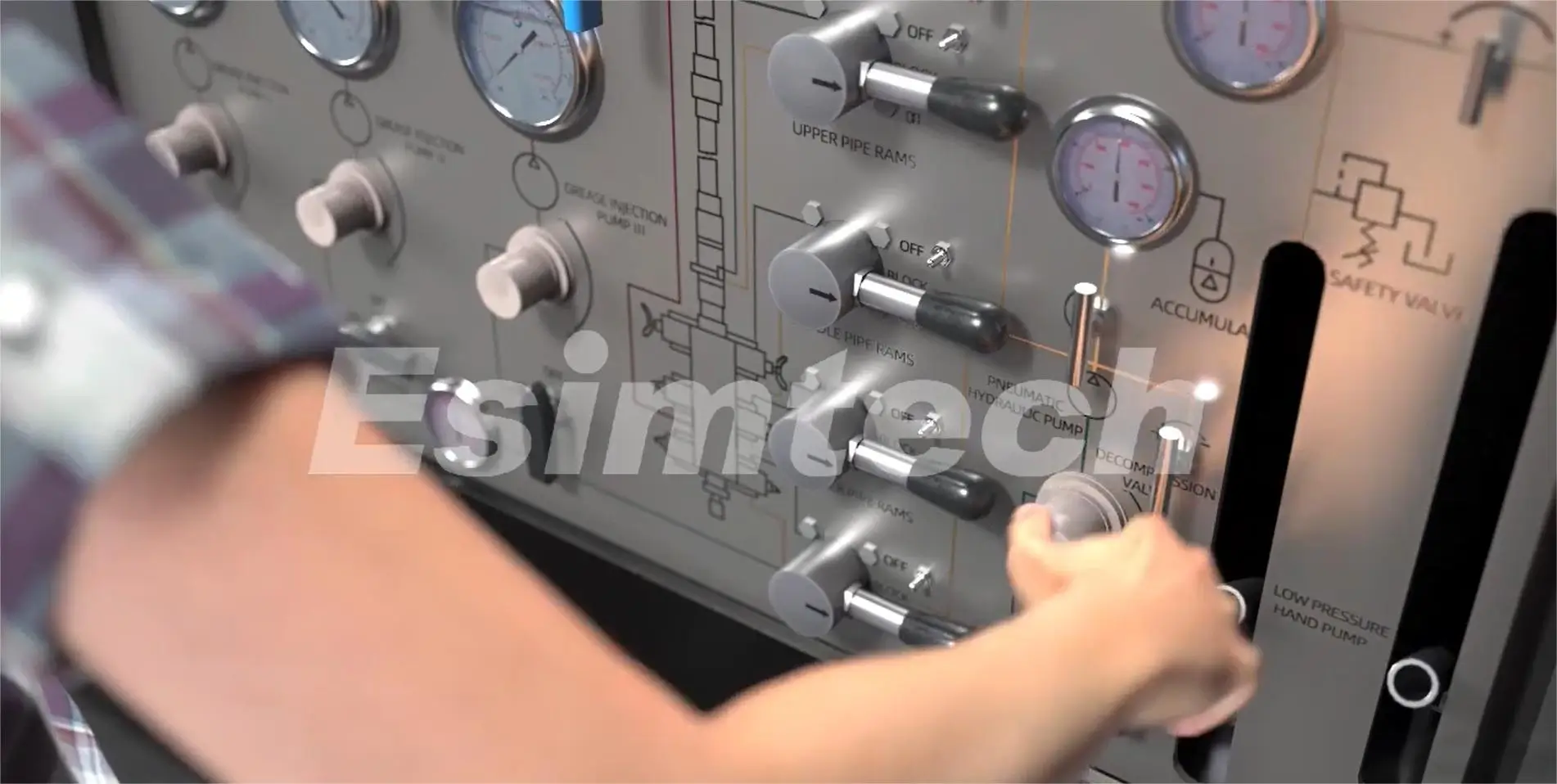
A well-logging simulator system is a computer software tool used in the oil and gas industry to simulate the behavior of electromagnetic waves as they propagate through geological formations surrounding a borehole.
Esimtech is a leading manufacturer and supplier of state-of-the-art well-logging simulators. By integrating customized hardware with high-precision mathematical models, we provide the oil and gas industry with a revolutionary tool for data interpretation and operational decision-making.
In real-world operations, “logging tools” are lowered into the borehole to collect data on rock formations and fluids to identify hydrocarbon reservoirs. Esimtech’s simulators replicate this process digitally, allowing for risk-free training and highly accurate subsurface imaging.
Categories of Esimtech Well Logging Simulator
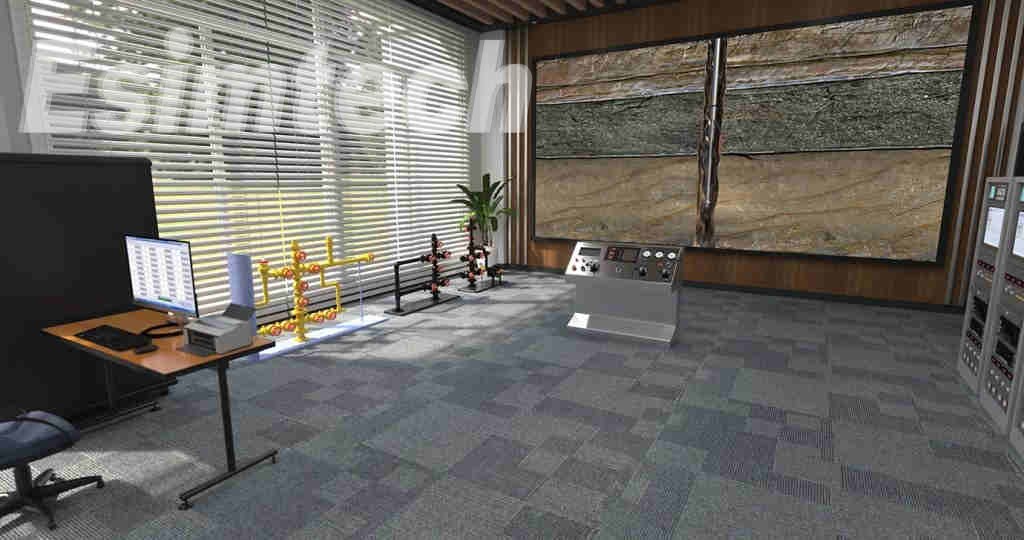
Production Well Logging Simulator
This oil well logging simulator by Esimtech integrates virtual reality and mathematical modeling to provide realistic training for technicians. It replicates surface units and downhole operations for various well types. The system enables risk-free skill assessment, operation mastery, and theoretical learning, significantly enhancing safety and efficiency in oilfield exploration.
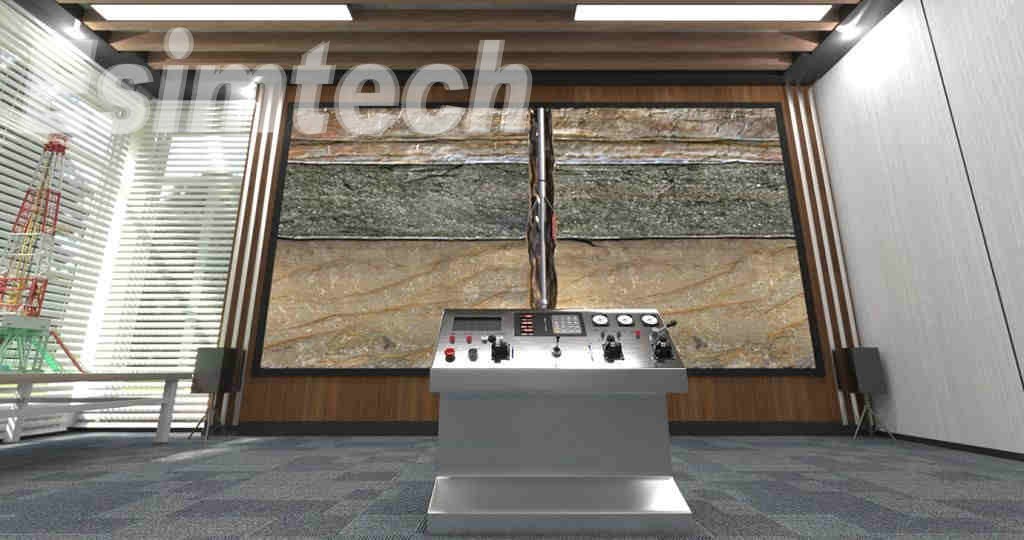
Open Hole Well Logging Simulator
Open Hole Well Logging Simulator is an immersive training system that replicates real-world logging operations. It combines high-fidelity hardware consoles with 3D software to simulate geological formations and tool responses. The system enhances trainees’ skills in equipment operation, data interpretation, and emergency handling through realistic, risk-free virtual environments.
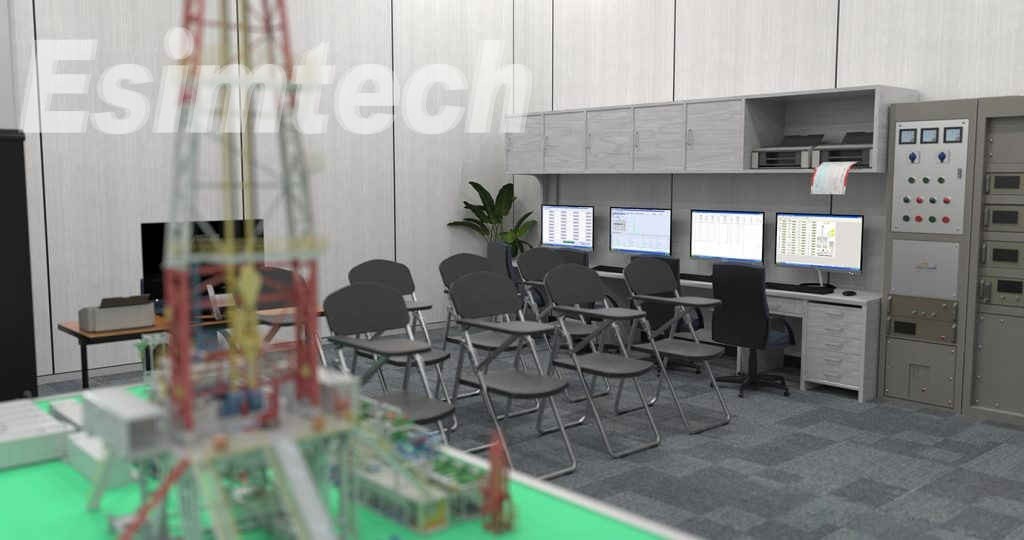
Compound Logging Simulator
The Compound Logging Simulator is an advanced training system for petroleum personnel. It integrates full-scale hardware—like logging units and sensors—with sophisticated software to simulate the entire logging process. It provides immersive experiences for mastering operational skills, gas detection, and managing 46 types of drilling accidents effectively.
How Does Well Logging Simulator Work?
The simulator models electromagnetic (EM) wave propagation through downhole formations. It takes into account formation properties, tool specifications, and borehole trajectory.
- Formation Model: Create a subsurface model around the borehole, including conductivity, dielectric properties, and other geological data. Inputs can come from well logs, seismic surveys, or existing studies.
- Logging Tool Specifications: Set tool parameters such as frequency, waveform, and design details. These determine how EM waves interact with the formation.
- Wave Propagation: The simulator solves mathematical equations to calculate how EM waves travel through the formation.
- Signal Response: Calculate the tool’s received signal based on wave propagation results, tool design, and formation properties.
- Log Simulation: Generate a synthetic well log that represents real downhole data. Outputs can be used to test tool designs, develop interpretation algorithms, or evaluate measurement sensitivity.
Core Technical Advantages of Esimtech Well Logging Simulator
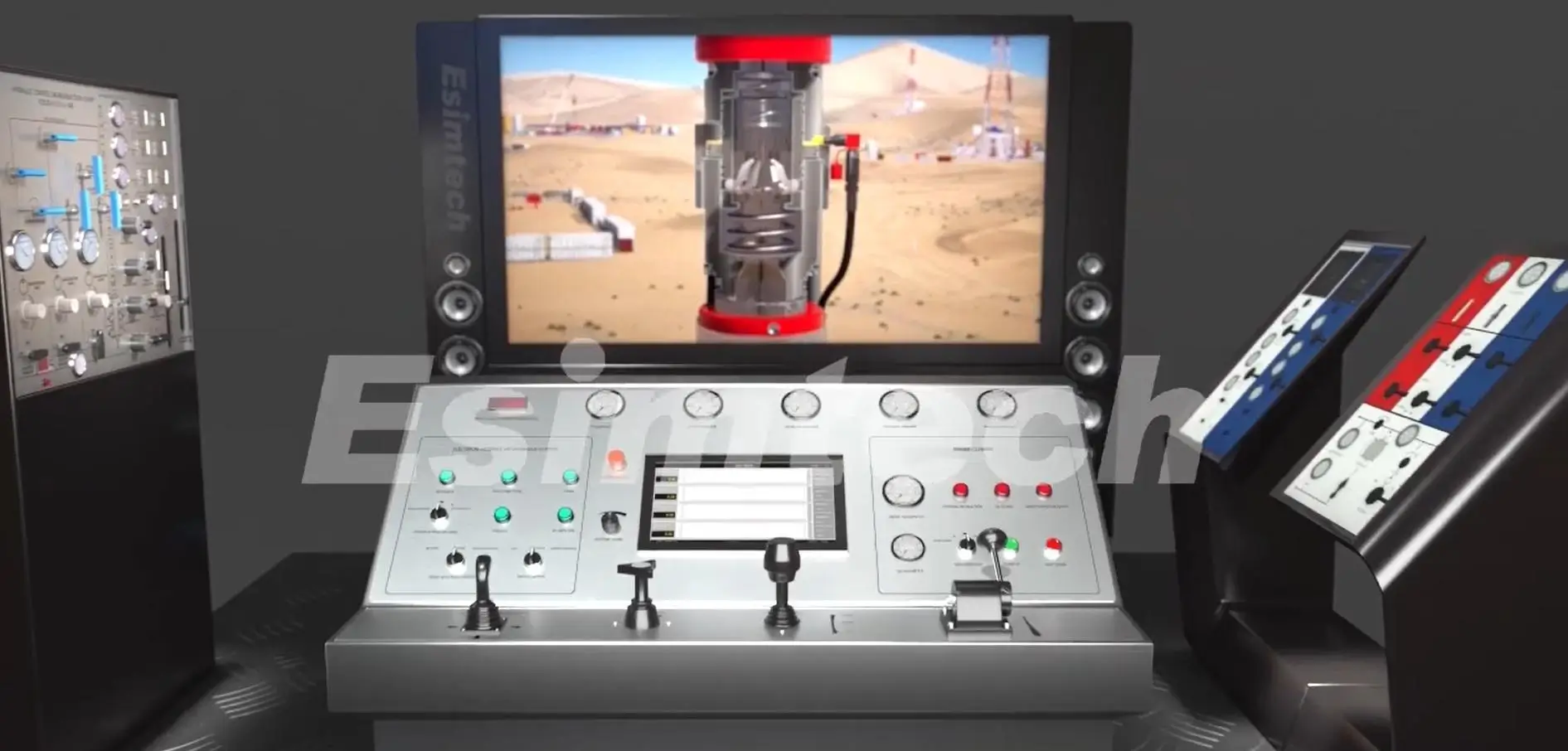
Our system is not merely a simulation, but a highly accurate reproduction of real-world operations. Its core advantages are reflected in the following four dimensions:
- Seamless Integration (Customized Hardware and Software): Our software and hardware systems are perfectly compatible with existing equipment. This high degree of adaptability ensures rapid and accurate data acquisition, facilitating informed decision-making by operators.
- Top-Tier Modeling Accuracy: We employ industry-leading high-precision mathematical and physical models. These models, refined over many years by our expert team, achieve peak accuracy and reliability.
- Real-Time Analysis Capabilities: The system supports real-time data processing and interpretation, significantly reducing the time from data acquisition to insight generation.
- Comprehensive After-Sales Support: We provide timely and comprehensive after-sales service to ensure our customers’ equipment is always in optimal operating condition.
Why Buy Well Logging Simulator From Us?
Well-logging simulators are powerful tools that provide significant advantages to the oil and gas industry, enabling exploration and production companies to optimize their operations, reduce risk and costs, and maximize the value of their hydrocarbon resources. Here advantages if you want to buy well-logging simulators from us.
- Improved Data Quality: Test and validate logging tool designs. Develop new interpretation algorithms. Achieve more accurate data acquisition and analysis.
- Reduced Risk and Costs: Identify potential problems before drilling, testing, or production begins. Optimize logging scenarios, reduce additional logging runs, and minimize drilling errors and accidents.
- Enhanced Reservoir Characterization: Better understand subsurface formations. Identify hydrocarbon reservoirs, estimate properties, and improve reservoir characterization.
- Increased Efficiency: Test and optimize logging tool designs before field use. Save time, reduce costs, improve data accuracy.
- Better Production Optimization: Use accurate well log data to optimize production rates, identify new drilling opportunities, and maximize the economic value of hydrocarbon resources.