
The Real Cost of Coiled Tubing Incidents—And How Simulation Mitigates the Risk
Today, well intervention using coiled tubing (CT) is a necessary element in any field development. Coiled tubing units provide operators with cost-effective tools for live-well intervention without the necessity to kill the formation. At the same time, this efficiency is accompanied by the reality that is very hard to underestimate: coiled tubing operations represent one of the highest-risk and lowest-tolerance activities.
Indeed, when thousands of meters of steel tubing are deployed into a high-pressure wellbore, any mistake on the part of the operator or any delay in reaction to a pressure peak can result not only in downtime but also in a complete mechanical or well control catastrophe.
For oilfield service companies and drilling schools, management of this risk is one of the key operational tasks. However, to fully understand why it is crucial to implement a modern approach to training, executives should look beyond general safety statistics and analyze the actual costs of field accidents.
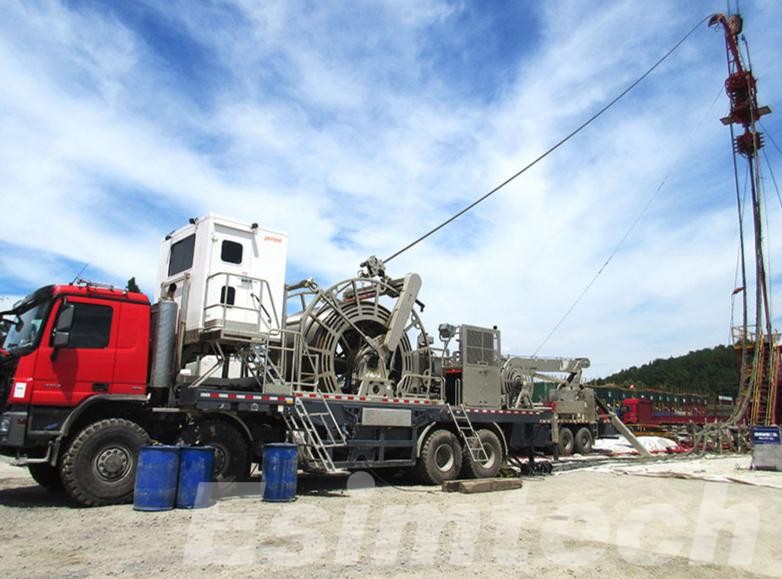
Unmasking the “Iceberg Costs” of a Coiled Tubing Failure
While assessing the economic effect of a coiled tubing operation, many companies fail to see beyond the visible tip of the iceberg and end up assessing only the tangible costs that are right in front of their eyes. Yet, the real economic effect of a problem is hidden under the surface in the form of operational compounding losses.
Visible Tip of the Iceberg: Direct Costs
In case of a CT string’s fatigue breakage, part or buckle due to excessive helical loading, or stuck pipe, the tangible costs incurred include the following:
- Replacement of the CT String: Cutting off hundreds of feet of expensive alloy tubing.
- Fishing Operations: Using special wireline or fishing equipment to remove the string from the wellbore.
- Equipment Damage: Fixing the injector head, stripper rubber, or BOP.
The Submerged Cost: Operational Hidden Expenses
While replacement costs for the actual hardware are substantial, the real operational killer is the non-productive time (NPT).
- Non-productive Time: Once a CT intervention procedure is halted, the whole field spread, including nitrogen generators, pumping equipment, and labor, will be idle. With complicated offshore and remote onshore configurations, NPT might cost anything between $20,000 and $150,000 per day.
- Wellbore Damage: In case of failure of a fishing operation or permanent string breaking, irreparable wellbore damage might ensue. The worst-case scenario is sidetracking or even abandoning the well as a means of overcoming the problem, thus making a routine cleanout procedure into a costly capital loss.
- Liabilities Related to Regulation and Health & Safety: Emergency well control operations caused by CT packer or stripper malfunctions entail regulatory investigation, huge fines, and lasting damage to the company’s commercial reputation.
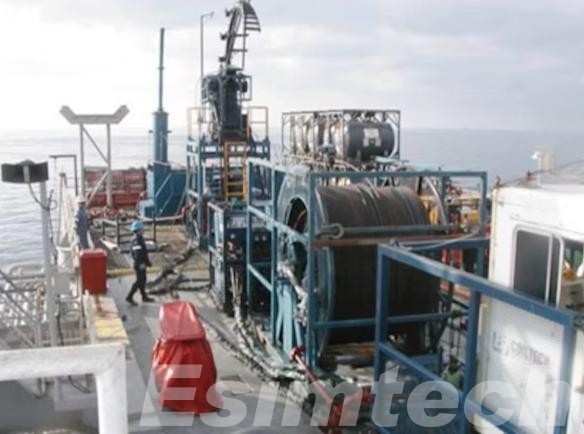
Why Traditional Training Fails in High-Risk Scenarios
But if the risks involved are that great, why do field incidents occur? In most cases, the reason is rooted in deficiencies in traditional systems of workforce competency.
In traditional models, technical instruction was conducted through lectures, engineering textbooks, and passive slide presentations. Such forms of training are suitable for imparting theoretical understanding of such processes as well as control of fluid hydraulics; however, they are completely inadequate for acquiring the necessary muscle memory. The skills for reacting properly to sudden tubing drops or rapid gas kicks cannot be acquired merely by studying books.
An alternative way of conducting practical classes – live-rig training – involves an obvious contradiction: no responsible training coordinator or asset manager would want to provoke a stuck pipe incident or create conditions for hydrocarbon influx in a multi-million-dollar live well in order to check the trainee’s response speed.
Thus, traditional training approaches are inherently conservative and cautious; junior operators are well-equipped with theoretical knowledge but lack any experience in crisis management.
Advanced Simulation: Turning High-Risk Crises into Safe, Scalable Practice
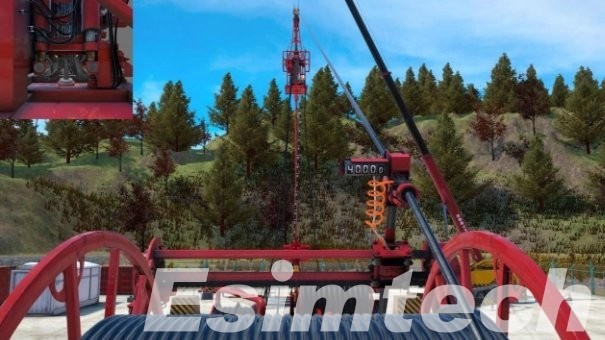
That is precisely where advanced well intervention simulation changes the operational model. Contemporary simulators do not merely duplicate the appearance of the oilfield but rather duplicate the real-world, physical and thermodynamic behavior of the wellbore itself.
To be of operational value, however, a simulator cannot rely solely on pre-programmed, static scenarios. Emergencies on the field are inherently unpredictable and chaotic. High-end simulation systems overcome that limitation by incorporating three key technical components into the training process:
1. Real-Time Engineering Mathematics Models
The mathematical engine continuously evaluates downhole physics, including Multiphase Flow, Wellbore Hydraulics and Torque & Drag.
2. Non-Sequencing Software Architecture
In contrast to the linear software, the non-sequencing software architecture models real chain reactions. When the operator pulls up too hard against a tough formation, the localized stress changes automatically. When the threshold is breached, it causes an unplanned mechanical breakdown, making trainees realize the results of their actions.
3. 1:1 Physical Hardware Modeling
The artificial intelligence is matched with real hardware components in form of a true console. The weight indicator, pump pressure meters, brake valves, and levers give identical delays, haptic feedback, and sound that an operator can expect from a real coiled tubing machine.
Using this closed loop, operators learn how to sense the slightest downhole tension and pressure changes using only their hands and eyes.
The Financial Case for Simulators: A Strategic ROI Transition
The transition from a training facility to a fully-fledged simulation environment is considered to be a major CAPEX. Nevertheless, once a cost-benefit analysis is conducted, the fact becomes clear that such an investment will pay back quickly and sustainably.
| Operational Metric | Traditional Training Programs | Advanced Simulation Training |
| Training Risk Profile | High exposure if conducted on active assets; otherwise, purely theoretical. | Zero physical risk to assets, personnel, or environment. |
| Time-to-Competency | Long, slow progression relying on rare real-world exposure. | Accelerated by 30% to 50% via concentrated emergency drills. |
| Emergency Preparedness | Low, dependent on theoretical reaction protocols. | High: operators possess proven muscle memory for complex failures. |
| Operational Impact | Higher risk of field NPT due to human error and slow response. | Drastic reduction in human-induced NPT and mechanical damage. |
Through the transition from field training to training in an offshore-quality simulator, one transforms the unstable OPEX associated with accidents and downtime into one-time CAPEX.
Moreover, it dramatically decreases the time-to-competency of new hires. The trainee will experience far more wellbore situations, snubbing procedures, and well control events through a two-week simulation training course than he or she would ever experience within two years of field training. The trainee graduates to the field as an asset protector, not a liability.
Final
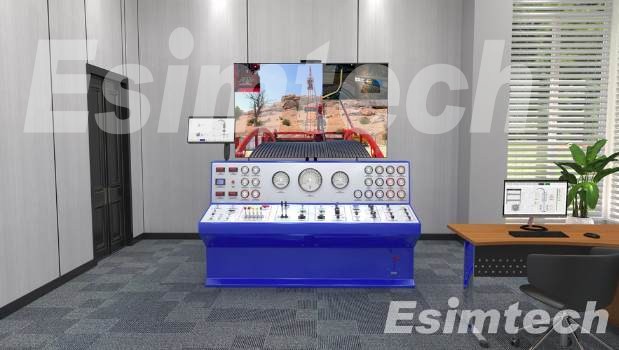
In times when margins are squeezed in the oilfields and safety compliance is mandatory, a reactive approach to crisis management will prove disastrous for any business strategy. It is too costly for businesses to wait for a non-productive time loss incident or mechanical failure in the hole to find out whether there is competence among the operators.
Using the entire process of simulation training gives energy services, drilling companies, and training institutions around the world the security that comes from ensuring their competency using mathematical models and real hardware interfaces.
Optimize Your Well Intervention Training Program
Don’t wait for a costly field incident to audit your safety and operational protocols. Contact the Esimtech engineering team today to schedule a technical consultation and discover how our custom Full Size Coiled Tubing Simulator solutions can protect your assets and reduce operational NPT.