
Common Causes of Navigation Errors and How Simulator Training Helps Prevent Them
In Navigation, port operations and navigation in complex waters, Navigation Errors have always been one of the important causes of ship collisions, stranding and yaw accidents.
Although modern ships widely use advanced navigation devices such as GPS, ECDIS and radar, accident statistics show that technological progress has not completely eliminated navigation risks at both the human and system levels.
Therefore, more and more shipping enterprises and Training institutions have begun to attach importance to Navigation Simulator Training, systematically reducing the probability of navigation errors through a controllable, safe and repeatable simulation environment.
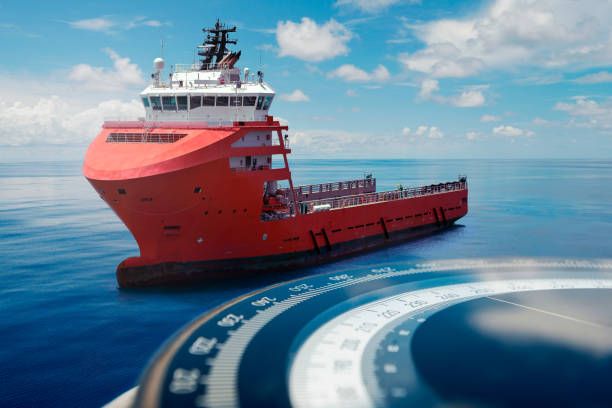
What Consequences Can Navigation Errors Bring?
Navigation errors usually refer to deviations in the judgment of a ship’s position, course or the surrounding situation during navigation due to equipment, environmental or human operation issues.
Common consequences include:
- The ship deviated from the planned course
- Collided with other ships
- Ships run aground or hit reefs
- It causes significant property losses and personnel safety risks
In high-density waterways or complex port environments, a minor navigation judgment error can often be rapidly magnified into a serious accident.
Core Reasons For Navigation Errors At Sea
Human Factors
Human factors are the primary cause of navigation errors, especially in the high-intensity and high-pressure maritime environment, where the shortcomings in operational skills, emergency response capabilities and teamwork will be infinitely magnified.
- Insufficient operational skills: Unproficient in operating core equipment such as radar plotting, ARPA automatic tracking, and ECDIS electronic charts, often resulting in basic mistakes such as positioning calculation deviations and incorrect parameter Settings. Some crew members do not have a solid grasp of GPS positioning calibration, navigation light and signal recognition, which leaves potential safety hazards at key navigation nodes.
- Lack of emergency response capabilities: In the face of sudden situations such as equipment failure and extreme weather, it is easy to fall into a state of decision-making confusion. For instance, when the radar malfunctions, one may not know how to locate through backup means, and when berthing or unberthing in strong winds or rapids, the operation may be disordered.
- Improper resource management: The collaboration within the bridge team is unbalanced, information transmission is not timely, and division of labor is not clear, resulting in lagging integration of multi-source navigation data. Some crew members lack a “holistic perspective”, overly relying on personal judgment while neglecting team collaboration, which leads to decision-making mistakes.
- Cognitive bias: Insufficient understanding of the channel rules in restricted waters and the collision avoidance principles that multiple vessels may encounter makes it easy to make wrong course judgments in dense port waters and complex buoy deployment areas, increasing the risk of collision.
Environmental Factors
The uncertainty and complexity of the Marine environment have always been a significant challenge for navigation operations and a core scenario with a high incidence of errors.
- Natural environmental disturbances: Complex sea conditions such as strong winds, rapids, and huge waves can affect the stability of ship handling. Low visibility (fog, rain, night navigation) directly hinders visual observation, resulting in delayed target recognition and distance judgment deviations.
- The navigation environment is complex: narrow and winding port channels, dense intersections of multiple ships, and unclear distribution of fishing nets or obstacles, etc. These scenarios impose extremely high requirements on the precision of route planning and operation. The slightest negligence may lead to stranding or collision.
- Sudden risk scenarios: Sudden extreme weather (such as strong typhoons, strong convective weather), temporary closure or diversion of waterways, floating objects at sea and other unexpected obstacles test the crew’s rapid response and emergency navigation capabilities.
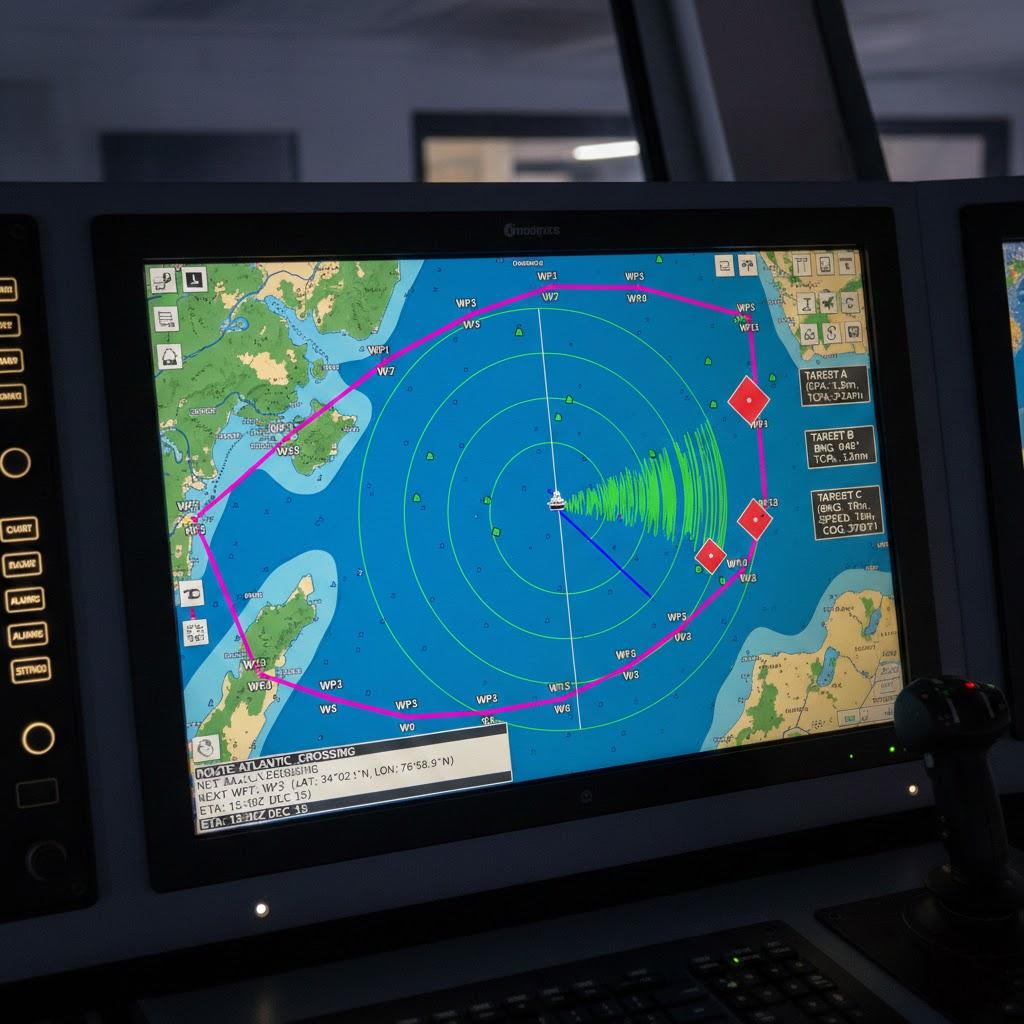
Equipment and System Factors
Modern navigation is highly dependent on navigation equipment. However, if the operation of the equipment is not proficient or the response to malfunctions is insufficient, it may instead become a “stumbling block” to navigation safety.
- Unfamiliarity with equipment operation: Insufficient utilization of the advanced functions of GPS positioning systems and automatic navigation systems, failure to fully leverage the auxiliary navigation value of technical equipment, and still relying on traditional operation methods, resulting in low efficiency and errors.
- Insufficient response to equipment failures: Lack of experience in handling unexpected situations such as radar malfunctions, abnormal electronic charts, and communication system failures. In the event of equipment failure, it is impossible to quickly switch to alternative solutions, resulting in navigation interruption or misjudgment.
- Data fusion judgment error: The ability to integrate and analyze multi-source navigation data such as radar, ECDIS, and GPS is lacking. It is difficult to eliminate data errors through cross-validation, and it is easy to make wrong navigation decisions due to the misguidance of a single data point.
Esimtech Navigation Simulator: A Training Solution Targeted to Address Navigation Errors
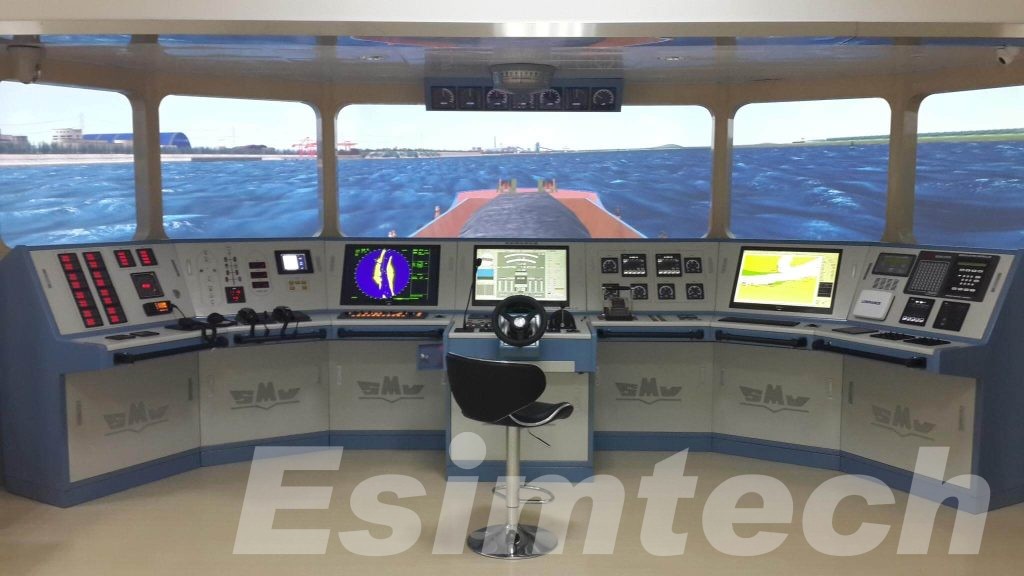
Esimtech Navigation Simulator uses computer simulation technology to create a highly realistic navigation environment, allowing trainees to complete route planning, equipment operation, collision avoidance decision-making, and emergency response training in a virtual setting.
- High-fidelity scenario recreation: Utilizing single/multi-channel large-screen wide-angle visual projection, the bridge hardware environment is replicated 1:1, accurately recreating high-risk scenarios such as navigation in open and restricted waters, berthing and unberthing in ports, encounters with multiple vessels, and severe weather, allowing trainees to experience realistic navigation conditions firsthand.
- Zero-risk practical training: Without the investment of real vessels and fuel costs, high-risk operations such as berthing and unberthing (including tugboat assistance and mooring operations), anchoring, and emergency collision avoidance can be practiced repeatedly, allowing for trial and error and debriefing, helping trainees accumulate practical experience in a risk-free environment.
- Data-driven precision improvement: Equipped with multiple data recording and playback functions, it fully records operational instructions, equipment parameters, and course trajectories during training. Quantitative analysis accurately pinpoints error points, facilitating targeted improvements.
How Can Simulation Training Specifically Address Navigation Errors?
1. “Exposing errors” in a risk-free environment
Students can do this in the simulator:
- Repeatedly experiencing incorrect route Settings
- Practice dealing with equipment failure in a complex environment
- Understanding the consequences of wrong decisions without generating real accident risks
2. Strengthen the comprehensive utilization capacity of equipment
Simulation training emphasizes:
- Cross-validation of multi-source navigation information
- The coordinated use of ECDIS, radar and visual judgment
- Reduce excessive reliance on a single system, such as GPS
3. Enhance decision-making ability and situation awareness
By setting up complex scenarios:
- Many ships will encounter and avoid collisions
- Sudden environmental changes
- Navigation in high-density traffic waters
- Trainees can gradually establish correct judgment logic and operational habits.
Typical Navigation Simulation Training Scenarios
- Route planning and inspection training
- Integrated operation training of ECDIS/radar/ARPA
- Simulation of navigation in bad weather and low visibility
- Emergency navigation training in case of equipment failure
- Port entry and exit as well as narrow waterway navigation training
These scenarios are precisely the high-risk links where navigation errors are most likely to occur in reality.
Summary
Reducing navigation errors requires not only advanced equipment but also continuous and practical training.
Navigation simulators bridge the gap between theory and practical operation, helping crew members build their capabilities and confidence before they actually face maritime risks. Navigation simulators are not a substitute for real navigation but a necessary training path to safe navigation.