
How Navigation Simulators Forge Precision Decision Making in Extreme Sea Conditions
In the modern shipping environment, one of the biggest challenges faced by ships during navigation is the decision-making process in adverse sea conditions. Factors such as strong winds, large waves, complex ocean currents, and low visibility all combine to significantly increase the risks of misjudgment and accidents. Numerous maritime accident investigations have shown that human decision-making errors are often one of the key causes of accidents.
To enhance the capabilities of crew members without increasing actual navigation risks, more and more maritime colleges, training institutions, and shipping companies have begun to use navigation simulators to systematically train their decision-making abilities in adverse sea conditions. This article will systematically analyze: how navigation decision-making in adverse sea conditions can be efficiently, controllably, and assessably trained through simulators.
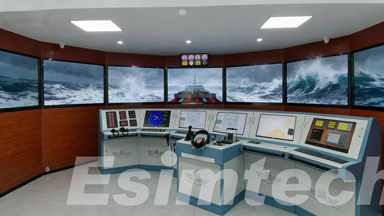
Why Navigation Decisions in Adverse Sea Conditions So Crucial?
In the case of normal sea conditions, vessels would predominantly depend on the usual channels and the common procedures for navigation; extreme sea conditions would lead to a great deal of uncertainty in the environment, and the navigators would have to decide quite fast most of the time.
Typical challenges include:
- Strong winds and huge waves affect the maneuverability of ships
- Ocean currents and swells cause deviations in course and speed
- Low visibility conditions such as rain, fog, and night navigation weaken the perception ability
- In areas where multiple ships converge, the complexity of collision avoidance decisions significantly increases
Under these conditions, the captain’s and navigator’s judgment, risk awareness, and collaborative decision-making ability directly determine the level of navigation safety.
Limitations of traditional navigation training methods
- Ship-based training involves high risks and high costs.
Carrying out training under real harsh sea conditions inherently poses safety hazards, and it is difficult to control environmental variables artificially. Once an operational error occurs, the consequences are uncontrollable.
- The scene cannot be repeated.
The harsh sea conditions are random and cannot be trained and compared under the same conditions repeatedly, making it difficult to achieve systematic improvement in skills. - Evaluation and review difficulties
Traditional training relies more on experience-based judgment and lacks data recording and objective assessment methods, which is not conducive to continuous improvement.
Core Technology of Marine Simulators: Realistically Recreating the Ocean’s “Fury”
The high degree of realism of modern navigation simulators stems from the integration of three core technologies.
- Multi-degree-of-freedom hydraulic motion platform can precisely simulate the six degrees of freedom movements of a ship, such as roll, pitch, and heave, allowing the crew to directly feel the force of the waves.
- High-precision marine environment dynamics engine is the brain of the simulator. It is based on complex fluid mechanics mathematical models and can perform real-time calculations and generate dynamic interactions of wind, waves, and currents, accurately depicting the shape of each wave and the effect of each vortex.
- 1:1 highly realistic integrated environment of the full-function bridge constitutes the operation interface for training. Here, it integrates radar/ARPA, electronic chart display and information system (ECDIS), steering gear, main engine control system, and even can simulate equipment failures, power outages, and other sudden situations, ensuring that the training covers all possible scenarios.
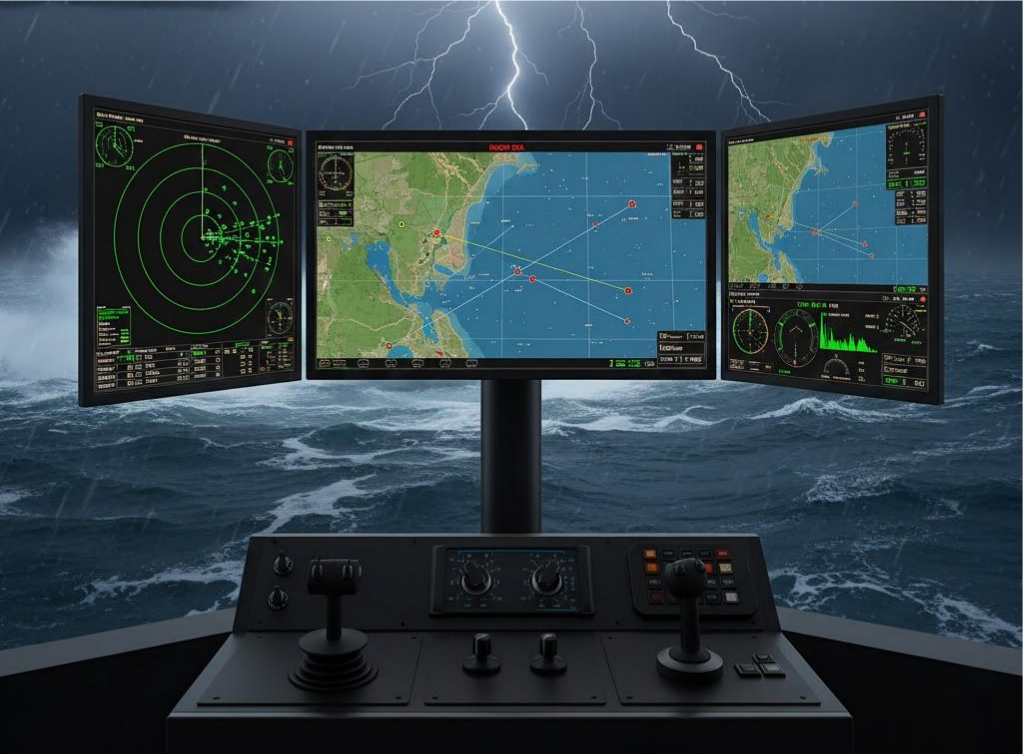
Six Key Training Scenarios in Harsh Sea Conditions
Scenario 1: Ship Handling and Route Planning in Complex Environments
The simulator can set up an oceanic route that passes through complex weather areas. The long, strong, and heavy rains were not to impede the crew members from such a demanding task as to fully verify the electronic chart information, radar echoes, and the latest weather forecasts and at the same time to adjust the vessel’s course and speed. They need to steer clear of the restricted navigation zones and pick the route that, besides being the safest, is the most economical in terms of fuel consumption. The training helps the staff to develop a skill that is the very opposite of difficulty, that is, to make complete and right decisions when the situation is worsened by so much information at their disposal.
Scenario 2: Berthing, Unberthing, and Mooring Operations under Extreme Conditions
The simulator can reproduce the extreme challenges of berthing in strong crosswind currents. The crew members need to precisely control the main engine and the rudder, and conduct efficient communication and collaboration with the simulated tugboat captain, issuing accurate rudder commands, steering commands and mooring rope instructions. Any timing or force error at any moment could cause the ship to collide with the dock or run aground. This training transforms the high-risk practical operation into a safe skill that can be practiced infinitely.
Scenario 3: Multi-Vessel Encounters and Emergency Collision Avoidance Decision-Making
In narrow waterways with poor visibility, the simulator can generate multiple target vessels to create complex crossing collision scenarios. The crew must proficiently use radar and ARPA to detect targets, assess collision risks (TCPA/DCPA), and strictly follow the “International Regulations for Preventing Collisions at Sea” (COLREGs) in combination with visual observation (simulated navigation light signals) to decisively take turning or speed-changing actions. This enhances the crew’s dual capabilities of applying the rules and making emergency decisions.
Scenario 4: Equipment Failure and Emergency Response
The simulator can mimic the “main engine failure” or “total power loss” situations of the whole ship during the harshest part of a storm. In case the ship loses control and waves start breaking over the vessel the crew has to very fast turn on the emergency response plan: emergency rudder activation, emergency announcements, repair organization, and use of the remaining power for controlling the position of the ship. This pressure test is a great help for the crew in acquiring greater psychological strength and, besides that, being more skilled in but not less proficient emergency response procedures in real crisis situations.
Scenario 5: Bridge Resource Management and Team Coordination
During the simulated complex inbound process, the captain, pilot, helmsman and duty officer need to work collaboratively efficiently. The simulator records all communications, instructions and operations. After the training, the instructor can use the playback function, combined with objective data, to review with the team: Was the communication clear? Were the responsibilities defined? Was the decision-making process optimal? This data-based review is a key tool for improving team operational efficiency and safety culture.
Scenario 6: Internalization of Regulations and Operational Standards
The simulator can generate various scenarios of ship encounters (such as crossing, overtaking, and meeting head-on), and requires trainees to correctly identify and display the corresponding navigation lights and signal shapes. The system will automatically evaluate the accuracy and speed of the trainees’ responses, ensuring that the knowledge of international maritime collision avoidance rules (COLREGs) is not just confined to textbooks but is transformed into subconscious and correct responses.
Standard Procedure For Training Decision-Making Capabilities Using Navigation Simulators
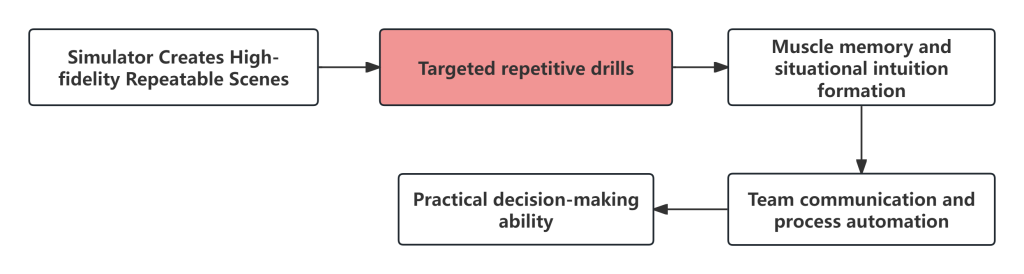
Step 1: Training scenarios and goal setting
Based on the trainees’ levels and training objectives, specific adverse sea conditions and navigation tasks are set, such as specifying the route, safely passing through complex waters, etc.
Step 2: Real-time Decision Making and Operational Drills
The trainees complete the route planning, control operation and collision avoidance judgment in the simulator. The instructor can observe their decision-making logic and operational behaviors in real time.
Step 3: Process Recording and Playback Analysis
The navigation simulator can fully record:
- Operation time points
- Changes in course and speed
- Decision paths and results
Through the playback function, instructors and trainees can conduct in-depth analysis of key decision-making nodes.
Step 4: Evaluation and Skill Enhancement
Based on the data and behavioral performance, conduct a quantitative assessment of the trainees’ judgment ability, risk awareness, and collaboration level, and establish a continuous improvement loop.
Typical application scenarios of navigation simulator training
1. Maritime colleges and training institutions
Used for basic training of crew members, competency certification training, and the cultivation of senior captains’ decision-making abilities.
2. Internal training for shipping enterprises
Improve the overall safety level of crew members, reduce accident rates and insurance costs.
3. Pilot training and special route training
Specialized training is conducted for port entry and exit, complex waters, and extreme sea conditions.
Conclusion
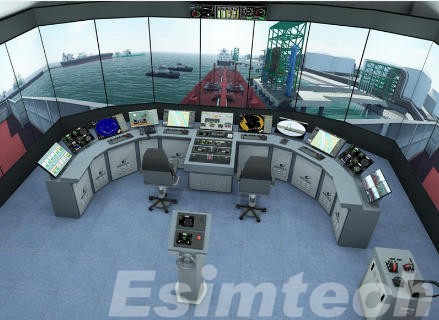
Navigation decisions under adverse sea conditions cannot be made solely based on accumulated experience. Instead, a systematic, repeatable and assessable training method is required. The navigation simulator, by highly replicating the real environment, enables crew members to continuously make mistakes, review and grow under safe and controllable conditions.
For shipping companies and training institutions that aim to enhance navigation safety and reduce operational risks, professional navigation simulator solutions have become an indispensable choice.