
Best Practices for Building Reliable Oil and Gas Simulation Models
Operator training is an essential factor in the oil and gas industry when it comes to safety, production stability, and incident prevention. The more complicated the operating systems, the greater the need for training simulators with zero tolerance for errors—these are no longer optional tools but rather essential systems.
On the other hand, the effectiveness of any training program relies heavily on the oil and gas simulation that is behind it. If the simulator acts differently from the actual plant, the trainees will learn wrong responses, which will not only affect safety but also operational performance in a negative way.
This article discusses the most important things to consider while creating reliable oil and gas simulation models for training purposes. It mainly deals with realistic behavior, operational alignment, and measurable training outcomes.
Defining Reliability in Oil and Gas Simulation for Training
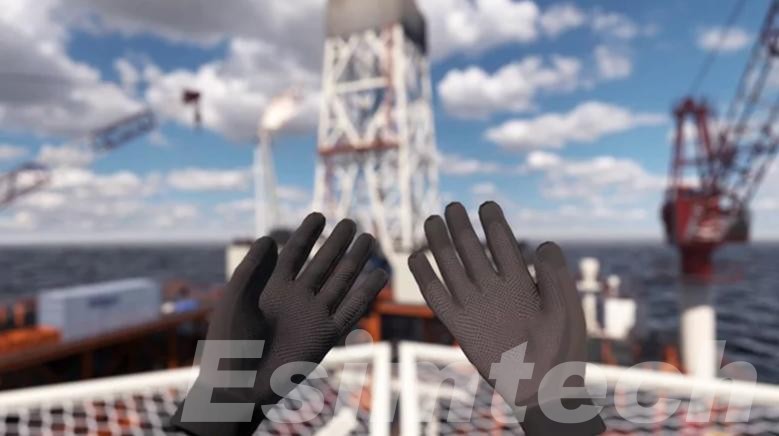
In training applications, the reliability of oil and gas simulation is determined by the operational credibility rather than the numerical details. An operator acknowledges the simulator as a reliable one when the operator finds its behavior to be in line with what the operator experiences in the control room.
The most critical issue for training is not if the model is mathematically advanced, but if it responds properly to the operator’s actions. Realistic and repeatable process responses must be elicited by valve movements, controller changes, and interlock activations. If the simulator is erratic or goes against the real operating logic, the trainee’s trust will be lost quickly.
The properties of a trustworthy oil and gas simulation for training are:
- Same cause-and-effect relationships throughout
- Normal and abnormal conditions do not change behavior
- Operators’ expectations are matched by the Predictable responses
Simulator reliability is usually best determined by experienced operators. If they have confidence in the simulation, it is more likely that trainees will treat it as a serious matter and practice what they have learned in the actual plant. Thus, in this situation, reliability is not a technical metric of an abstract character but a necessity for impact and acceptance in training.
Aligning Oil and Gas Simulation Models with Real Operating Procedures
To get the most out of training, the oil and gas simulation models must not only depict the design of the plant but also its actual operation. The trainees should perform the same steps in the simulator as if they were on the actual site.
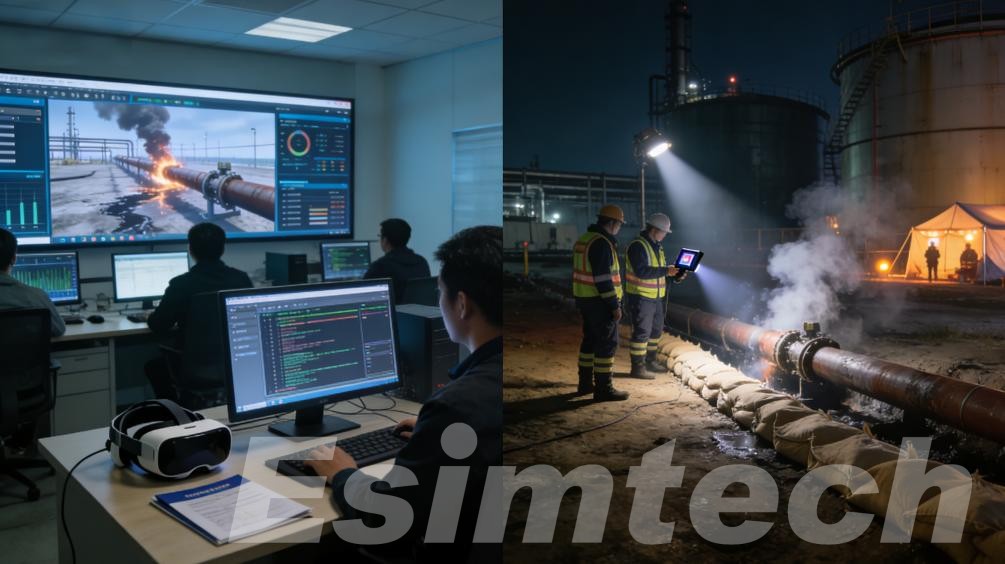
Startup and shutdown procedures are among the main aspects that need to be in perfect harmony with the real operating practices:
- Start-up and shutdown sequences
The oil and gas simulation should enforce the correct order, timing, and dependencies of actions, such as warm-up, pressurization, and stabilization steps.
- Permissives and interlocks
The actions that are not allowed in the real system must be shown as not allowed in the simulator as well. The bypasses, overrides, and reset conditions should be consistent with the actual control logic in their behavior.
- Alarm and trip behavior
During abnormal conditions, alarm priorities, delays, and trip conditions in the oil and gas simulation should be similar to the control room situation.
- Emergency shutdown (ESD) logic
The simulator must be capable of demonstrating the actual ESD cause-and-effect relationships, along with automatic actions and operator duties after activation.
The best practice for reliable oil and gas simulation training is to validate the models with operators, process engineers, and control specialists who know the procedures in daily operations—not only how they are written.
When operating procedures are properly aligned with simulation behavior, trainees will form correct habits from the start. This alignment will guarantee that oil and gas simulation training will be directly converted into safer and more effective plant operations.
Building Realistic Dynamic Behavior in Oil and Gas Simulation
Trainers are quick to discern whether a training simulator mimics the actual process. The slightest variations in timing or feedback can shatter immersion and lower the effectiveness of training. Therefore, the dynamic behavior of the simulation is the foremost parameter for judging the quality of oil and gas simulations used for training.
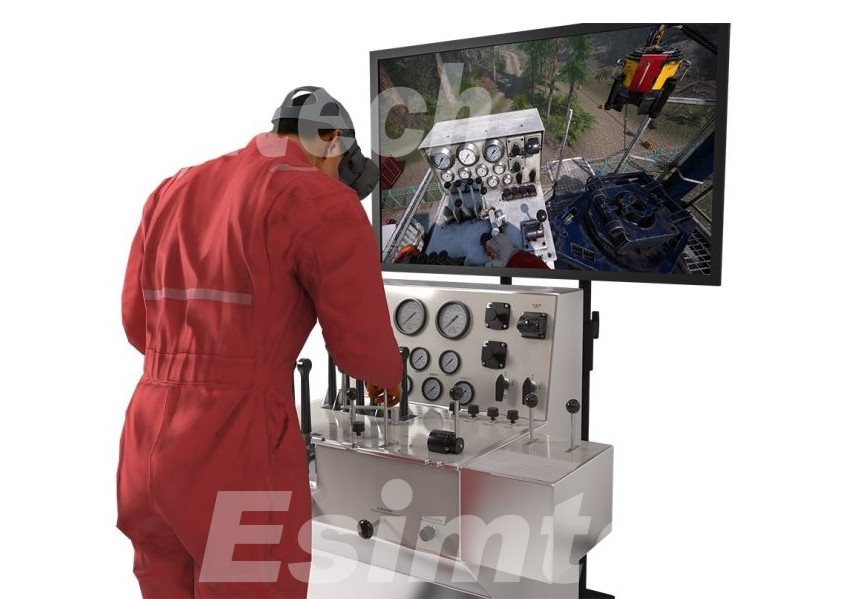
In oil and gas simulations, realistic dynamics are concerned with the following aspects:
- The speed of the process response to operator actions.
- Trends are developing familiarly and logically.
- Disturbances take time to develop and stabilize.
Ordinary dynamic problems that hinder training include:
- Process reactions that are incredibly fast or slow.
- Sudden jumps instead of gradual trend developments.
- Unstable conduct during normal operations or when load changes occur.
- Delays that do not align with the operators’ expectations.
Although enhancing the model’s fidelity might look like a fix, it usually comes with additional issues. Adding too much detail might impair the performance in real time and cause the models to act in unexpected ways, which the operators would never encounter in the actual field. Thus, it undermines the credibility of the oil and gas simulation for training as it does not make the situation any more realistic.
The most appropriate course of action is to obtain the desired realism and strength of the simulation by mimicking only those dynamic features that are important to the operators, such as inertia, time-delay of the response, and time required for stabilization, while maintaining the simulation stable and responsive in real time.
As soon as operators identify the dynamic behavior as a familiar one, oil and gas simulation turns into a powerful tool for the development of skills in timing, anticipation, and decision-making under pressure.
Scenario Design as a Core Element of Reliable Oil and Gas Simulation
Training scenarios determine operators’ actual learning in the training process. Even a good oil and gas simulation might turn into nothing more than a demo tool if it lacks well-designed scenarios.
The main characteristics of a reliable training simulator are the support of scenarios that represent the realistic operational risk. The common abnormal situations where incorrect decisions are most likely to occur alongside dramatic failures should be the focus of the training simulator.
The main features of a simulator for training purposes in the oil and gas industry can be classified into three broad groups:
1. Normal operating scenarios
These scenarios include routine activities like starting up, changing loads, and shutting down. The trainees will be able to get used to the standard operating procedures and the expected reactions of the process through the training.
2. Abnormal Operating Scenarios
These scenarios incorporate the failure of the equipment, issues with control, or disturbances in the process. They are a must to train the whole process of diagnosing, prioritizing, and taking corrective action, all under the pressures of time in the oil and gas simulation.
3. Emergency Scenarios
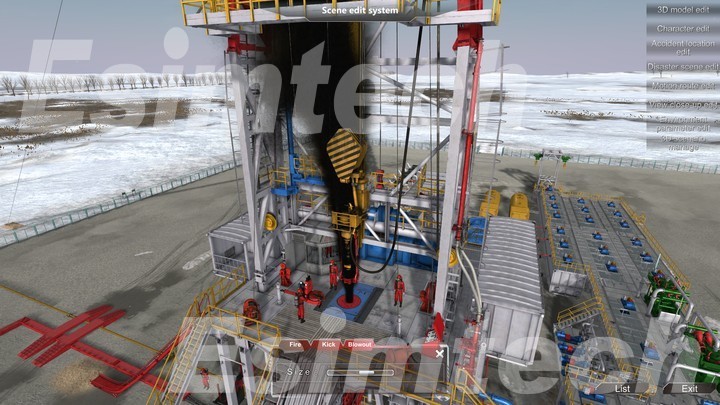
Emergenciesare a trial for both the technical response and the procedural discipline. The oil and gas simulation models that are the most reliable must be capable of portraying the very realistic paths of escalation, which would include alarms, trips, and automatic safety actions.
Consistency is a crucial factor besides the scenario type. The same scenario should be treated in the same manner, no matter how many times it is run. This repeatability provides instructors with the means of making objective comparisons between the performance of different trainees and, at the same time, guarantees fair evaluation.
Scenarios that are well thought out transform oil and gas simulation into a properly organized training system. They empower the operators to go through the rare but high-risk situations in a controlled environment, thus gradually building their confidence and competence before they have to deal with such situations in actual operations.
Integrating Instructor Control and Assessment into Oil and Gas Simulation
The instructor bears the central role in any training program. The same holds for oil and gas simulation for operator training. Even a well-constructed simulator can’t produce consistent training outcomes without effective instructional control and assessment tools.
A stabilization oil and gas simulation platform must let instructors have complete visibility and control over the training session. It includes the ability to start, pause, and reset scenarios, introduce faults at certain moments, and control the speed of training without disrupting the stability of the model. Instructors are able to adapt the sessions to different trainee skill sets and learning outcomes, thanks to these features.
Assessment is as significant. Measuring the performance of tasks done is the primary way of training value, not just performing them. Modern oil and gas simulation systems keep records of operators’ actions, their response times, and procedural compliance. This information greatly helps in calorie evaluations and provides structured feedback.
The main abilities coming from the instructor’s side are:
- Control of scenarios in real-time
- Recording and playing back actions
- Scoring that is uniform and based on specified criteria
If the instructor tools are nicely integrated, then the oil and gas simulation will turn into a training process that is not only informal but also repeatable and measurable. The same thing is a must for the development of skills, the gaining of trust, and the establishment of operational discipline.
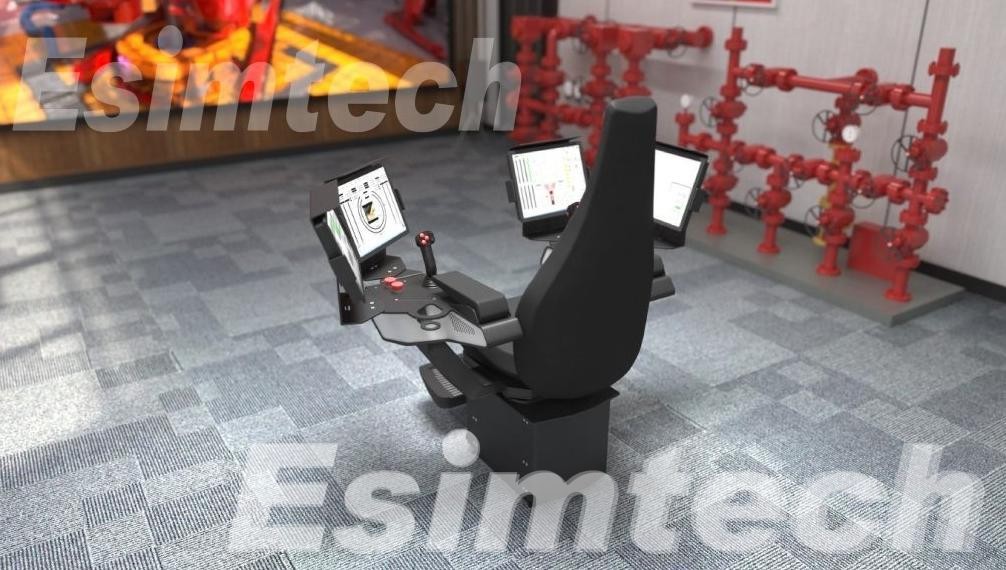
Using Modern Oil and Gas Simulation Technology to Improve Training Outcomes
The application of oil and gas simulation for operator training has undergone a complete overhaul due to modern technology. The state-of-the-art simulators are now configured to take part in the entire operations cycle, perform structured evaluations, and carry out long-term training programs—not limited to the mere demonstration of processes.
Significant technology components that directly benefit the training results are as follows:
- First-rate control room interfaces
Training on the same screens, graphics, and control logic as the actual DCS allows operators to gradually acquire the necessary skills and build up their confidence from the very start.
- Team and multi-user training
The newest oil and gas simulation techniques make it possible for management and staff to be trained in a coordinated manner, which in turn enhances the quality of communication and the level of awareness regarding the situation.
- Integration with real systems and data
The power of incorporating site control logic, operating data, and configuration changes keeps the training in sync with the current operations.
- Modular and scalable system architecture
In modular oil and gas simulation platforms, the addition of new units, scenarios, or training objectives can be done without having to rebuild the entire simulator.
In the long run, these capabilities translate to less maintenance effort and longer useful life of the training system, which in turn will be a better return on investment overall.
Thus, technology gives value only if it is aligned with real training needs.
If you aim to achieve better training realism, consistency, or scalability, our oil and gas simulation solutions are already built with these objectives in mind. We are glad to have you reach out to us to explore how our simulator can be customized to meet your specific operations and training needs.