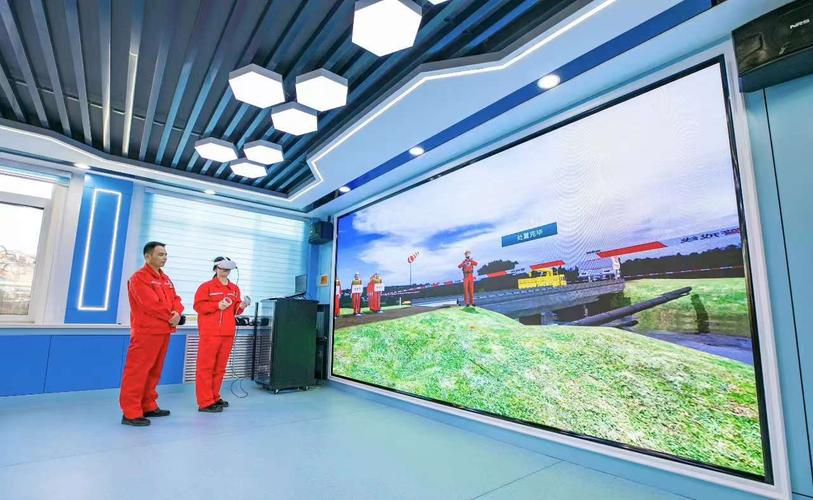
Which Roles Can Use Oil & Gas Simulators? Applications Across Key Positions
In the oil and gas industry, high risks, high costs and strong professionalism coexist. Whether it is drilling, well control, or production and downhole operations, a single minor judgment error can lead to serious safety accidents or huge economic losses.
Under such circumstances, oil and gas simulators have gradually evolved from "training tools" into an important support system for enterprises to enhance safety levels and operational capabilities.
However, many people still have a misconception: oil and gas simulators are only suitable for trainees or new employees. In fact, the positions they cover are far more extensive than imagined.
Oil and gas simulators can be further divided into simulators used in different stages, such as Drilling and Well Control Simulators, Downhole Operation Simulators, and Well Logging Simulators. Engineers can simulate the operation and construction process for a specific stage.
Drilling and Completion Positions: The Most Mature Application of Simulators
Drilling Engineer / Field Supervisor: For drilling engineers, the oil and gas simulator is an important tool for verifying technical solutions and enhancing judgment capabilities. By simulating the adjustment of drilling parameters under different geological and well conditions, it enables the early verification of drilling plans, reduces on-site trial-and-error and technical decision-making risks, and thereby ensures the safety and efficiency of on-site construction.
Drillers and drilling teams: Frontline operators form the first line of defense against accidents. The oil and gas simulator, through a highly realistic operation interface and working condition settings, enables drillers and drilling teams to repeatedly practice standard operation procedures and emergency responses in a virtual environment. This achieves standardizing the process and emergency response through operation-level simulation training, strengthening team collaboration, and reducing human operational errors.
Well Control And Safety-related Positions: Core Users of Accident Prevention
Well Control Engineer: Well control is one of the most critical and risky aspects in oil and gas operations. The oil and gas simulator can precisely simulate complex well control scenarios such as overflow and gas invasion, and is used for well control strategy verification, specialized training, and capability assessment. In addition to enhancing engineers' well control judgment ability, relevant qualification certifications and capability assessments are also applied at present.
HSE and Safety Managers: By simulating the evolution process of accidents, it is possible to visually demonstrate the impact of human errors, process flaws, or decision delays on the outcome of the accident. This enables safety managers to specifically reproduce the accident scenarios and analyze risks, assess the impact of operational behaviors and process flaws on the evolution of the accident, thereby enhancing safety awareness and the effectiveness of emergency procedures.
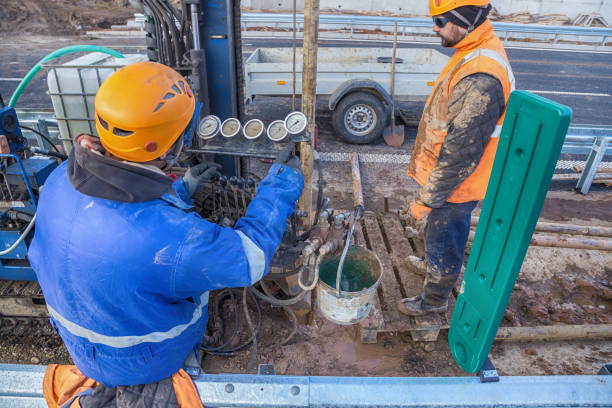
Production and Downhole Operations Positions: From "Able to Produce" to "Stable Production"
Oil/Gas Production Engineer: During the production stage, the oil/gas simulator can be used to simulate common issues such as production variations, pressure decay, water invasion, or gas cones. In this environment, engineers optimize the combination of production parameters to enhance the stable production capacity.
Underground operation and well intervention engineers: The underground operation environment is complex, and the occurrence of abnormal incidents not only poses high difficulty in handling but also incurs extremely high costs. Through simulators, engineers can conduct pre-practice on complex operation procedures and abnormal situations, thereby reducing the uncertainty and operational risks in underground operations.
Management and Decision-Making Roles: Enhancing Technical Understanding and Decision-Making Quality
Site Manager / Project Manager: The simulator can help understand technical risks and verify decision-making logic. The management can conduct multiple scenario simulations for comparison, visually assess the impact of different decisions on safety, schedule, and cost, reducing the blind spots caused by "empirical judgment", and improving the overall quality of project decision-making.
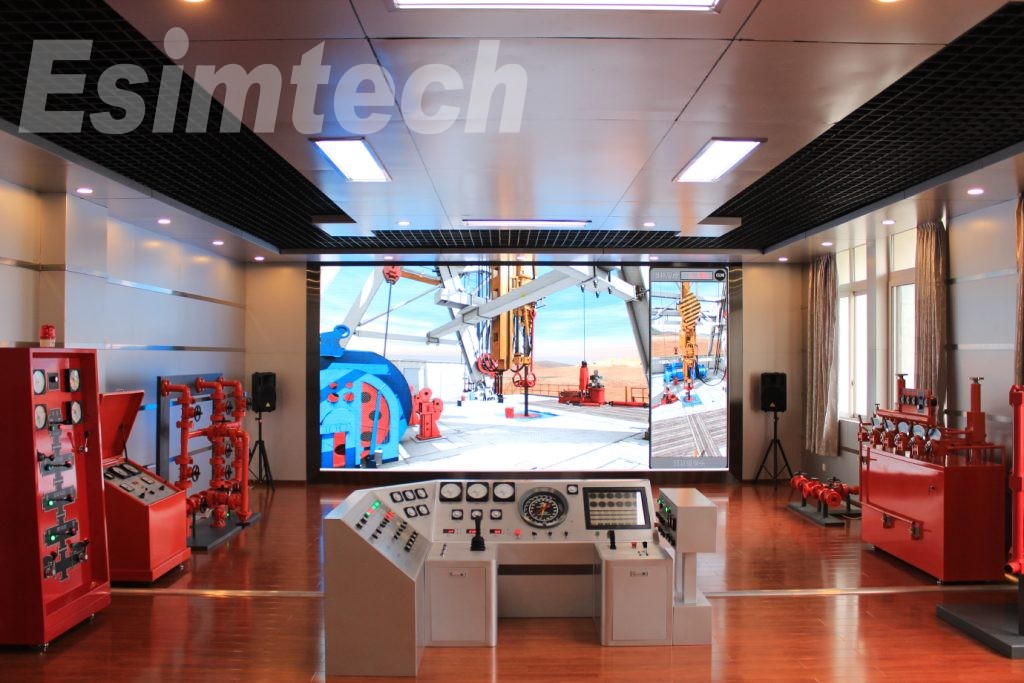
Training and Education Positions: Building a Replicable Talent System
Enterprise Training Manager: The simulators can provide a repeatable and quantifiable training environment, helping enterprises establish unified training standards, achieving systematic training and assessment of personnel capabilities, and shortening the training cycle.
University and vocational school teachers: The oil and gas simulator effectively bridges the gap between classroom teaching and on-site practice, integrating theoretical teaching with actual operation scenarios to enhance the practicality and comprehension depth of the teaching.
Conclusion
As the oil and gas industry increasingly demands higher standards of safety, efficiency and digitalization, the role of oil and gas simulators is changing.
It is no longer merely an auxiliary tool for training new employees, but has evolved into a comprehensive capacity-building and risk management platform covering multiple positions and spanning the entire operation cycle.
For oil and gas enterprises that aim to enhance their overall operational efficiency and reduce long-term operational risks, the rational introduction and use of oil and gas simulators has become a strategically significant choice.