
Formation Evaluation Using Well Logs
Formation evaluation is a critical process in the oil and gas industry used to determine the physical and fluid properties of subsurface formations. It helps engineers identify hydrocarbon-bearing zones, evaluate reservoir quality, and make informed drilling and production decisions. Among various evaluation methods, well logging is one of the most efficient and widely used techniques.
Logging can provide continuous formation data throughout the wellbore, making it a core tool for reservoir evaluation and formation analysis.
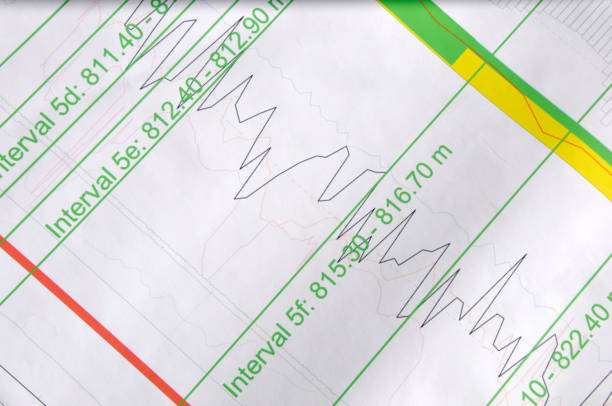
What Is Formation Evaluation?
Stratigraphic evaluation tests underground rock layers to discover their ability to produce oil and natural gas. The process requires scientists to measure and analyze rock physical properties which include porosity, permeability, lithology, and fluid saturation.
The main objectives of stratigraphic evaluation include:
- Identifying oil and gas-bearing layers
- Assessing the reservoir storage capacity
- Determining the type of fluid (oil, gas or water)
- Supporting reservoir development decisions
Logging plays a core role in achieving these goals by providing continuous and detailed stratum data.
Role of Well Logging in Formation Evaluation
The characteristics of the formations that surround the wellbore can be directly measured through logging which allows engineers to perform reservoir evaluation without requiring extensive core sampling.
The main functions include:
Identification of reservoirs
Logging can distinguish between reservoir rocks (such as sandstone) and non-reservoir rocks (such as shale).
Identifying the presence of oil and gas
Resistivity logging and neutron logging can be used to determine whether there is oil, gas or water in the formation.
Support drilling and completion decisions
Stratigraphic evaluation helps engineers decide:
Whether to complete the well
Where to perforate
Which production layers to select
Key Well Logs Used in Formation Evaluation
Different types of logging provide different geological information, and combining multiple logging methods can enhance the accuracy of evaluation.
Natural gamma logging: Rock identification
Natural gamma logging identifies rock types by measuring the natural radioactivity of the formation. It is mainly used to distinguish between shale and sandstone and to determine reservoir boundaries.
Resistivity logging: Oil and gas identification
Resistivity logging measures the resistance of the formation to the flow of current. Oil-bearing formations typically have a higher resistivity than water-bearing formations.
Density logging: Porosity measurement
Density logging is used to measure the density of the formation. This data can be used to calculate porosity and evaluate the quality of the reservoir.
Neutron logging: Fluid identification
Neutron logging measures the hydrogen content in the formation. It can be used to determine the type of fluid and calculate porosity.
Acoustic Logging: Rock Property Analysis
Acoustic logging measures the time it takes for sound waves to travel through the formation. This data is useful for assessing porosity and the mechanical properties of the formation.
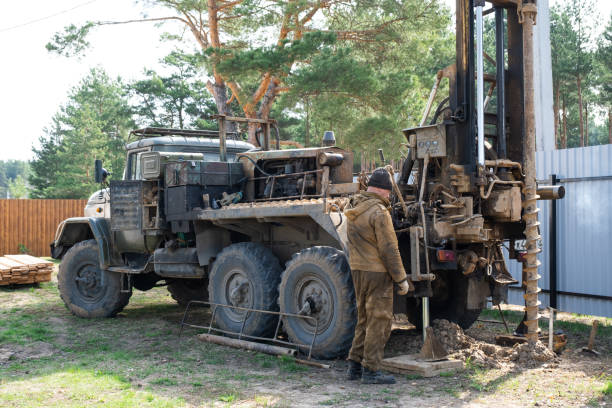
Key Reservoir Parameters Derived from Well Logs
Well logs allow engineers to calculate important reservoir properties.
Porosity
Porosity represents the ability of a reservoir to store fluids. The higher the porosity, the greater the potential of the reservoir is usually.
Water saturation
Water saturation represents the proportion of water in the pores. A lower water saturation usually indicates the presence of oil and gas.
Rock type
Logging can identify the types of rock in the strata.
Permeability
Permeability indicates the ability of a fluid to pass through rock. This is an important parameter that determines production capacity.
Formation Evaluation Workflow Using Well Logs
Formation evaluation typically follows several steps:
Step 1: Data Acquisition
Collecting data through cable logging and while-drilling logging
Step 2: Data Processing
The collected data need to be processed and corrected.
Step 3: Well Logging Interpretation
Engineers identify the reservoirs and calculate parameters by analyzing the well logging curves.
Modern training systems, such as well logging simulators, can help engineers enhance their well logging interpretation skills in a safe environment. Engineers can practice curve analysis, reservoir identification, and evaluation decisions through the simulation system without incurring on-site risks.
Step 4: Reservoir Characterization
Calculate and analyze reservoir parameters.
Step 5: Decision Making
The engineer decides whether to proceed with production.
Applications in Oil and Gas Industry
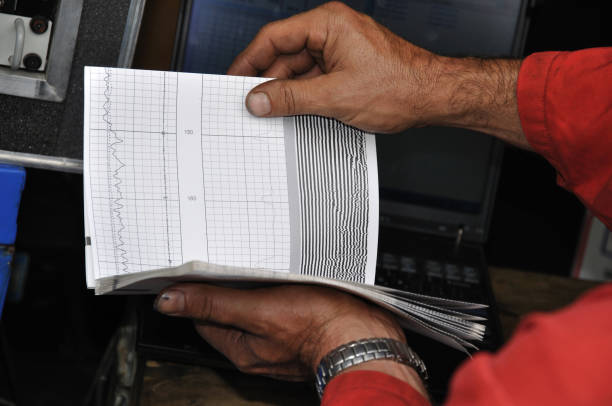
Formation evaluation is used in:
- Oil exploration
- Gas exploration
- Reservoir development
- Production optimization
It plays a crucial role throughout the entire oilfield lifecycle.
Conclusion
Using logging for formation evaluation is a key technology for identifying oil and gas reservoirs and understanding the underground formations. Logging provides important data support for reservoir parameter calculation, drilling decision-making, and production optimization.
As the complexity of oil and gas development increases, accurate logging interpretation and advanced simulation training have become increasingly important for improving efficiency and reducing risks.