The Long-Term Business Costs of Inadequate Oil Well Training
In many oil well projects, training is often regarded as a "necessary but compressible cost". As long as basic compliance requirements are met and personnel have previous experience, it is considered "adequate".
However, in actual operation, insufficient training does not immediately lead to the failure of the project, but it will continuously cause commercial losses throughout the entire oil well lifecycle - and these losses are often underestimated, or even never systematically accounted for.
What is the ultimate cost in terms of business for insufficient training?

Immediate Financial Impact: Cash Flow Starts Leaking Early
In oil well operations, the most obvious consequence of insufficient experience or incorrect judgment is the frequent occurrence of unplanned well shutdowns (NPT). In many cases, the problem is not the equipment itself, but the slow and improper response of personnel to abnormal signals, which leads to the forced interruption of the operation.
Each NPT directly increases the cost of a single well:
- Drilling rigs, personnel, and service resources are forced to be idle
- The operation window is disrupted, and the progress is difficult to recover
- Small problems that were originally controllable are magnified into systematic delays
What's more concealed is that insufficient training also leads to a large number of "repetitive errors".
The same problem recurs repeatedly in different wells and different teams, and rework, repair, and additional operations gradually become "normal costs" rather than "exceptional expenditures".
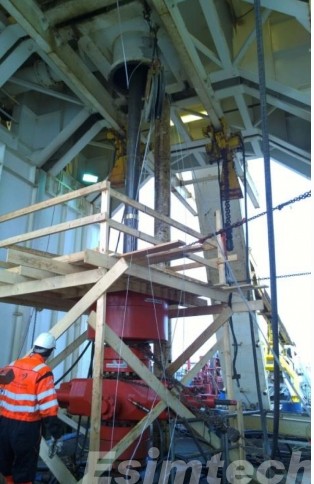
In fact, insufficient training is one of the most common and easily overlooked root causes of well control and operational accidents in oil wells.
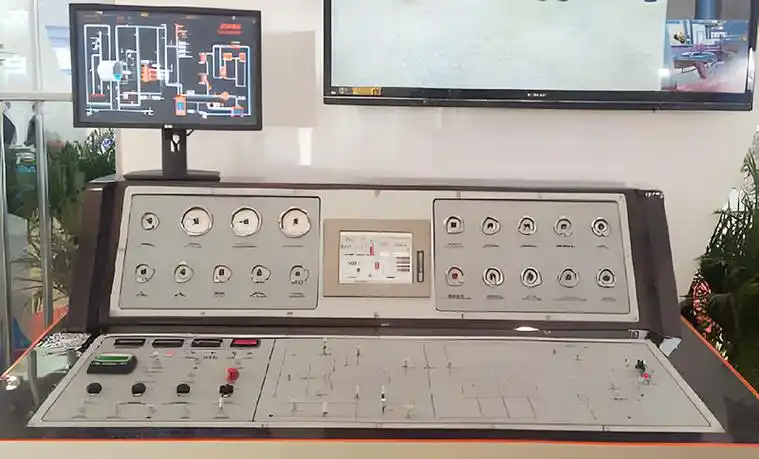
This is why more and more operators are introducing oil and gas industry training simulators to allow teams to repeatedly practice high-risk scenarios without increasing on-site risks.
Extended Project Timelines: The Hidden Cost of Delay
In oil well projects, time itself is the cost.
When the team lacks systematic training, the operation rhythm often heavily relies on individual experience, and the decision-making efficiency is unstable, resulting in frequent "deadlocks" in key stages such as drilling and well completion.
For a single well, the delay may still be within an acceptable range;
However, in multi-well and large-scale development projects, if the rhythm of one well gets out of control, it will often trigger a chain reaction:
- The scheduling of subsequent well locations is forced to be adjusted
- The coordination cost with equipment and service providers increases
- The overall delivery cycle of the project is prolonged
These delays are rarely attributed solely to "training issues", but they are continuously reflected in the financial statements as a decline in project efficiency and an increase in management costs.
Increased Safety Risk: One Incident, Long-Term Financial Consequences
From a business perspective, the true cost of an accident goes far beyond just one production halt or repair expenses. Insufficient training is often one of the most common yet most easily overlooked causes before an accident occurs.
Once an accident happens, enterprises not only have to bear the direct losses, but also include:
- Output losses due to project suspension
- Compensation, fines, and additional costs for compliance reviews
- Increased insurance premiums, with future project premiums being raised for a long time
More importantly, accident records will be "recorded" for a long time. In subsequent project approvals, cooperation negotiations, and international project bids, the safety history will become an important basis for the other party to assess risks.

Workforce Impact: Rising Costs, Declining Stability
Insufficient training often leads to the direct transfer of pressure to the front-line staff.
In high-risk environments, if there is a lack of adequate preparation and confidence, the staff turnover rate usually rises significantly.
For enterprises, this means:
- The costs of recruitment and re-training keep increasing
- Project experience is difficult to consolidate
- The team's capabilities are highly dependent on a few "key individuals"
Once core personnel leave, the capability gap will be quickly exposed in new projects, causing the enterprise's risks to multiply when expanding in scale or handling multiple projects simultaneously.
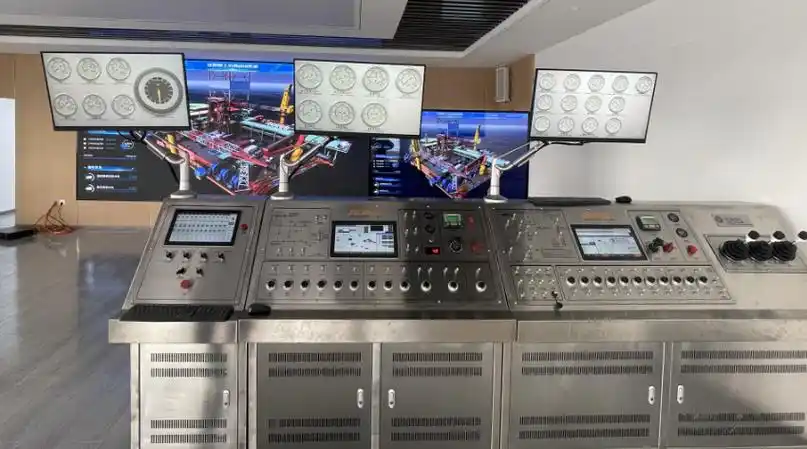
Field experience alone cannot automatically translate into replicable team capabilities. Only through structured training can companies distill experience into unified standards. Systematic tools like the Well Control Training Simulator allow different teams to train repeatedly in the same scenario, ensuring consistency in key decision-making logic.
Management Overload: Strategic Focus Gets Replaced by Firefighting
When the front-line teams lack sufficient training, problems tend to keep escalating upwards.
The management is forced to frequently intervene in on-site decision-making and spend a lot of time addressing issues that should have been prevented in advance.
In the long run, this will lead to two obvious consequences:
- Management energy is consumed on short-term problems rather than long-term planning.
- Decisions gradually become more conservative, and the project risk tolerance decreases.
Insufficient training is actually using the management's time and attention to "fill the gaps", which is itself an extremely costly opportunity cost.
Brand and Market Confidence: Damage That Compounds Over Time
In the oil and gas industry, the ability to fulfill contracts and professional reliability are the most crucial "invisible assets". When project delays occur frequently and the accident rate is high, the external market will quickly make a judgment.
This impact will not be immediately reflected in revenue, but will gradually manifest as:
- The demand from partners for stricter contract terms
- Increased difficulty in winning project bids
- Decreased bargaining power in international projects or capital matters
Insufficient training, which will eventually translate into the fixed perception of the market regarding the "risk label" of the enterprise.
Training as a Long-Term Business Investment
The value of training does not lie in "avoiding all problems".
Rather, it lies in:
- Reducing the probability of high-cost errors occurring
- Unifying the judgment logic and response methods of the team
- Identifying risks in a controllable range in advance
Insufficient training may not cause the project to fail immediately, but it will definitely erode profits continuously in the long-term operation.
Conclusion
In conclusion, the long-term commercial losses caused by insufficient oil well training are far more severe than the short-term savings in training costs - it not only leads to frequent safety accidents, low production efficiency, premature deterioration of equipment and assets, damaged compliance reputation, rising labor costs, but also affects the cash flow planning and long-term competitiveness of the enterprise, and even may push the enterprise into an operational crisis.
If you wish to have a more systematic understanding of how the Oil and Gas Industry Training Simulator Solution helps reduce long-term operational and business risks, you can learn more here.