How Automated Kick Detection Systems Work in Well Control

Written By: Computer Science Professor
Deeply rooted in the R&D of simulators for the oil and gas industry, committed to bringing safety to every oil worker.
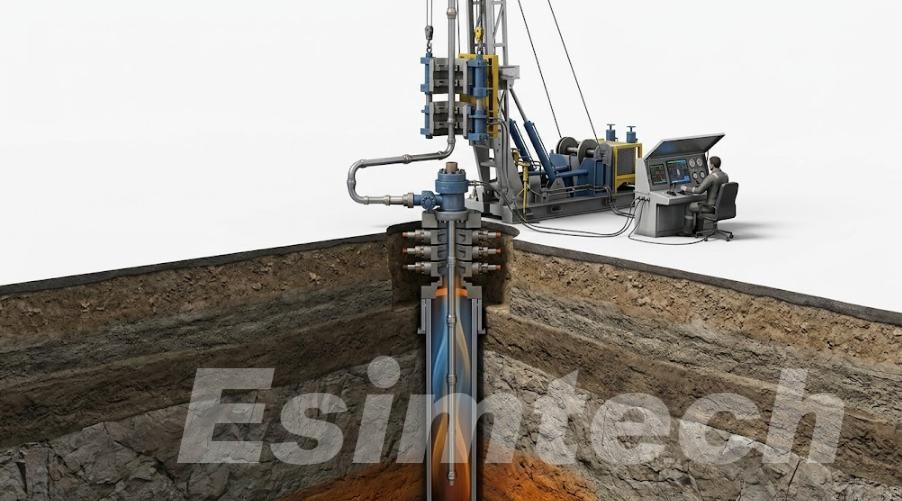
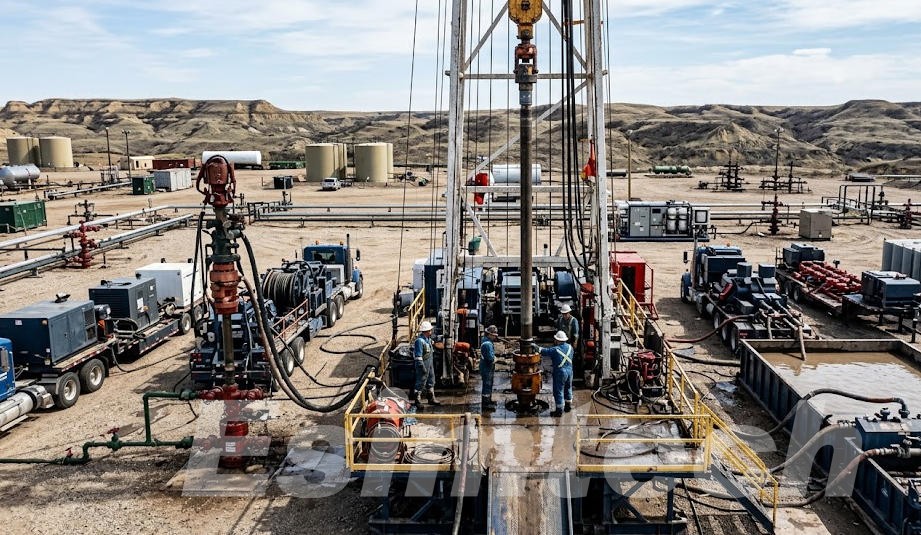
Maintaining well control is paramount in oil and gas drilling operations to protect the environment, safety and ensure continuous operation. One of the most important challenges during drilling is detecting and managing a “kick” which is an the influx of formation fluids in the wellbore because of an imbalance between formation pressure and drilling mud pressure. Traditionally, kick detection has relied heavily human observation and manual monitoring, which carries the risk of delay in reaction or oversight. With the technological advancements, automated kick detection systems are increasingly transforming well control practices by enabling faster, more accurate identification and response to kicks.
What are Automated Kick Detection Systems
Automated kick detection systems work in real-time tracking and analysis instruments that are designed to spot early indications of formation fluid influx in drilling operations. These systems make use of a combination of sensors and data analysis machines learning algorithms and even artificial intelligence to detect subtle changes in the downhole and surface characteristics that indicate an event that kicks.
Key monitored variables typically comprise:
- Pump pressure and strokes
- Pit volume changes
- Drilling mud return flow rate
- Pump pressure and strokes
- Standpipe and annular pressure

Core Technologies Behind Automated Kick Detection Systems in Well Control
Automatic kick detection devices use advanced technologies to analyze drilling data in real-time. Understanding the basic technologies that underlie these systems can reveal how they improve the safety of operations and efficiency in well control.
1. Real-Time Sensor Networks
The basis of all automated kick detection system is a sophisticated system of real-time sensors that are deployed throughout all the drill infrastructure. They collect vital operational data, such as:
- Inflow and outflow rates of drilling mud
- Pit volume changes
- Standpipe pressure and annular pressure
- Pump strokes and torque
High-resolution, high-frequency sensors allow the system to track constantly and with precision, creating the foundation for the early detection of unusual behavior.
2. Differential Flow Monitoring
One of the most important technologies used for automated kick detection is the differential flow which relates the volume of drilling mud pumping into the well to the amount that returns towards the ground. In a well that is balanced the two should be roughly equal. Unfortunate increases in flow return is an obvious sign of an indication of a kick. Modern analysis of flow and analytics in real time permit the system to detect minor discrepancies and prompting alerts prior to more obvious signs of a problem.
3. Real-Time Data Acquisition and Processing
To handle the flood of sensor data, automated kick detection systems employ Data Acquisition Units (DAQs) which collect and send information to processors. They can perform real-time analysis which allows the system to immediately detect any deviations from the normal parameters. The data is then normalized and filtered to eliminate noise caused by vibrations of equipment, rigs or even normal operating fluctuations.
4. Advanced Analytics and Pattern Recognition
After data has been processed, patterns recognition algorithms analyze the relationships and trends among various parameters. For instance an abrupt increase in pit volume, accompanied by a rise in annular pressure and an increase in return flow could be a sign of the onset of the kick. These algorithms are able to distinguish between harmless operational changes from truly dangerous anomalies.
Certain automated kick detection platforms make use of multi-sensor data fusion that integrates inputs from different sources to increase detection accuracy and decrease false alarms.
5. Machine Learning and Artificial Intelligence
Modern kick detection systems for automated kicks are increasingly incorporating the use of machine-learning (ML) and artificial intelligence (AI). These techniques allow the system to gain insights from previous events and constantly increase the accuracy of detection. AI models study historical data and use predictive analytics to predict kick events before they actually occur.
Contrary to threshold systems that are static, AI-driven kick detection systems adjust to changes in geological formations as well as drilling depths and fluid properties, providing an adaptive response that is tailored to the specific well location.
6. Edge Computing
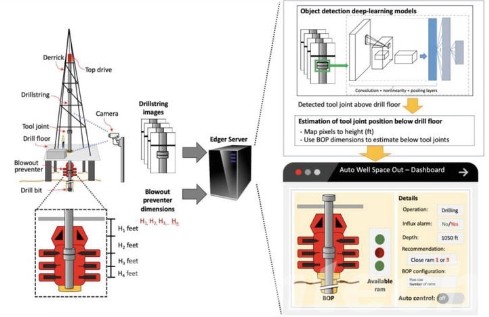
To ensure low-latency processing–especially in offshore or remote drilling sites–automated kick detection systems often deploy edge computing technologies. They process vital information locally, on the location of the rig instead of relying completely upon cloud-based analysis. This allows for quicker decisions and alerts, even in areas with poor connectivity.
7. Human-Machine Interface (HMI)
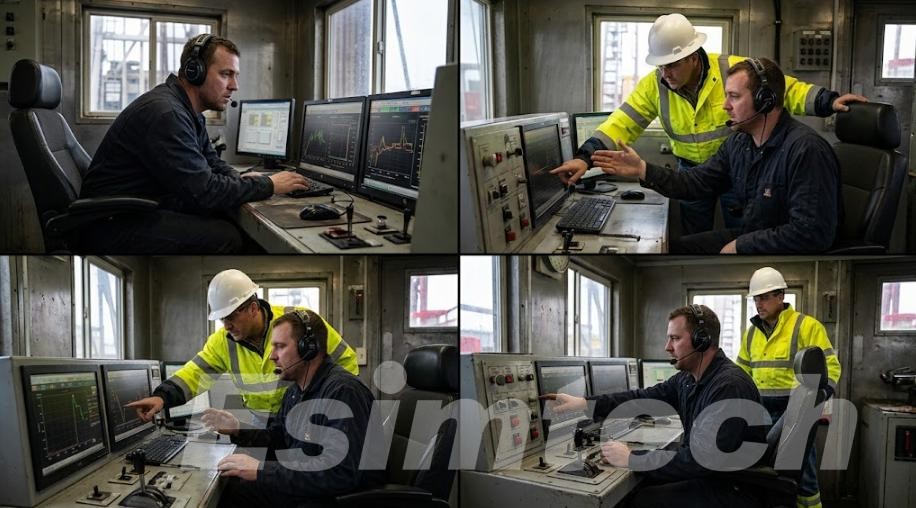
The results of the system’s automated components are presented via a user-friendly interface. They display real-time information warning indicators, alarms, and trend graphs that allow drillers to evaluate the situation rapidly and respond in a timely manner. Modern HMIs are made to be user-friendly equipped with touchscreen controls as well as visual dashboards that are suited to different user roles, ranging from drilling to engineer responsible for well control.
8. Integration with Rig Control and Safety Systems
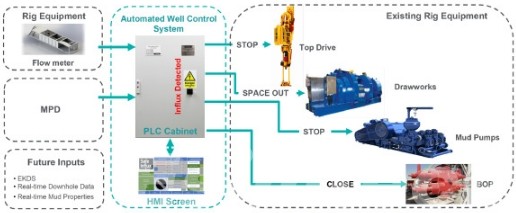
Automated kick detection systems are being connected to system of rig automation and safety protocols. If the kick is detected the system is able to communicate with:
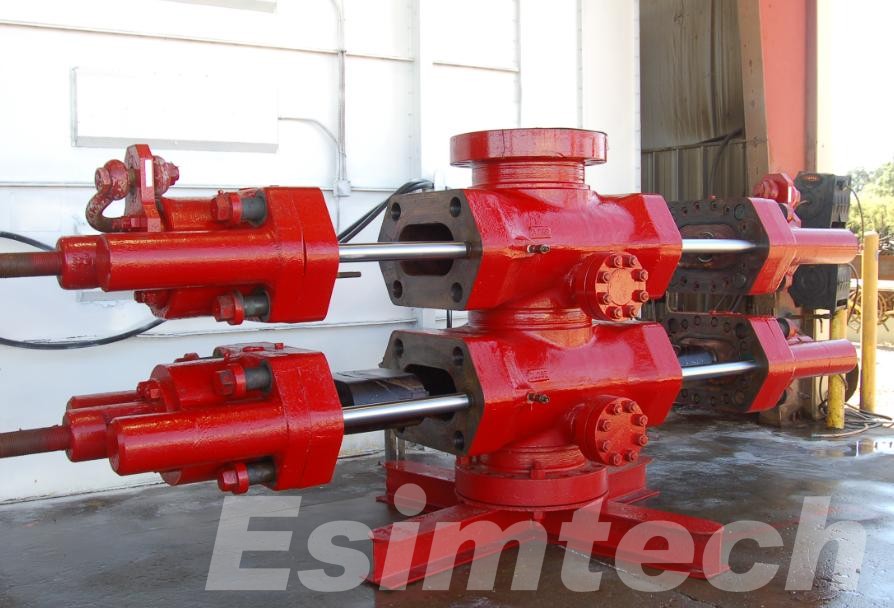
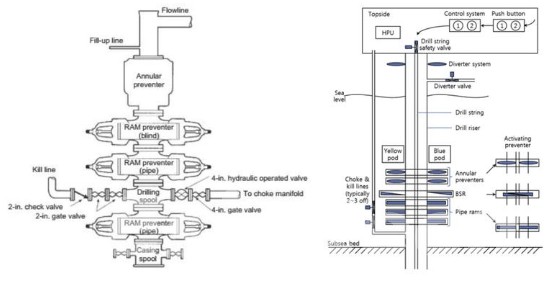
- Blowout Preventer (BOP) control systems
- Mud pumps and choke manifolds
- Rig shutdown mechanisms
This integration can provide semi-autonomous and fully automated responses that allow the system to start well-planned shut-in processes and decrease the possibility of escalating without delay.
9. Remote Monitoring and Cloud Connectivity
A variety of automated kick detection platforms offer remote access via cloud connectivity. This allows supervisors and engineers in control centers onshore to keep track of conditions across several wells, and also collaborate with teams based on rigs. Information generated by automated kick detection systems can be saved to the cloud for analysis later for compliance documentation, optimizing future operations.
10. Cybersecurity and Redundancy
Because of their vital safety functions Automated Kick detection devices are built with strong cybersecurity frameworks. They include encryption of data and intrusion detection systems as well as secure access protocols. In addition redundancy is built into both the software and hardware layers to ensure uninterrupted functioning in case of a component failing or threats from outside.
How Simulation Technology Supports Automated Kick Detection Systems in Well Control
By creating virtual models for drilling operations, formations geologic in nature and fluid dynamics, oil and gas simulation technology assists engineers understand the well behaviors, enhance detection algorithms and train personnel under realistic yet safe conditions.

Algorithm Development and Validation
Simulation environments permit developers to create different kick scenarios – like gas influx, water intrusion or oil kicks, under varying formation pressures and the weights of mud. Through the use of such controlled situations, experts are able to examine how automated kick detection algorithmic algorithms respond to small variations in the flow rate and pit volume. This can help fine-tune the sensitivity and accuracy of detection algorithms, decreasing the chance of false alarms or missed kicks prior to installing the systems in real wells.
Training and Operator Preparedness
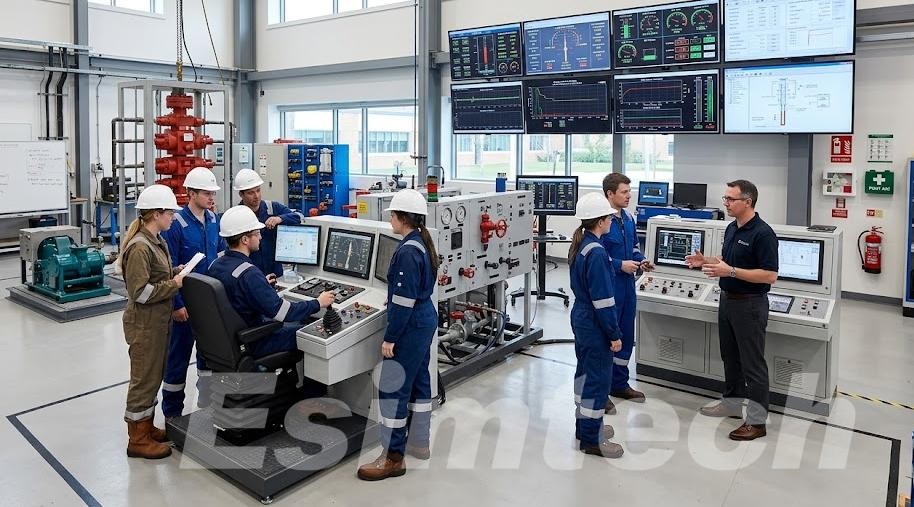
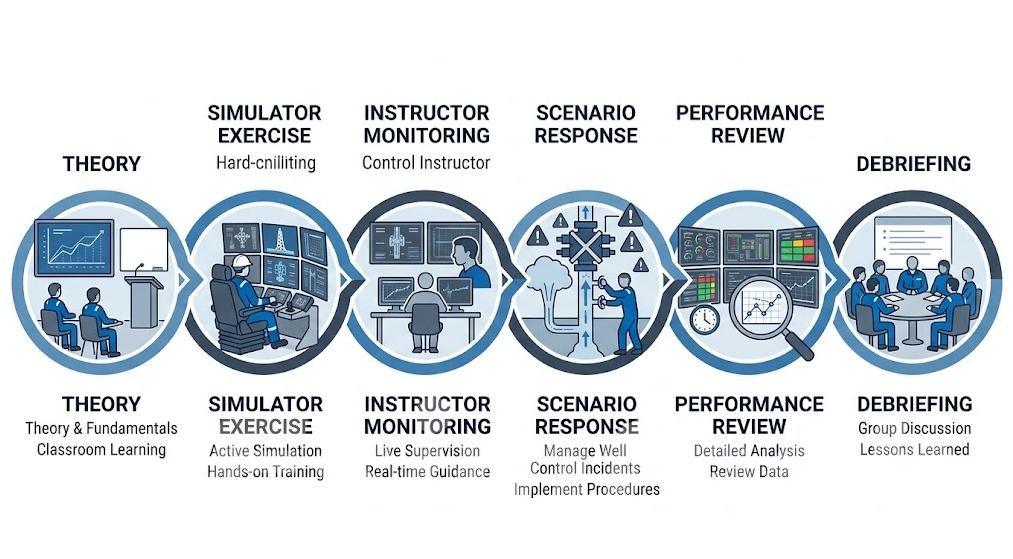
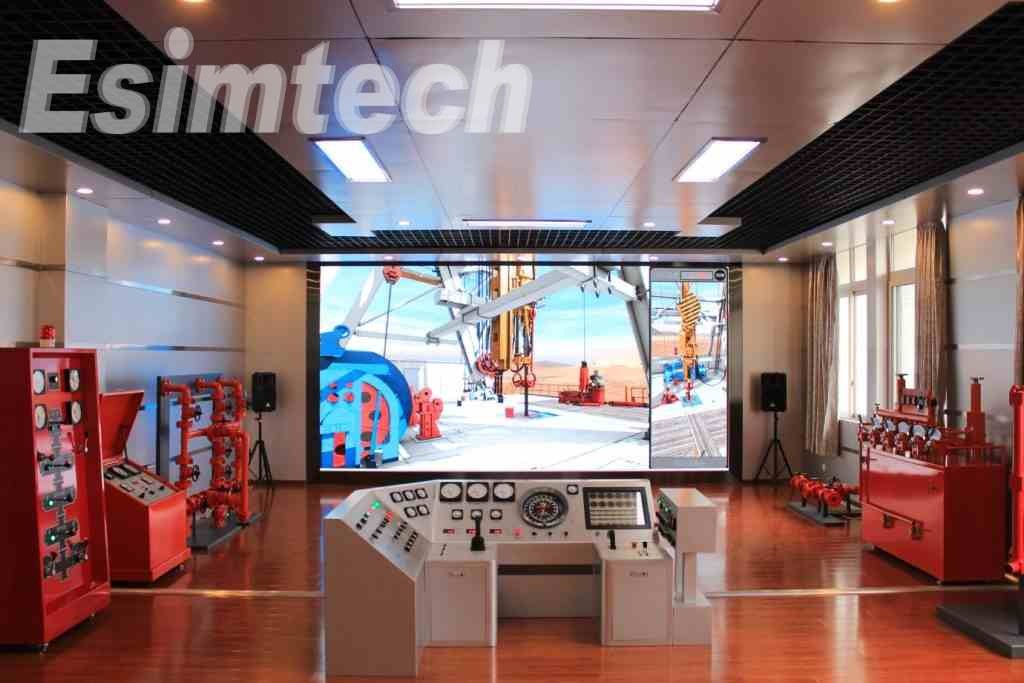
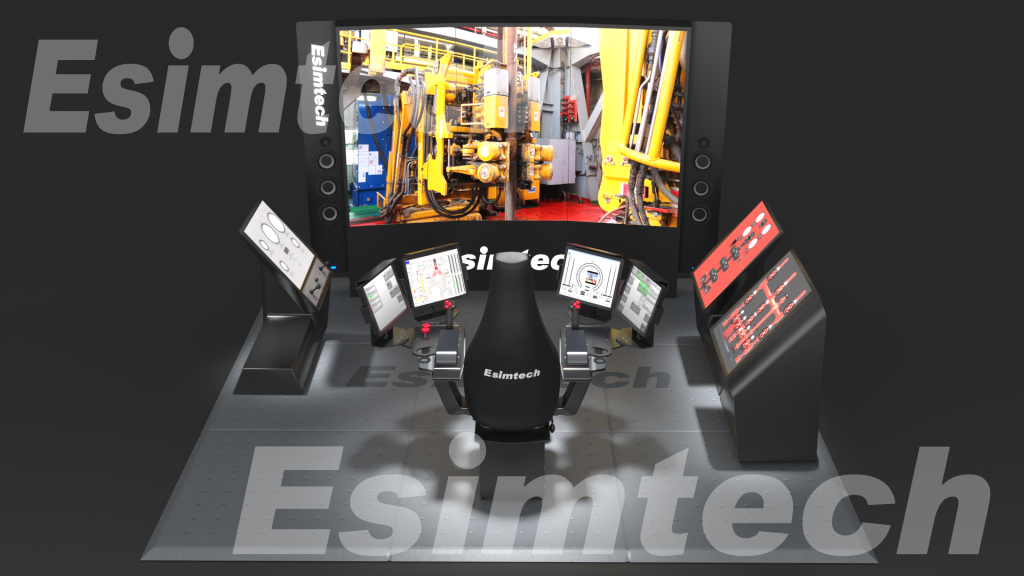
Drilling training simulators give drilling teams real-time, hands-on training experience that responds to kicks that are detected through automated software. The training platforms simulate the actions of automatic kick detection system’ interface alarms, controls, and actions that occur during simulated kicks. Operators learn to interpret system alerts, coordinate emergency responses, and operate rig safety equipment in a controlled environment–improving decision-making speed and confidence when real kicks occur.
System Integration Testing
Automated kick detection systems together with rig control systems, blowout preventers, and mud pumps needs thorough testing to ensure smooth communications and prompt automated responses. Simulation technology allows simulation-based commissioning for integrated systems, ensuring whether kick detection causes the right actions with no unintended adverse negative effects. This minimizes the risk of costly mistakes occurring in actual drilling operations.
Scenario Analysis and Risk Assessment
Drilling simulation system can model complicated operation conditions, such as changing the formation’s pressure, properties of fluids and drilling parameter. Through simulation of a broad range of “what-if” scenarios, engineers can test the effectiveness of kick detection systems that are automated in extreme or challenging circumstances. This allows them to identify weaknesses in the system and helps inform changes to improve kick detection across a range of operational scenarios.
Predictive Modeling and Optimization
Advanced simulations that incorporate geological data and drilling parameters aid in the predictive analysis of automated kick detection systems for kick detection. Through simulation of fluid influx dynamics as well as wellbore pressure behaviour These models improve the ability of the system to predict kick probabilities before thresholds are exceeded. This proactive approach helps in the better management of mud weights as well as drilling parameters to reduce the risk of kicks.
Continuous Improvement Through Data Feedback Loops
Simulation tools can also utilize the historical drill and kick event information to create digital copies of wells which are virtual copies that are updated in real-time. These digital twins permit the automated detection of kicks’ designers and operators to continually experiment with new detection methods and improve the system’s settings in response to changing operating conditions and well conditions.
Key Advantages of Automated Kick Detection Systems for Well Control
1. Early Detection and Faster Response
One of the biggest benefits that automated equipment has is its capability to recognize kicks in the most early possible stage. In contrast to manual methods which rely on visual inspections or simple equipment and kick detection systems, automated kick detection utilize high-resolution sensors as well as real-time analytics that monitor drilling parameters with incredible precision. They continuously monitor the flow rates and pit volumes pressure trends, pit volume levels, as well as the activity of pumps to spot tiny irregularities. When they catch a kick early operators can start processes to control wells much faster, frequently gaining crucial minutes that could be an important difference in a minor incident or an all-out blowout.
3. Improved Accuracy and Consistency
Automated systems offer a degree of precision and reliability that is impossible to achieve by relying on human oversight. Human interpretation can vary from person to person and is susceptible to fatigue, distractions, or misjudgment–especially during complex operations or night shifts. Kick detection systems that are automated operate continuously, without interruption, and applies defined rules and thresholds to the data in a consistent manner. This reduces variation and makes sure that any kicks detected are by using reliable, objective criteria, not based on subjective human judgement.
4. Reduction of False Alarms
False alarms are a frequent issue in manually detected kicks. False positives can cause unnecessary shut-ins, operational delays and a reduction in productivity, while an untrue negative could cause a devastating blowout. Automated systems employ sophisticated algorithms and patterns to differentiate between normal drill changes and real kick signatures. This means that the automated systems for detecting kicks are able to drastically reduce the number of false alarms and increase the efficiency of operations while providing a high level of security.
5. Real-Time Monitoring and Remote Access
As digital technology continues to advance in drilling environments Automated kick detection systems are now able to send real-time information to offshore control centers, where skilled engineers and safety professionals can offer additional oversight. Remote monitoring capabilities enhance the process of making decisions and facilitates the collaboration of responses to crucial situations. Operators are able to visualize conditions on the surface and downhole in real time, examine the system’s diagnostics, and simulate scenarios to be prepared for various kick scenarios.
6. Enhanced Learning and Predictive Capabilities
Modern automated kick detection platforms are increasingly incorporating AI and machine learning to gain knowledge from previous data. They can detect patterns prior to kicks, and provide insights which help drillers anticipate problems before they arise. As time passes the system will become more intelligent and more efficient, providing an ever-changing layer of protection that is tailored to specific wells formations and operational profile.
7. Reduction in Non-Productive Time (NPT)
By reducing false alarms, and catching actual kicked earlier than usual, these systems can help to reduce the amount of time wasted for the cost of drilling. Less unnecessary shut-ins, enhanced situational awareness, and quicker recovery from kicks make for an efficient and cost-effective drilling process.
8. Strengthening Regulatory Compliance and Safety Culture
Regulators are increasingly emphasizing the importance of using sophisticated monitoring systems and controls in order to increase the safety of oil and gas production. Automated kick detection systems does not only comply with the requirements of these bodies, but also displays an active safety policy. Operators are able to provide documentation of continuous monitoring and rapid responses to kicks and reinforce their dedication to safe and responsible drilling procedures.
Challenges and Future Innovations in Implementing Automated Kick Detection Systems for Well Control
This chart offers a comprehensive overview of the challenges that are faced in automated kick detection systems and the technological advances that are shaping the future of well control automation.
| Challenge | Description | Future Innovation |
| Sensor Reliability and Calibration | Sensors are susceptible to drifting over time, or fail in extremely harsh drilling environments which can result in inaccurate readings or miss kicks. | Self-calibrating sensors by using AI diagnostics for maintenance that is predictive. |
| False Alarms and Alarm Fatigue | Automated systems could produce false positives due to noise from the rig or pressure surges equipment malfunctions, which can cause personnel to disregard real warnings. | Machine learning algorithms that adapt to distinguish between genuine regular fluctuations and kicks. |
| Integration with Legacy Systems | Older equipment may not work with the latest automated kick detection systems that makes the integration complicated and expensive. | Modular interfaces, standardized interfaces that permit plug-and play installation on both older and newer devices. |
| Limited Operator Trust and Training | The personnel who drill may not comprehend or trust in automated systems, which can delay response or even overriding alarms. | Improved training simulators for users and user-friendly tools for decision-making to boost the system’s adoption. |
| High Implementation Costs | The initial investment in hardware, software and integration can be costly particularly for smaller companies. | Cloud-based, scalable, automated kick detection platforms which reduce the dependence on hardware and upfront capital expense. |
| Real-Time Data Processing Limitations | The massive amount of data generated by multiple sensors may strain bandwidth and slow down analysis in real-time. | Integration of devices with edge computing to allow on-site processing as well as immediate alert generation. |
| Static Threshold-Based Detection | Traditional systems are based on fixed limits that could not adapt to changing operational or geological conditions. | Artificial Intelligence-driven models for predictive analysis that constantly modify detection criteria based on the current circumstances. |
| Regulatory and Compliance Hurdles | Inconsistency in standards leads to certification and regulatory approval inconsistency across all regions. | Industry-wide development of automatic kick detection system’ performance standard and programs for certification to facilitate global deployment. |

Summary
Automated kick detection systems represent a critical improvement in well control, providing greater speed, reliability, and safety over traditional methods. Through the use of real-time data analytics and intelligent automation, they enable drilling teams to react swiftly to influxes of formation fluid and reduce the risk of dangerous blowouts and costly non-productive time. As the industry shifts towards automated drilling and digitalization, automated kick detection systems will become more and more important in preventing blowouts and ensuring more secure processes.