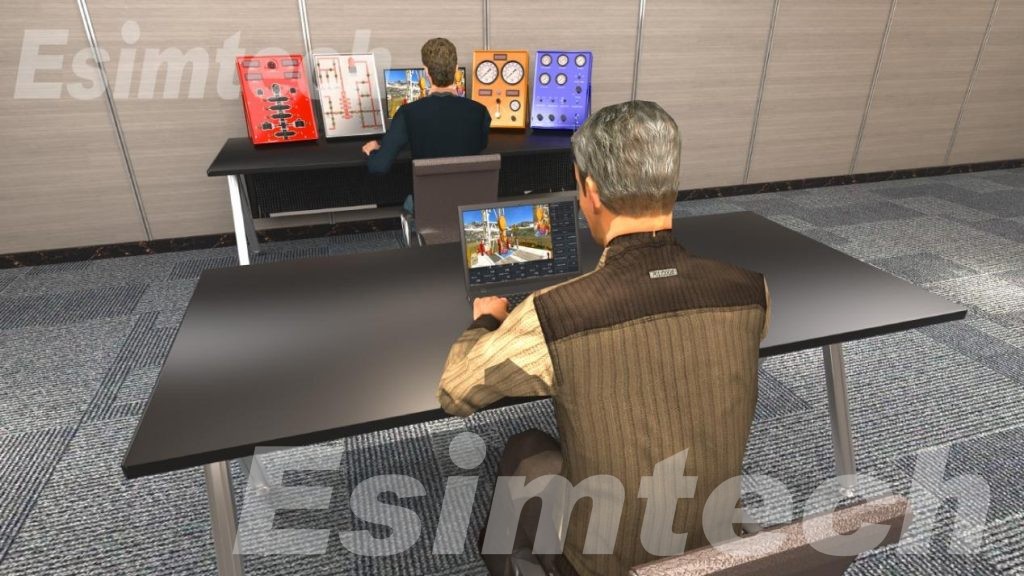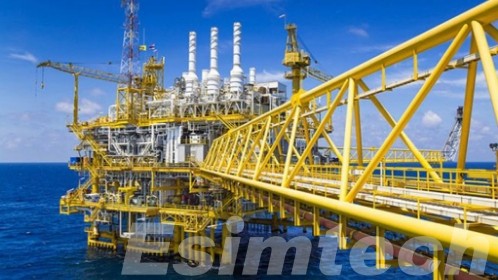
Why Oil & Gas Companies Use Oil Drilling Animation for Training?

Written By: Computer Science Professor
Deeply rooted in the R&D of simulators for the oil and gas industry, committed to bringing safety to every oil worker.
Training has always been one of the most important bases for safe, efficient drilling operations in the oil and gas industry. As drilling projects are getting highly sophisticated and the demands on safety keep going up, the pressure is on management to ensure that personnel understand processes, the behavior of equipment, and operational risks at all levels.
In this respect, traditional training methods alone are very often no longer adequate. In order to bridge the gap between theory and actual operation, many oil & gas companies are turning to oil drilling animation as part of their training programs today. By converting complex technical concepts into clear visual explanations, drilling animation is enabling organizations to train more safely, faster, and more consistently.
The Training Challenges Oil & Gas Companies Face Today
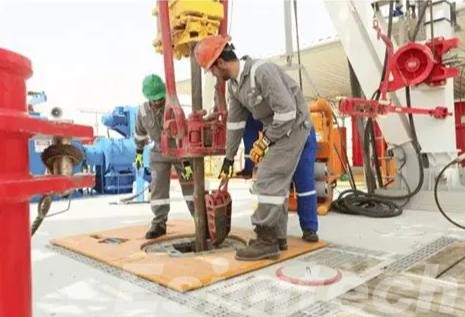
Training in the oil and gas industry is fraught with constraints seldom faced in other industries. Drilling operations are inherently hazardous, technically sophisticated, and subject to rigorous safety and operational guidelines. At the same time, companies need to ensure that staff with various functions and levels of experience have a consistent understanding of drilling processes.
A number of practical challenges further extend the ineffectiveness of conventional training methodology:
- Poor visibility of the drilling operation end
Many critical drilling processes occur underground or inside equipment; thus, explaining them using only manuals, static diagrams, or classroom presentations is hard to visualize.
- Limited access to live training environments
Safety considerations, tight production schedules, and cost constraints continue to limit hands-on experience for the trainee on active rigs.
- Unreliable conveyance of knowledge
Teams may have different levels of comprehension as a result of training that varies in quality based on the instructor's background, communication preferences, and time constraints.
- Changes in the workforce and time constraints
Relying exclusively on traditional mentorship and on-the-job training is more difficult due to higher turnover rates, aging expertise, and the requirement for quicker onboarding.
The distance between theoretical education and actual drilling operations is widening as a result of these difficulties. Many oil and gas businesses are using oil drilling animation as a more dependable method of standardizing technical training and visualizing complicated operations in order to close this gap while preserving safety and efficiency.
What Is Oil Drilling Animation in the Training Context?
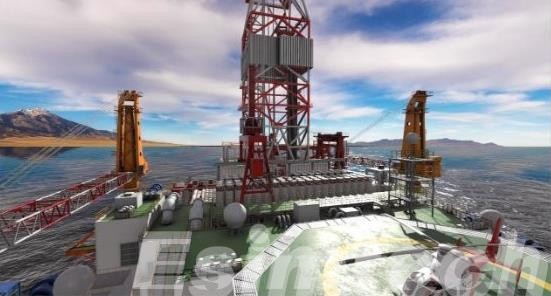
Oil drilling animation, as used in training, is the use of 2D or 3D representations to accurately and clearly explain drilling equipment, workflows, and operational procedures. Training-focused drilling animations are constructed using engineering data, industry standards, and actual operating conditions, in contrast to marketing animations.
Animation of oil drilling is frequently used to:
- Imagine drilling the entire well from spudding to completion.
- Describe the internal and subterranean operations of drilling systems.
- Exhibit proper operational techniques and safety measures.
- Give examples of both onshore and offshore drilling situations.
Oil and gas animation enables trainees to comprehend not only what to do but also why particular procedures are important by fusing technical correctness with lucid visual storytelling.
Reason 1: Reducing Training Risks in High-Risk Operations
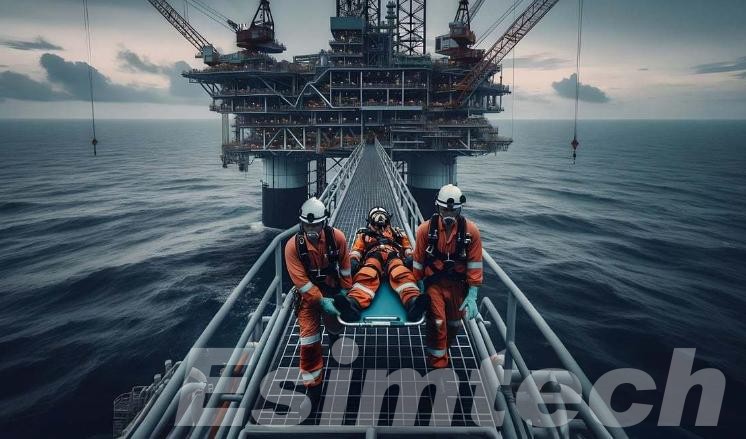
Learning through trial and error can be very costly in drilling operations. It is impossible to correct mistakes safely in pressure control, equipment handling, and procedural timing, thus making the companies' decision to use simulation of practical exposure of trainees during the early learning stages very prudent.
Oil drilling animation affords a safe distance between learning and risk. Critical situations, such as pressure anomalies, equipment failure, or improper sequencing, can be shown in a very realistic way without endangering anyone or anything. Trainees will see how incidents are developing, escalating, and being controlled, all along in a simulated environment.
Through the separation of learning from exposure, companies are able to minimize the chances that training itself will be a source of operational risk.
Reason 2: Making Complex Drilling Processes Easy to Understand
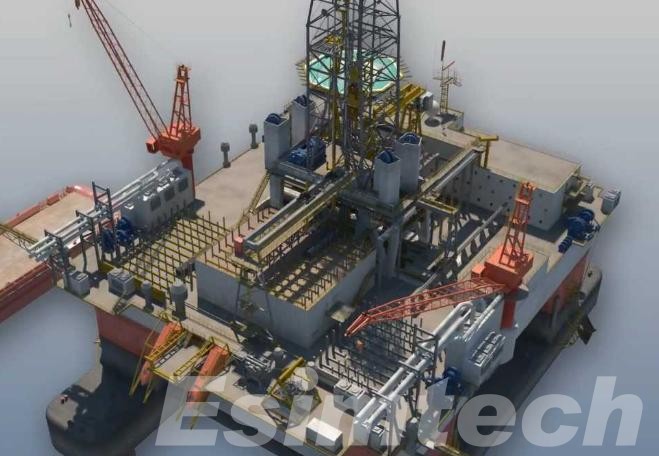
To learn drilling is not a matter of learning a series of steps but more a matter of developing an accurate model of behavior in a system. It is very difficult to grasp many drilling operations because they are taking place in unseen environments—the drilling apparatus, a wellbore, or in some cases, below the surface of the earth.
The oil drilling animation functions to promote understanding by making it consistent with human observation. Instead of using descriptions to explain sequence, motion, and relationships in space, these are shown. Through this lesson, students are able to see how fluids move, where forces interact, and how a change in one part of a system affects other parts.
The passage from description to visualization results in a decrease in cognitive load and makes it possible for students to have a more accurate and stable idea of drilling processes.
Reason 3: Improving Training Efficiency and Consistency
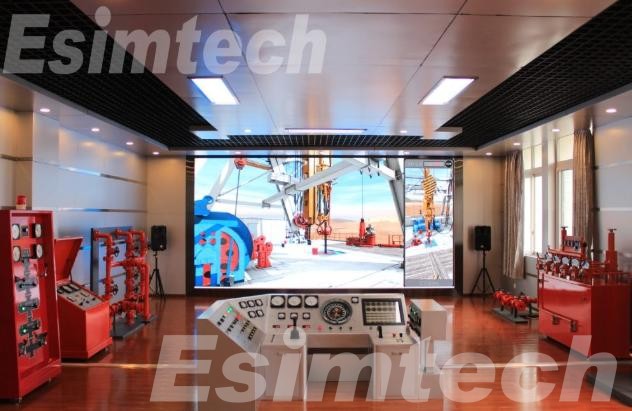
Thus, the larger an organization grows, the less it is about training specific individuals; it becomes all about systems. It is not scalable to depend upon experienced personnel explaining the same thing over and over again, and it usually leads to variability in how that information is conveyed.
Oil drilling animation introduces structure into training programs. The same visual material can be used across teams, projects, and regions to ensure that fundamental concepts are communicated consistently. Trainers need to spend less time explaining the basics and more time addressing role-specific questions.
Organationally, this means better training efficiency and less reliance on specific instructors.
Reason 4: Lowering Training Costs in the Long Term
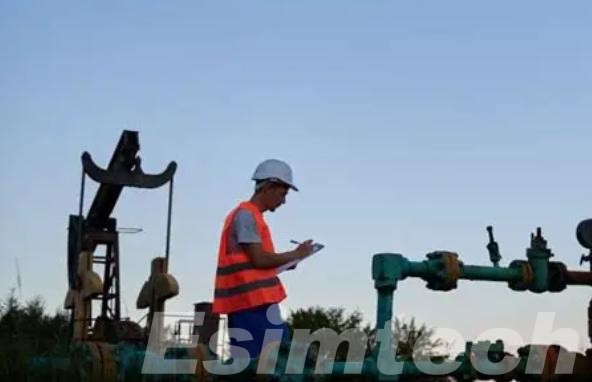
In the oil and gas industry, training costs are seldom apparent at first sight. They are allocated to travel, downtimes, accessing equipment, and repeating the instructions. Eventually, these indirect costs could be higher than the training content itself.
The oil drilling animation transfers a part of this recurring cost into an asset that can be reused. After being developed, the same animation might carry out different training cycles, be modified for diverse audiences, and be refreshed as the procedures change. Even though the first investment is a big one, the long-term cost per trainee gets lower with continued use.
From the viewpoint of decision-makers, it is not so much about the immediate savings but rather about the slowly but surely growing training resource.
When Should a Company Invest in Oil Drilling Animation for Training?
Rather than a broad desire to update content, investing in oil drilling animation is typically motivated by particular training pressures. When current training techniques are no longer appropriate for the complexity or risk profile of their operations, businesses typically arrive at this stage.
The following are typical circumstances that indicate the necessity for animation-based training:
Introduction of novel drilling techniques or technology
Legacy training materials frequently become out-of-date or lacking as workflows, equipment, or well designs change.
Activities in technically challenging or high-risk settings
There are fewer opportunities for practical training in deepwater, offshore, or high-pressure wells, and precise visualization is more important.
Workforce shift and quicker onboarding
Rapid hiring cycles, contractor-based teams, and high turnover all call for training materials that can be delivered effectively and consistently.
Theoretical and practical execution gaps
Frequently occurring misconceptions or deviations from protocol suggest that ideas are not being properly grasped.
These circumstances turn oil drilling animation from an optional addition to a useful instructional aid. It helps businesses improve comprehension, lower training-related risk, and uphold operational standards across teams by offering concise, repeatable visual explanations.
What to Look for in an Oil Drilling Animation Training Partner

More than only graphic design abilities are required of an oil drilling animation partner. Technical precision and industrial knowledge are crucial for training purposes in order to guarantee that animations promote secure and dependable learning.
Important evaluation standards consist of:
- Expertise in the oil and gas industry, especially about drilling processes and procedures
- Accuracy at the engineering level in line with actual tools and processes
- Adaptability to various well types, equipment, and training objectives
- Compatibility with more extensive training methods, such as digital platforms or simulations
- A competent partner assists in converting intricate drilling information into useful training resources.
You can look at Esimtech's oil and gas training products or get in touch with our team to talk about your particular training needs if you want to improve drilling training with precise animation and simulation-based solutions!