Equivalent Circulating Density (ECD): Why It Matters in Drilling Operations

Written By: Computer Science Professor
Deeply rooted in the R&D of simulators for the oil and gas industry, committed to bringing safety to every oil worker.
The equivalent circulating density (ECD) is an important parameter in drilling operations as it reflects the effective density of the drilling fluid as it circulates within the wellbore. Unlike the static mud density, ECD takes into account the additional pressure generated by friction when the drilling fluid flows through the annulus. Mastering the methods for calculating, monitoring, and controlling ECD is beneficial for the drilling team to maintain wellbore stability, reduce fluid loss, and manage well control risks.
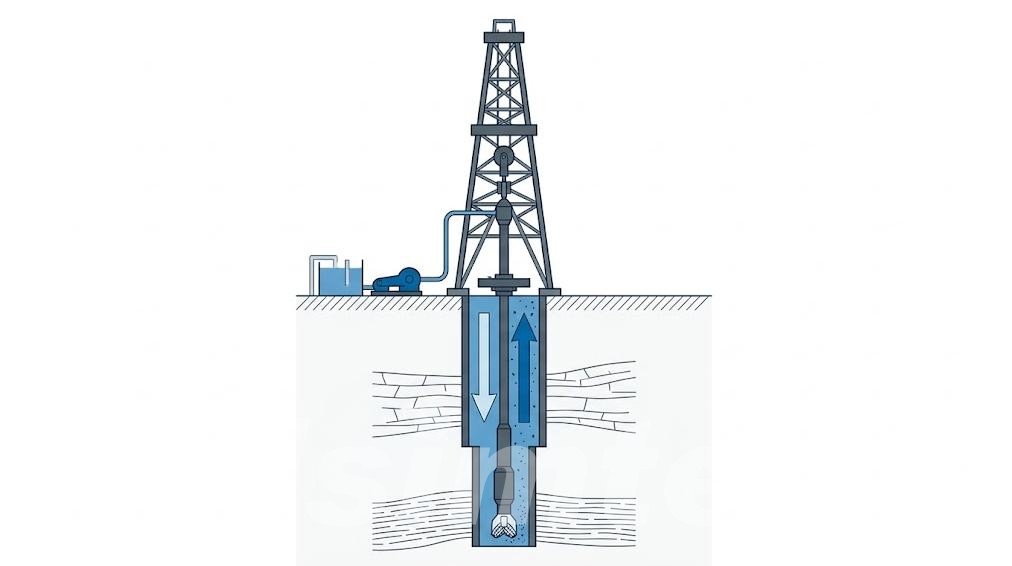
How to Calculate Equivalent Circulating Density (ECD)
The calculation method for ECD (equivalent circulating density) is as follows: Add the annular friction pressure loss to the static fluid pressure of the drilling fluid, and then convert the total pressure into the equivalent mud density.
For the commonly used units in the oilfield, the calculation formula is as follows:
ECD (ppg) = MW + ΔPa / (0.052 × TVD)
In the formula:
- MW: Static drilling fluid density, measured in pounds per gallon (ppg).
- ΔPa: Frictional pressure loss in the annulus above the target depth, measured in psi.
- TVD: True vertical depth at the target point, measured in feet (ft).
- 0.052: Conversion factor used in calculating the reservoir pressure.
For example, suppose the mud density is 10.0 ppg, TVD is 8,000 ft, and the frictional pressure loss in the annulus is 200 psi.
- ECD = 10.0 + 200 / (0.052 × 8,000)
- ECD ≈ 10.48 ppg
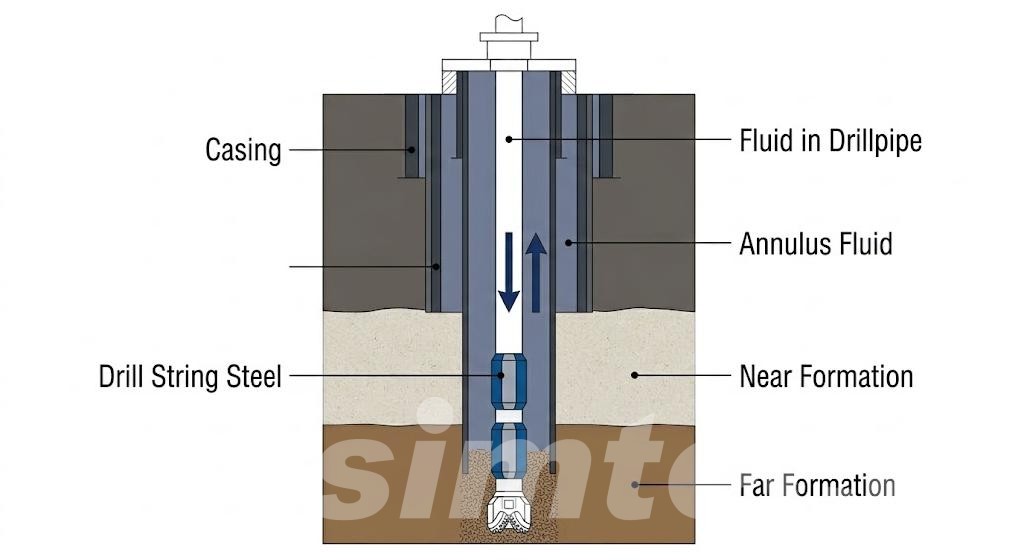
This means that at this depth, the effective pressure generated by the circulating fluid is equivalent to approximately 10.48 ppg of static mud density. This calculation uses the frictional pressure loss in the annulus above the target point, rather than the total pressure loss of the entire system.
When the circulation stops, the frictional pressure loss in the annulus usually disappears; if there are no other pressure influences, ECD will approach the static mud density. This difference is crucial when evaluating the operational pressure window of the well.
What Factors Affect ECD During Drilling?
Various drilling parameters can affect the equivalent circulating density (ECD). Understanding these interrelationships is helpful for engineers to analyze the reasons for ECD changes and determine which variables require further investigation.
Displacement: Increasing the displacement usually leads to an increase in fluid flow rate and annular friction pressure loss. This results in an increase in ECD, especially in sections with narrow annular spaces or high circulation resistance.
- Drilling fluid rheology: Fluid viscosity, yield value, and other rheological properties affect the flow resistance. Changes caused by temperature variations, fluid treatment, or solid phase accumulation can alter annular pressure loss and ECD.
- Annular geometry: The space between the drill string and the wellbore determines the ease with which the drilling fluid returns to the surface. Narrow annular spaces, drill string joints, and irregular wellbore shapes can all increase flow resistance.
- Cuttings concentration: Cuttings occupy the annulus space and may increase the effective density of the return fluid. Poor wellbore cleaning can lead to debris accumulation, increased circulating pressure, and unstable ECD.
These factors do not act independently but are interrelated. For example, although increasing the displacement helps improve the transport of debris, it may also increase friction pressure loss. Engineers must comprehensively evaluate its impact on wellbore cleaning effect and wellbore pressure limit.
What Happens When ECD Is Too High or Too Low?
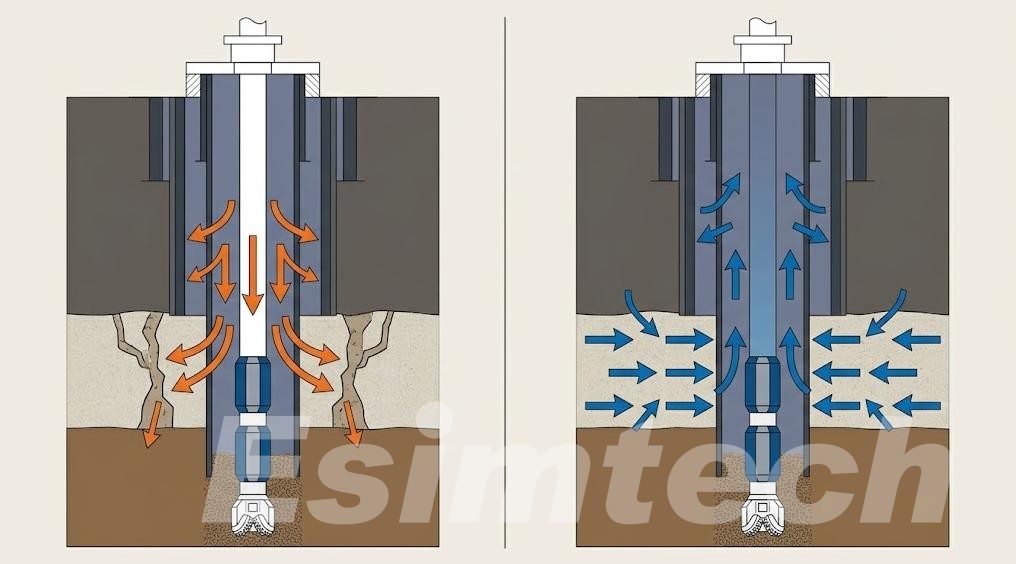
The main concern lies in whether the effective circulating pressure (ECD) remains within the pressure range allowed by the formation.
When the ECD is too high, the bottom hole pressure may exceed the formation fracture pressure or the pressure-bearing limit of the weak formation. This can lead to drilling fluid leakage, reducing the flow volume available for circulation and increasing the complexity of well control operations. Leakage can also increase costs and bring additional operational risks.
The reasons for the ECD being too high may include excessive circulating friction, excessive rock debris load, improper fluid performance, or restricted annular flow. Therefore, once the ECD increases, an analysis and investigation should be conducted instead of simply automatically adjusting a single parameter.
When the ECD is too low, the bottom hole pressure during circulation may not be sufficient to balance the formation pressure. If the pressure drops below the required level, formation fluids may enter the wellbore, triggering overflow.
A low ECD does not necessarily mean that the well condition is unsafe; the actual risk depends on formation pressure, fluid density, pressure conditions, and the approved operation window. However, insufficient pressure margin makes the wellbore more prone to formation fluid invasion.
For wells with a narrow pressure window (i.e., a small difference between pore pressure and fracture pressure), this challenge is particularly severe. In such conditions, even a minor change in ECD can affect operational safety.
How to Monitor and Control ECD in Drilling Operations
Effective ECD (Equivalent Circulating Density) management begins with monitoring pressure dynamics and understanding the various factors that cause changes.
- Monitor the drilling conditions. Track the displacement, standpipe pressure, available downhole pressure measurement data, and other related drilling parameters. If downhole pressure measurement tools are equipped, their data can help assess the actual pressure conditions in the wellbore.
- Check the performance of the drilling fluid. Regularly verify the density and rheological parameters of the drilling fluid. Abnormal changes in performance may indicate that the fluid properties or solid phase content are affecting the annular friction.
- Evaluate the wellbore cleanliness. Pay attention to the rock cuttings return, drilling parameters, and signs of annular blockage. Even if the surface drilling fluid density remains unchanged, poor wellbore cleanliness may lead to an increase in ECD.
- Compare ECD with the pressure window. For a specific well depth, compare the estimated or measured ECD with the pore pressure and fracture pressure limits, and fully consider the uncertainty of the measurement data and the estimated pressure values.
- Make adjustments based on engineering analysis. Any adjustments to the displacement, fluid performance, or drilling operation methods should follow the drilling plan and established operating procedures for that well. Any adjustments must take into account both well control requirements and formation integrity.
The goal is not simply to minimize ECD, but to maintain an adequate bottom hole pressure while avoiding excessive pressure that may damage the formation.
Improve ECD Management Through Drilling Simulation Training

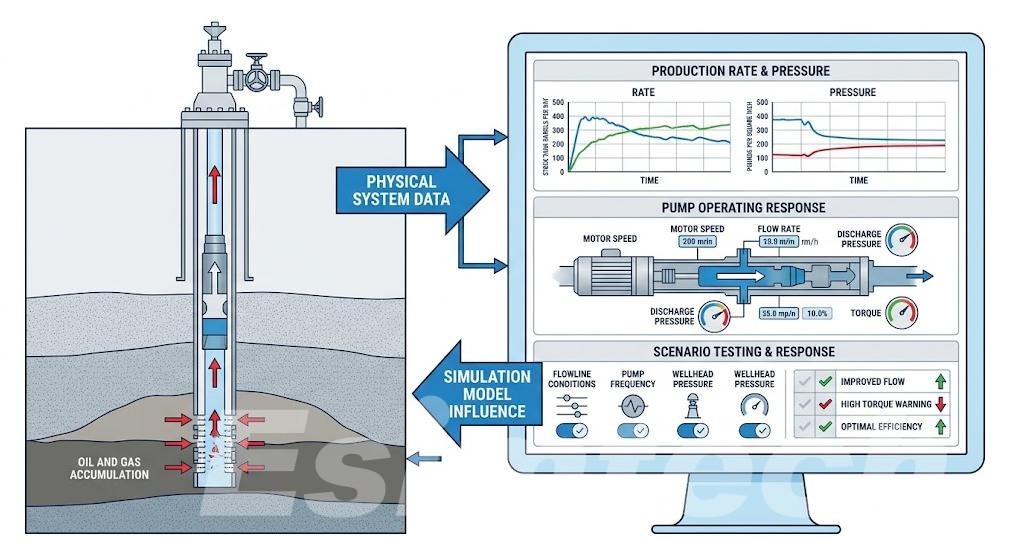
Drilling simulation training helps engineers understand how pump displacement, drilling fluid performance, annular friction force and cuttings load affect the equivalent circulating density (ECD) and bottom hole pressure. By simulating scenarios, trainees can assess operational decisions and identify potential pressure-related risks without conducting unnecessary tests in actual wells.
ESIMTECH provides drilling and well control simulation systems for technical training and operational decision-making practice.
Welcome to learn about ESIMTECH’s drilling simulation system and explore the drilling simulation solution specifically designed for petroleum engineering training centers.