What Operational Risks Can be Reduced by Coiled Tubing Simulators?
Coiled tubing operations are characterized by strict tolerances, constantly changing well conditions, and very little margin for error. With the increasing size, length, and complexity of wells, operational risks cannot be regarded as technical issues—they will influence safety, cost control, and project delivery in a direct manner.
Using a coiled tubing simulator gives one the opportunity to practically point out, assess, and control such risks before and throughout the operations. Not depending on experience or making reactive decisions only, the simulators make it possible for groups to deal with quantified scenarios and validated limits, thus creating a more controlled and predictable operational approach.
Why Need Coiled Tubing Simulators?
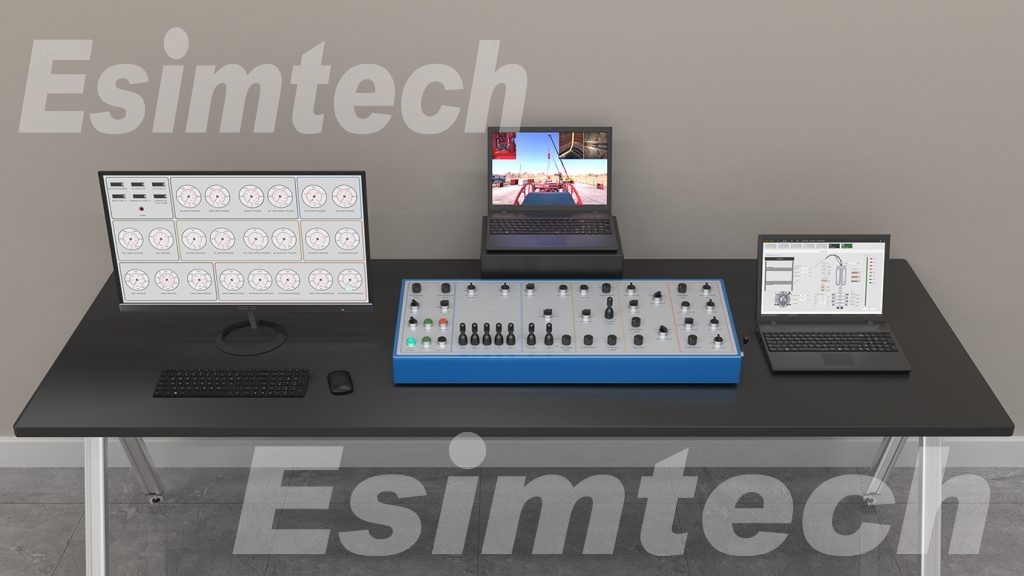
The coiled tubing operations are going through a major transformation as they begin to be carried out in complex wells—high deviation, depleted reservoirs, extended reach, and tighter operating margins. The minor errors that happen in such situations can turn into incidents of well control, stuck pipe, and excessive non-productive time, or even lead to costly equipment failures, very quickly.
A coiled tubing simulator is built to prevent these risks from happening. By bringing together well data, tubing mechanics, and hydraulic models, simulators give the opportunity to engineers and crews to conduct the tests of operational scenarios, validate limits, and rehearse responses in a safety-controlled area. Instead of trying to solve the issues in the field, the risks are pinpointed and reduced during the phases of planning and training.
Reducing Well Control Risks with a Coiled Tubing Simulator
Incidents related to well control represent a very big and expensive risk factor in the coil tubing operations, among the most important and expensive risks involved in coiled tubing operations. The whole chain of consequences that can occur due to a single miscalculation in either pressure management or circulation response includes exposure to danger, delay in the operation, regulatory oversight, and loss of money up to a large amount.
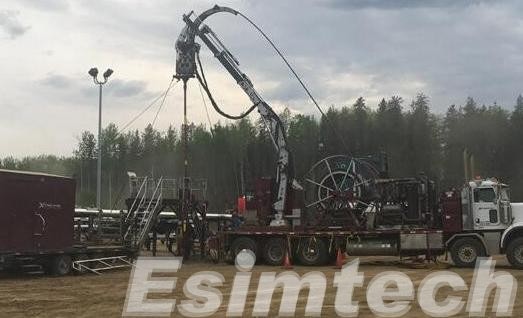
- The coiled tubing simulator is a powerful tool that can help operators to conduct their activities in a more controlled and preventive manner. Through creating a virtual representation of the pressure behavior, flow dynamics, and well responses in the normal and abnormal conditions, the teams will easily see the stability of the well and how the operational decisions are affecting it. This way, the well control strategies will be tested and corrected before the actual execution and not after the incident takes place.
- For the field crews, the scenarios based on the use of simulators are able to give a virtual experience of the high-risk situations that are hard and dangerous to practice on-site. Training on the fast detection of warning signs, the right sequences of actions, and communication under pressure will enhance the team's confidence and uniformity in performance.
The net result is that when the real well control problems arise, the response will be quicker and more assertive than before, leading to less escalation, more personnel, and the asset being safe.
Minimizing Stuck Pipe and Mechanical Failure Risks Using a Coiled Tubing Simulator
Warnings usually precede mechanical failures in coiled tubing operations. The conditions can be drag that has built up over time, localized buckling, or more tubing being used than what can handle the current downhole conditions. In the case of extended-reach and high-deviation wells, the chances of these risks happening are much higher.
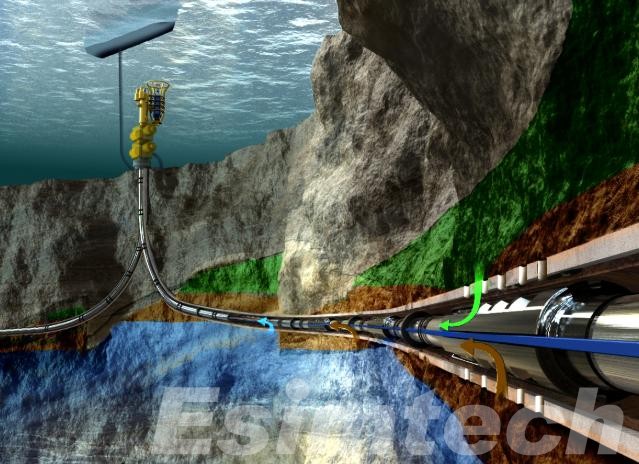
The use of a coiled tubing simulator allows the early detection and control of mechanical risks, as it gives the opportunity for the teams to assess the behavior of the tubing under the realistic working conditions. This includes the following factors:
- The axial forces, drag, and friction acting along the wellbore
- The tendency of buckling in the deviated and horizontal parts
- The stress on the tubing and fatigue accumulation with different running speeds and pressures
- The mechanical limits are sensitive to changes in the geometry of the well and the properties of the fluid
Engineers can specify unambiguous mechanical limits and pinpoint the parts of the well that will need stricter control of operations through the analysis of these outputs in the planning phase. Thus, the selection of operating parameters and intervention strategy can be done more wisely before the actual work starts.
In this way, the coiled tubing simulator not only lessens the dependency on field trial-and-error but also contributes to the downfall of stuck pipe incidents, along with the premature tubing damage and unplanned mechanical failures that can affect safety and project economics.
Reducing Non-Productive Time (NPT) Through Coiled Tubing Simulator Planning
In coiled tubing operations, non-productive time(NPT) is often caused more by uncertainty than by equipment malfunction. The lack of clarity regarding the operating limits, the use of untested procedures, and the last-minute adjustments of parameters can all result in the wellsite being frequently paused and decisions being made reactively.
A coiled tubing simulator is a great tool to help reduce the NPT, as it permits the teams to validate the operation beforehand. Engineers are able to double-check and discuss the different circulation strategies, pump rates, and running speeds to see how the well is likely to react under varying conditions. Bottlenecks and high-risk steps are pointed out early on, which leads to the refinement of the prepared procedures and the preparedness of the contingencies in advance.
With a more precise operational plan and the limits well-defined, the field crews would be spending significantly less time troubleshooting and waiting for instructions. Decisions made are quicker and of greater confidence, which results in smoother execution and fewer unplanned delays. The structured planning approach used over time translates directly into shorter job durations and more consistent operational performance.
Lowering Human Error Risks with Coiled Tubing Simulator Training
One of the most continuous risks in coiled tubing operations still lies in human error, especially in cases of high pressure or where time is an essential factor. Wrong decisions can still be made by even the most skilled crews when the well behavior is not known, or the conditions are changing fast. Classical training techniques, which are mainly based on practical experience, do not prepare workers for rare but very impactful situations.
The coiled tubing simulator presents a solution to this issue by offering structured and repeatable training that is focused on decision-making instead of routine tasks. Grounded in simulator-based training, the crew can work under conditions that are very similar to actual ones but without putting the well or equipment at risk. Among the main advantages are:
- Practicing imaginary and emergencies that seldom happen in the field
- Strengthening proper operational sequences and response times
- Boosting communication and cooperation among engineers and field crews
- Finding out the weak points in both individual and team decision-making
The coiled tubing simulator, by repeatedly exposing personnel to controlled yet realistic scenarios, assists in turning correct responses into standard behavior. It lessens the reliance on individual intuition and equalizes the performance of the crew. Eventually, simulator training results in more consistent execution, quicker detection of issues, and a measurable reduction in incidents caused by human errors during live operations.
Mitigating Financial and Project Risks with a Coiled Tubing Simulator
In coiled tubing operations, financial risk is tightly coupled with uncertainty in operations. The project budget can very quickly be surpassed, and the field schedules altered if there are interruptions of an unplanned nature, equipment damage, or failed interventions.
A coiled tubing simulator is one of the tools available to minimize the likelihood of these risks by enhancing predictability throughout the job lifecycle. In the planning phase, the simulator allows the engineers to validate operating parameters and to locate the high-risk scenarios before the resources are mobilized. This lessens the last-minute changes and the costly on-site adjustments.
During the stage of execution, simulator-informed procedures assist the crews to operate inside the specified limits, thus decreasing the possibility of major incidents that result in equipment loss or give rise to the need for remedial work. Moreover, simulator-based planning and training practices in the long run also lead to job repeatability, which in turn makes the cost estimates and schedules more reliable.
By minimizing uncertainty and also skipping high-impact failures, the coiled tubing simulator offers assistance in the aspect of cost control, thus safeguarding the assets and at the same time, increasing the chances of delivering the projects on time and within budget.
Wrapping Up
Operational risks during coiled tubing operations are rarely single events—they are mostly the consequences of limitations in visibility, shortage of preparation, or lack of consistency in execution. As wells become increasingly complicated, managing these risks calls for more than just a seasoned practitioner.
A coiled tubing simulator acts as a hands-on platform to mitigate uncertainty throughout planning, training, and execution. Bettering well control preparedness, decreasing mechanical failures, cutting down NPT, and lowering human error are four ways in which simulators assist teams attain safer and more predictable results.
Should you wish to enhance operational reliability or see how a coiled tubing simulator can play a part in your specific workflows, our group can present comprehensive technical data and customized simulation options. Connect with us to talk about your operational issues and find out the way our simulator can be utilized in your projects!