Digital Twins in Oil & Gas: Elevating High-Fidelity Well Control and Drilling Simulation

Written By: Computer Science Professor
Deeply rooted in the R&D of simulators for the oil and gas industry, committed to bringing safety to every oil worker.
In upstream oil and gas engineering, the old model of classroom learning and using static CAD simulations is inadequate. In case a drilling team discovers an HPHT formation or a shallow gas zone beneath water, split-second decisions need to be made to prevent an accident from occurring. Failure to calculate mud weight or respond to a pit gain alarm translates directly into NPT, equipment failure, or a blowout.
The solution for preventing such accidents involves the use of digital twins that accurately simulate the real-life downhole environment and equipment on the drilling rig.
By replicating actual downhole physics and rig hardware inside a virtual sandbox, engineering teams can practice critical operations, test well design limits, and build muscle memory under zero-risk conditions.
Defining High-Fidelity Digital Twins in Petroleum Engineering
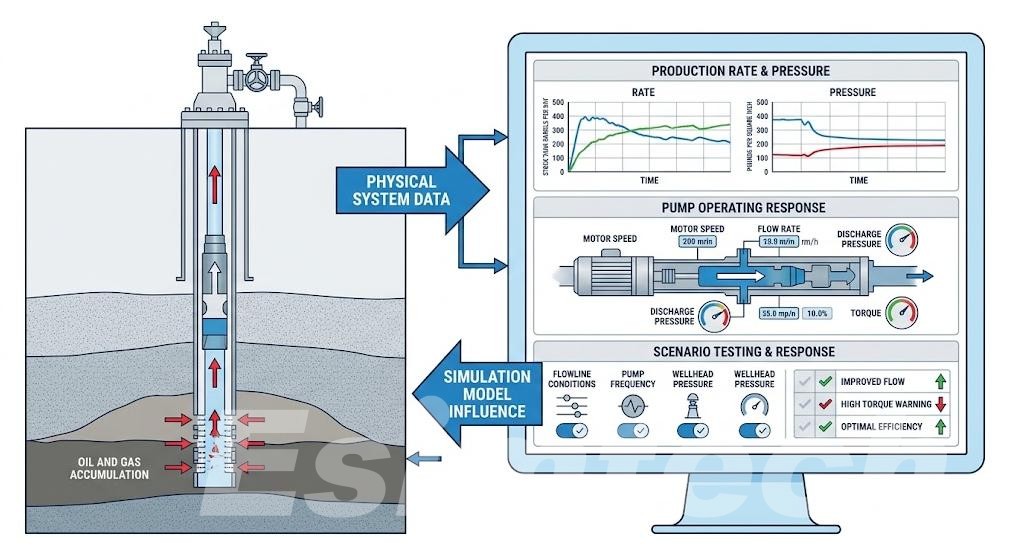
How does an authentic industrial digital twin differ from an ordinary 3D simulation? The distinguishing factor is dynamic mathematical reciprocity. An accurate digital twin in drilling and completions engineering involves a three-tier structure that matches physical parameters with transient physics equations.
- Control Interface: Physical control consoles built with identical joysticks, choke valves, and electronic displays as the commercial cyber-rigs (NOV Amphion or Cameron systems).
- Multiphysics Engine: Mathematical component of a digital twin that computes multiple phase fluid mechanics, rock-bit mechanics, and drillstring mechanics continuously at a rate that updates key variables such as standpipe pressure (SPP) and hookload multiple times every second.
- Telemetry Layer (Data Bridge): Telemetry layer that operates on industrial standards (WITSML or OPC UA) that makes sure the virtual bottomhole pressure (BHP) reacts instantaneously upon manipulation of a manifold valve.
Core Applications: Digital Twin Simulation in Action
Dynamic Drilling & Well Control Simulation
A blowout can mainly be prevented by detecting kicks. The Drilling & Well Control Simulator produces a physical twin that reproduces the exact physical precursors of kick formation without depending on scripted warnings.
Standard Operating Procedure (SOP) during Simulation:
Detection: The simulation model calculates gas expansion as it rises from the annulus of the drill stem. The operator sees the increase in volume at the pit level and an elevation in return flow on the mud system display.
- Space-Out: The operator employs the drawworks controls to lift the drill stem to space out the tool joints with respect to the BOP ram position.
- Shut-In: The mud pumps are shut off, and the BOP is closed either via the annular or the pipe rams.
- Stabilization: The simulator calculates the pressure stabilization curve, resulting in exact SIDP & SICP.
- Mitigation: The crew mitigates the kick either via the Driller’s method or Wait & Weight method through the virtual choke manifold.
Downhole Operation & Geosteering Training
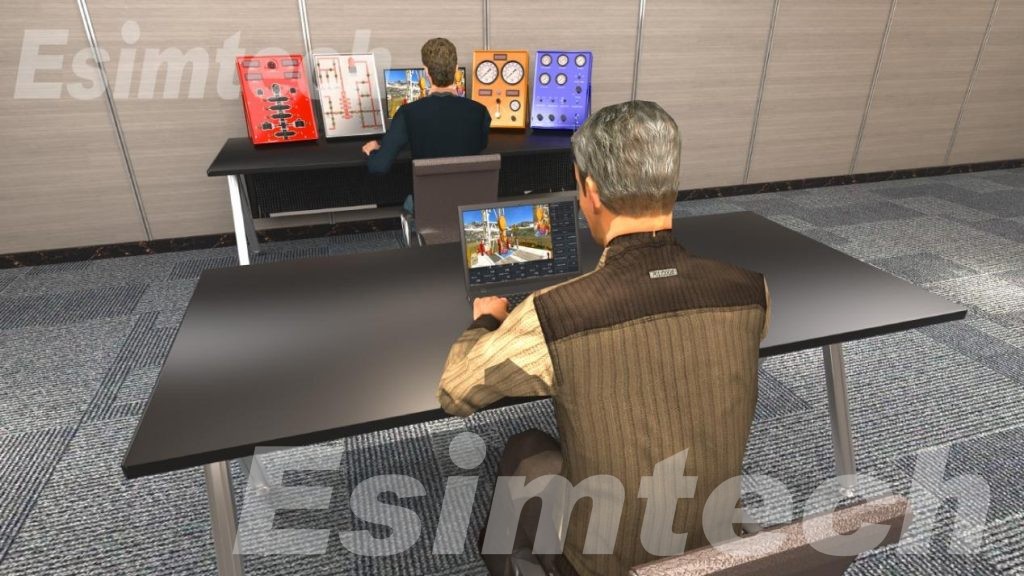
Moving the horizontal wells across tight reservoir layers calls for close cooperation. Accurate twins make use of real-time telemetry from MWD and LWD systems.
- Mechanical Diagnostics: Trainees detect abnormalities in the hook load and torque by monitoring their fluctuations and diagnosing any downhole malfunctions, including sticking, bit bouncing, or strong whirls, prior to breaking the drill string.
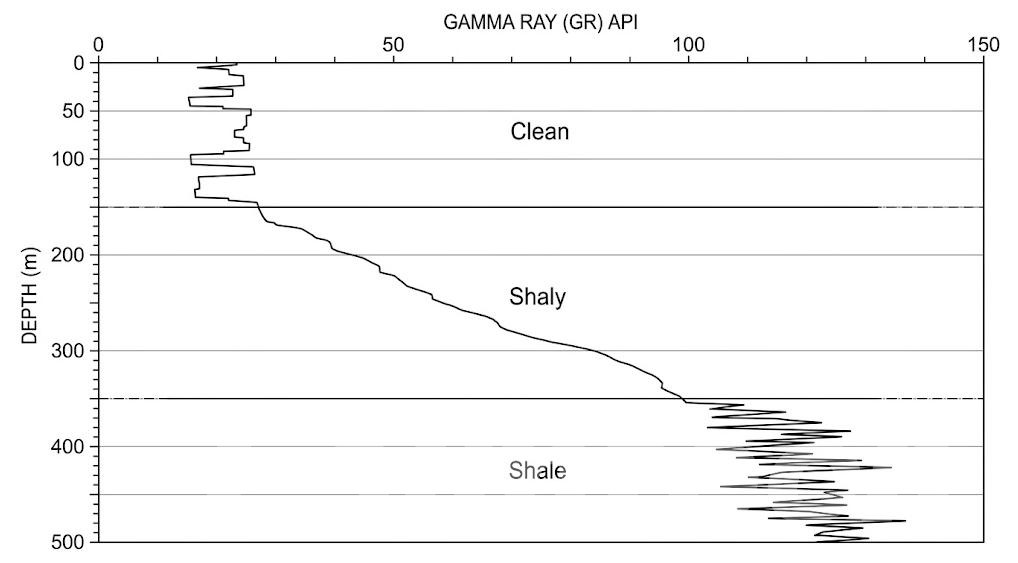
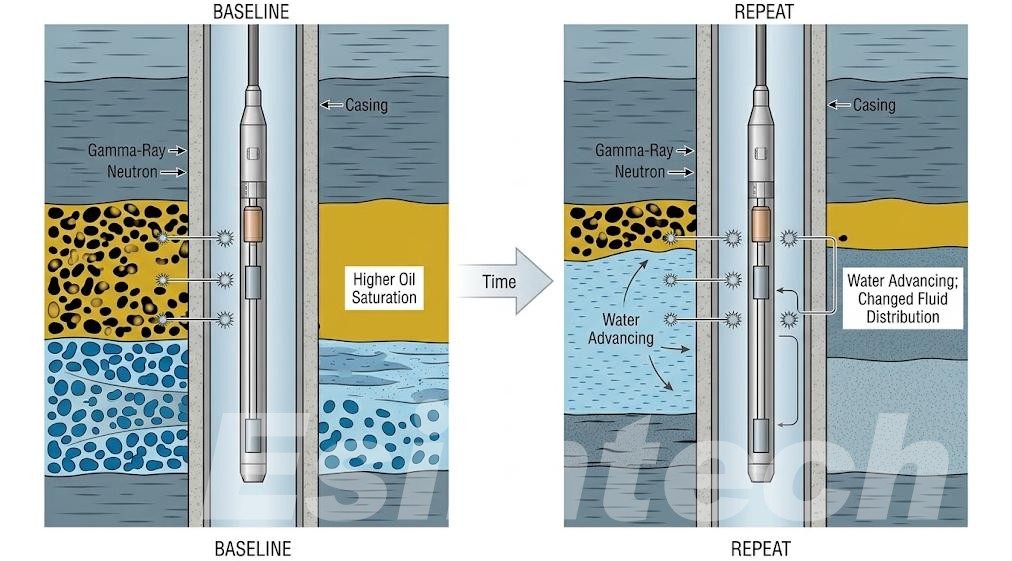
- Geosteering Visualization: The trainer builds simulated gamma-ray and resistivity logs. The directional driller needs to correct tool face position on the fly while keeping the course within the payzone to prevent drilling outside into water zones and shales.
Production & Facility Process Simulation
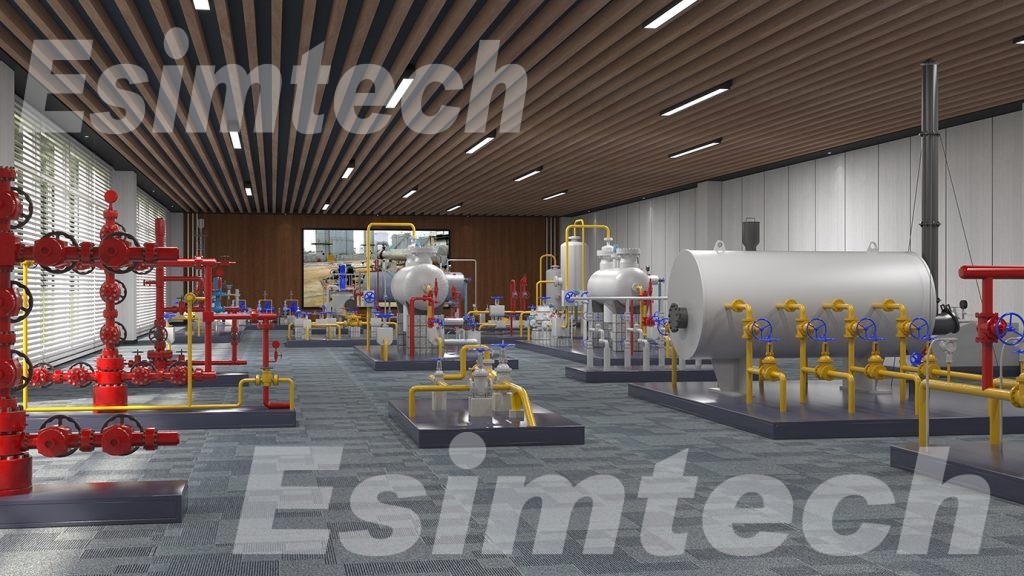
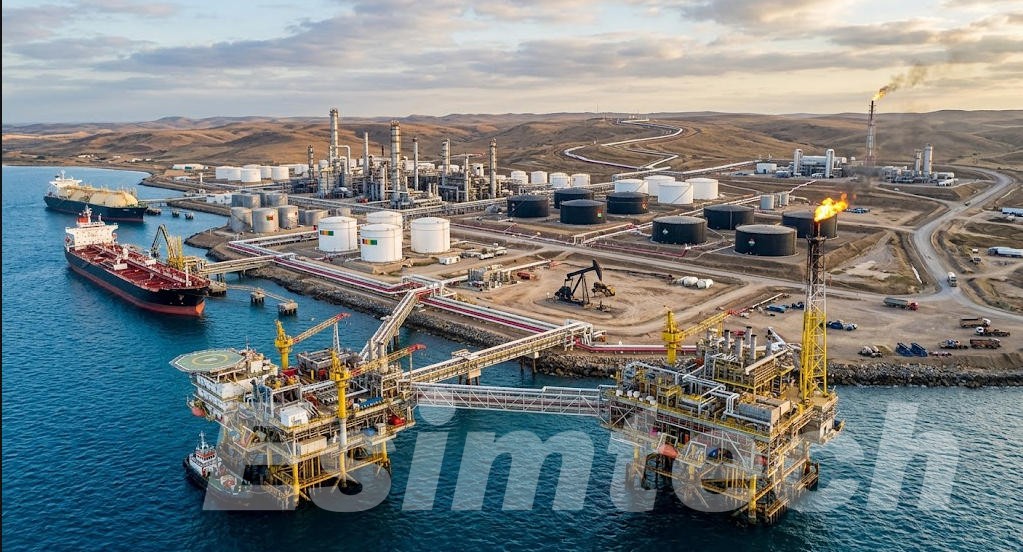
The application of the digital twin approach goes beyond the drilling stage to midstream operations and surface facilities. Process twins analyze complicated thermodynamic properties in headers, three-phase separators, and multi-station compressors.
Transients of slug flow operations in subsea tiebacks are simulated for mitigating risks of liquid surge that affects the chemical process of separation. In addition, the use of the virtual system enables ESD execution as well as testing automated surge control in compressors without disrupting the actual production process.
Aligning Digital Twins with Global Certification Standards IWCF & IADC

When it comes to the business-to-business drilling industry, training cannot be separated from compliance. The current simulation technology should be able to meet the exact assessment criteria laid down by the International Well Control Forum (IWCF) and International Association of Drilling Contractors (IADC) WellSharp programs.
| Assessment Parameter | Legacy Training Methods | High-Fidelity Digital Twin Approach |
| Grading Metrics | Subjective instructor observation | Timestamped tracking of every valve and pump input |
| Scenario Complexity | Single-variable, predictable kicks | Compounded failures (e.g., choke washout + pump failure) |
| Pressure Control Tolerance | Rough estimates via text testing | Real-time verification of BHP within strict API limits |
While conducting IWCF Level 3 or Level 4 well kill, the digital twin serves as an unbiased assessor. An instructor can introduce equipment malfunctions during the process of well killing—for instance, a plugged drill nozzle or a leak in the choke manifold. The system will precisely measure the number of seconds the supervisor takes to notice the drop in pressure and set the manual choke to keep bottomhole pressure constant.
Overcoming Deployment Roadblocks in Legacy Infrastructures
The integration of digital twins into legacy fleets of assets raises the following industry issues:
- Data Silos: Legacy SCADA systems and older drilling rigs capture data in legacy formats not able to connect to current physics simulators.
- Hardware Requirements: Real-time simulations of multi-physics models require powerful computers that are usually not available on regular office desktops.
The Solution: Rather than using fragmented software-only solutions, operators are turning to a solution involving turn-key simulator hardware packages. This type of simulator integrates robust, high-performance hardware control panels with protocol translation capabilities (Modbus, Profibus, and WITSML). This enables legacy rig personnel to be trained on very reactive hardware simulating their particular field conditions without having to invest millions of dollars in upgrading the digital networks of the actual asset itself.
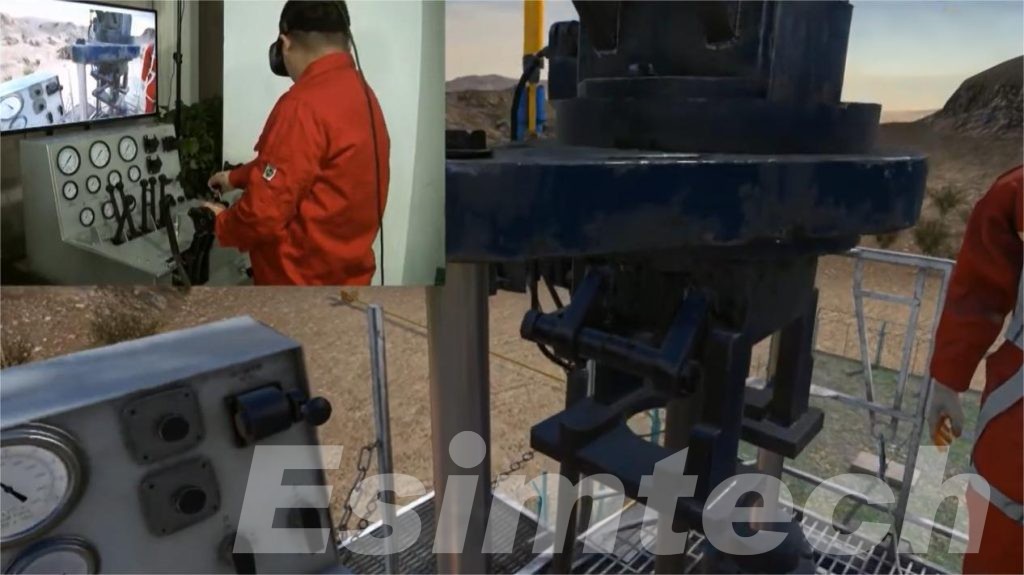
To Summary
Essentially, the concept of a high-fidelity digital twin is all about mitigating risks involved in current-day oilfield operations. It serves as an intermediary between design and execution, converting telemetry data into real-time physical data feedback.
When the driller is acquiring experience in catching early spikes from the flowline, or the facility personnel have to deal with a subsea slugging episode, simulation training is what helps cope with those risks effectively. By relying on physics-based simulation training with standard hardware interface capabilities, you safeguard your operation and equipment at the same time.