The Role of Managed Pressure Drilling (MPD) in Well Control

Written By: Computer Science Professor
Deeply rooted in the R&D of simulators for the oil and gas industry, committed to bringing safety to every oil worker.
Managed Pressure Drilling (MPD) has emerged as a transformative method in modern drilling processes, especially for improving well control. In increasingly complex geological settings, such as deepwater, high-pressure high-temperature (HPHT), or depleted formations, conventional well control strategies often face limitations. MPD tackles these problems by allowing a dynamic control of the annular pressure profile while drilling, which reduces risk and increases operational efficiency.
Understanding Well Control Challenges
Well control is the practice and equipment utilized to ensure the pressure balance within a wellbore, to prevent inadvertent circulation of the formation fluids towards the surface. This is commonly known as the kick. Traditional methods rely on the weight of mud that is predetermined, along with static barriers in order to maintain this equilibrium. In formations with tiny window of pressure between pore pressure and fracture gradients, these static techniques can lead to:
- Formation fluids influx (kicks)
- Loss of circulation as a result of fractures
- Effects of ballooning
- Non-productive time (NPT)
These challenges require more flexible and responsive pressure control systems. This is exactly what Management Pressure Drilling can provide.
What is Managed Pressure Drilling (MPD)
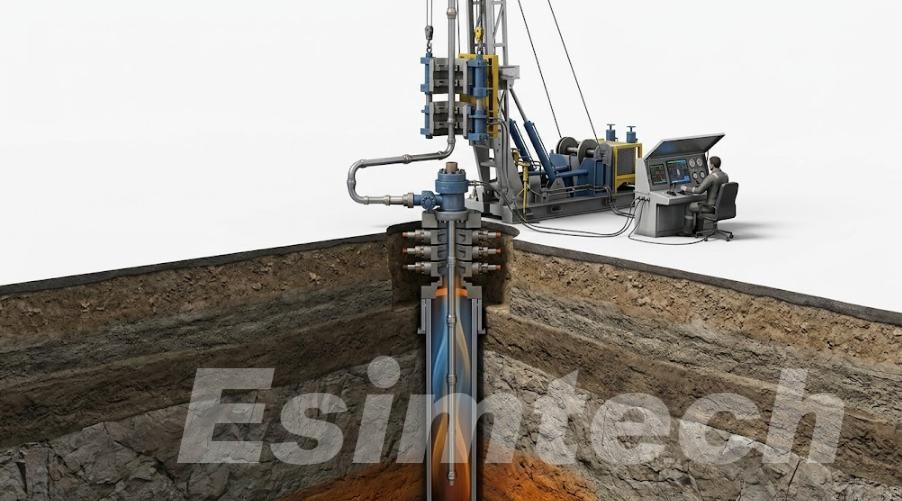
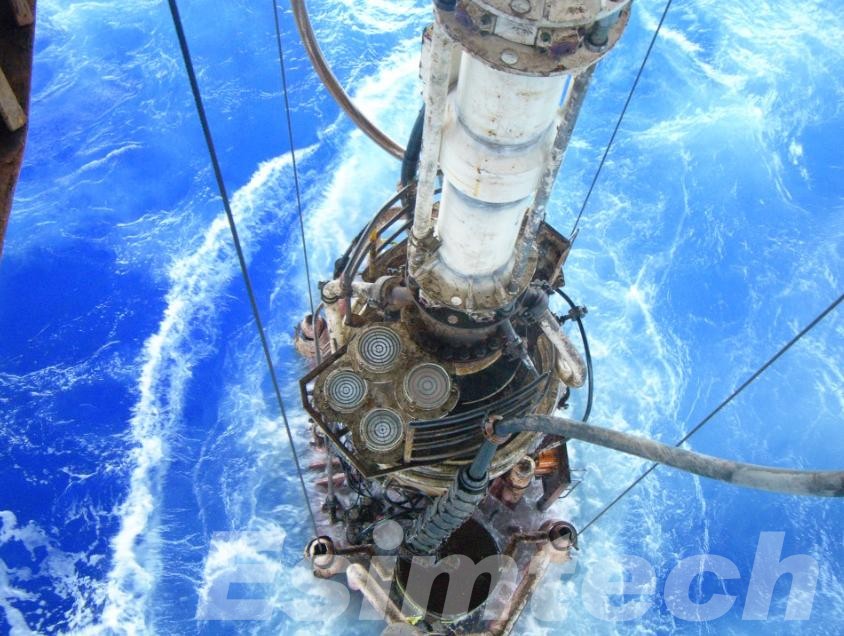
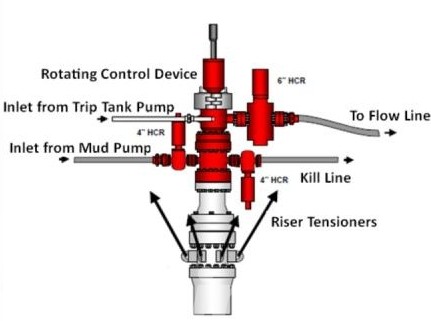
Managed Pressure Drilling is a sophisticated drilling technique that allows you to precisely regulate the profile of annular pressure in the wellbore. In contrast to conventional drilling, which relies on only static mud weights to regulate formation pressures, MPD utilizes a closed-loop technology using specialized equipment — such as an electronic control unit (RCD) and a variable surface backpressure–to control the pressure of the wellbore in real-time. This method improves safety, decreases the possibility of kicks and lost circulation, and permits drilling in difficult environments with a narrow margin of pressure.
How Managed Pressure Drilling Enhances Well Control
1. Dynamic Pressure Control
Conventional drilling focuses on maintaining pressure through the use of weights for mud fixed to the ground, with the ability to only adjust the pressure in real-time. This method of static adjustment is especially difficult in formations that have narrow margins between the pore pressure and the fracture gradient. If formation pressures change unexpectedly or geological properties are not clear, conventional systems may not be able to react quickly enough which increases the risk of the formation kicking, losing circulation and even blowouts.
Managed Pressure Drilling transforms this process completely by shifting pressure management from an inactive into an active process. With the help of surface backpressure and control systems that are real-time, MPD continuously adjusts the annular pressure profile to keep the low-pressure in the bottomhole precisely where it should be. This proactive control greatly decreases the chance of uncontrolled influxes and increases the overall quality of the well.
2. A Closed-Loop System
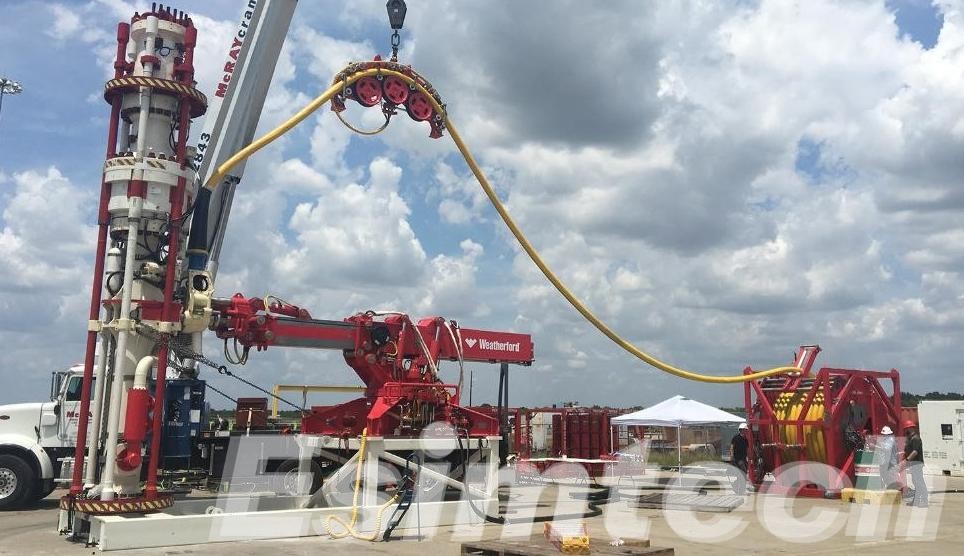
The efficiency in Managed Pressure Drilling is in its closed-loop design. It makes use of the rotating control unit (RCD) to close the wellbore on the surface, creating an uninterrupted and controlled environment, even when drilling is taking place. Choke manifolds as well as pressure sensors provide real-time information, allowing operators to adjust backpressure as a result of changing conditions in the downhole. This helps in more precise control of the equivalent circulating density (ECD) that is crucial for ensuring equilibrium.
Since Managed Pressure Drilling permits instant pressure adjustments without interruption to circulation, it permits continuous operations, even in event of anomalies in pressure. The ability to control pressure at a real-time pace is a crucial element of well control that traditional methods cannot even compete with.
3. Early Influx Detection and Mitigation
One of the primary methods MPD improves control of wells is by detecting and reducing the impact of influxes of formation fluid. Because the system constantly examines the flow rate, pressure and returns, small deviations from the expected behavior are easily identified. In conventional systems, such variations could be overlooked until pit volumes increase or surface indicators display changes, often after the influx has been transformed into an influx.
With managed pressure drilling small-scale influxes of pressure are detected before they reach thresholds that are dangerous. This allows workers to increase backpressure or alter the pressure gradient so that they stop the flow. In many instances, the flow can be pumped out without closing the well, thus avoiding use of blowout stoppers (BOPs) as well as the delays in operation that are a result.
4. Improved Control in High-Risk Formations
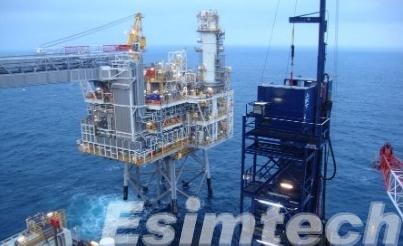
For deepwaters, HPHT (high-pressure high-temperature) environments, and depleted reservoirs Pressure control can be notoriously difficult. The pressure windows are usually so small that the gap between a secure drilling area and an event that could be serious to control could be a matter of the equivalent of a few millimeters. MPD permits precise aiming within these windows of narrowness and gives users an opportunity to go into areas where conventional methods could lead to abandonment or expensive sidetracking.
Additionally, Managed Pressure Drilling assists in avoiding excessive overbalance that could affect the formation and cause the formation to fail or cause differential sticking. Also, it reduces the risk of underbalance that could lead to an increase in. The ability to fine-tune pressure profiles makes MPD especially useful in zones of uncertain geology where pressures of formation may not be accurately calculated during the planning process.
5. A Complementary Role to Traditional Well Control Tools
Managed Pressure Drilling is not designed to replace conventional controls for wells like BOPs, or muds for heavy drilling. It’s more of an important enhancement to them. While traditional tools are the last line of defense during emergencies, MPD acts as a first-line prevention measure, reducing the severity and frequency of situations that may require more drastic intervention.
By ensuring perfect pressure levels throughout drilling, MPD helps reduce the need for the use of reactive measures to control wells. This results in safer operations less interruptions, and in many cases, lower drilling costs overall.
Applications of Managed Pressure Drilling in Well Control
| Application Area | Description |
| Narrow Pressure Margins | Managed Pressure Drilling keeps a precise bottomhole pressure (BHP) within formations, with little difference between pore pressure and fracture pressures. which prevents kicks. |
| Early Kick Detection and Management | Monitoring in real-time of pressure and flow rates changes allows for rapid detection and management of influxes prior to them escalating to kicks. |
| HPHT (High-Pressure, High-Temperature) Wells | Managed Pressure Drilling manages dynamic pressure fluctuations in extreme environments improving well control and reducing the requirement for casing strings with contingency. |
| Depleted or Mature Fields | For low-pressure areas, MPD helps to prevent circulation loss and assists in drilling safely through reservoirs that are depleted without putting on excessive weight in mud. |
| Fractured or Naturally Faulted Formations | Managed Pressure Drilling permits the adjustment of pressure in real time to avoid abrupt influxes or losses caused by faults or fractures which intersect the wellbore. |
| Deepwater Drilling | Compensation for lower pressure gradients and permits drilling through multiple pressure zones without trip or well control accidents. |
| Ballooning Differentiation | Managed Pressure Drilling is a way to distinguish the ballooning (formation breath) as opposed to actual kicks which can prevent unnecessary shut-ins, and helping to improve the quality of decisions. |
| Underbalanced Drilling Transition | Serves as an intermediary between underbalanced drilling and conventional drilling, providing advantages in pressure control without commitment to UBD the complexity. |
Simulations Used for Managed Pressure Drilling to Enhance Well Control
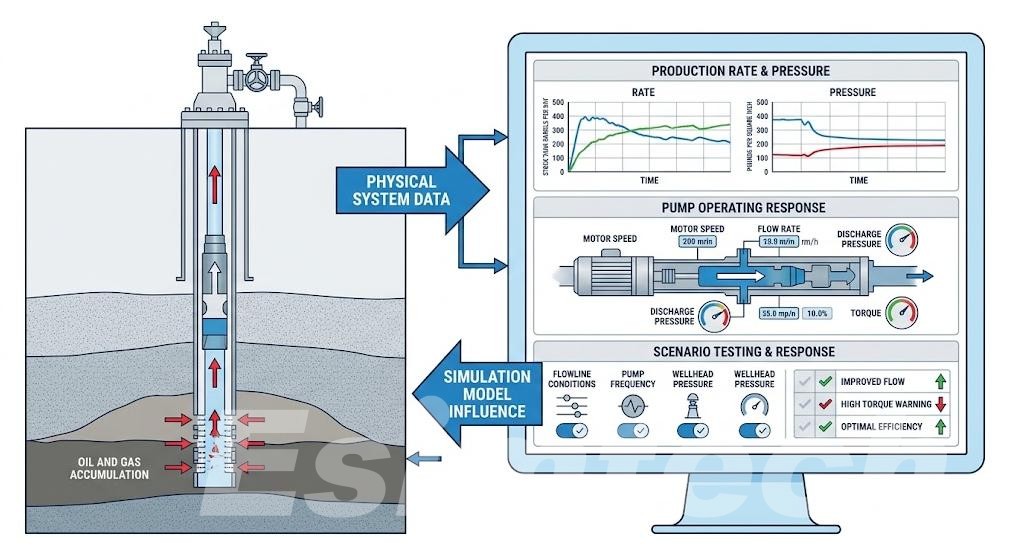
Simulations used in Managed Pressure Drilling are designed to simulate the interaction between the fluid’s dynamic formation pressure and mechanical forces throughout the wellbore. By using these models, operators can predict the ways in which changes in surface backpressure, drilling fluid properties and flow rates will impact the downhole environment. These insights are crucial for stabilizing the wellbore, avoiding influxes, and managing transitions between various pressure regimes.
1. Hydraulic Modeling for Real-Time Pressure Control
A popular tools for simulation used in Managed Pressure Drilling is the hydraulic modeling software. These models can be used to model circulating pressures equivalent circular density (ECD) as well as temperature gradients in the wellbore. Through the use of multiple situations, scientists can figure out the best surface backpressure to ensure an appropriate bottomhole pressure within the narrow window of pore-to-fracture.
Hydraulic simulations are also used to optimize choke settings, anticipate the pressures of swabs and surges during Tripping operations, and simulate the effects of transient events such as pump startup or stoppages of flow and flow stoppages, which all impact the well control.
2. Kick Tolerance and Influx Behavior Simulations
Another important category in Managed Pressure Drilling simulations focuses on the tolerance of kicks and management of influx. The models will predict how wells will react to the flow of formation fluids in different operating conditions. Simulations are able to evaluate:
- The amount and type of fluid that is safe to be circulated
- The necessary backpressure to stop any further inflow
- The time it takes to get back control of the well in dynamic conditions
These simulations let crews create elaborate MPD operating procedures to control kick handling, which reduces the requirement for emergency shutdowns as well as BOP activation.
3. Thermal and Multiphase Flow Modeling
When it comes to HPHT or deepwater conditions, precise thermal modeling is crucial. Simulations that simulate this area can tell the effects of temperature fluctuations on the density and viscosity of fluids and, in turn, affect the pressure control. When combined with multiphase flow modeling (gas-liquid-solid) Simulations aid in predicting the behavior of downholes during situations like foamy influxes of gas or.
Managed Pressure Drilling systems that operate without accounting for temperature-dependent changes risk underestimating or overestimating annular pressures, potentially leading to kicks or lost circulation.
4. Wellbore Stability and Geomechanics Integration
Advanced MPD simulations typically include geomechanical models to assess the strength of the formation and the distribution of stress. Through the integration of the real-time MPD Pressure data in these well control simulations, the operators are able to determine the likelihood of collapse at the wellbore and identify weak formations and adjust drilling parameters as needed.
This feature helps ensure safe operating windows, and also avoids unnecessary sidetracks or casings because of borehole instability in turn, enhancing control of wells.
5. Digital Twin and Real-Time Simulation
The latest advancement for Managed Pressure Drilling simulation is the development of digital twins, virtual duplicates of the drilling site, which are constantly updated with real-time information. Digital twins mimic downhole conditions as drilling progresses, which allows the use of predictive models and real-time decision-making.
When utilized in combination with MPD systems, digital twins are able to simulate the effects of changes in parameters that are proposed prior to their implementation which reduces uncertainty and increases the accuracy of control.

6. Training and Scenario Planning using MPD Simulators
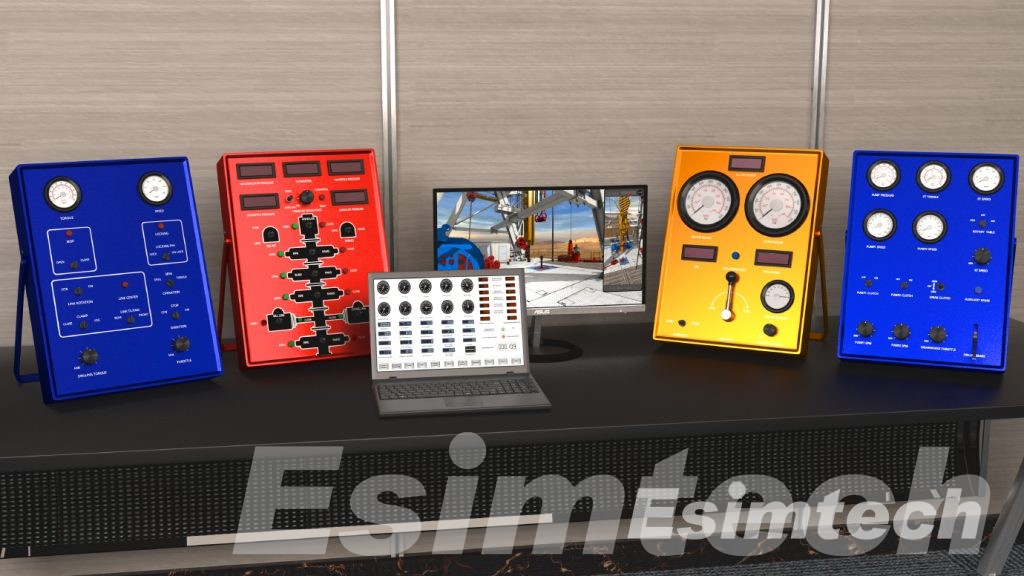
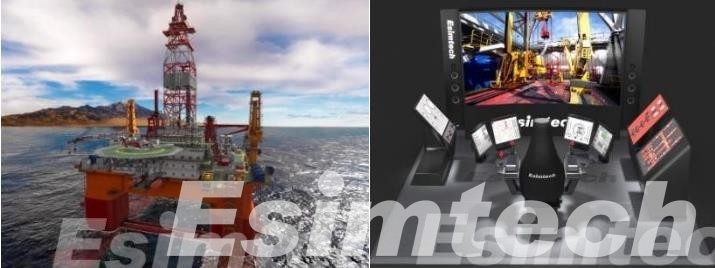
Beyond the engineering research, Managed Pressure Drilling simulations are utilized to train employees in scenarios of well control. The specialized drilling simulators mimic the actual devices, profiles of wells, along with surface control systems that allow teams to learn how to respond to losses, kicks and other anomalies that occur in a secure environment. Training exercises help improve the requirements for compliance with procedures and help improve the ability to make decisions under stress.
Final Thoughts
Managed Pressure Drilling has redefined the way that operators approach well control. Through the use of real-time control on the wellbore pressure environment, MPD transitions well control from a reactive to a proactive discipline. The ability of MPD to minimize kicks, increase security, reduce NPT and extend the drilling area makes it a vital tool in today’s complicated drilling processes. As exploration continues to explore deeper, hotter and more complex geological formations, the use of MPD will continue to increase more.
Oil and gas simulation tools are used to aid drillers in managing pressure with confidence and accuracy. While Managed Pressure Drilling use continues to grow, the integration of sophisticated simulation is essential for achieving safe and successful well control outcomes.