How Well Workover Simulators Guarantee IWCF Certification Success?

Written By: Computer Science Professor
Deeply rooted in the R&D of simulators for the oil and gas industry, committed to bringing safety to every oil worker.
Passing the well intervention test for an IWCF Level 3 (Driller) or Level 4 (Supervisor) qualification is difficult indeed. For a person who runs a training center or oilfield service company, this is an obvious statement. The thing is that the failure rate of practical exams is quite high.
The main difficulty here is that traditional classroom training based on presentations, manual calculation, and outdated software cannot ensure that the student is ready to deal with the real situation that may arise while working in a well.
For candidates to pass the practical test, they need to have a well workover simulator that can give them high-fidelity training through the use of nonlinear software combined with hardware.
Why Traditional Training May Fail IWCF Level 3 & 4 Candidates?
“The Step-by-Step” Trapped Software Approach
Basic training software works according to a pre-planned script. The software moves automatically from Step A to Step B no matter what happens with Step A. However, a downhole kick is not a script. In case of a mistake or panic by the trainee, static software cannot calculate all the real-life consequences. So students will be learning how to take tests under optimal conditions.
Zero Stress Training
Test-takers usually can do all calculations correctly in theory, sitting in their rooms and working with a sheet of paper. But when it comes to a simulator console during the test, they see the following picture:
- Rapid movement of BOP gauges
- Fast growth of pit volumes
- Highly growing casing pressure
They freeze because they have never experienced this before.
Level 4 “Big Picture” Conundrum
Level 4 is not about operating switches but is about assessing risks and making quick decisions under pressure. In the absence of a simulator capable of providing real-time data trends and immediate reactions, it becomes impossible to prepare supervisors for anomaly diagnosis before a blowout.

How Advanced Workover Simulators De-risk the Practical Exam?
Real Multiphase Fluid Dynamics Engine
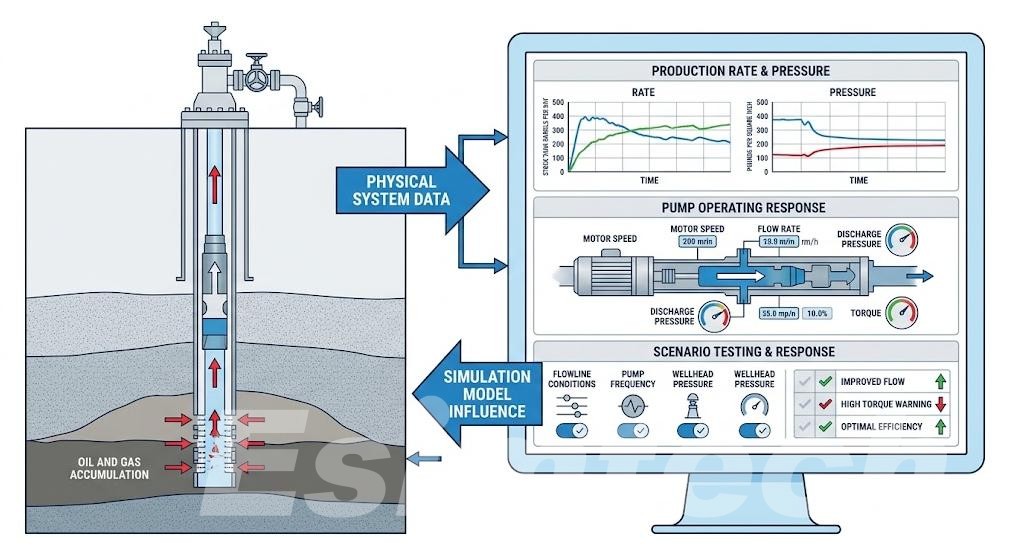
Unlike traditional simulators, modern training software does not utilize preprogrammed animations. Instead, it runs on a multiphase fluid dynamics engine, which calculates accurately the behavior of gas, oil, and drilling mud. The physics engine instantly responds to:
- Actual depth and casing of the well
- Permeability of the formation and reservoir pressure
- Changes in real-time mud density
The Freedom to Fail
High-end simulators feature an open and non-sequential training architecture. In other words, the program does not punish the trainee for committing mistakes. Thus, if he closes the BOP at the wrong moment, mispositions the valve on the manifold, or adjusts the choke incorrectly, he will be faced with the real-life consequences of his actions—such as fracture of the formation or bursting of a seal.
Hardware 1:1 Reaction
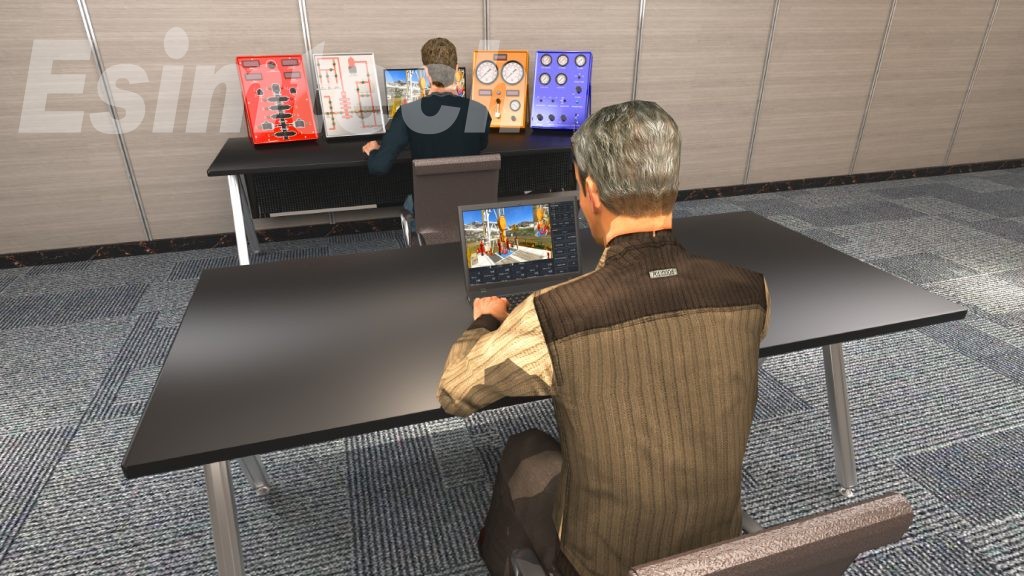
The key to passing the hands-on assessment test successfully is the development of muscle memory. The physical buttons, lever movements, and natural lag in communication on the Driller and Choke Consoles have to be exact copy of the equipment used in official IWCF test centers. Otherwise, the entire training becomes useless.
Mastering the Hardest IWCF Test Modules via Simulation
1. Killing Sheet Execution (Driller’s & Wait & Weight)
While filling the kill sheet is just the beginning, its proper execution is the area that many students struggle with. The simulator comes as a living validator. Learners will get used to controlling bottom hole pressure while monitoring vital changes from ICP (Initial Circulating Pressure) to FCP (Final Circulating Pressure).
2. Secondary Well Control Difficulties
The IWCF instructors relish introducing unexpected problems right in the middle of the practical exam. Instructors can use modern simulators to introduce difficulties for the trainee, such as:
- Plug in the choke valve or the failure of the pump
- Loss of all power for the main mud pumps
- Gas migration while snubbing is underway
The candidate must identify the gauge readings right away and rectify the problem without disrupting the secondary well control barrier.
3. Simulated Bullheading Process
The bullheading process is common practice for many well servicing operations, but it presents a lot of danger. The simulator makes the applicants keep track of their injection rate and surface pressure, teaching them how to inject the kill fluid back into the formation without exceeding the Formation Fracture Pressure.
Smart Assessment & Flexible Deployment for Instructors
Automated Instructor Management System (IMS)
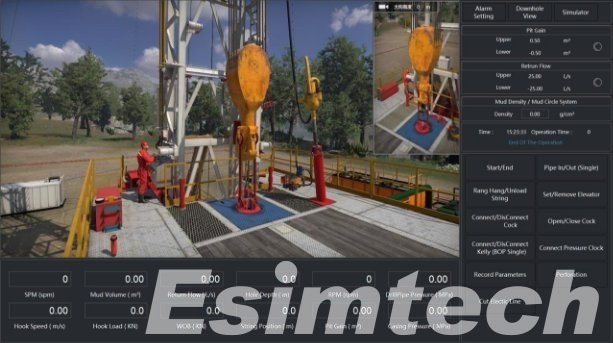
The instructor should not be left to wonder how well the candidate performed. The IMS keeps a record of every single turn of the valves, choke settings, pump strokes, and pressure peaks. At the end of the run, it generates a report based on data collected and in accordance with IWCF scoring criteria.
Real-Time Fault Insertion
Using a touchscreen interface, the trainer can surreptitiously insert an accumulator pressure loss fault or knock out a remote choke control panel precisely at the point where the trainee believes they have the well situation under control. Only through such an approach can one truly test the ability of a Supervisor candidate in contingency planning under pressure.
Certification Anywhere With Portability
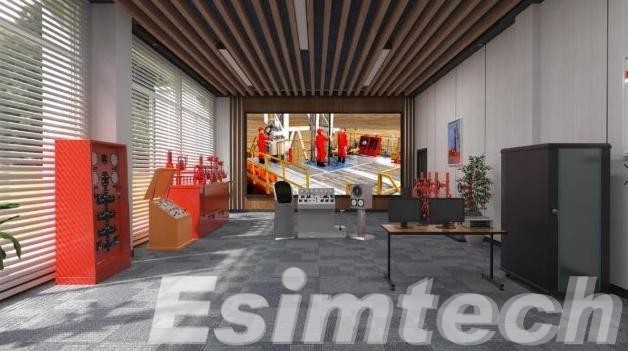
- Cabin-Based Systems: Ideal for fixed regional training centers looking for full environment immersion.
- Aluminum Case-Based Portable Systems: Ideal for portability. Exam-standard, compliant consoles can be packed up in their portable cases and flown directly out to an offshore rig or field site for crew certification.
Conclusion
IWCF certification card is more than just a piece of paper; it is what will keep your crew safe on an active workover rig. The fastest way to improve pass rates at your testing center is to switch from traditional, book-driven instruction to a realistic simulator experience.
The process of dealing with the unexpected behavior of the well and controlling the physical console makes them ready for the exam and for returning to the rig.