Pipeline Transportation of Heavy Crude Oil: Challenges, Solutions and Innovations

Written By: Computer Science Professor
Deeply rooted in the R&D of simulators for the oil and gas industry, committed to bringing safety to every oil worker.
Pipeline transportation of heavy crude oil is a big deal within the global energy world, because it lets the transfer of high viscosity petroleum from production sites towards refineries, and also to export terminals. Now compared with light crude, heavy crude oil is usually denser, more sluggish, and it often carries more sulfur and a few other unwanted components. So, moving it efficiently is harder. That’s why pipeline transportation made for this job need specific engineering solutions, so flow assurance stays stable and operations remain safe.
Challenges in Pipeline Transportation of Heavy Crude Oil
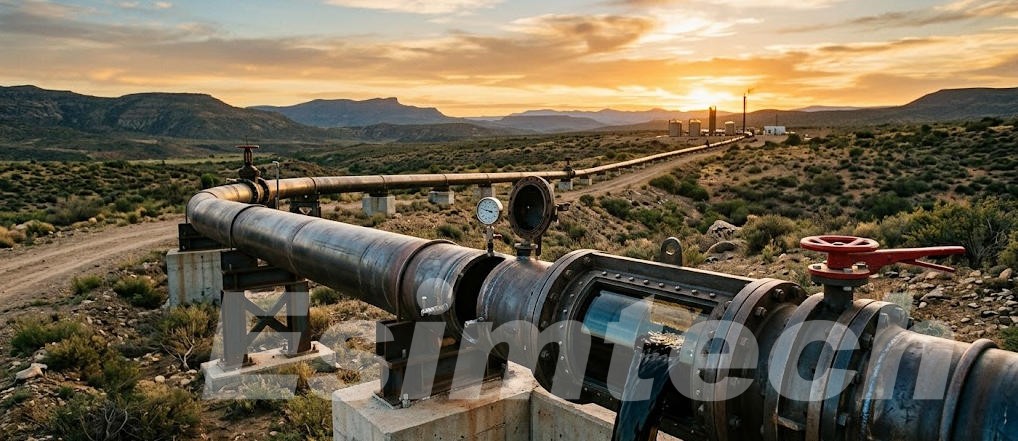
Heavy crude oil tends to be very viscous and has low API gravity, so it doesn’t really move in the usual way. In certain cases, it can act almost like a semi-solid when the temperature is around ambient. This ends up giving a set of technical challenges during pipeline transportation.
| Challenge Area | Description | Operational Effect |
| High viscosity | Heavy crude is thick and resists flow, especially at low temperatures | Requires higher pumping power and reduces flow efficiency |
| Temperature sensitivity | Crude thickens or solidifies when temperature drops | Necessitates heating systems or insulation along pipelines |
| Wax and asphaltene deposition | Solid components accumulate on pipe walls over time | Reduces pipeline diameter and may cause blockages |
| High energy consumption | More energy is needed to maintain flow over long distances | Increases operational costs and carbon footprint |
| Corrosion risk | Sulfur, water, and acidic compounds accelerate internal corrosion | Shortens pipeline lifespan and increases maintenance frequency |
| Flow instability | Changes in pressure and temperature affect flow consistency | Can lead to surging, slugging, or partial shutdowns |
| Diluent dependency | Heavy crude often requires blending with lighter hydrocarbons | Adds logistical complexity and supply chain dependence |
| Startup/shutdown difficulty | Restarting flow is challenging due to cooling and solidification | Increases operational risk and restart time |
| Pumping station intensity | More frequent and powerful pump stations are required | Raises infrastructure and capital investment costs |
| Environmental cleanup difficulty | Spills of heavy crude are sticky and hard to remove | Increases environmental damage and response complexity |
| Measurement and monitoring complexity | Viscosity and composition vary along the pipeline | Requires advanced sensors and real-time control systems |
Technological Solutions for Pipeline Transportation of Heavy Crude Oil
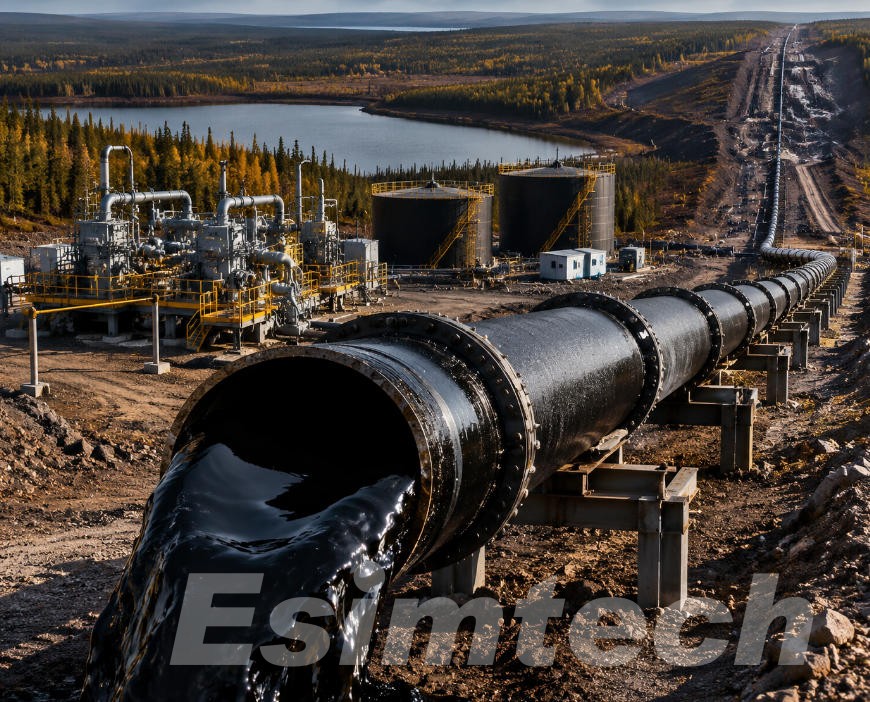
To ensure stable, efficient, and safe pipeline transportation of heavy crude oil, engineers rely on a combination of thermal, mechanical, chemical, and digital technologies that work together to maintain continuous flow and prevent blockages.
1. Thermal Management and Heat-Assisted Transport Systems
One of the more important approaches is thermal management. Because heavy crude gets much more viscous when temperatures drop, keeping a good pipeline temperature is really critical. Engineers use heat tracing setups, external heating stations, and thermally insulated pipelines to reduce heat loss as the fluid travels. In colder areas, heated pipelines help prevent the oil from thickening too much or even solidifying, which helps flow keep a steady rhythm even when the distance gets long.
In some advanced systems, warmed oil gets transported across carefully controlled temperature zones, kind of evenly. These designs aim to balance energy consumption and flow efficiency so operators can keep transport stability without running up heating expenses too much. Sometimes the zones are tight, and the operators rely on monitored feedback rather than guesswork.
2. Diluent Blending and Viscosity Reduction Technology
Another solution that gets used often is diluent blending. In this step, heavy crude oil is mixed with lighter hydrocarbon components, for example condensates or naphtha. The main aim is to lower viscosity and density so the resulting fluid can travel more easily through pipelines. This approach is particularly common in areas producing bitumen, or ultra-heavy crude.
Its real performance depends on accurate regulation of blending proportions and constant tracking of fluid properties. Modern blending stations are typically outfitted with automated control systems that tune the composition during operation, based on measured pressure, temperature, and flow rate situations.
3. Drag Reduction and Flow Enhancement Additives
Chemical technologies also play a key role in lifting pipeline efficiency. Drag-reducing agents (DRAs) are polymers injected into the crude oil stream to reduce turbulence and the frictional interaction between the fluid and the pipeline walls. Even small concentrations of these additives can noticeably raise throughput while avoiding the need for more pumping stations, and that is often the big point.
Flow improvers together with paraffin inhibitors are also used to limit the buildup of wax and asphaltenes inside pipelines. These chemical treatments help keep a smooth inner pipe surface, and this is essential for consistent long-distance transport.
4. Advanced Pumping and Pressure Management Systems
Heavy crude pipelines demand strong pumping infrastructure to sustain flow across long distances. Modern pumping stations are typically built with variable speed pumps that tune output based on live demand and pipeline conditions. This reduces pressure surges and improves energy efficiency.
Also, multi-stage pumping systems are frequently put to work in extensive pipeline networks. In practice they split the main line into a few sections, each section backed by specific pressure control units. With this approach the system keeps a steady flow, even when crude oil properties shift along the travel path.
5. Pipeline Heating and Insulation Engineering
In addition to active heating methods, passive thermal control is also required. High-performance insulation materials reduce heat loss, especially in arctic conditions or at high altitude. In some cases the pipelines are buried deeper underground, or they’re placed with protective coatings that limit thermal exchange with the nearby environment.
These engineering solutions are commonly paired with monitoring systems, they track temperature gradients along the pipeline so that any cooling risk is spotted early.
6. Digital Monitoring and Smart Pipeline Systems
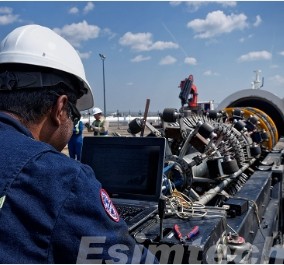
Modern heavy crude pipelines are more and more driven by digitalization and automation, and it feels like this is becoming the norm. Networks of sensors that are actually built into the pipeline run constantly, measuring pressure, temperature, viscosity, and flow rate. From there the readings go to centralized control platforms which then apply predictive analytics so operations can be optimized, frequently in real time.
Those smart pipeline arrangements also help spot early indicators of blockages, wax buildup, or pressure disturbances well before they turn into urgent failures. Sometimes, artificial intelligence models help forecast flow behavior when environmental conditions change, and then operators can make proactive readjustments rather than waiting.
7. Corrosion Control and Material Engineering
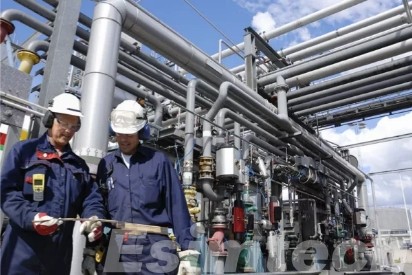
Since heavy crude often includes sulfur compounds, water, and other aggressive contributors, picking materials correctly and using protection techniques matters a lot. Usually, the pipelines are fabricated with corrosion-resistant alloys, or they are given internal coating systems that weaken the chemical interaction between the crude oil and the steel surfaces.
Cathodic protection systems are also used to prevent external corrosion that comes from soil and moisture, which happens quietly, in a way that can be hard to notice. Regular inline inspection tools, frequently referred to as intelligent pigs, are run to spot corrosion, pitting, or mechanical defects without shutting down pipeline operations.
8. Integrated Flow Assurance Strategies
In the end, the critical point for moving heavy crude through long pipelines is to bring multiple technologies together in one flow assurance strategy. Thermal control, chemical treatment, mechanical pumping and digital monitoring need to operate as a coordinated set. If there is an imbalance in one area, flow instability can appear, energy consumption can rise, and pipeline safety can be compromised.
Emerging Innovations in Heavy Crude Pipeline Transportation
The future of heavy crude pipeline transportation is being shaped by digitalization, advanced materials, automation, and sustainability-driven innovation.
1. Real-Time Simulation
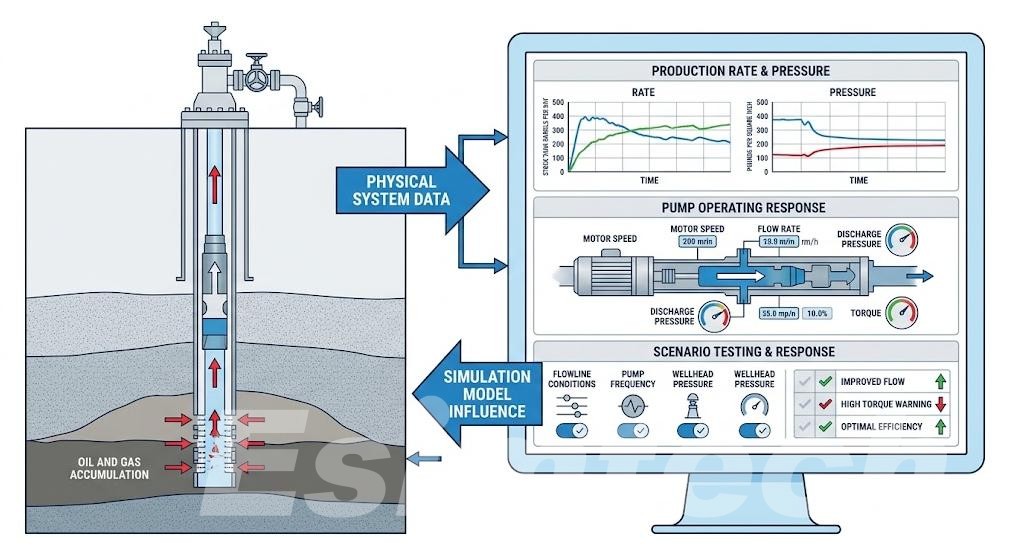
One of the most influential emerging trends is the adoption of real-time oil and gas simulation technologies, which allows the operators to simulate flow conditions, detect anomalies, and test operational scenarios without interrupting actual transport.
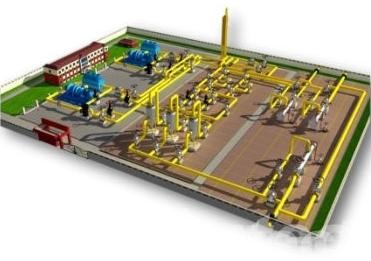
The following charts provides how oil transportation simulation technologies are applied for heavy crude oil.
| Simulation Application Area | How It Is Used | Operational Value |
| Flow behavior modeling | Simulates viscosity changes, multiphase flow, and pressure drop in pipelines | Helps predict flow stability and prevent blockages |
| Thermal simulation | Models heat loss, temperature distribution, and heating system performance | Ensures crude remains above wax-formation and solidification thresholds |
| Wax and asphaltene prediction | Simulates deposition trends under varying temperature and flow conditions | Reduces risk of pipeline fouling and operational shutdowns |
| Pump station optimization | Tests different pump configurations and operating schedules virtually | Improves energy efficiency and reduces mechanical stress |
| Diluent blending simulation | Models mixing ratios between heavy crude and light hydrocarbons | Ensures optimal viscosity reduction and transport efficiency |
| Transient analysis | Simulates start-up, shutdown, and emergency shutdown scenarios | Prevents pressure surges, slugging, and restart issues |
| Leak and rupture modeling | Simulates leak propagation and pressure loss behavior | Enhances safety systems and emergency response planning |
| Pipeline network simulation | Models entire pipeline systems including branches and terminals | Supports infrastructure design and capacity planning |
| Corrosion prediction modeling | Simulates chemical interaction between crude and pipeline materials | Helps plan maintenance and material selection |
| Digital twin systems | Creates real-time virtual replicas of pipeline operations using live data | Enables predictive maintenance and real-time optimization |
| Energy consumption simulation | Evaluates pumping power, heating demand, and system efficiency | Reduces operational costs and improves sustainability |
| Risk and reliability analysis | Models failure scenarios and system vulnerabilities | Supports safety assurance and regulatory compliance |
2. Artificial Intelligence and Predictive Flow Optimization
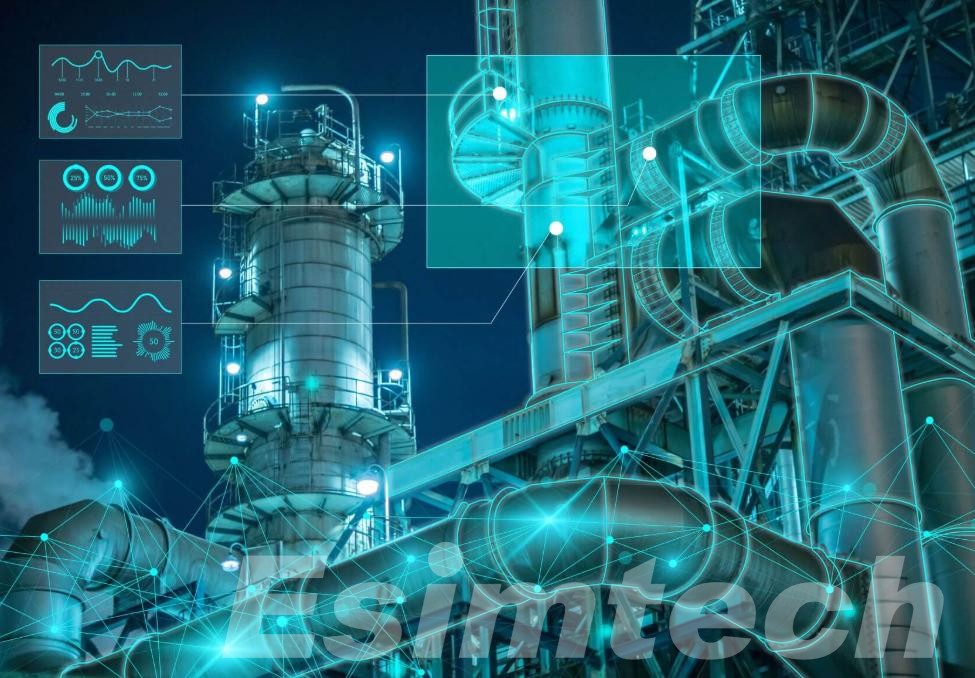
Artificial intelligence is becoming central to the optimization of heavy crude transport. Machine learning algorithms can analyze large volumes of operational data, including pressure readings, flow rates, and temperature variations, to identify hidden patterns that human operators may not easily detect.
AI-based systems can automatically adjust pumping schedules, optimize energy usage, and predict potential flow disruptions before they occur. This shift from reactive to predictive operations is expected to greatly enhance both efficiency and reliability in future pipeline networks.
3. Advanced Sensor Networks and Smart Monitoring Systems
Future pipeline infrastructure is increasingly being designed with dense networks of smart sensors embedded along the entire pipeline route. These sensors continuously monitor key parameters such as temperature, pressure, vibration, and acoustic signals.
With improved connectivity and data transmission capabilities, these systems enable near-instant detection of leaks, wax buildup, or abnormal pressure changes. The integration of fiber-optic sensing technologies further enhances the ability to detect small-scale changes over long distances, making pipelines significantly safer and more responsive.
4. Energy-Efficient Pumping and Low-Carbon Operations
Energy consumption is one of the major operational challenges in heavy crude transportation. Future developments are focused on reducing this energy demand through advanced pumping technologies. Variable-speed pumps, energy recovery systems, and optimized hydraulic designs are being introduced to improve efficiency.
In addition, there is growing interest in powering pumping stations with renewable energy sources such as solar and wind. This shift is part of a broader effort to reduce the carbon footprint of pipeline infrastructure and align with global sustainability goals.
5. Next-Generation Thermal Management and Materials
Since temperature control is critical for maintaining flowability, new insulation materials and pipeline coatings are being developed to improve thermal efficiency. These materials are designed to reduce heat loss over long distances, especially in cold climates where heavy crude is more likely to solidify.
At the same time, research into advanced pipeline materials is improving resistance to corrosion, erosion, and chemical degradation. These innovations help extend pipeline lifespan and reduce maintenance requirements.
6. Automation and Autonomous Pipeline Operations
Automation is playing an increasingly important role in pipeline management. Future systems are expected to rely heavily on autonomous control technologies that regulate pressure, temperature, and flow without constant human intervention.
These automated systems can respond instantly to changes in operating conditions, such as sudden pressure drops or flow inconsistencies. This reduces the risk of human error and improves overall operational stability.
7. Green Diluent Alternatives and Environmental Innovation
Traditional heavy crude transport often relies on blending with light hydrocarbons to reduce viscosity. However, environmental concerns are driving research into greener alternatives. These include bio-based diluents and low-carbon blending agents that reduce the environmental impact of pipeline operations.
In parallel, improvements in spill prevention and rapid response systems are helping minimize environmental risks associated with heavy crude transportation.
8. Integrated and Interconnected Pipeline Networks
Future pipeline systems are expected to become more integrated and interconnected, linking production sites, storage facilities, and refineries into a more flexible global supply network. This allows operators to dynamically adjust flow routes based on demand, maintenance schedules, and market conditions.
Final Words
As global energy demand keeps changing, heavy crude pipeline transportation systems will continue to matter because they connect resource-rich regions with refining centers. Ongoing innovations in pipeline materials, real-time monitoring technologies, and flow assurance practices will be crucial so the systems stay safe, effective, and environmentally responsible.