Managed Pressure Drilling Best Practices and Training Method

Written By: Computer Science Professor
Deeply rooted in the R&D of simulators for the oil and gas industry, committed to bringing safety to every oil worker.
Managed Pressure Drilling(MPD), which initially served as an auxiliary solution, has become an integral part of the drilling process in HPHT and offshore wells. Moving on to the year 2026, the energy market is dominated by the necessity to develop so-called “un-drillable” fields amid high operational costs. The current volatility in oil prices, combined with the increased concern about energy security at an international level, leaves no room for non-productive time due to wellbore instability.
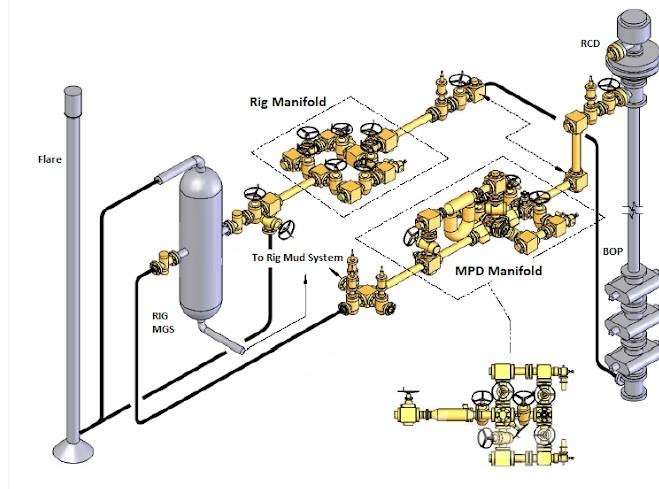
In contrast with normal drilling, which relies on the static hydrostatic pressure of the mud, MPD employs a closed system that enables the manipulation of the pressure profile in the annulus. As such, drilling is conducted within extremely thin margins of 0.2 to 0.5 ppg between the PP and the FG. Achieving success in the complex and challenging process of MPD is not simply a matter of purchasing equipment but also a combination of hydraulic modeling, maintenance, and an expertly trained crew.
Best Practices for Managed Pressure Drilling Operations
Accurate Pressure Profiling
The effectiveness of MPD depends on how precise the hydraulic modeling is. “A good guess” is not enough when dealing with a closed system.
- Pre-Spud Hydraulic Modeling: Operators have to employ software that factors in fluid compressibility, thermal expansion, and rheological characteristics of drilling muds. The software must be capable of forecasting ECD per foot drilled.
- Dynamic Pore Pressure Testing (DPPT): When drilling, the user needs to carry out occasional tests where the SBP is lowered slightly, and the flow-out is monitored. In case a micro-invasion is observed, then the pore pressure can be determined accurately, which helps in determining the safety margin.
- Calibration of the “Anchor Point”: The software should be updated using the real SPP and SBP figures. For instance, if the model gives 3,500 psi but the sensor detects 3,420 psi, then the rheological parameters in the software need to be modified immediately.
Equipment Redundancy and Maintenance
Any mechanical malfunction in the MPD system will result in instant wellbore instability. In case of an unforeseen drop in the SBP, the well will produce, while an increase may cause formation fracturing.
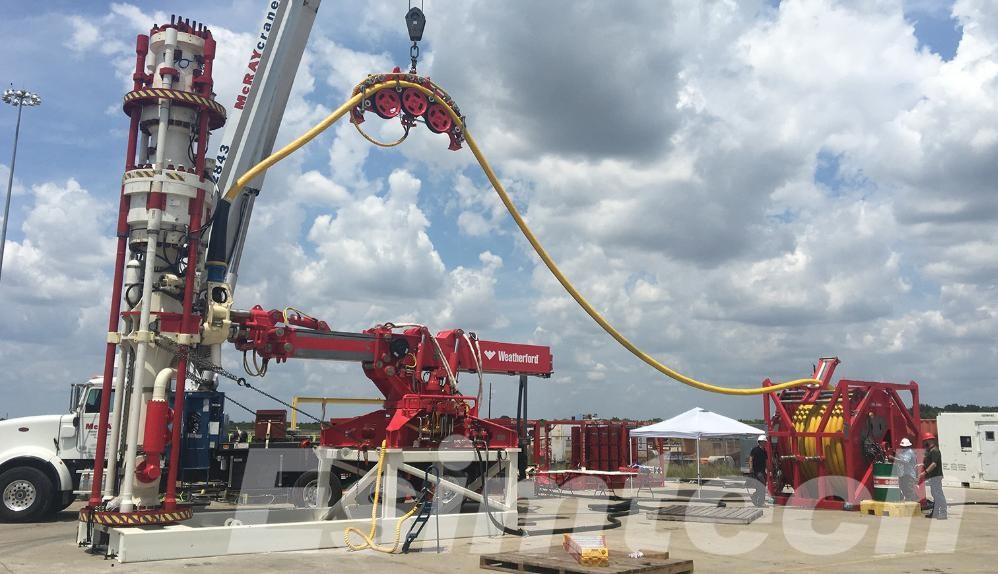
- Rotating Control Device (RCD) Integrity: The integrity of the RCD is considered to be the main source of pressure control. It is recommended to measure temperatures and vibrations of the bearing assembly. Sealing units need replacement depending on the hours rotated.
- The “Two-Choke” Minimum: The manifold design should include a minimum of two automatic chokes. In case one choke becomes eroded because of high solid velocity, there is a need for the flow to be diverted to the other choke without any reduction in SBP.
- Sensor Validation: Redundant Pressure and flow sensors (Coriolis meter) are a must. Any difference between the values obtained by Sensors A and B should result in diagnostics being conducted immediately.
Connection Management
The most crucial stage in the MPD procedure is when the mud pumps are shut off to add a stand of pipe. For a traditional drilling rig, reducing the amount of friction results in lowering the bottom hole pressure.
- Back Pressure Control: While the main pumps shut off, an automated MPD choke has to close down, or else a special back pressure pump must be increased to keep a constant Bottom Hole Pressure (BHP).
- “Transition Table”: There is an official “Ramp Up / Ramp Down” chart that must be followed by the drillers. It tells precisely how many GPM are being lost each second and the required number of psi rise in MPD pressure to compensate.
Kick Detection and Management
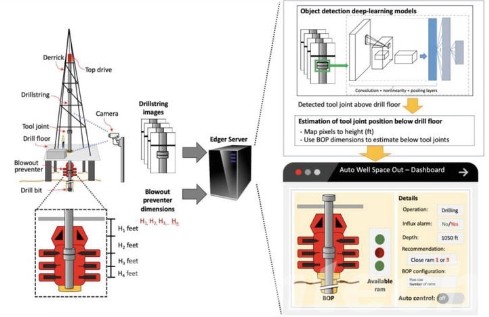
The MPD method offers a sensitivity factor not possible through conventional “Pit Gain” monitoring.
- Micro Flux Monitoring: With the help of Coriolis Flow Meters, the system differentiates between “Flow In” and “Flow Out” with a sensitivity of +/- 5 gpm. This enables the detection of an influx as little as 0.5 barrels.
- Influx Control (Not Only Shut-in): During the application of MPD, the first reaction to the kick event would be to increase the SBP to “stop the flow” without stopping circulation, thus preventing the movement of the kick into the wellbore and allowing “Dynamic Well Control.”
Managed Pressure Drilling Training Methods
Training via High Fidelity Simulators
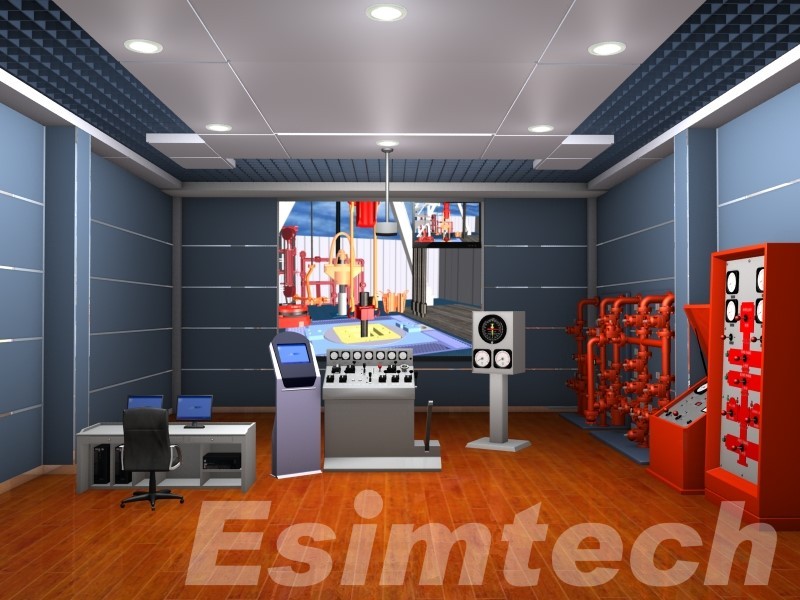
The training needs to be shifted from theoretical learning in classrooms to actual practical sessions that involve the use of HIL simulators. Muscle memory skills are developed when the controls used during the drilling simulation are the same as those in the rig. Adversarial challenges like plugged bit nozzles and faulty sensors are introduced by instructors to make trainees troubleshoot hydraulic systems effectively.
Crew Resource Management
MPD success depends on seamless communication between the Driller, MPD Engineer, and Toolpusher. Implementing closed-loop communication ensures every command is repeated and confirmed before execution, reducing the risk of human error. Crews must also undergo decision-matrix drills to reinforce “Stop Work Authority,” ensuring that predefined safety thresholds trigger immediate shut-in protocols without the need for additional administrative approval.
On-the-Job Training
The rig floor provides the practical intuition that simulators cannot fully replicate. Trainees should complete a minimum of two full well cycles from spud to TD under the direct supervision of a Senior MPD Lead. A rigorous logbook system is used to document and verify the mastery of critical tasks, such as RCD element changes under pressure and manual choke manipulation, ensuring that field competency is both demonstrated and recorded.
Managed Pressure Drilling Ultimate Competency Certification
The term “Certified MPD Specialist” refers to an individual who blends international standards for regulation with demonstrable skill in the field. The prerequisites for becoming a Certified MPD Specialist include having a legitimate IWCF (International Well Control Forum) or IADC WellSharp certification, where he/she passes through the MPD Supplemental Modules. These international qualifications form the foundation for a legally qualified operator to handle surface back pressure and closed-loop well control operations globally.
To achieve ultimate competency, candidates must pass a four-pillar internal assessment:
- Hydraulic Competence: The operator should be able to manually compute hydrostatic pressure, ECD, and friction loss. It ensures that the individual will be able to double-check the software results with physics, and not simply blindly trust the automatic readings.
- Mechanical Proficiency: Certification requires documented mastery of the hardware. This entails disassembling and reassembling RCD bearing units and calibrating Coriolis flowmeters and automated choke manifolds.
- Emergency Response: Candidates go through intense, timed simulator tests. They must maintain the stability of the wellbore when faced with extreme cases such as failure of the primary pump coupled with high-rate formation influxes.
- Software/Control Command: To be proficient in this area requires not only the skill of pressing buttons but also the capability to set up the computerized control system and tune the PID loops. This prevents hunting pressures in the system.
To Summary
The adoption of Managed Pressure Drilling signifies a move away from a reactionary problem-solving approach towards proactive wellbore design. In
2026, with the world’s energy markets experiencing increased volatility and disruptions to their critical seaways, reducing NPT becomes more than just a priority—it becomes a necessity for sustained profitability. With strict compliance with industry standards and hiring only internationally certified professionals, the industry can thrive despite adverse geological and political conditions. Essentially, combining state-of-the-art technology and skilled personnel makes Managed Pressure Drilling both robust and economical in today’s fast-evolving market environment.