The Evolution of Land Oil Rigs: From Traditional Derricks to Modern Onshore Drilling
There have been remarkable changes within the oil industry over the past century. At the centre of this transformation are onshore oil rigs. Onshore oil rigs have maintained their wooden derricks while continuing to drive the global energy market while modernising to more automated, safe, efficient, and cost-effective drilling platforms. This article considers the history of land oil rigs and their innovations while contrasting and comparing the technologies of the past and the present.
What Is a Land Oil Rig?
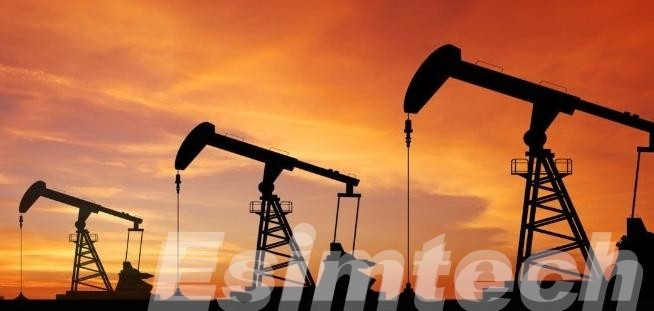
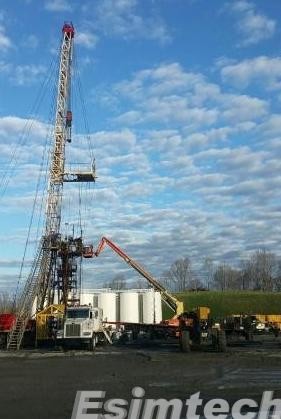
A land oil rig specialises in drilling wells plus extracting oil and gas from underground reserves. These oil rigs are stationed on land rather than on water. This gives them stable land, easier logistics, and less complicated structures. Buildings are usually made with a pulling, drilling, and lifting system, and each support system is designed to coordinate access above ground to reach the oil below ground.
Land oil rigs can be modular. There is new automation for the processes, and buildings can be constructed with new age safety structures to ensure control while the oil is being drilled. There are new processes to minimise the amount of time that a building is in use. These structures can be employed on land that has varied geological conditions, such as areas with deep underground reserves or even shallow formations. Overall, a land oil rig is a highly flexible platform that accesses oil underground without large safety concerns.
Early Oil Rig Onshore Technology: Traditional Derricks Started the Industry
The first oil rigs onshore were traditional wooden derricks, uncomplicated yet functional structures that laid the foundation for the modern oil industry. These early land oil rigs could only use a lot of manual labor, mechanical pulleys, and very basic drilling tools, which further limited both depth and speed. Despite their simplicity, they enabled taking out oil from shallow reservoirs and powered industrial growth, fueled local economies.
Traditional derricks usually consisted of tall, open-framework towers that carried the drill string and hoisting equipment. The operations involved a coordinated team for drilling, mud circulation, and well maintenance, sometimes under very harsh conditions. These oil rigs on land did not have automation or refined safety features as such; however, they established fundamental engineering practices and operational protocols that were deemed necessary. The experiences with early derricks led to more efficient, safe, and deeper-drilling land oil rigs, eventually opening the door to modern onshore drilling.
The Shift Toward Modern Land Oil Rigs: Key Innovations
Today’s onshore oil rigs use technology and modern methods to achieve the best results in three areas:
- Efficiency. Oil and gas rigs onshore today have automated drilling and AI systems that monitor activities in real-time and speed up the process while avoiding delays. "Derrick" rigs were used for oil and gas drilling in the past. Because modern rigs can operate around the clock, service levels are much higher than those of "Derrick" rigs.
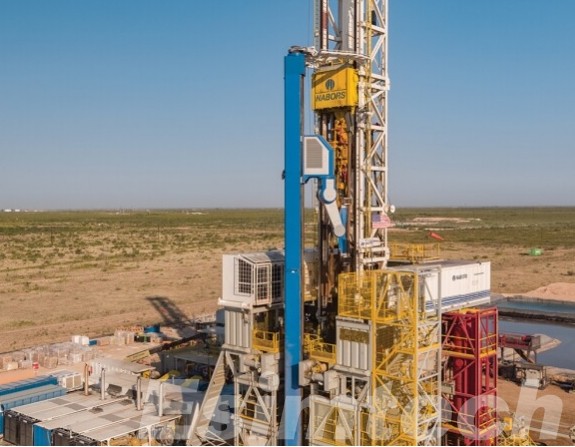
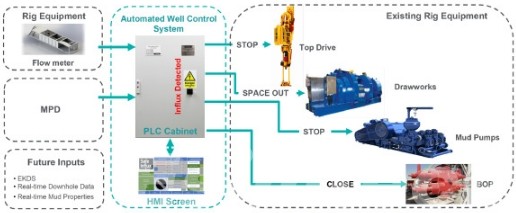
- Safety. Using real-time sensors and predictive analytics, operators can monitor rigs for pressure, equipment, and other factors, resolving issues before they become serious problems. As a result, incidents on oil rigs are much less common than in the past.
- Cost Containment. Due to scheduled maintenance, modular construction, themed maintenance scheduling, and better programmed mechanical routines, it is possible to "presence" less in all aspects. Overall, this allows for better-structured plans and less uncertainty around overall operational costs.
As a result of the above factors, oil rigs onshore today are better than before in all aspects: effectiveness, cost, safety, and speed. Consequently, oil rigs onshore have greater operational flexibility in the face of shifts in the market and geological factors. These improvements bring oil rigs onshore to the forefront of modern practice and demonstrate that operational technology can positively change the drilling industry.
Comparing Traditional vs Modern Land Oil Rigs
The transition from traditional derricks to new land oil rigs is a great opportunity to see how far processes, safety, and technology have come. All early oil rigs on land were very simple and required a lot of manual labour. Today, oil rigs use automation and digital monitoring technology along with modular design.
The key differences from then to now are:
- Drilling Depth: Old traditional land oil rigs only stretched down to very shallow reservoirs. That was only a few hundred feet down. Modern oil rigs onshore are several thousand feet down.
- Automation: Early derricks had to manually lift hoisting equipment which barriers off a section of the rig. Today, rigs have automated all of the functions of the drill, and even use AI technology to assist.
- Safety: Old traditional land oil rigs had very little to no safety altogether, which put crews at high risk. Today there are real land oil rigs, and they have safety altogether with collision avoidance, predictive maintenance, and automated emergency systems.
- Operational Efficiency: Modern oil rigs onshore have improved the overall timeframe, reduced downtime, and overall lowered costs of oil drilling from historical oil drilling.
This shows how the technology innovations from highly labour-intensive, traditional land oil rigs have improved. They are now highly productive, land oil rigs.
Overcome the Change to Modern Oil Rig on Land: Simulation
Moving from traditional land oil rigs to modern oil rigs on land requires planning and calculating risk. In this scenario, oil and gas engineering simulation helps engineers model drilling simulations, evaluate equipment, and troubleshoot issues in a model before transitioning to field deployment.
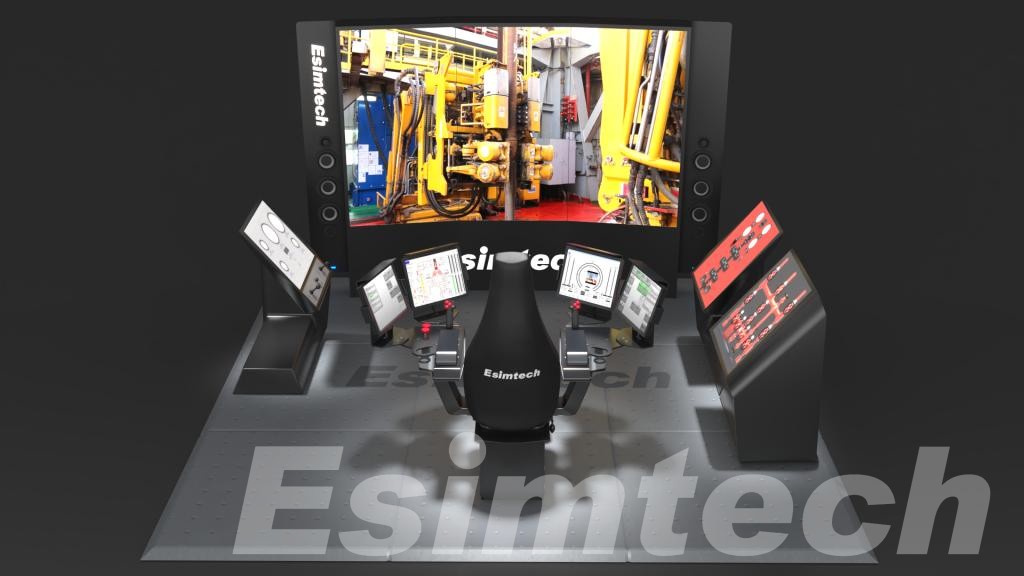
Engineers can evaluate a range of virtual scenarios using the oil and gas engineering simulation. These include fluid pressure and mechanical changes to the drilling model, as well as environmental variables that the engineering team can set. The simulation may help refine drilling, resource management, and crew management to produce a scenario with minimal risk.
Likewise, the oil and gas engineering simulation can help evaluate the fastest configuration and arrangement of modular land oil rigs, saving time on assembly and startup. In using gas, the simulation helped manage the oil company’s risk in the transition to modern rigs. By using the simulation, the company managed its risk. The simulation technology helped to manage its risk. By using simulation technology, the company helped to manage its risk and an oil production company improved its high performance.
The End
How land-based oil drilling and the technology that supports oil drilling has changed over the years is seen in the transition of oil land drilling companies' early use of derricks to the use of modern oil drilling rigs. Today's oil drilling rigs are faster, more efficient, and safer, which allows for more complex drilling that goes deeper into the earth's crust. The land oil drilling companies and industries that utilise these oil drilling rigs are able to provide more energy to the world because of their new sustainable practices.