
Enhanced Oil Recovery in Unconventional Reservoirs
Unconventional reservoirs present unique challenges due to their low permeability, heterogeneity, and complex geomechanics. Traditional primary and secondary recovery methods often yield poor results in these environments, prompting the development and application of Enhanced Oil Recovery (EOR) techniques tailored to the specific conditions of unconventional plays.
Understanding Unconventional Reservoirs
Unconventional reservoirs are hydrocarbon-bearing formations that cannot produce oil or gas at economic flow rates without assistance from advanced extraction techniques. Unlike conventional reservoirs, where hydrocarbons accumulate in porous, permeable rocks and can be extracted through natural pressure drive or simple water flooding, unconventional reservoirs require extensive stimulation such as hydraulic fracturing or horizontal drilling to unlock their production potential.
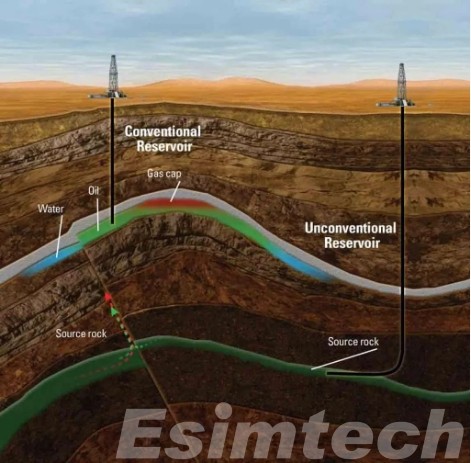
1. Unique Geological Characteristics
One of the most prominent features of unconventional reservoirs is their ultra-low permeability, typically in the nanodarcy range, which severely limits fluid flow under natural conditions. In addition to low permeability, these reservoirs exhibit significant geological heterogeneity, meaning that rock and fluid properties can vary widely across short distances. This heterogeneity complicates fluid movement, stimulation effectiveness, and reservoir management strategies.
2. Dependency on Stimulation Techniques
Extraction from unconventional reservoirs is heavily reliant on stimulation methods, particularly hydraulic fracturing. These techniques create artificial pathways for hydrocarbons to flow by inducing fractures in the rock. Without such stimulation, most unconventional formations would be commercially non-productive. Horizontal drilling is also commonly used to increase the contact area with the productive zone, enhancing recovery efficiency.
3. Complex Flow Mechanisms
Unlike conventional systems where Darcy’s law can be applied directly to predict fluid behavior, unconventional reservoirs often exhibit complex flow dynamics. These may involve multiphase flow in nano-scale pores, capillary pressure effects, and adsorption/desorption processes. Understanding these unique flow mechanisms is essential for designing effective enhanced oil recovery strategies.
4. Geomechanical Considerations
Geomechanics plays a central role in the development of unconventional reservoirs. Factors such as rock brittleness, in-situ stress orientation, and natural fracture networks influence the success of stimulation efforts and subsequent recovery. Properly characterizing these parameters is critical to optimizing both initial production and the application of EOR methods.
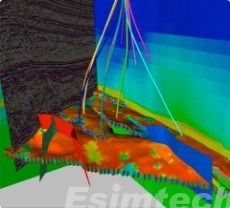
Types of Enhanced Oil Recovery Techniques for Unconventional Reservoirs
1. Gas Injection
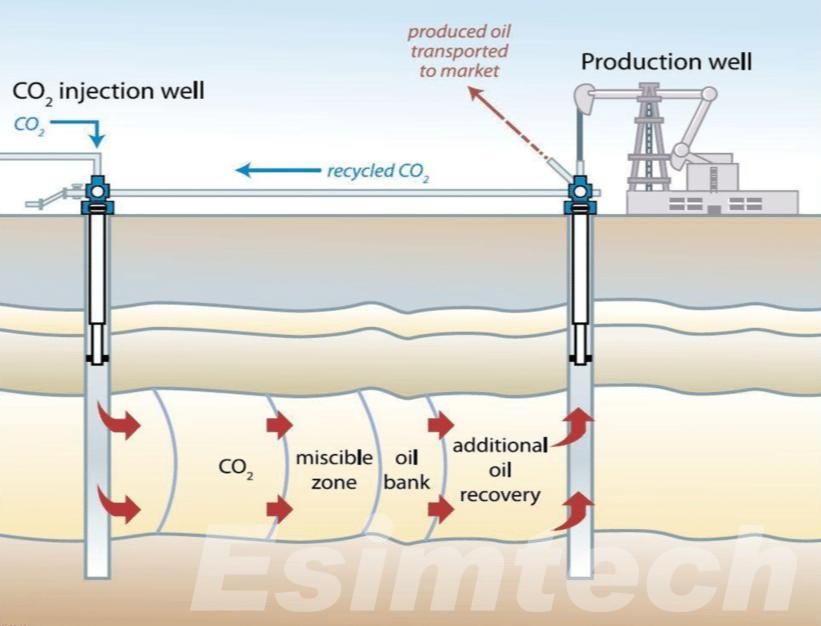
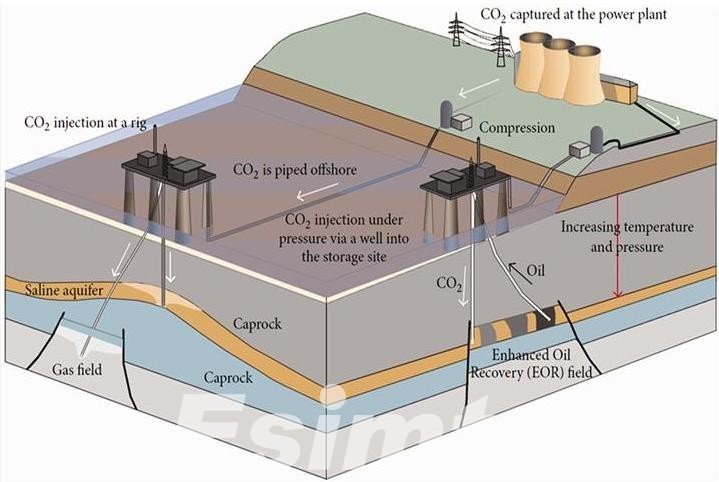
Gas Injection Enhanced Oil Recovery, particularly using carbon dioxide (CO₂), is one of the most promising EOR techniques for unconventional reservoirs. In formations like shale, CO₂ can enhance oil recovery by dissolving into the oil, reducing its viscosity, and causing it to swell, thereby improving its flow through tight pores and fractures. Additionally, CO₂ has the potential to desorb hydrocarbons from the organic matter within the rock, especially in formations with high total organic carbon (TOC). Challenges remain in managing fracture propagation and ensuring uniform gas distribution, but advances in monitoring and modeling have significantly improved the feasibility of this method.
2. Chemical EOR
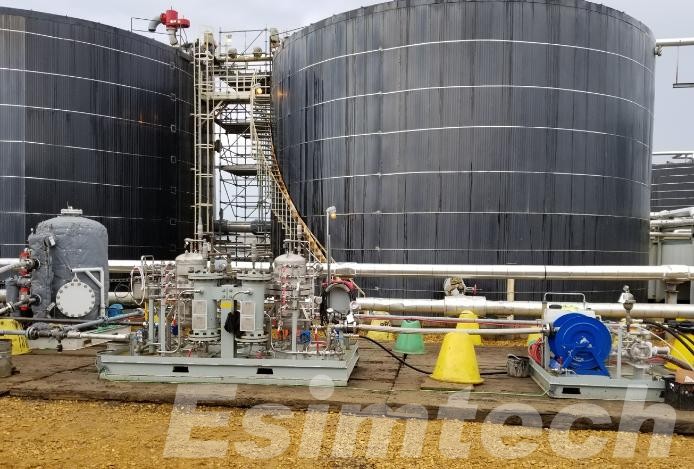
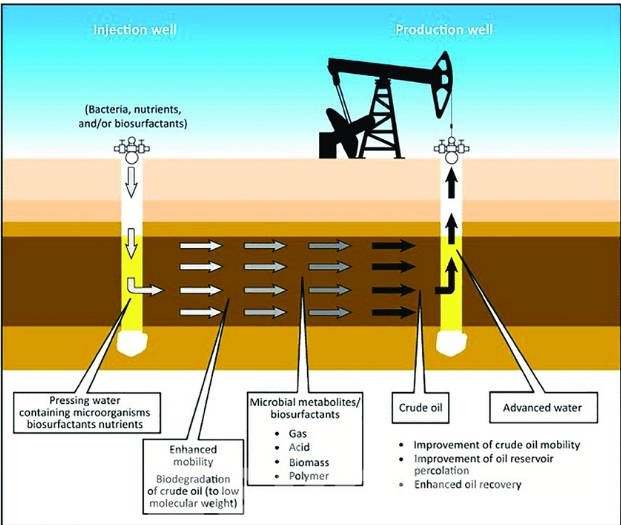
Chemical Enhanced Oil Recovery involves injecting specially formulated substances—such as surfactants, polymers, or alkalis—into the reservoir to improve oil mobility and sweep efficiency. Surfactants can reduce interfacial tension between oil and water, while polymers increase the viscosity of the displacing fluid to minimize fingering and bypassing. In unconventional reservoirs, nano-scale pore throats and complex wettability behavior require customized chemical formulations. Although this approach is still under research and development for widespread use in unconventional plays, it holds potential when tailored to specific reservoir conditions.
3. Thermal EOR
Thermal Enhanced Oil Recovery methods, such as steam injection or in-situ combustion, are traditionally used in heavy oil reservoirs but face limitations in unconventional plays due to the low thermal conductivity and high heat loss in tight formations. However, newer technologies such as electromagnetic heating or radio-frequency (RF) heating are being investigated as alternatives. These methods generate localized heat to reduce oil viscosity and mobilize hydrocarbons without the extensive energy loss associated with traditional steam-based approaches.
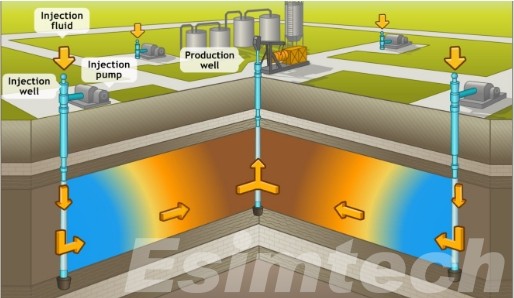
4. Water-Based Methods
Waterflooding is generally less effective in unconventional formations due to poor rock permeability and the difficulty in achieving uniform fluid distribution. However, engineered waterflooding—where water chemistry is altered to improve rock wettability or interact favorably with reservoir fluids—has shown limited but growing interest. Low-salinity waterflooding and smart water injection techniques are being evaluated in specific unconventional contexts, though practical field applications remain sparse.
5. Nanotechnology-Enhanced EOR
Nanotechnology is emerging as a cutting-edge tool for EOR in unconventional reservoirs. Engineered nanoparticles can be designed to alter rock wettability, reduce interfacial tension, or carry reactive agents into ultra-tight pore networks. These particles can navigate complex fracture systems and enable targeted interaction at the microscopic scale. Though still largely in the experimental phase, early results indicate that nanofluid-based EOR could become a game-changing technique for improving oil recovery in shale and tight rock formations.
6. Hybrid EOR Approaches
In some cases, combining multiple Enhanced Oil Recovery methods offers synergistic benefits. For example, gas injection may be combined with chemical additives or thermal stimulation to enhance effectiveness. These hybrid EOR approaches are particularly relevant in unconventional reservoirs, where multiple mechanisms may be required to overcome the complex barriers to fluid flow. Tailoring these solutions to reservoir-specific conditions is key to their success.
Challenges and Future Solutions in Implementing Enhanced Oil Recovery in Unconventional Reservoirs
| Challenge | Description | Future Solutions |
| Ultra-Low Permeability | Unconventional reservoirs often exhibit permeability in the nanodarcy range, severely limiting fluid movement. | Development of more effective stimulation techniques and nanofluid-based EOR methods to improve flow paths. |
| Fracture Complexity | Induced and natural fractures can create unpredictable flow behavior and hinder sweep efficiency. | Advanced geomechanical modeling, real-time fracture mapping, and adaptive stimulation strategies. |
| Heterogeneous Rock Properties | Rock and fluid characteristics vary significantly over small distances, complicating EOR planning. | Use of machine learning and high-resolution reservoir characterization for targeted EOR application. |
| Limited EOR Field Data | Most EOR techniques are still in the pilot or research phase in unconventional plays, limiting best practices. | Expansion of pilot tests, long-term monitoring, and shared industry databases to build empirical knowledge. |
| Capillary Trapping and Wettability | High capillary forces and mixed wettability reduce the effectiveness of fluid displacement. | Custom-designed surfactants and wettability modifiers optimized for specific shale mineralogy and fluids. |
| Economic Viability | High operational costs and low recovery rates can make EOR in these settings economically unattractive. | Process optimization, modular EOR systems, and incentives for CO₂ utilization to improve cost efficiency. |
| Environmental and Regulatory Risks | Concerns over water usage, CO₂ storage, and induced seismicity limit the adoption of some EOR methods. | Development of greener, water-efficient EOR chemicals and improved monitoring of geomechanical impacts. |
| Fluid-Rock Interaction Uncertainty | Unpredictable chemical interactions may affect oil recovery and long-term formation integrity. | Laboratory-scale testing and reactive transport simulations to forecast and control fluid-rock interactions. |
How Simulation Technology is Used for Enhanced Oil Recovery in Unconventional Reservoirs
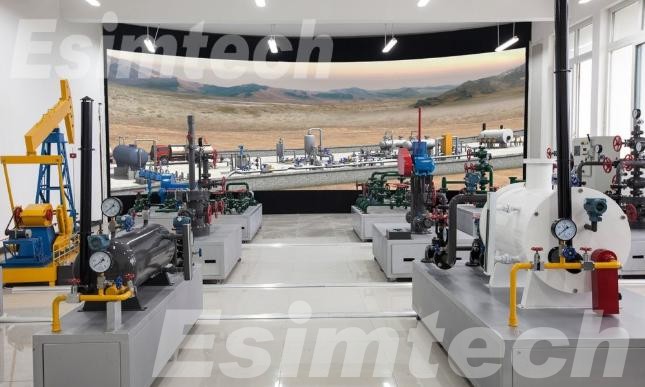
Oil and gas simulation technology does a great favor for designing, optimizing, and evaluating enhanced oil recovery strategies in the complex environment of unconventional reservoirs.
1. Reservoir Characterization and Modeling
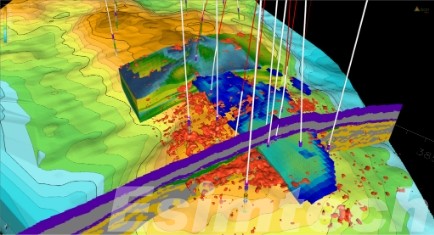
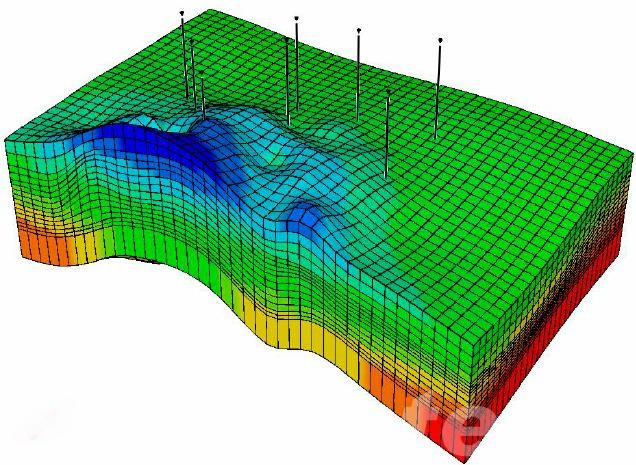
Accurate simulation begins with comprehensive reservoir characterization. This involves integrating geological, geophysical, petrophysical, and geomechanical data to build detailed 3D models of the reservoir. In unconventional settings, simulations must capture fine-scale heterogeneity, including natural fractures, organic content, and stress anisotropy. Advanced geocellular modeling software allows operators to construct these complex frameworks, which serve as the foundation for all further EOR analyses.
2. Fracture Modeling and Optimization
Fracturing simulation is essential for unconventional reservoirs, where induced hydraulic fractures are the primary conduits for fluid flow. Simulation tools model fracture geometry, propagation, and interaction with natural fractures using discrete fracture network (DFN) and continuum approaches. These models enable engineers to optimize fracture spacing, stage placement, and treatment volumes, maximizing contact with hydrocarbon-rich zones and improving EOR fluid distribution.
3. Multiphase Flow Simulation
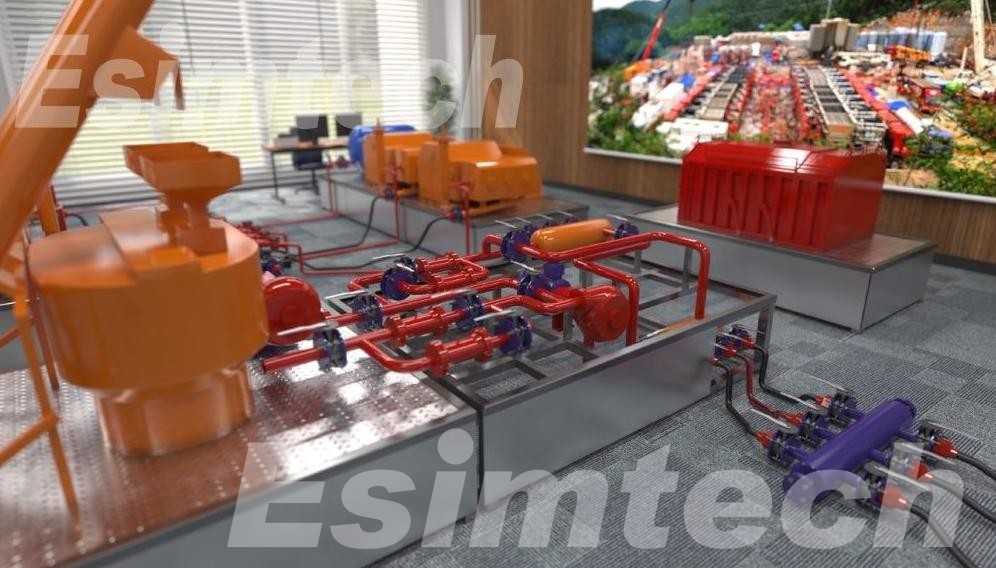
Once the reservoir and fractures are modeled, multiphase flow simulation is employed to predict the movement of injected EOR agents (e.g., CO₂, surfactants, polymers) and their interaction with reservoir fluids. These simulations account for capillary pressure, relative permeability, adsorption/desorption, and phase behavior in nano-scale pores. This is especially crucial in unconventional reservoirs, where traditional Darcy-based models may not adequately represent flow dynamics.
4. Thermal and Chemical EOR Simulations
Thermal EOR simulations involve modeling heat transfer, steam condensation, and changes in oil viscosity under heating. In unconventional formations, advanced thermal simulators evaluate newer methods such as electromagnetic or RF heating. For chemical EOR, simulations track the performance of injected formulations in altering wettability, reducing interfacial tension, and enhancing sweep efficiency. These simulations often incorporate chemical kinetics and surface interactions to improve accuracy.
5. History Matching and Forecasting
Simulation tools are also used for history matching, where actual production and pressure data are compared against model predictions to refine reservoir models. Once calibrated, these models can forecast the performance of various EOR scenarios. Operators can virtually test different injection strategies, rates, and chemical formulations before committing to costly field trials.
6. Machine Learning Integration
Recent advancements include the integration of machine learning with reservoir simulation. AI algorithms can rapidly analyze large datasets, identify hidden patterns, and optimize parameters for EOR design. Surrogate models trained on high-fidelity simulations also allow for faster decision-making during field operations.
7. Environmental and Economic Impact Assessment
Simulation platforms support not just technical planning, but also environmental and economic evaluation. For example, CO₂-EOR simulations can predict CO₂ sequestration potential, enabling carbon credits or regulatory compliance. Cost-benefit analysis tools embedded in simulation workflows help operators make informed decisions based on recovery efficiency, operational costs, and environmental trade-offs.
Final Words
Enhanced oil recovery in unconventional reservoirs represents a critical frontier in maximizing the value of hard-to-produce resources. Through innovations in gas injection, chemical processes, thermal techniques, and digital technologies, the industry is gradually overcoming the barriers posed by low permeability and reservoir complexity. As energy demand continues to grow and conventional reserves decline, EOR in unconventional reservoirs will be increasingly vital in securing a stable and sustainable energy future.