Floating LNG(FLNG) vs. Land-Based LNG: Strategic & Technical Analysis

Written By: Computer Science Professor
Deeply rooted in the R&D of simulators for the oil and gas industry, committed to bringing safety to every oil worker.
Natural gas remains a key element in the global energy transition. With advancements in offshore extraction technology, remote gas fields have become economically viable for development. The developers face a core strategic choice: floating liquefied natural gas (FLNG) or land-based LNG?
Both need to cool the natural gas to -162℃ (-260℉) to facilitate storage and transportation. However, there are significant differences in structural design, capital allocation, operational risks, and labor requirements. This article will compare the engineering and strategic differences between FLNG and onshore LNG, providing reference for the full life cycle assessment of projects for operators, EPC contractors, and decision-makers.
What is Floating LNG (FLNG)?
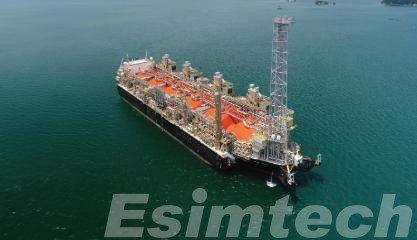
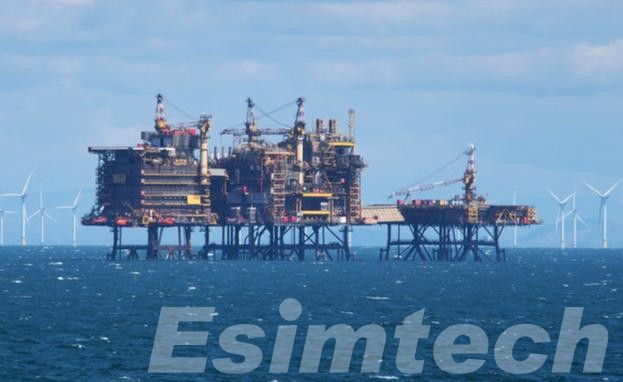
Floating liquefied natural gas (FLNG) is an offshore facility that integrates the processes of natural gas processing, liquefaction, storage, and unloading. It is usually deployed directly above or nearby the gas field.
Because the entire liquefaction process is completed at sea, FLNG does not require the construction of long-distance submarine pipelines or the establishment of onshore infrastructure. It is an efficient solution for developing remote, deep-water or stranded gas fields.
FLNG operation process:
Subsea wellhead ➔ FLNG processing and liquefaction ➔ Ship-to-Ship (STS) transfer ➔ LNG transport vessel
What is Traditional Land-Based LNG?
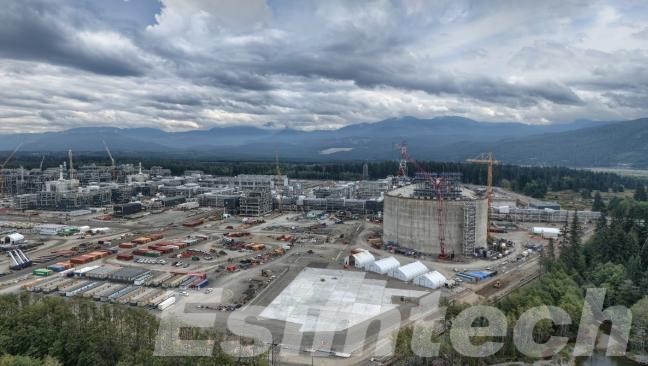
Land-based LNG facilities are built in coastal areas and have direct access to deep-water ports. Natural gas is extracted from onshore or shallow-water gas fields and transported through pipeline networks to centralized factories.
Such factories are equipped with pre-treatment facilities, large refrigeration systems, fully enclosed storage tanks, and dedicated export terminals. They feature high production capacity and long service life, and are the core force in the global LNG supply chain.
Onshore LNG production process:
Onshore/Shallow Water Gas Field ➔ Pipeline Network ➔ Onshore Plant Pretreatment and Liquefaction ➔ Storage Tanks ➔ Port Loading ➔ LNG Transport Vessel
Key Differences: FLNG vs. Land-Based LNG
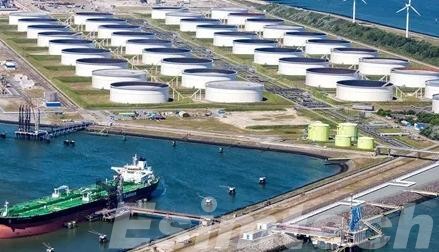
When assessing the applicability of FLNG (Floating Liquefied Natural Gas) and onshore LNG, geographical location alone cannot be the sole criterion. The core difference between the two lies in the way of process integration: FLNG integrates the entire value chain into a compact floating structure, while onshore facilities distribute it across onshore plants and submarine pipeline networks.
Here is a high-level strategic overview:
| Evaluation Factor | Floating LNG (FLNG) | Traditional Land-Based LNG |
| Primary Location | Offshore (Stationed directly over gas fields) | Onshore (Coastal industrial complexes) |
| Capital Profile | High marine shipyard CAPEX; eliminates subsea trunklines & land costs. | High civil engineering & land acquisition costs; lower marine intensity. |
| Deployability & Asset Life | Relocatable asset; ideal for medium field lifespans. | Fixed, permanent asset tied to local onshore infrastructure. |
| Operational Risk Environment | High-density equipment plot; severe sea-state interaction. | Wide safety buffers between process units; stable ground foundation. |
Strategic and Engineering Trade-Offs
1. Capital Dynamics: CAPEX vs. Lifetime ROI
FLNG does not merely reduce capital risks; instead, it alters the capital expenditure (CAPEX) structure:
- FLNG: Eliminates the costs associated with long-distance submarine pipelines and the acquisition of coastal land. However, as it requires integrating the cryogenic liquefaction unit into the floating vessel, it demands high-standard marine metallurgy and modular construction, resulting in higher upfront capital expenditure for the shipyard. For stranded gas fields, FLNG can significantly increase the net present value (NPV) of the project.
- Land-based LNG: The construction cost is high (including dredging, foundation, and full containment tanks), and the cost of obtaining right-of-way (ROW) for pipelines also needs to be borne. However, for large gas fields, land-based LNG has higher long-term scale benefits.
2. Physical Footprint and Process Safety
The safety engineering logic for facilities at sea is completely different from that for land-based facilities:
- High equipment density and explosion-proof safety: The land-based facilities are separated from the storage tanks by several hundred meters; the equipment density of FLNG is 3 to 4 times higher, requiring extremely high standards for heat radiation protection, explosion-proof walls, and highly integrated emergency shutdown (ESD) systems.
- Liquid sloshing: The waves cause the liquid in the storage tank to shake, which not only exerts dynamic loads on the diaphragm safety shell system but also disrupts the fluid dynamics balance of the distillation tower.
3. Marine Operations & Weather Downtime
Land-based terminals are mostly built in protected coastal waters, while FLNGs have to operate directly in the open ocean environment.
During the execution of ship-to-ship (STS) low-temperature LNG transportation in adverse sea conditions, dynamic positioning (DP), dedicated flexible hoses, and precise monitoring of weather windows are relied upon to avoid interruption of unloading or leakage risks.
The Human Factor: Crew Preparedness in High-Risk LNG Environments
Operating FLNG and onshore LNG facilities present different challenges. Due to the integration of navigation and high-pressure gas processing in FLNG, traditional onshore personnel need to undergo cross-disciplinary professional training to be competent.
To reduce operational risks, operators widely apply dynamic simulation and digital twin technologies before the facility is put into operation:
- Process control and ESD drills: Simulate complex pretreatment, liquefaction circuits, and automatic emergency shutdown scenarios.
- Maritime transportation and ship operation: Trainees should be able to handle low-temperature loading, ship-to-ship (STS) transfer, and adverse sea conditions.
- Safety and Emergency Response: Through virtual drills to simulate gas leaks, fires, and blowouts, enhance response capabilities.
Esimtech’s oil and gas production and transportation simulator, along with its emergency drill system, can assist teams in seamlessly integrating onshore standard operating procedures with the complex marine operation environment.
Conclusion: Making the Right Strategic Choice
The choice between FLNG and onshore LNG is not a matter of which is superior; rather, it depends on the geographical, economic, and operational realities of the gas field:
- Choose FLNG: Suitable for remote, deep-water or medium-sized stranded gas fields. When pipeline costs are too high or when the need to avoid geopolitical risks through facility mobility is required, FLNG is the ideal choice.
- Choose land-based LNG: Suitable for onshore or offshore gas fields with abundant reserves, stable demand, and a well-developed pipeline network, and suitable for long-term production.
No matter which solution is adopted, personnel performance and operational safety directly determine the project ROI. Introducing advanced simulation training as early as possible can help the engineering team master complex processes, reduce downtime, and ensure asset safety.