What Is Pulsed Neutron Logging? Applications in Cased-Hole Wells

Written By: Computer Science Professor
Deeply rooted in the R&D of simulators for the oil and gas industry, committed to bringing safety to every oil worker.
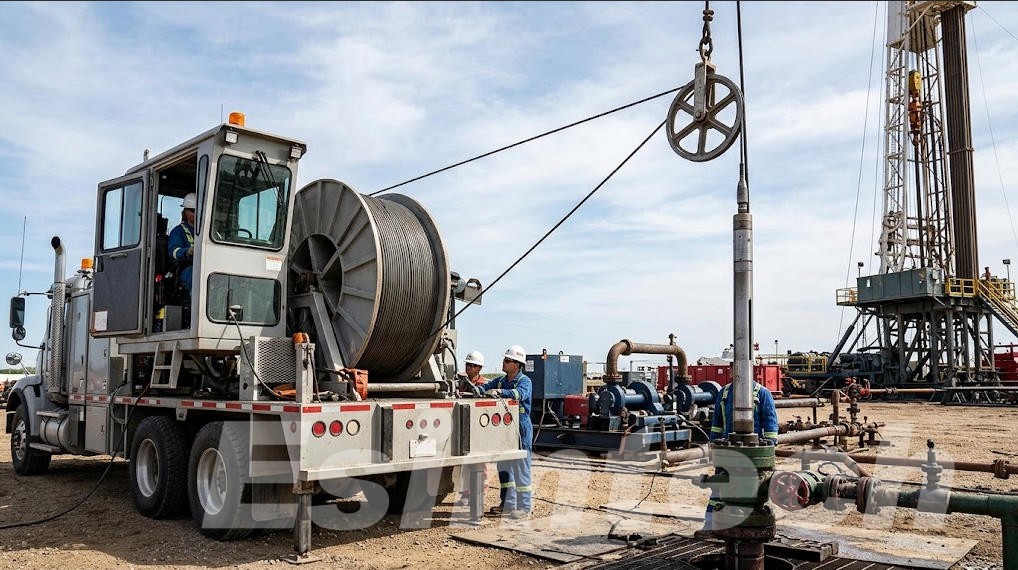
When it is necessary to assess the oil reservoir conditions in a well with a pre-installed casing, pulsed neutron logging (PNL) can provide an effective evaluation method. Unlike conventional open-hole well logging, PNL can assess the formation through the casing without the need to reopen the wellbore and can obtain information such as fluid saturation and reservoir changes.
For mature wells in production, the common evaluation focuses include the distribution of remaining oil, whether injected water has entered specific layers, whether gas has entered the formation, and which layers still have exploitable value.
PNL can be used to assess these reservoirs and production conditions.
How Does Pulsed Neutron Logging Work in a Cased-Hole Well?
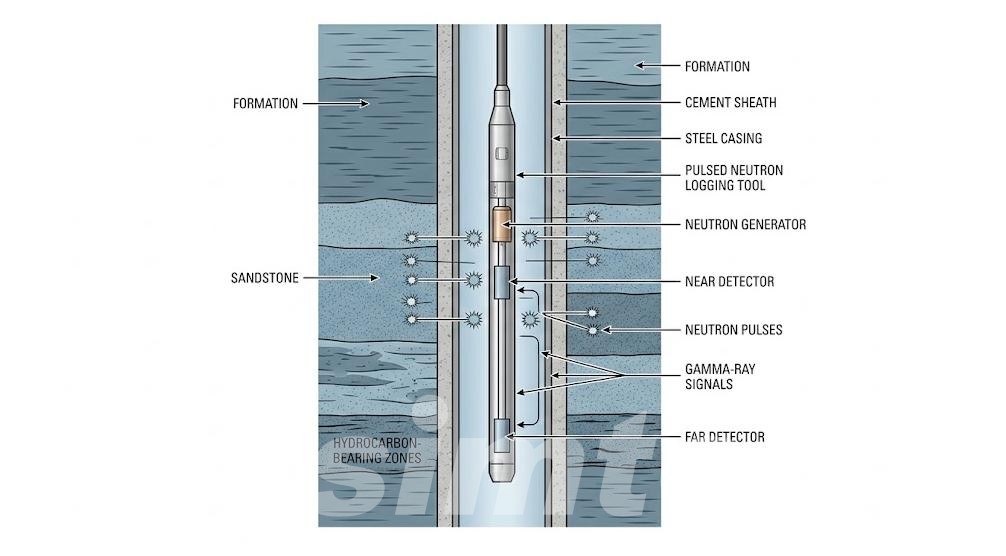
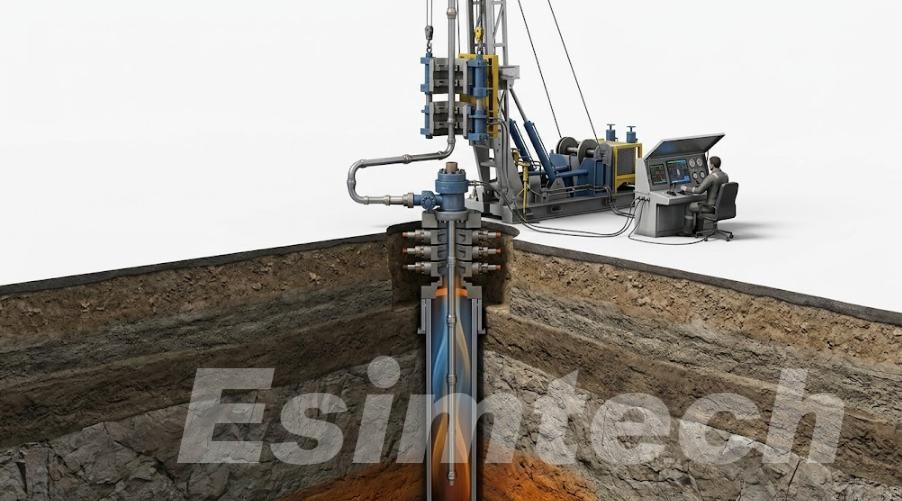
The pulsed neutron logging instrument generates high-energy neutrons and measures the gamma-ray response produced by the interaction of neutrons with the formation materials.
In cased wells, Sigma (thermal neutron capture cross-section) logging and carbon-oxygen (C/O) logging are two important measurement methods. Sigma measurement is based on the neutron capture characteristics of the formation and can be used to assess changes in formation water and hydrocarbon saturation. C/O logging estimates oil saturation and water saturation by measuring the gamma-ray response related to carbon and oxygen.
By combining PNL data with previous logging data, well completion information, and production history, the changes in reservoir fluids after well completion can be further evaluated.
Read more: What are the Top 5 Cased Hole Logging Tools
Key Applications of Pulsed Neutron Logging
1. Remaining Oil Saturation Evaluation
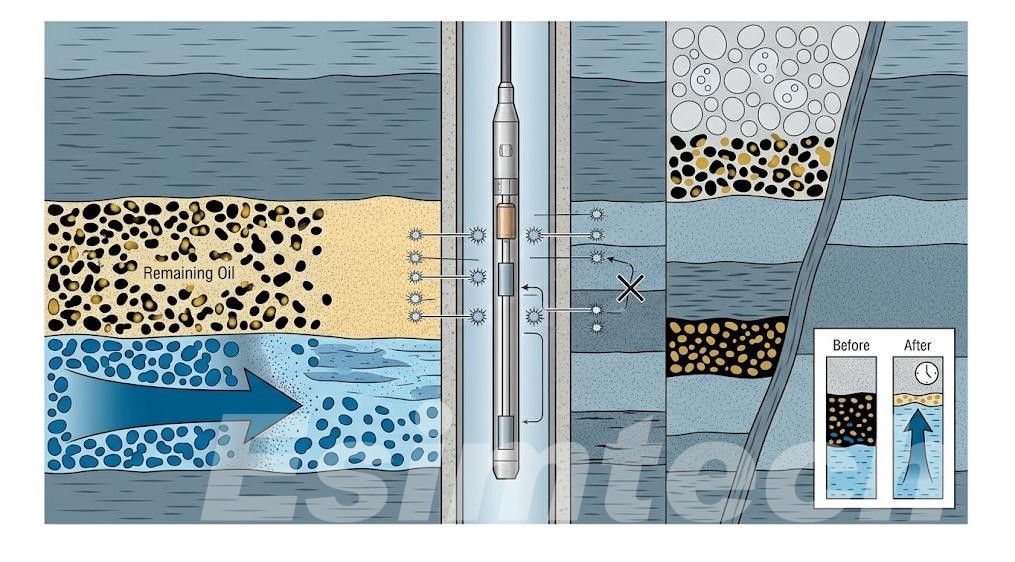
One of the important applications of pulsed neutron logging (PNL) is to assess the remaining hydrocarbon saturation in cased wells.
In mature oil fields, continuous production from oil wells does not mean that all reservoir sections have been fully exploited. Some sections may still contain recoverable oil, while others may have been water-floored or are close to depletion.
PNL can identify the sections with remaining hydrocarbon saturation, providing a basis for the following operations:
- Selecting new perforation sections
- Evaluating bypassed oil layers
- Planning re-completion
- Determining well workover priority
Before implementing additional production operations, PNL can be used to determine the distribution location of remaining oil.
2. Water Flooding and Water Breakthrough Monitoring
Fluid migration is another important application of pulsed neutron logging (PNL).
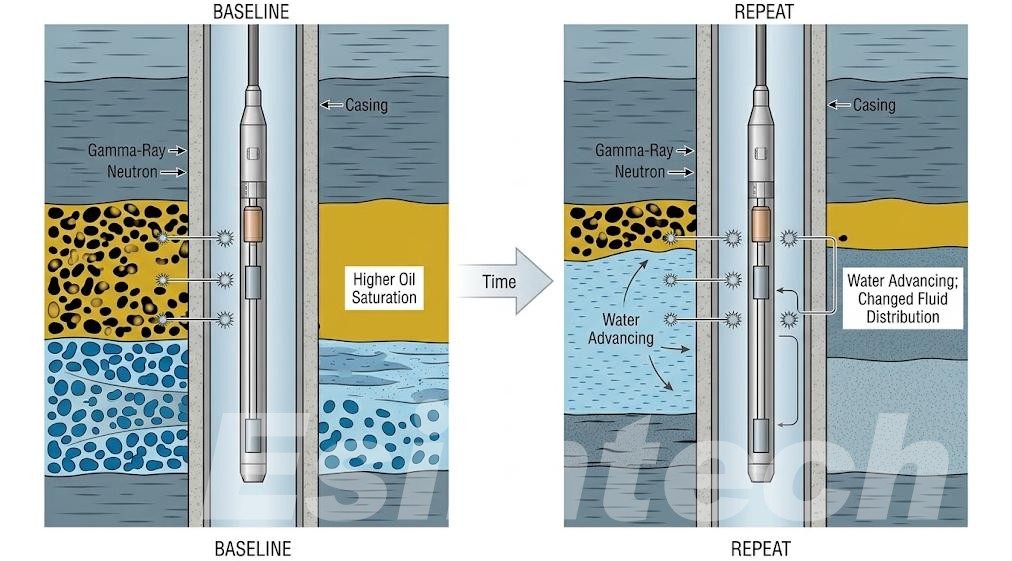
During water injection development, the formation saturation will change over time. By comparing the repeated PNL logging results with earlier data, water saturation changes can be identified, and which layer segments are affected by injected water or water invasion can be determined.
These data can be used to analyze:
- Water breakthrough
- Water invasion
- Uneven water injection response
- Increase in production volume
- Changes in different reservoir layers
Compared with surface production data, PNL can also provide information at the formation level, helping to determine the source and migration of water flow.
3. Identifying Bypassed Hydrocarbons
Even though there are still hydrocarbon resources with potential for exploitation in some areas of the oil reservoir, the production from the oil wells may still decline.
PNL (Pulse Neutron Logging) can identify the layers that were not fully exploited or bypassed during the initial development of the oil field. The saturation of these layers may be different from that of the adjacent production layers.
By combining production data with geological information, it is possible to further determine whether a certain layer needs to be re-perforated, re-completed, or maintained as it is.
For mature oil and gas assets, casing well logging is not only used to obtain formation data, but can also be used as a tool for reservoir monitoring and production decision-making.
4. Gas Saturation Evaluation
PNL (Pulse Neutron Logging) can also provide information on the gas saturation in the casing well.
Compared with the oil-water discrimination, the interpretation of gas saturation is more susceptible to the influence of formation and wellbore conditions. Factors such as porosity, lithology, clay content, formation water, casing, cement, and wellbore conditions can all affect the logging response.
When analyzing gas saturation, it is necessary to combine other rock physics data and production data for a comprehensive interpretation.
5. Time-Lapse Reservoir Monitoring
Single pulse neutron logging (PNL) can only reflect the state of the reservoir at a specific moment, while repeated measurements can show the changes in the reservoir over time.
By comparing the baseline logging data with repeated PNL data, engineers can monitor changes in fluid saturation, including:
- Reservoir depletion
- Water injection
- Fluid migration
- Change in oil saturation
- Gas invasion or gas redistribution
This time-shift monitoring method is particularly suitable for mature oil fields, as the reservoir conditions may have significantly differed from those measured in the initial open-hole well logging.
When Should Operators Consider Pulsed Neutron Logging?
PNL (Pulse Neutron Logging) is applicable in the following situations:
- The wellbore has completed the casing and cementing process.
- The original open-hole well logging data is outdated or incomplete.
- There are abnormal changes in production dynamics.
- The water production has increased.
- The location of remaining hydrocarbon resources needs to be determined.
- New perforation intervals are being evaluated.
- The response of the reservoir to water injection needs to be analyzed.
In these cases, the value of PNL lies not only in obtaining logging data, but also in providing a basis for reservoir evaluation and production decisions.
What Affects PNL Interpretation?
The interpretation of PNL (Pulse Neutron Logging) is not solely dependent on the neutron response.
The mineralization degree of formation water significantly affects the measurement results based on the capture cross-section (Sigma), while lithology, clay content, porosity and formation density also influence the saturation interpretation. Completion conditions should also be taken into account, including casing, tubing, cement sheath and wellbore fluids.
A reliable PNL interpretation should be comprehensively analyzed by combining open-hole well logging data, completion records, production history and other reservoir data.
Read more: Open Hole vs. Cased Hole Well Logging: Which One to Choose
To Conclude
Pulse neutron logging provides a practical means for reservoir evaluation in cased well conditions, and can be used to analyze the distribution of remaining oil, water flow migration, gas content, and the layers with further development value.
For cased wells, PNL is not only used to obtain logging data, but also can be used to monitor changes in reservoir saturation, providing a basis for subsequent downhole operations and production decisions.