Is Deepwater Drilling Considered Unconventional Oil Production?

Written By: Computer Science Professor
Deeply rooted in the R&D of simulators for the oil and gas industry, committed to bringing safety to every oil worker.
It is common for deepwater drilling to be lumped under unconventional oil production due to the high cost and risk associated with it, as well as the advanced technology required. But this is purely an operational matter rather than a geological one. In general, deepwater drilling is classified under conventional offshore production in petroleum engineering.
This arises from a misunderstanding of what is meant by unconventional, either geological or engineering/economic aspects. This blog uses a technical basis in distinguishing unconventional from conventional oil.
What Is Deepwater Drilling?
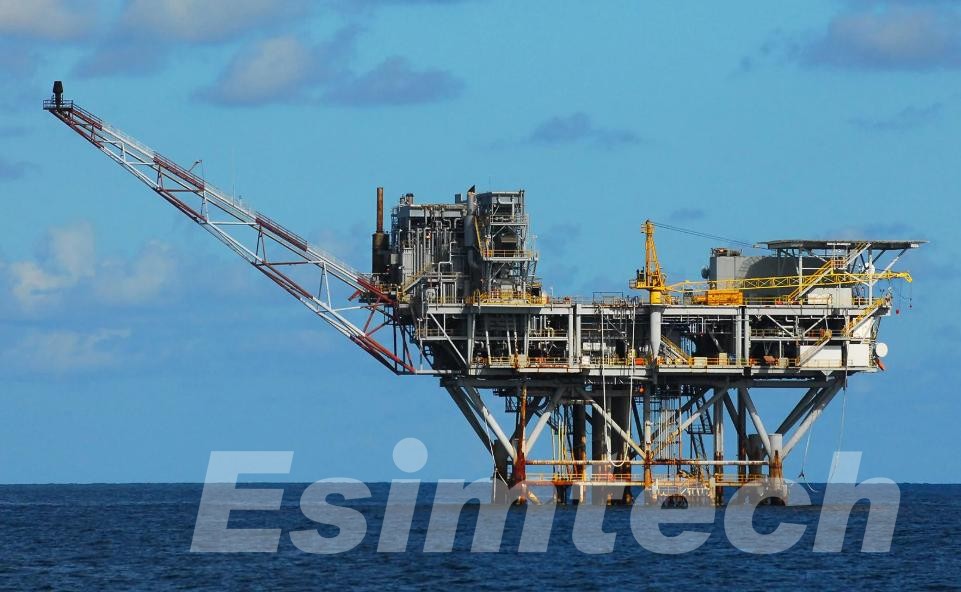
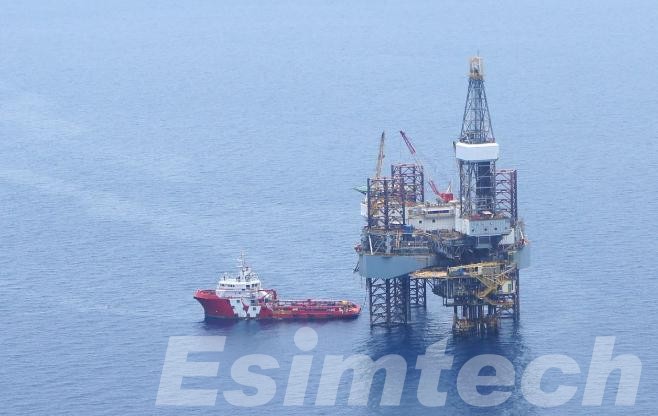
Deep-water drilling involves offshore drilling activities performed in waters at depths of more than 500 meters, with ultra-deep-water drilling performed at depths beyond 1,500 meters. Deep-water wells are drilled using floating platforms like drill ships or semi-submersible platforms as opposed to fixed platforms.
The environment imposes limitations that are absent from shallow water drilling. For instance, the location of the wellhead is on the seabed and control processes have to pass through the subsea system. This results in a lengthy mechanical and hydraulic link between the surface and the reservoir.
From a practical perspective, deep water drilling is typified by a few critical conditions:
- High hydrostatic pressure at seabed level
- Long vertical and slanted wellbore trajectories
- Lack of direct intervention
- Dependence on subsea production facilities
While this makes for difficult implementation, it does not alter the geologic properties of the reservoirs to which access is gained.
What Does “Unconventional Oil Production” Mean?
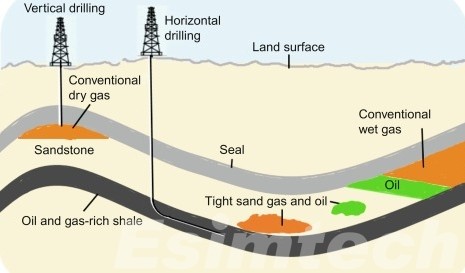
Unconventional oil production is characterized by challenges in extracting hydrocarbons from the reservoir rock, not by the environment in which the drilling occurs and depth of water. This challenge arises from a lack of permeability that inhibits the natural flow of hydrocarbons.
Examples of such unconventional sources include shale oil, tight oil, oil sands, and coal bed methane, among others. Such sources need further intervention measures to facilitate their extraction.
Hydraulic fracturing is the most popular method applied to make hydrocarbons accessible for extraction.
In simple terms:
- Conventional production relies on natural reservoir flow
- Unconventional production requires artificial flow enhancement
This distinction is critical for understanding why deepwater drilling is not classified as unconventional.
Why Deepwater Drilling Is Sometimes Viewed as Unconventional
Even though it is geological in the traditional sense, deepwater drilling can be classified as unconventional due to the engineering aspects and costs involved. There are several reasons why such a classification exists:
1. Complexity of the process
Deep water drilling involves complex systems consisting of floating rigs, subsea facilities, and real-time monitoring technology. Any intervention once the process is completed is complicated and costly.
2. High capital exposure
A single deepwater project can involve investing huge amounts of money initially, prior to production.
3. Limitations
The high temperature and pressure involved, as well as extended well bores, add to the risk in drilling and completion processes.
In light of these difficulties, there is an increased tendency for companies to make use of simulations during the planning process. Drilling simulation software can be employed to analyze the behavior of wells in advance. Firms like Esimtech are involved in producing simulation software for drilling purposes.
Why Deepwater Drilling Is Officially Classified as Conventional
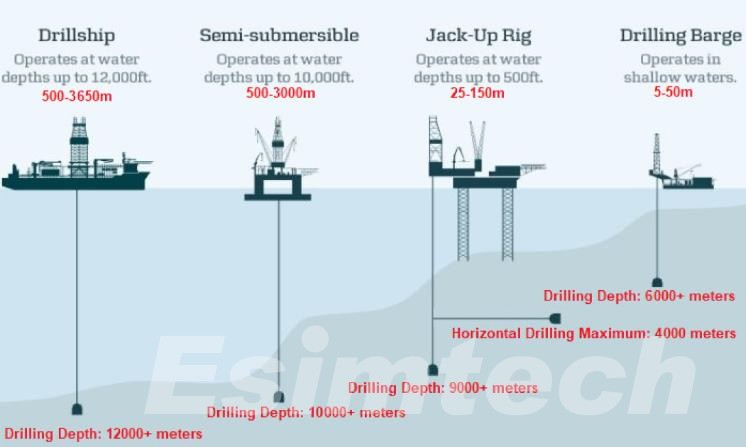
While the process is complicated, deep water drilling still belongs to the category of conventional offshore oil production. The reason is that any categorization depends only on reservoir characteristics and not on the degree of difficulty in drilling the well.
Deep water reservoirs consist mainly of sandstone and/or carbonate rocks with natural permeability. In other words, after the well is drilled, hydrocarbons simply move through existing pores.
From the industry’s perspective, this distinction is consistent:
- No artificial fracturing is necessary;
- Natural pressure provides all the energy for extraction;
- Conventional offshore completion techniques will suffice.
The SPE and IEA, for example, classify any deep water drilling as offshore conventional resource development.
Key Differences Between Deepwater and Unconventional Drilling
Despite the fact that both processes involve very high costs and risks, the basic limits differ in principle.
| Factor | Deepwater Drilling | Unconventional Drilling |
| Reservoir type | Conventional sandstone/carbonate | Tight shale or low-permeability rock |
| Main limitation | Offshore engineering complexity | Fluid flow restriction in rock |
| Production method | Natural flow after completion | Requires stimulation (e.g., fracturing) |
| Infrastructure | Floating rigs + subsea systems | Onshore drilling pads |
| Cost driver | Offshore logistics and equipment | Repeated stimulation and drilling |
This can be expressed in a simple statement:
Limitations on deepwater drilling pertain to access and the environment, whereas unconventional drilling limitations pertain to geophysics.
Industry Perspective: Convergence of Methods
For current developments within the oil and gas industry, the division of conventional and unconventional drilling operations has become increasingly flexible at an operational level, while distinctions continue to exist geologically.
This can be seen, for example, in terms of digital technology. Reservoir modeling, drilling simulation, and predictive analytics have become integral parts of any deepwater or unconventional project, and their usage cannot be considered an optional component in high-cost operations.
Moreover, drill simulations are particularly helpful for deepwater projects where physical interference and costs are high, since pre-drilling modeling will decrease the uncertainties inherent in such undertakings.
Deepwater drilling is not considered to be unconventional oil production since it involves exploration and exploitation of conventional reservoirs using natural flow mechanisms.
Nevertheless, due to the complexity, high costs of implementation, and risks involved, this type of project is similar to unconventional oil projects in terms of engineering processes. With technological advancement, it becomes increasingly difficult to differentiate between the two types.