Why Technical Training Needs Precision Oil and Gas 3D Animation?

Written By: Computer Science Professor
Deeply rooted in the R&D of simulators for the oil and gas industry, committed to bringing safety to every oil worker.
Oil and gas exploration upstream requires that there be no room for error in operations. As technology increases drilling conditions, going to HPHT formations and deeper waters, traditional teaching techniques are starting to struggle. Textbooks and slide presentations can no longer adequately teach about the physics involved in today’s drilling technologies. Even though digital media is now common in the industry, a large gap exists between traditional marketing animations and the use of advanced visualization for training. When it comes to training, oil and gas animation should value mechanics over visual appeal.
The Cost of Training Gaps on the Rig Floor
Low competency levels at the rig floor result in NPT, machinery breakdowns, and serious safety concerns. Newly employed field engineers, rig floorhands, and derrickmen find it hard to visualize what is unseen. Fluid flow beneath the earth, pressure systems, and operations within enclosed machines will always be theoretical subjects when learned from two-dimensional drawings.
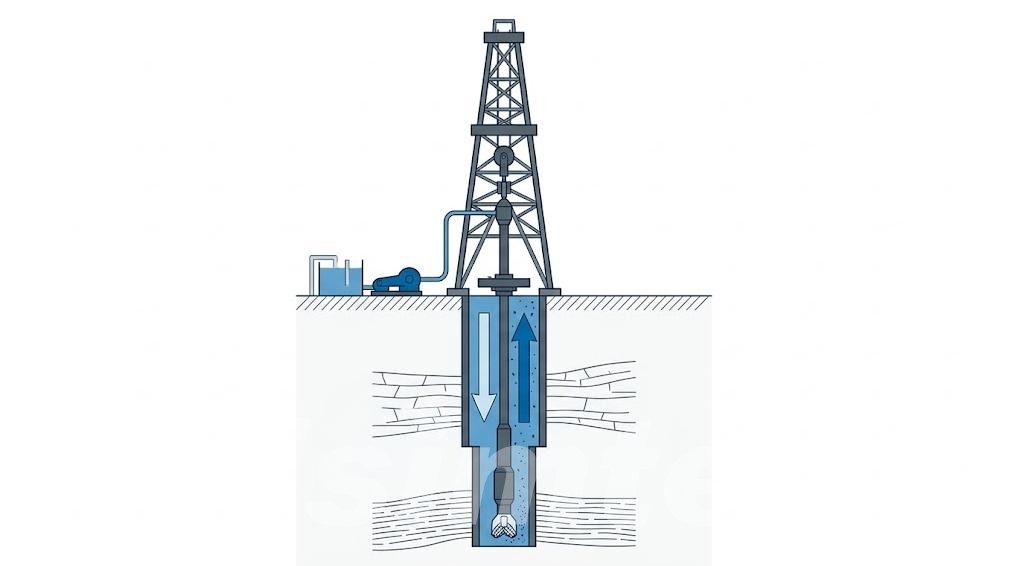
The ability of a trainee to conceptualize the flow of fluid within the borehole properly while making the trip is crucial in terms of his or her response time in case of early warning signals. Late identification of the kick or faulty management of the choke manifold results in the manageable flow of fluids being transformed into a well control situation. In addition, inappropriate manipulation of expensive surface equipment like the top drive or automatic pipe handling machine will contribute to wear and tear of these machines, thus resulting in unnecessary maintenance procedures.
Where Generic 3D Studios Fail Petroleum Engineering Logic
Most companies in the oil and gas field engage generic multimedia firms in designing their training content, only to realize that these designs are not useful in teaching technical information. Although generalists in 3D animation are well-versed in lighting, texturing, and camera angles, they do not comprehend petroleum engineering principles and API guidelines.
Examples of mistakes that are often made when developing oil and gas 3D animation include:
- Mechanical Mismatch: Illustrating the non-synchronization between the drawworks, traveling block, and top drive while running pipe into the hole.
- Flawed Valve Configurations: Portraying the state of the valves in the kill and choke manifold contrary to the normal operating procedure or the correct flow of fluid within the hydraulic system.
- Unphysical Fluid Behavior: Demonstrating how drilling fluids or gas flows through the annular space contrary to the laws of hydraulics.
By being presented with visually misleading graphics, trainees will form distorted cognitive models. In a situation where there is cognitive dissonance as a result of an incorrectly depicted process that “looks nice,” there could be serious problems with how an employee approaches the real machine.
Core Requirements for Engineering-Grade Visuals
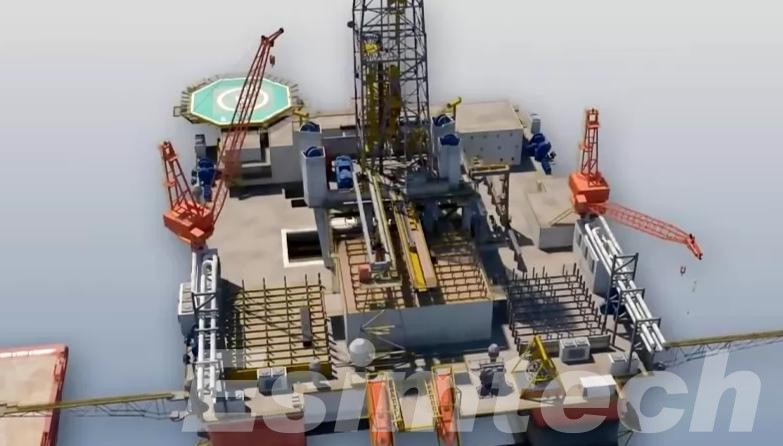
As a resource that can provide technical education to trainees, a 3D animation should start from scratch based on engineering drawings, technical sketches, and the laws of physics. This is because a video should change into a visual depiction of rig operations.
| Feature Requirement | Generic Animation Studio | Engineering-Grade Precision (e.g., Esimtech) |
| Asset Modeling | Based on reference photos and creative guesswork. | 1:1 CAD model conversion adhering to exact manufacturer specs. |
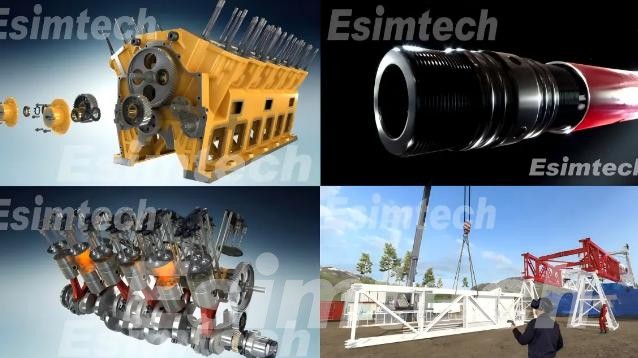
| Internal Mechanics | Closed exterior shells with no internal functionality. | X-ray/cutaway views showing internal valves, pistons, and fluid pathways. |
| Downhole Simulation | Simplified, static graphics representing subsurface layers. | Dynamic visualization of real-time physics, including kick propagation and pipe sticking. |
| Process Alignment | Focuses on cinematic pacing and visual transitions. | Strictly follows standard operating procedures (SOPs) and safety checklists. |
Oil and gas 3D rendering reveals what cannot be seen. It is an ability to have a look “inside” a subsea BOP stack and see how the sealing process happens within the annular and ram preventers around the drill pipe due to the hydraulic pressure. It gives us a transparent insight into the whole wellbore, showing how lost circulation is happening since hydrostatic pressure exceeds the formation fracturing gradient.
This level of detail transforms a visual asset into a definitive teaching tool.
Supporting IWCF and IADC Training Compliance
International certification organizations like the International Well Control Forum (IWCF) and International Association of Drilling Contractors (IADC) have stringent training requirements for personnel involved in drilling activities. Becoming certified demands a thorough knowledge of the behavior of the wells and procedures during well killing processes.

3D animation offers the high precision that is needed to understand the various certification criteria. For instance, in demonstrating the differences between the Driller’s method and Wait & Weight methods, an instructor should demonstrate the effect of changing pressure during circulation out of the well kill. A trusted 3D animation can help in splitting the screen into two: the first side will show the physical actions done on the hydraulic choke valve, while the other side displays the change in the drill pipe pressure gauge and the physical movement of the gas kick out of the well.
Operational Impact: Linking precise visual assets to IWCF/IADC curriculum requirements ensures trainees understand the underlying physics of well control. They move past simple checklist memorization and learn to accurately read pressure balances, directly improving pass rates and reducing field errors.
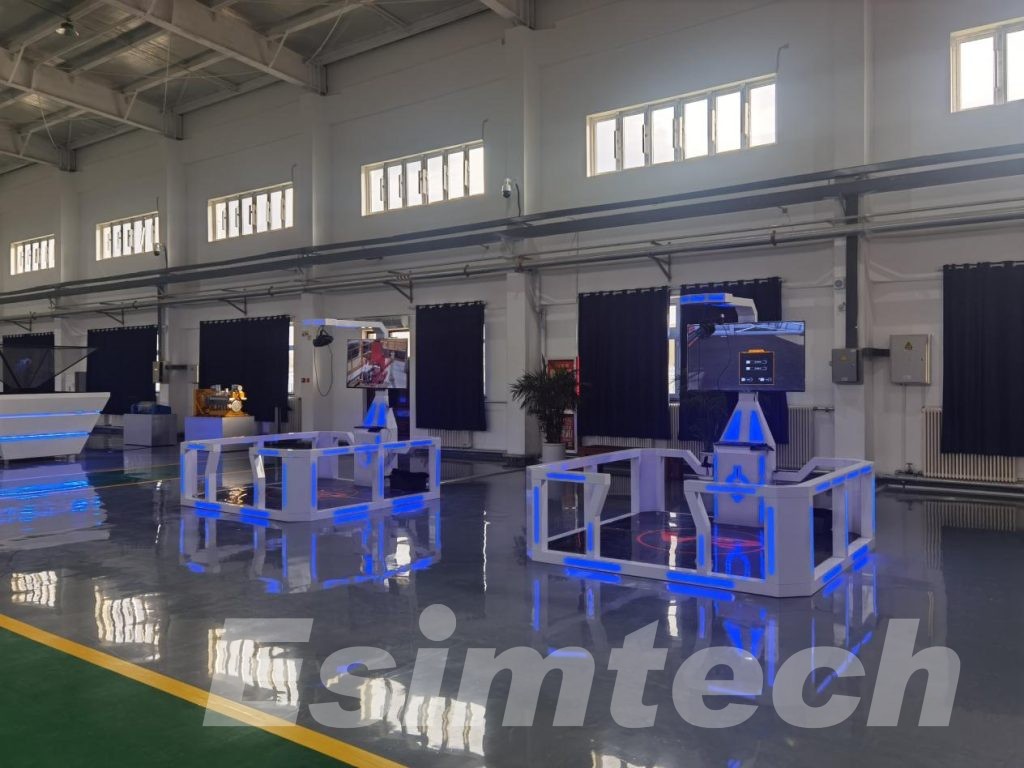
Integrating 3D Animation Assets with Drilling Simulators
Industrial training in modern times is moving from a passive watching of videos to an interactive, physically based one. High-fidelity visualizations of 3D animation for oil and gas are not only used in linear formats anymore but are also serving as a critical part of the graphical engine for hardware-in-the-loop simulators.
In a simulation environment, these visual tools transform into responsive applications:
- Visual Feedback in Real Time: Provides 1:1 physical responses on the driller’s control station, for instance, the physical motion of the choke stem during well control management.
- Synchronization Based on Mathematics: Binds changes in visuals with the mathematical model of multiphase flows and torque, updating standpipe pressure and pit volumes in real-time.
- Risk-free Training in an Immersive Environment: Offers trainees the ability to carry out complicated tasks in a risk-free manner, such as handling HPHT kicks.
For effective drilling training, one requires engineering-level accuracy and not fancy graphics. It is a fact that conventional multimedia does not apply to logic, which could result in expensive nonproductive time and failure in compliance.
The use of accurate 1:1 CAD oil and gas 3D animations that meet the IWCF/IADC standards and fit into drilling simulator technology ensures that the drills gain muscle memory.