Full-Scale Cyber Chairs vs. Cloud-Based Portable Simulators: Which Well Control Simulator Fits You?

Written By: Computer Science Professor
Deeply rooted in the R&D of simulators for the oil and gas industry, committed to bringing safety to every oil worker.
In high-risk oil and gas operations, drilling safety and well control training are of utmost importance. For decades, the industry has relied on physical classroom simulators to train operators to handle major risks such as blowouts and well surges. Nowadays, with the acceleration of digital transformation, cloud-based portable software solutions are emerging as a new option.
Whether it is a business training center, a university petroleum department, or an enterprise client of an international oilfield service company, they all face a key question: Should they invest in immersive full-scale hardware simulators, or choose flexible and efficient cloud-based portable simulators?
This guide will thoroughly analyze two types of technologies, compare their respective advantages and limitations, and provide a clear decision-making framework to assist you in choosing the more suitable solution and maximizing the value of your training investment.
What is Full-Scale Cyber Chairs / Hardware Simulators
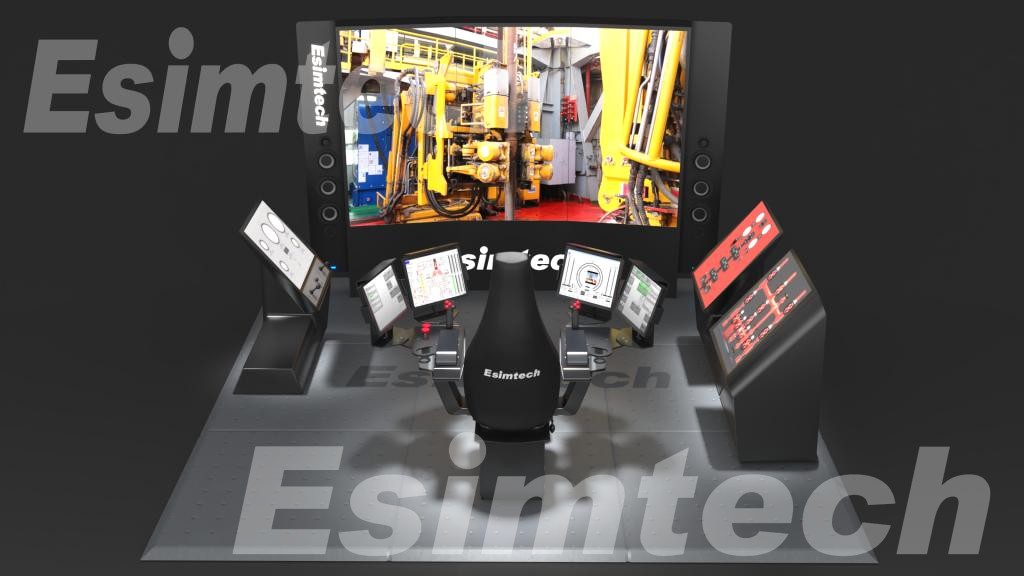
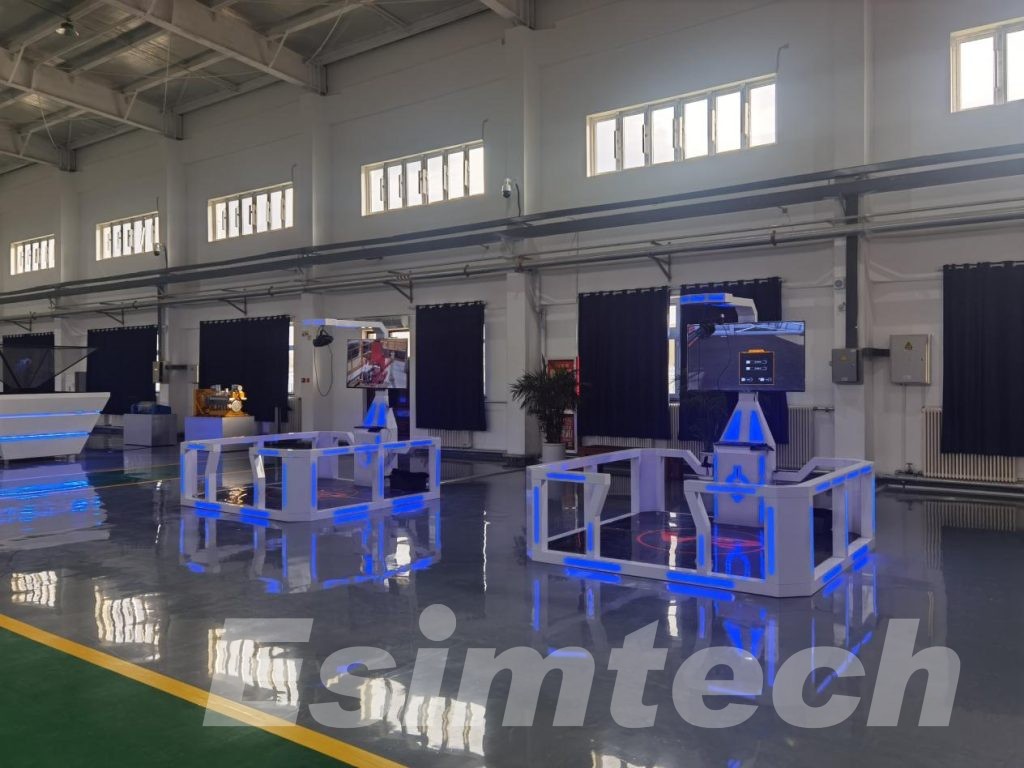
Full-size virtual seats or hardware simulators are an industrial-grade physical training system, designed to highly replicate the operating environment of a real drilling platform or modern drilling cabin.
The system is equipped with sturdy and ergonomic virtual seats and integrates real industrial joysticks, physical buttons, and hardware control panels, such as the drilling operator console, choke manifold panel, and blowout preventer control panel. It is usually combined with large multi-screen displays or 180° to 360° panoramic projection systems to fully recreate the on-site environment of the drilling platform.
- Muscle memory and true immersive experience: Well control operations require rapid and accurate responses. Physical joysticks, tactile switches, and realistic audio-visual alarms can help operators form muscle memory, which is impossible to achieve with a purely software interface.
- Meet strict industry certification requirements: For institutions providing official certification training, full-scale hardware simulators are the industry-recognized standard configuration. The system is designed in accordance with the practical assessment requirements of the International Well Control Forum (IWCF) and the International Drilling Contractors Association (IADC) for levels 3 and 4 courses, and can fully meet the relevant certification standards.
What is a Cloud-Based & Portable Simulator
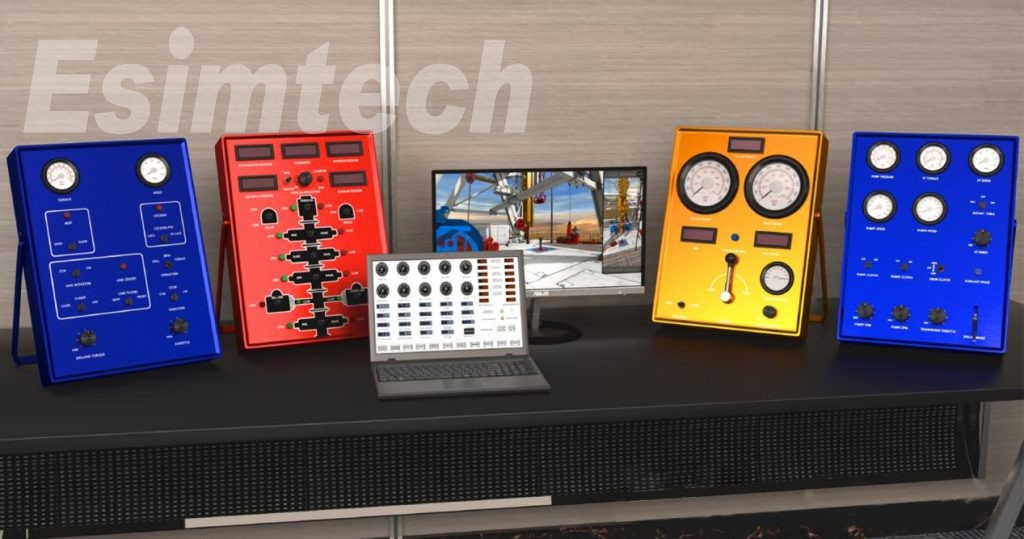
The cloud-based portable simulator represents the new generation of virtual training, separating the well control computing capabilities from the cumbersome hardware equipment.
These simulators do not require dedicated physical chambers. They can be run through cloud servers, web browsers, or lightweight PC software. Users only need to use a regular computer, laptop or tablet to complete the operations through a responsive 3D interface. To enhance the operation experience, some systems are equipped with lightweight plug-and-play USB desktop control boxes that can be easily placed in a briefcase for carrying around.
- Mobility: Training is no longer restricted to a fixed location. Employees on offshore platforms, in remote desert oil fields, or those on leave at home can log in at any time to practice complex operation procedures.
- Lower total cost of ownership (TCO): There is no need to bear the high costs of manufacturing, transportation, and professional maintenance. Cloud systems significantly reduce the initial investment (CAPEX).
- Centralized instructor management: Through the cloud architecture, instructors can simultaneously deploy, monitor, and evaluate the practical training of dozens of trainees via a unified network dashboard, thereby enhancing the efficiency of training and management.
Full-Scale Cyber Chairs vs. Cloud-Based Portable Simulators
To understand which technology aligns with your operational goals, let us compare them across four critical business dimensions:
| Comparison Criteria | Full-Scale Cyber Chair Simulator | Cloud-Based / Portable Simulator |
| Primary Objective | Deep immersion, physical muscle memory, and official practical certification exams. | Procedural familiarity, theoretical reinforcement, and flexible refresher training. |
| Hardware Footprint | Heavy industrial consoles, cyber chairs, and multi-screen setups require a dedicated room. | Standard PCs/laptops, optional portable desktop USB control boxes; minimal footprint. |
| Deployment Cost (CAPEX) | High upfront investment due to precision manufacturing and logistics. | Low to moderate: software licensing or scalable subscription options. |
| Mobility & Logistics | Stationary installation requires professional setup and shipping. | Highly portable; easily deployed to offshore rigs or remote regional offices. |
| Simulation Fidelity | High-fidelity mathematical fluid models paired with tactile, real-world physical feedback. | High-fidelity digital graphics and algorithms, but interactive feedback is virtual. |
Which One Do You Need?
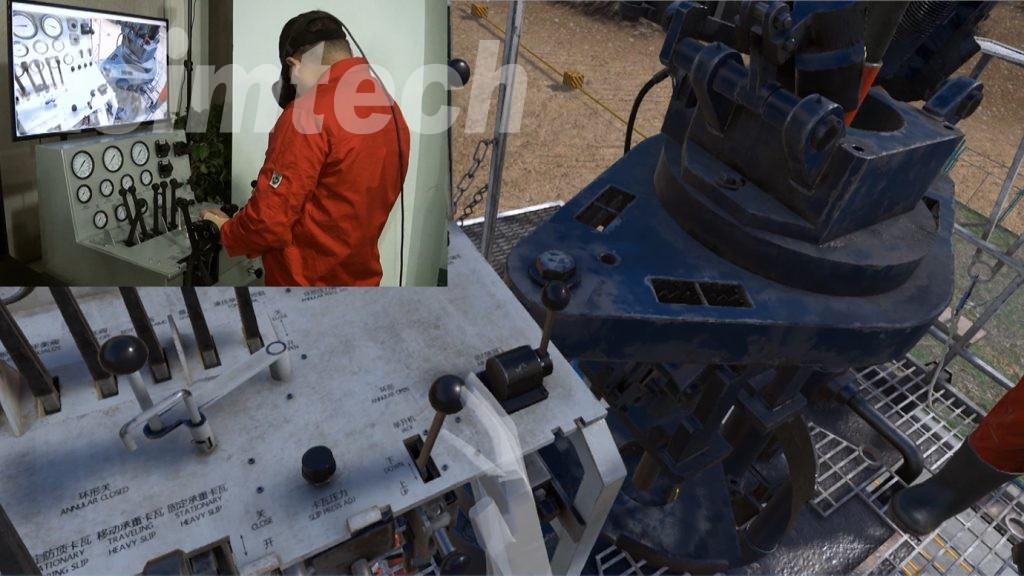
When making a choice between these two systems, the key factor is not which technology is more advanced, but which solution better meets your training requirements. You can determine the final procurement plan based on the following three aspects:
1. Clearly define the training objectives
If your main goal is to establish an authorized training center and offer internationally recognized IWCF or IADC practical certification, it is recommended to choose full-sized network seats. For training that requires completing assessments in a real drilling platform environment and meeting compliance requirements, the hardware equipment is indispensable.
If your focus is on continuously enhancing team capabilities, conducting pre-construction collaboration training, or reinforcing daily skills, it is recommended to choose a portable cloud simulator. It can help operators maintain proficiency in key well control procedures (such as the engineer method or the driller method) for several weeks after leaving the drilling platform.

2. Assess your logistics and space constraints
If you have a dedicated corporate training center or university laboratory with a specific training venue, a complete set of equipment will become the core facility for training, being both professional and influential.
If you manage multiple drilling teams across the globe, transporting bulky simulators to each site can be very costly. Cloud solutions enable training programs to be rapidly expanded to 500 users without having to worry about transportation delays.
3. Calculate your budget allocation
The complete hardware equipment represents a significant capital expenditure (CAPEX), but its return is reflected in the numerous high-capacity and high-quality certification courses over many years.
The cloud-based platform converts your expenses into operational costs (OPEX), thereby providing flexible budgets that can be adjusted according to your current number of employees or the terms of your current drilling contracts.
An increasing number of forward-thinking drilling contractors are combining these two systems. They use cloud-based portable software for decentralized remote pre-training, enabling trainees to acquire theoretical knowledge and valve operation procedures at any time and from anywhere; subsequently, they gather at the training center to complete immersive assessments and obtain official certifications through full-scale network seat simulators.
As a manufacturer of advanced drilling and well control simulation systems, Esimtech offers a comprehensive product range, including high-fidelity full-scale network seat simulators, as well as portable desktop simulation solutions that comply with IWCF and IADC standards.
Want to upgrade your training infrastructure? Contact Esimtech‘s simulation experts immediately to obtain customized technical solutions and cost-benefit analyses tailored to your project requirements.