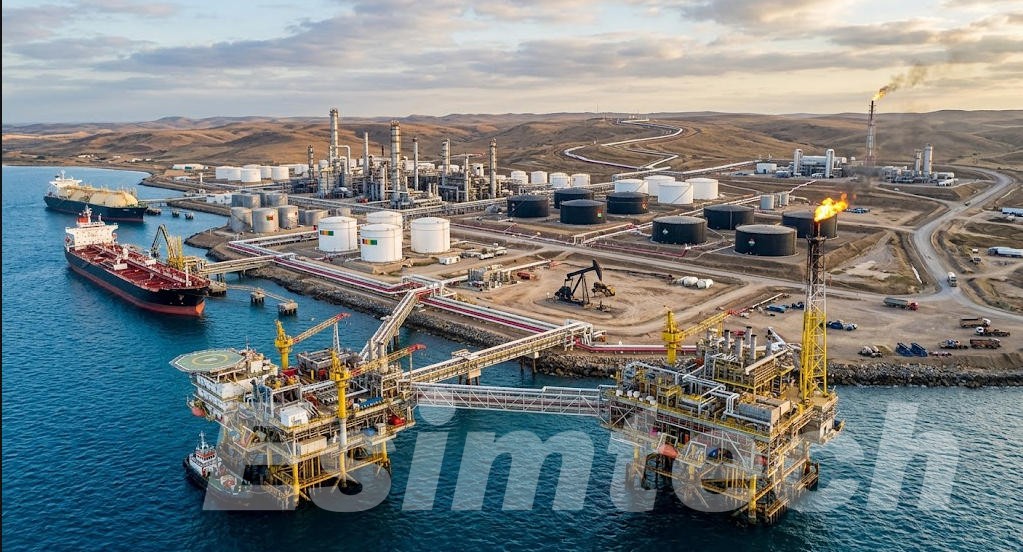
Can Drilling Simulators Replace On-the-Rig Training?

Written By: Computer Science Professor
Deeply rooted in the R&D of simulators for the oil and gas industry, committed to bringing safety to every oil worker.
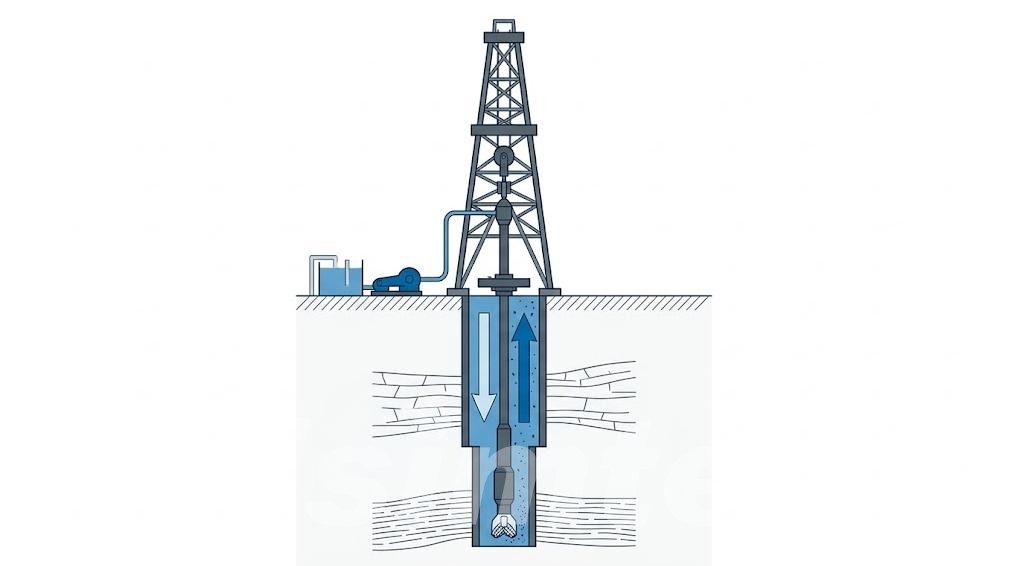
For decades, practical operation of drilling platforms has been an important part of training for drilling personnel. However, if each training stage relies on actual drilling platforms, it is costly, time-consuming, and more difficult to manage.
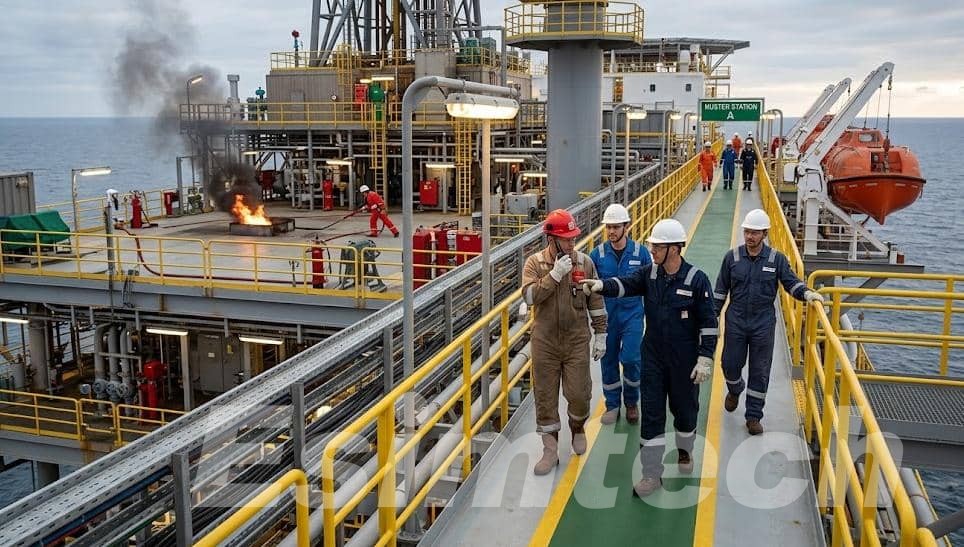
At the same time, not all situations can be safely replicated on actual drilling platforms.
Trainees often need to repeatedly practice the same operation to truly master it. They also need to accumulate experience in dealing with equipment failures and well control incidents, but these situations are difficult to simulate in normal drilling operations.
This is where drilling simulators come into play.
Rather than discussing whether simulators can completely replace the experience gained from actual drilling platforms, it is better to focus on a more practical question: Which drilling training content can be transferred to the simulation environment?
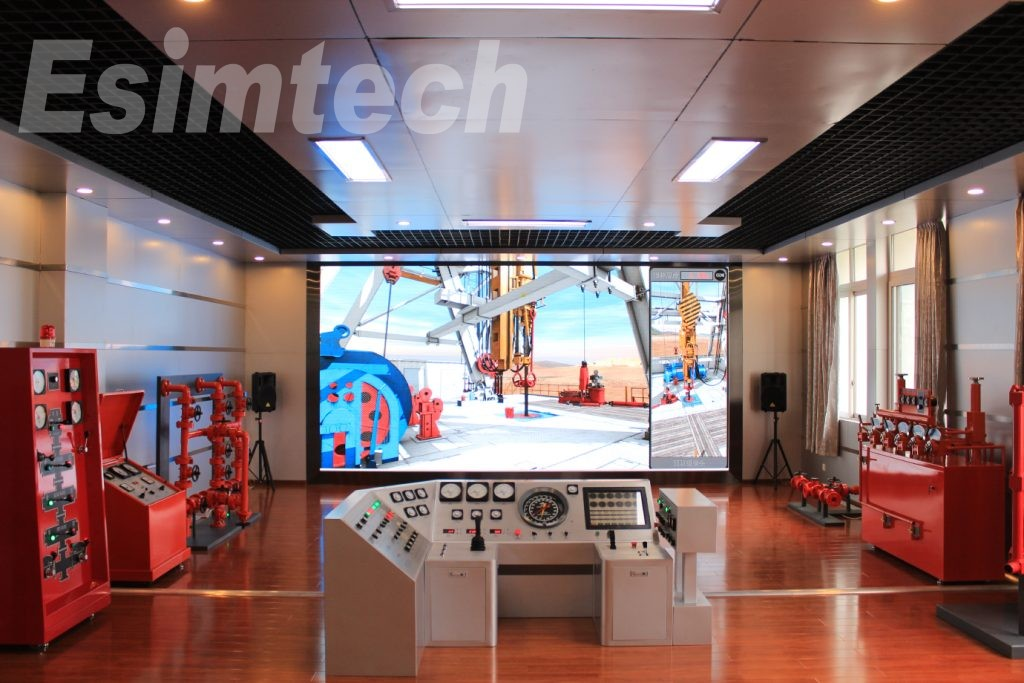
Where Simulators Can Replace Traditional Rig Training
Routine operations and procedures
Many of the training contents do not need to be carried out on actual drilling platforms. For example:
Equipment operation and control
- Drilling procedures
- Running and pulling out of drill strings
- Top drive operation
- Equipment startup and shutdown
- Drilling rig installation procedures
The simulator enables trainees to become familiar with these procedures in a controllable environment before operating the real equipment.
One important advantage is that errors during training do not have the same severe consequences as on the actual drilling platform. Trainees can first master the correct operation sequence, observe parameter changes, and become familiar with the control devices. This way, when they enter the field, they do not have to start from scratch.
Abnormal and emergency scenarios
Some of the most valuable training scenarios are also the most difficult to reproduce on a live rig.
For example:
| Scenario | Challenge for Live-Rig Training |
| Kick | Cannot be deliberately created for routine training |
| Stuck pipe | Difficult to reproduce safely and consistently |
| Lost circulation | Real operational and financial consequences |
| Equipment failure | Difficult to schedule as a training exercise |
| Well control event | High-risk environment |
The simulator can deliberately introduce these situations under controlled conditions.
The trainees need to identify the problems, analyze the changes in parameters, take appropriate measures, and observe the decision results.
If not handled properly, the training can be reviewed and repeated.
Traditional on-site training at drilling platforms is difficult to provide such a controllable and repeatable training environment.
Repetitive practice
Repetition practice is another obvious advantage of simulation technology.
On actual drilling platforms, training must be conducted in conjunction with operations. Production plans, equipment conditions, safety requirements, and personnel workload all limit the practice time.
Simulators, however, have no such limitations.
Trainees can:
Practice → Make mistakes → Review → Reset → Practice again
This is particularly useful for processes that rely on time, operational sequence, and precise control.
Trainees do not have to wait for the next suitable on-site training opportunity. Instead, they can repeatedly practice the same scenario until they can complete the operation stably.
Where On-the-Rig Training Still Matters
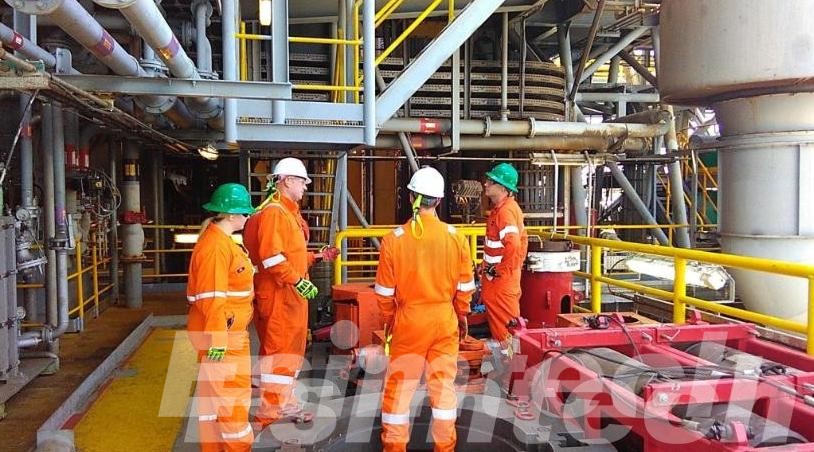
The simulation technology is powerful, but it cannot completely replicate all the working processes on a real drilling platform.
The following aspects still require practical operational experience:
- Working around real equipment
- Adapting to on-site conditions such as noise, vibration, and weather
- Operating physical components and tools
- Familiarizing oneself with the scale and layout of the drilling platform
- Communicating with crew members during actual operations
- Adapting to constantly changing working environments
Even if trainees perform well in the simulator, they usually need to undergo on-site practice under supervision to adapt to the real operational environment.
The key is not to replace on-site training with the simulator, but to use the simulator to enhance the efficiency of on-site training.
The Bigger Question Is Not Replacement, but Training Allocation
The discussions about simulator training and real drilling platform training often overlook a more practical issue. Instead of asking, “Can the simulator replace the drilling platform?”,
it would be better to ask, “Which training activities truly require the drilling platform?”
This distinction can more effectively allocate training resources.
Contents that can be transferred to the simulator include:
- Basic operation procedures
- Equipment familiarization
- Repetitive practice
- Emergency situation drills
- Emergency response
- Decision-making training
Contents that still require the real drilling platform include:
- Actual equipment operation
- Adaptation to the real working environment
- Teamwork
- On-site adaptation training
- Operational practice under supervision
The final outcome is not a choice between the two, but a hybrid training model that combines the advantages of both.
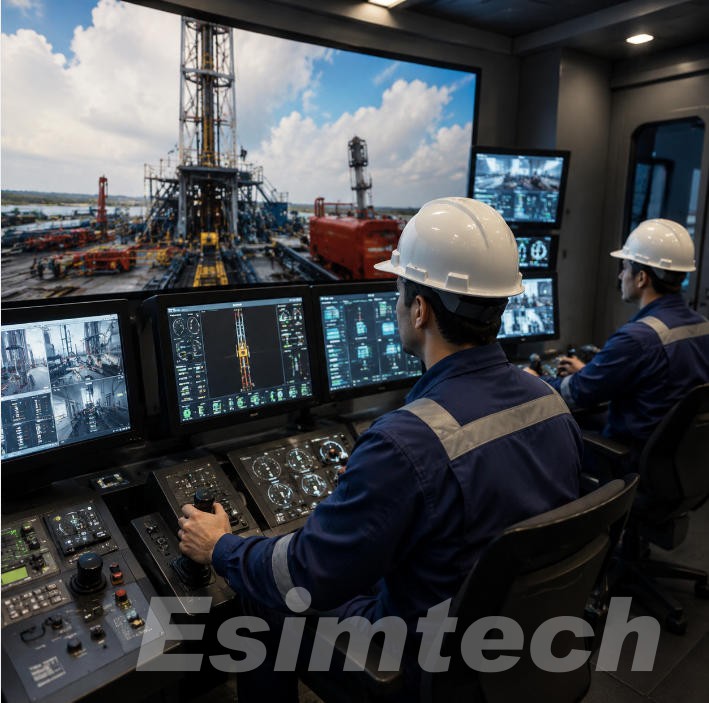
A Simulator-First Training Model
The training method led by simulators places simulation training at the early stage of the training process.
- Establish operational familiarity: Trainees become familiar with control devices, operation procedures, and equipment operation in a controlled environment.
- Practice normal operations: Trainees can repeatedly practice key processes without affecting production or entering the actual site.
- Introduce abnormal situations: Gradually incorporate more challenging scenarios to allow trainees to practice judgment and decision-making under pressure.
- Transition to on-site training: After mastering the basic knowledge, trainees enter the actual drilling platform under supervision, with a focus on training the operations and on-site skills that the simulator cannot fully replicate.
This method can more efficiently connect classroom learning with on-site operations.
Instructors do not need to occupy valuable on-site time to teach basic processes, but can focus on practical skills and trainees’ adaptation to the real working environment.
Can Simulators Reduce the Amount of On-the-Rig Training?
Yes, but they do not completely replace on-site training.
Simulators can reduce the time needed for procedural training, repetitive practice, and emergency drills on-site.
For drilling companies and training centers, this means:
- More coherent training courses
- Higher training frequency
- Less reliance on the availability of the drilling platform
- More secure practice of high-risk scenarios
- More opportunities for assessment and feedback
The goal is not to minimize on-site training as much as possible, but to ensure that every hour spent on a real drilling platform provides valuable practical experience for the trainees.
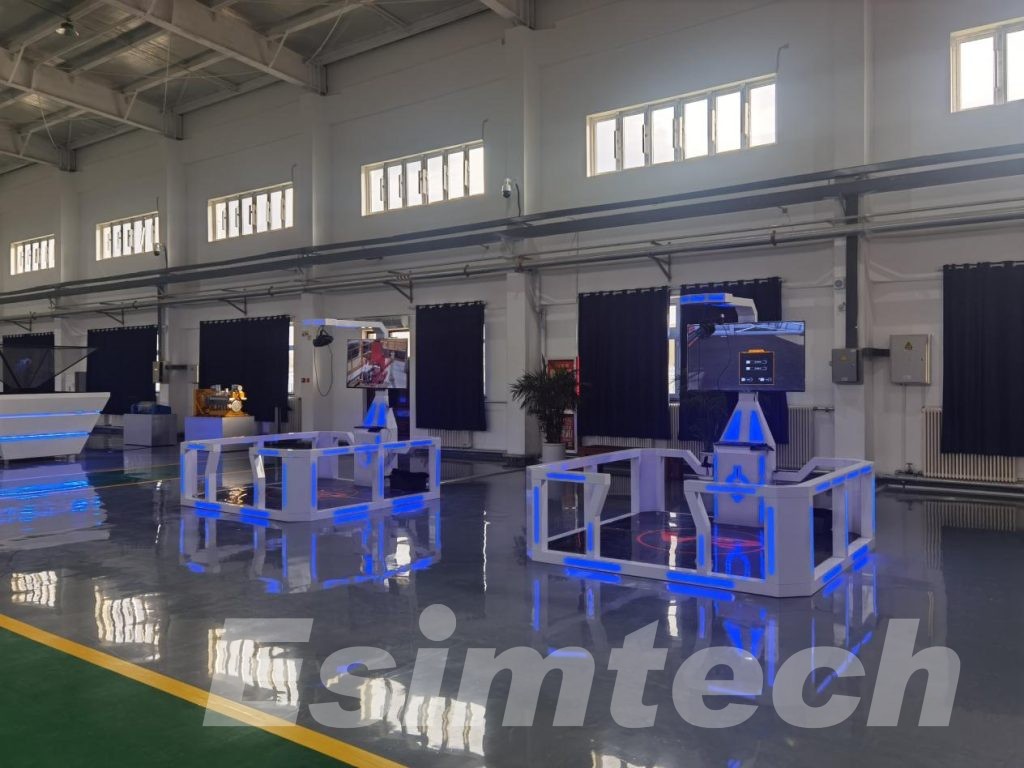
Esimtech Drilling Simulation System
Esimetch‘s drilling simulation system supports interactive training for drilling operations and drilling rig installations.
The system combines 3D simulation, equipment control, operation parameters and scenario training, providing a practice platform for personnel before entering the actual operation environment.
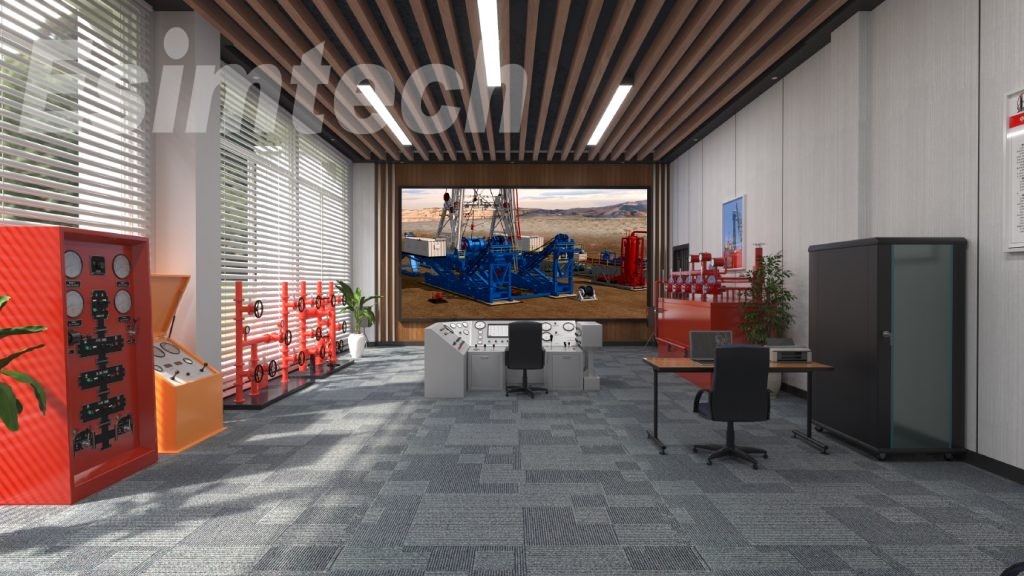
For example, the Esimtech land drilling rig installation simulator supports:
- Drilling rig installation process simulation
- Virtual drilling rig assembly
- Wellhead lifting
- Downhole structure lifting
- Drilling operations
- Equipment operation and control
- Abnormal situations and fault resolution
This training method not only demonstrates the drilling operation process, but also allows trainees to directly operate the simulation equipment, practice the operation process and deal with different operation scenarios.
Drilling simulators are unlikely to completely replace on-site practical operations. A more reasonable approach is to combine the two.
Using the simulator for preparation, practice, repetition and testing, and then cultivating operational experience and on-site adaptability through actual drilling rigs.
This combination can make drilling training safer, more efficient and more targeted.