Evolution of Training Simulations for Unconventional Oil & Gas Operations

Written By: Computer Science Professor
Deeply rooted in the R&D of simulators for the oil and gas industry, committed to bringing safety to every oil worker.
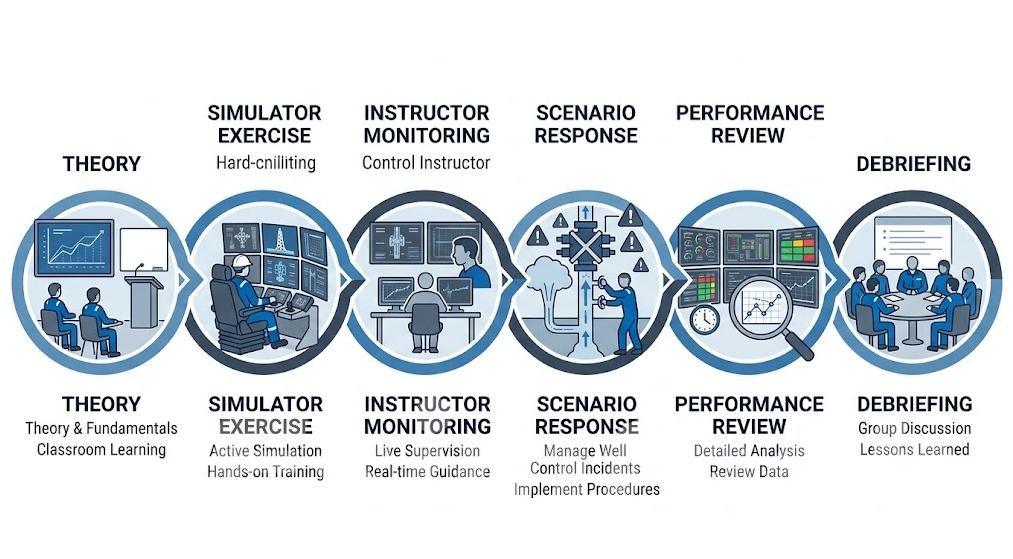
Changes are happening all across the energy world on a constantly growing scale. As mature fields start dominating in the oil and gas industry, its attention shifts firmly towards unconventional deposits such as shale gas, tight oil, and coalbed methane. But the challenges that accompany the complex process of drilling horizontally and fracturing multiple times make “learning by doing” both risky and inefficient.
That’s why more companies today turn to training simulators to master their skills. These training simulators are far different from what they were ten years ago, having been designed for an entirely new world characterized by digital twins, artificial intelligence analysis, and ESG criteria.
The “Unconventional” Challenge: Why Standard Training Fails
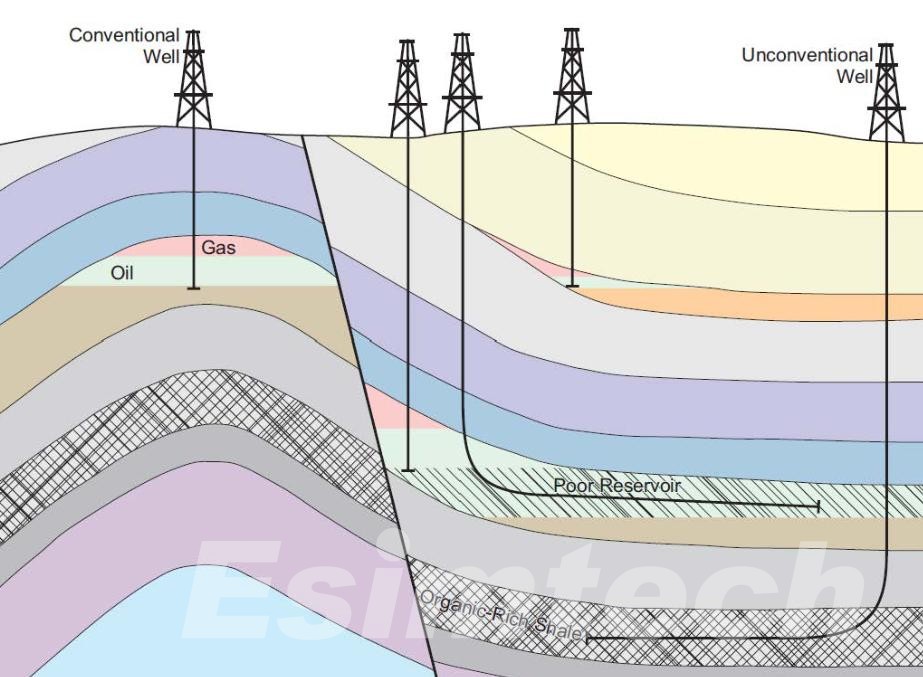
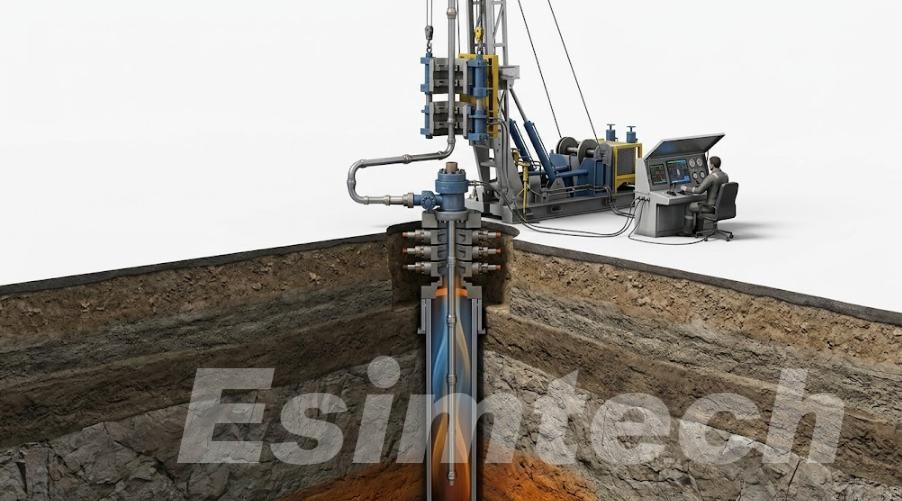
Unconventional oil and gas operations have fundamental differences from traditional vertical drilling operations in the following four key aspects:
- Geological fluctuations: Unlike the predictable layered structure of conventional oil reservoirs, shale formations exhibit heterogeneity. If the simulation fails to take into account micro-earthquake events or geological mechanical stresses, operators will be unable to handle unexpected situations that may arise during actual operations.
- High-intensity technology: The use of complex “platform drilling” and automated “walking drilling rigs” requires a high level of technical coordination, and classroom learning cannot simulate this kind of coordinated operation.
- Fault tolerance margin: In unconventional oil wells, a single mistake in a fracturing operation could jeopardize the entire project’s return on investment. Given the huge amount of capital involved, a “fail-safe” environment is necessary, where errors serve as opportunities for learning rather than causing economic losses.
- Environmental review: As the pressure for water resource management and methane emissions control continues to increase, the training content must include environmental compliance and oil spill emergency response.
From Visualization to Optimization: The New Simulation Frontier
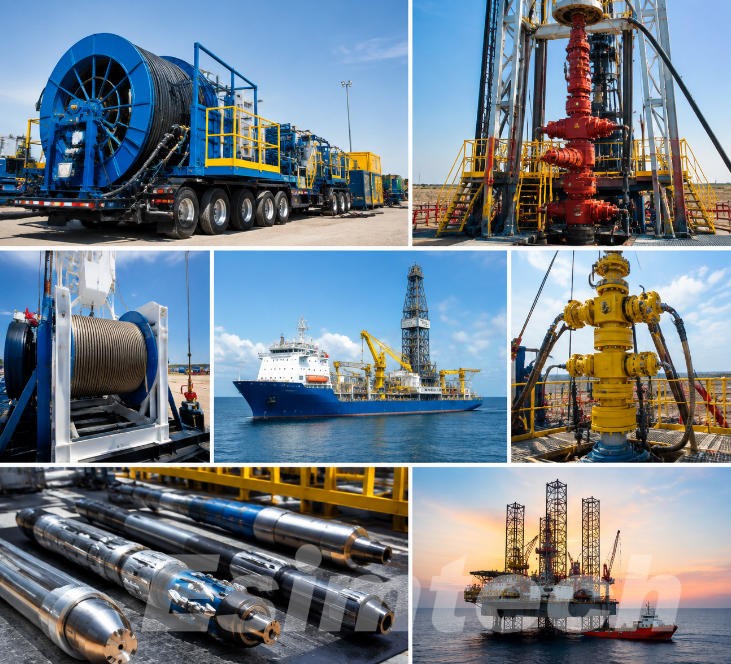
Today’s modern simulator for oil and gas wells is much more than a teaching aid; it has become an advanced tool used in engineering applications. Let’s take a look at some of the new ways this technology is changing non-conventional training programs:
1. Digital Twin Environment Simulations
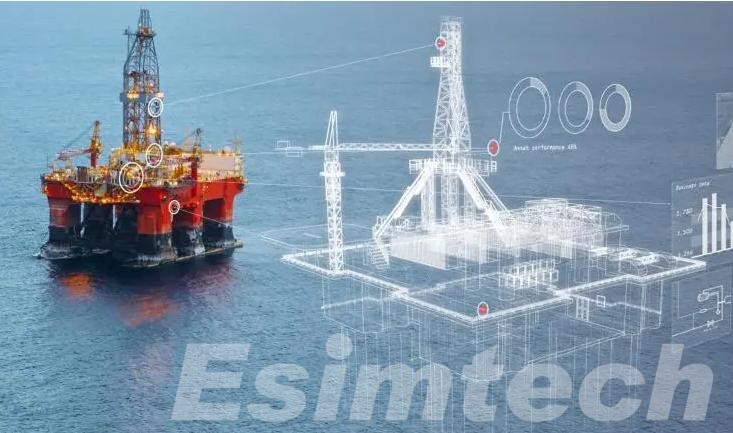
The best modern simulators create an environment known as “Digital Twins.” This means that students do not simulate operations in any generic well site but learn using a replica of the actual site where they will be working next. They can use their simulators for “pre-drill” operations to address unique concerns about a particular lateral operation.
2. AI and Real-Time Data Feedback
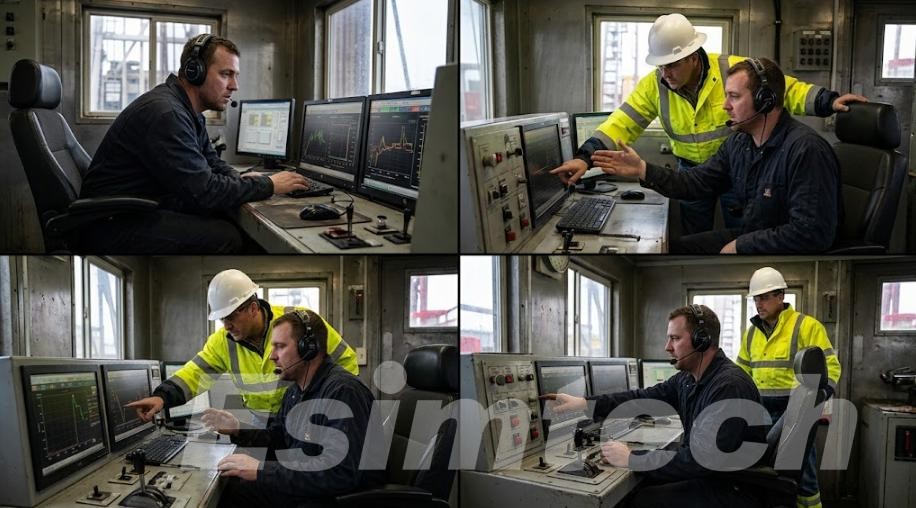
Incorporating the use of Artificial Intelligence makes it possible for simulators to provide tailored feedback. In case a driller is found to be prone to slow response time to the pressure increase, AI would be able to automatically increase the difficulty of the game and make him/her focus on the weakness. Such an approach makes training more than just a pass or fail.
3. Teamwork Drilling Training
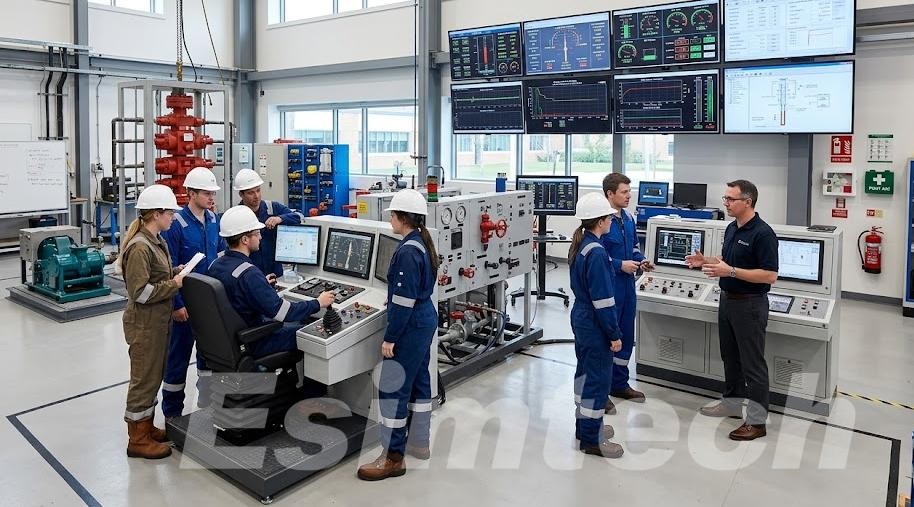
The key to success in unconventional drilling lies in collaboration between the geologist, the drilling engineer, and the completion crew. Nowadays, simulations allow multiple users to work on the same project. Drilling and fracturing crews can drill and complete several wells in one place at once within a virtual environment.
Drilling Simulator Applications in the Current Market
- Precise Drilling and Well Control
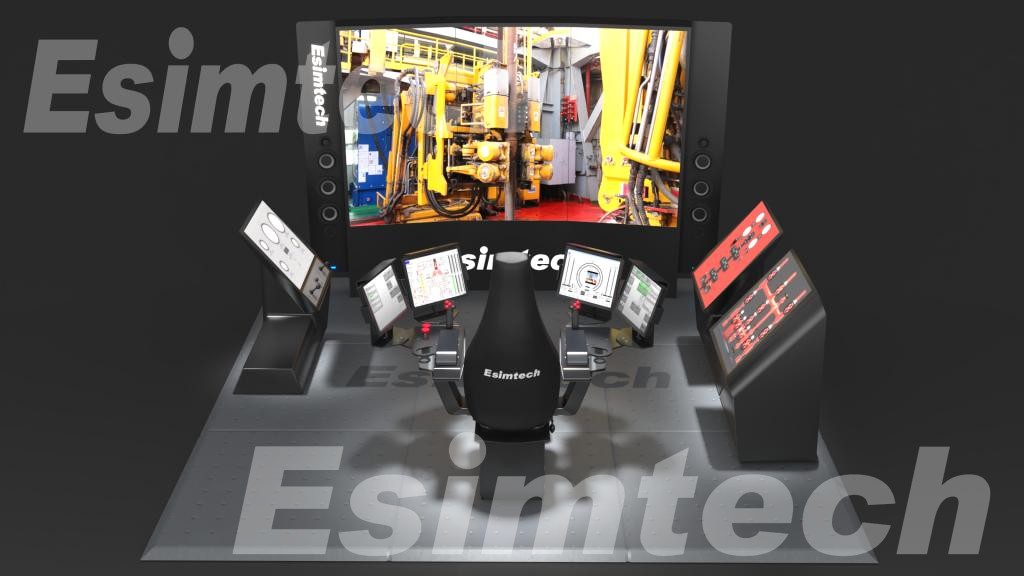
In unconventional oil wells, it is necessary to keep the drill bit within the narrow “oil-bearing layer”. Modern drilling simulators provide highly realistic geological guidance scenarios, guiding the drilling personnel on how to interpret real-time while-drilling logging (LWD) data, enabling them to make directional decisions instantaneously. This directly affects the ultimate recovery rate (EUR) of the oil well.
- Intelligent Well Completion and Fracturing
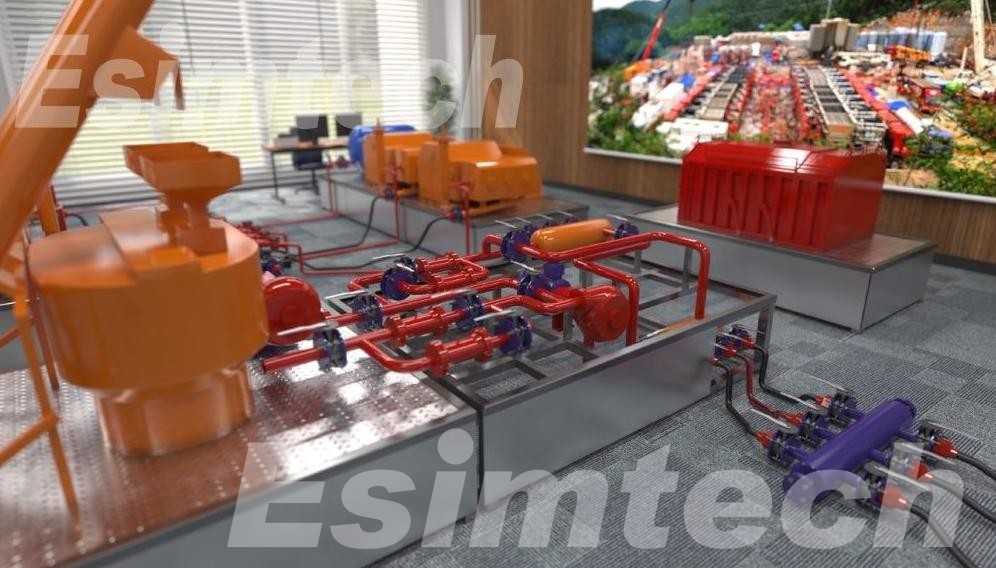
Hydraulic fracturing is the core technology of unconventional oil and gas operations. Advanced simulators can simulate complex flow mechanisms and the movement dynamics of proppants. By simulating different pumping schemes and pressure responses, operators can identify “screening blockage” in advance, thereby protecting equipment and ensuring the best oil reservoir production enhancement effect.
- Health, Safety and Environment (HSE) and Environmental, Social and Governance (ESG) compliance
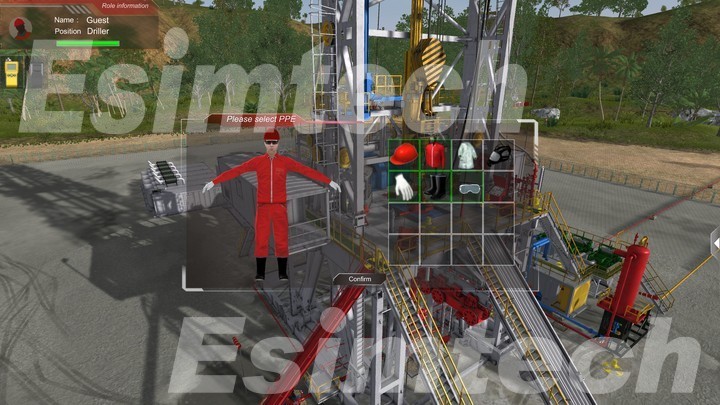
Safety is no longer merely about preventing blowouts. Today’s emergency simulation simulators include scenarios such as methane leakage detection, water circulation system failures, and automatic shutdown procedures. This enables employees to meet the increasingly stringent ESG standards of the industry while ensuring zero accidents in the workplace.
ROI of Simulation-Based Training
In the oil and gas extraction industry, everything boils down to money. The return on investment from simulation technology comes in three parts:
- NPT Reduction: Trained employees operate equipment at an efficient rate and decrease the likelihood of mistakes, lowering rig downtime.
- Equipment Endurance: Simulation training teaches operators how to optimize machine usage, thus extending the lifespan of the top drive and fracturing pump.
- “Time to Autonomy”: New hires reach competency 40% faster through immersive simulation than through traditional mentorship alone, solving the industry’s critical talent shortage.
The Future is Immersive
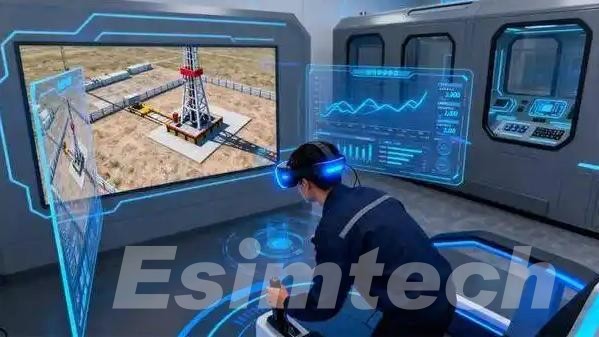
As we move toward 2027 and beyond, we expect to see even deeper integration of VR (Virtual Reality) and AR (Augmented Reality). Imagine a field technician wearing AR glasses that overlay a “X-ray view” of a downhole tool, synchronized with a simulation they ran just hours before.
At Esimtech, we remain committed to this evolution. Our mission is to bridge the gap between complex engineering and human execution. By providing simulators that reflect the true volatility of unconventional reservoirs, we aren’t just training workers—we are empowering the next generation of energy professionals to operate more safely, efficiently, and sustainably.