Why Precision Simulation is the Backbone of Modern Downhole Operations?

Written By: Computer Science Professor
Deeply rooted in the R&D of simulators for the oil and gas industry, committed to bringing safety to every oil worker.
Within the present-day scenario of the petroleum industry, there is very little room left for error in subsea applications. With the exploration of ultra-deep water and HPHT wells, the complications involved in subterranean formations have advanced beyond the scope of conventional training methodologies. It is, therefore, essential for modern companies to choose a training simulator system to safeguard their operations.
However, what has been witnessed in the last year? Here is an analysis of changes in downhole training needs and what makes Esimtech‘s latest systems a solution for the future.
The Reality of the “Complexity Gap”
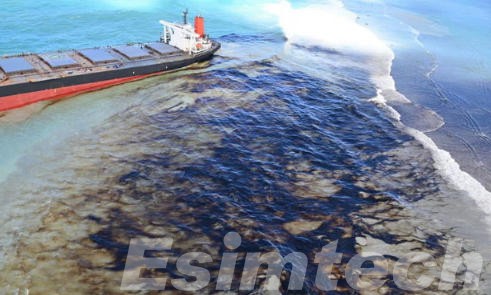
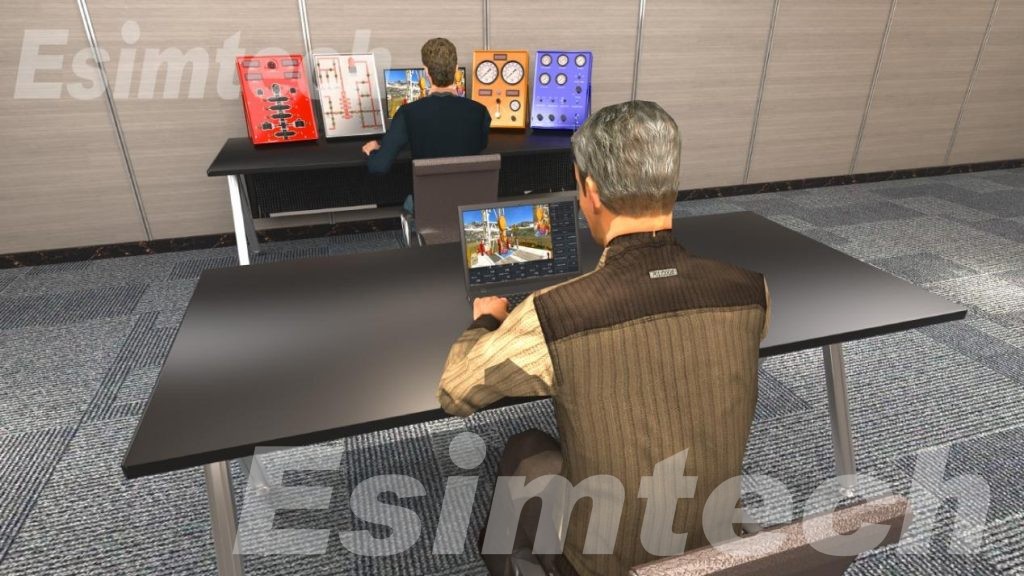
In the past, downhole training revolved around simple tasks: Tripping in, tripping out, and drilling. But today, the industry is struggling with a “complexity gap.” Drilling wells are now more complex, more deviated, and much more costly. A mistake made when running a snub job or an incorrectly managed kick in a HPHT well could cost you NPT that will run into hundreds of thousands of dollars per day—or even environmental disasters.
The standard approach of classroom training followed by hands-on training does not suffice to deal with a real situation because you cannot simulate a blowout in the field. High-fidelity simulation is the only way to cross the chasm from theory to action.
Beyond Graphics: The Power of High-Precision Physical Models
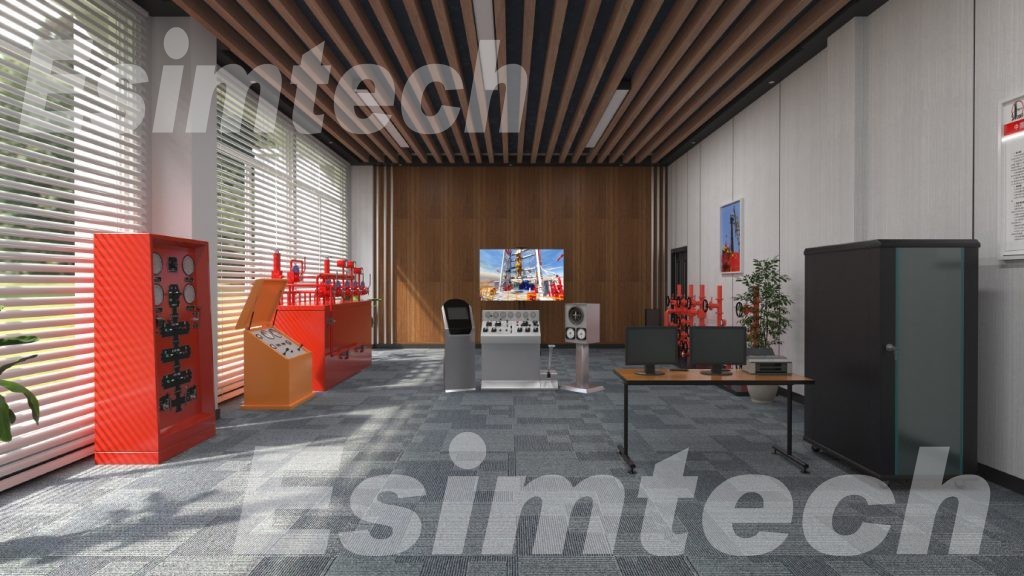
The most important change in 2025-2026 would be the progression from “visual simulation” to “mathematical precision.” Early simulators used to resemble virtual video games that looked good but had no tangible benefits. Modern and advanced learners require more.
In its downhole operations simulators, Esimtech relies on proprietary and patented “Flow Coupling” math models. If a trainee manipulates the choke manifold, he will not get a visual impression of a pressure decrease but an actual calculation of fluid dynamics, gas expansion, and friction depending on the well geometry. As a result, the developed “muscle memory” can be used directly on the rig floor without any adjustments.
Addressing the Workforce Crisis through “Non-Sequence” Training
The oil and gas industry faces significant challenges related to labor shortages. There is currently the “Great Crew Change,” which involves older individuals retiring and leaving young individuals who are technically savvy to operate millions of dollars worth of equipment.
Current simulation technology should take into account these changes. Old simulations required students to complete Step A before proceeding to Step B in a predetermined sequence. Our company has introduced the “Non-Sequence” operation mode. Students can control the simulation using free-form techniques without having to adhere to predefined steps. Any mistake made by the user is not undone by the system but is displayed as the natural result of the mistake. For example, it could involve wall sticking, sand setting, or equipment failure.
-1-1024x576_副本.jpg)
Integration with Digital Twins and Real-Time Data
Another one of the most sought-after functionalities in the year 2026 is that of simulating real upcoming projects. With the help of Digital Twin technology, we can input all the data from the actual well – the trajectory, the formation pressures, and the reservoir – into our simulation.
Before even going on to a particular rig, we can conduct a “drill” on that well virtually. In other words, we can experiment with different BHAs, simulate particular shut-ins based on the well’s unique pressure regime, and find out where bottlenecks might be. “Predictive training” could revolutionize our work in terms of minimizing NPT and optimizing ROP.
Standardizing Safety and Competency (IWCF/IADC)

The regulatory oversight has never been higher. Meeting the IWCF and IADC criteria is a must, but the new trend in the industry is a continuous competency approach instead of a one-off certification.
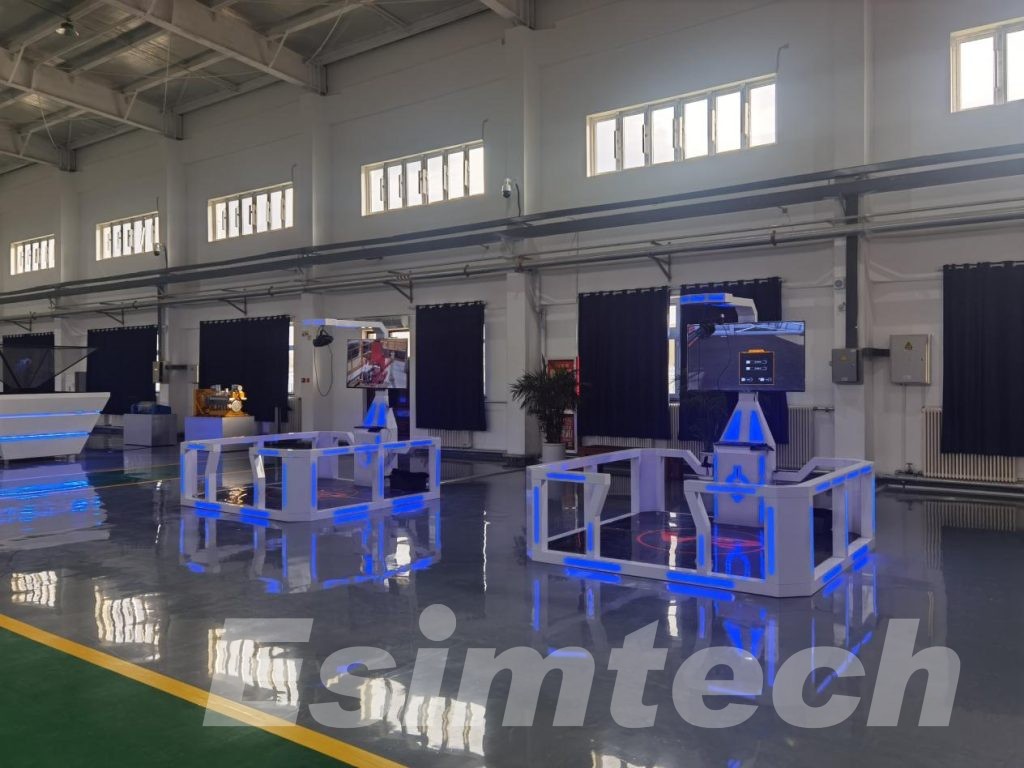
The Esimtech Downhole Operation Simulation Training System employs Intelligent Scoring and Real-Time Analytics technology. Everything that the trainee does, whether it is pumping speed or valve timing, is recorded and measured. Thus, it becomes impossible to introduce any bias into the assessment. Each employee gets their own “Competency Map,” which allows the Human Resources Manager or Operations Manager to clearly understand the drillers’ weak points.
The Economic Argument: ROI of Simulation
Procurement asks us, “What is the payback period?”
Math becomes ever more straightforward:
- Training Cost Savings: Saving 70% of training time by transitioning training activities to the simulator saves fuel, equipment maintenance costs, and money spent on travel.
- Insurance Discounts: Numerous insurers are willing to give insurance discounts when there is a way to provide proof that crews engage in regular simulation training.
- NPT Prevention: When a simulator allows a crew to avoid one pipe-sticking event or downtime, the investment pays for itself.
The Future is Immersive
In looking at the future of 2027, one should also consider how the use of AI Virtual Mentors and AR will change the rig floor even further. The basis, however, will never change. It will still be a simulation engine of the highest precision that will help prepare a human being for the unpredictable work with the earth’s crust.
Choosing a system of simulating operations in a borehole means investing in your best asset – your people. In an industry where “good enough” can be disastrous, the choice becomes obvious with Esimtech.