Essential Skills for Managing Wireline Logging in Deepwater Operations

Written By: Computer Science Professor
Deeply rooted in the R&D of simulators for the oil and gas industry, committed to bringing safety to every oil worker.
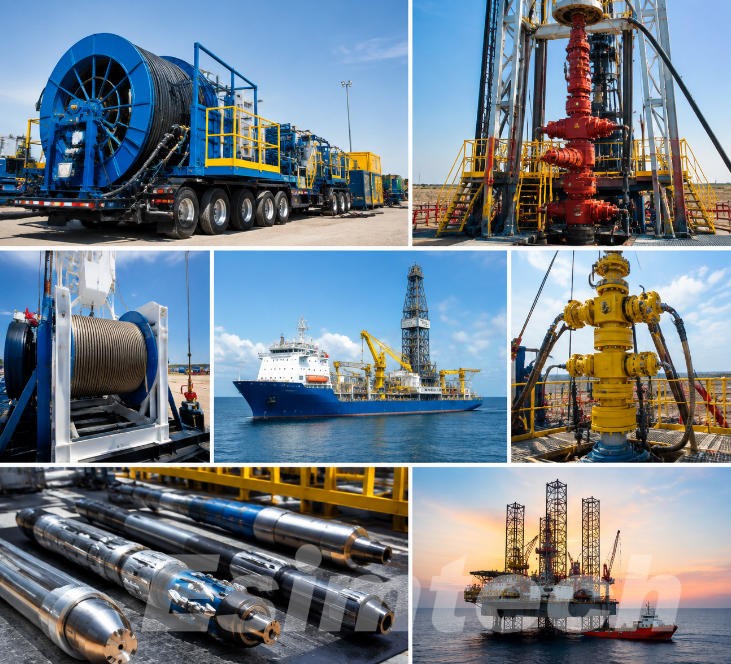
Within the offshore oil and gas industry, wireline logging in deepwater is the most complex challenge. While onshore activities require depths of 500 to 1,000 feet, deepwater wirelogging operates at depths over 1,000 meters with respect to hydrostatics and total vertical depth, which pose threats to cable mechanics. The average rental rate per hour for a deepwater drillship is up to $20,000 to $40,000; hence, non-productive time becomes the mortal enemy.
Successful deepwater logging does not only require the ability to run tool strings but is also a combination of vessel movement, hydrostatics, and the mechanics of very long cables. In order to keep wellbore integrity intact, the operator should have a particular level of “deepwater-ready” skills. The present guide identifies key competencies to operate successfully in deep water areas and shows how current advances in simulations help bridge the theoretical gap.
Skill 1: Precision Winch Control and Tension Management
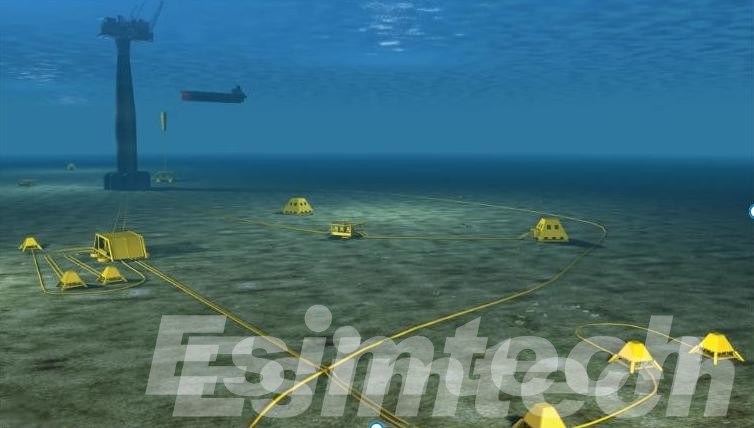
The most important physical issue with deep water wireline logging involves the sheer weight of the cable. In water deeper than 3,000 meters, the cable may have enough weight by itself to exceed its weakest point. The winching operation is no longer a mechanical procedure but rather one involving physics.
- Dynamic Tension Monitoring: Deep water operations create “drag” issues on account of the increased friction created when the equipment moves through the wellbore. The operators have to differentiate between a “sticky point” within the formation and an actual tool hang-up. The mistake could cost the company a fortune in BIH recovery operations.
- Awareness of Heave Compensation: Despite using sophisticated active heave compensators on the drilling rig, any motion of the ship can cause slight vibrations in the line. An experienced operator learns how to use winch speed to negate such micro-stress, making sure the string moves at a constant speed to ensure the accuracy of the geophysical measurement.
- The Role of Muscle Memory: Proficiency entails developing “muscle memory” of the winch by the operator. It involves recognizing the flexibility of the line, which means thinking of thousands of feet of steel rope as an enormous rubber band, which behaves differently at 500 meters than at 5,000 meters.
Skill 2: Mastery of Complex Well Geometry and Pressure Transitions
The Complexities of Deepwater Wells: Most deepwater wells are not vertical. Typically, such wells may take on complicated shapes like S-curves or may be highly deviated horizontal wells that are designed to target distant reservoirs.
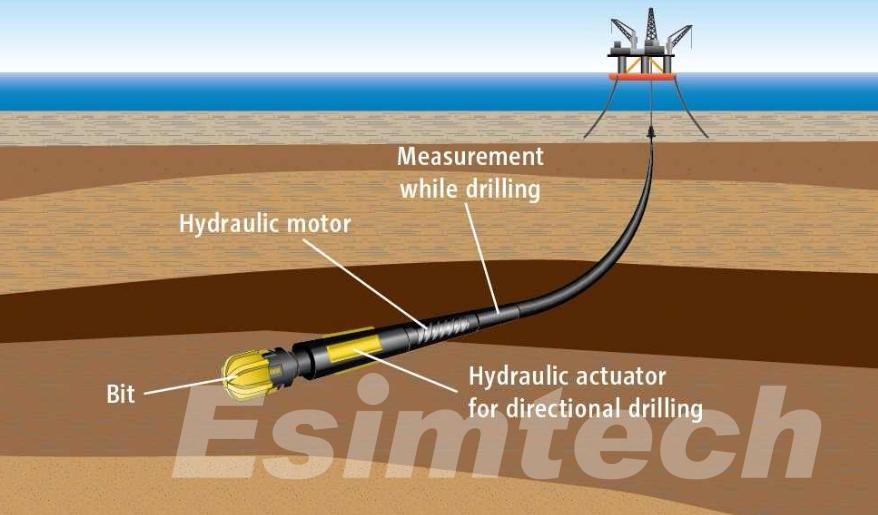
In maneuvering through such wells during wireline logging operations in deep water, some spatial intelligence is needed. For instance, as one travels through deviated wells with tool strings, there is a very high probability that the tool will develop key seating in the wellbore, thereby wearing away the side of the borehole. Besides, in deep water, pore pressure and fracture gradients differ only by small amounts. Too fast movement of the tool may generate a swab/surge effect, leading to kicks or formation fractures.
Skill 3: Emergency Response and Incident Mitigation
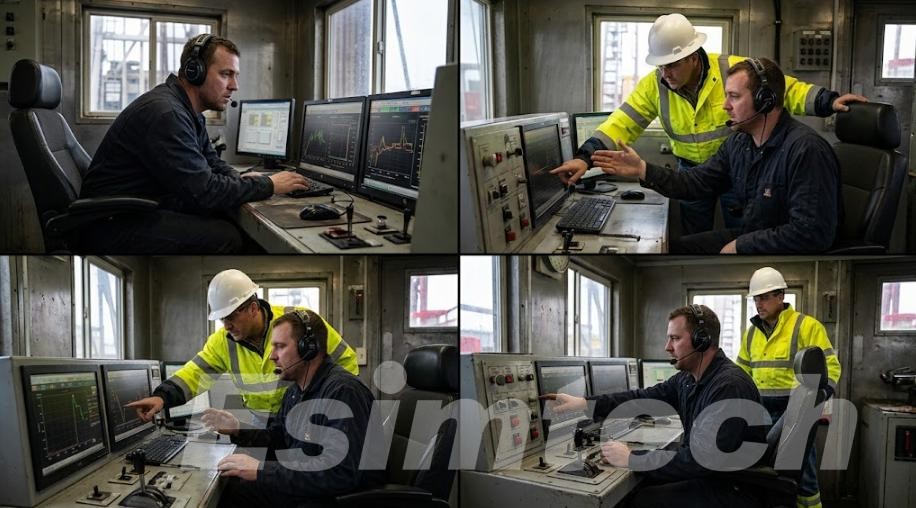
In case something happens 5,000 feet into the hole, panic is the most costly reaction. One can judge whether someone is experienced enough by his ability to perform either a “Controlled Pull” operation or handle a “Power-Off” event. Should the heave compensator or the vessel move away from its station, the logging engineer has but a few seconds to think.
Successful incident mitigation comes down to the use of scenario-based decisions. Say for example the tools get stuck. At that time, there is no need to pull with utmost force as it will surely break at its weakest point. Instead, one should calculate the “Overpull” limits according to the depth of operations and fatigue of the cable. Also, the engineer needs to stick to a rigorous jarring protocol as well as communicate openly with the Rig Manager regarding the situation.
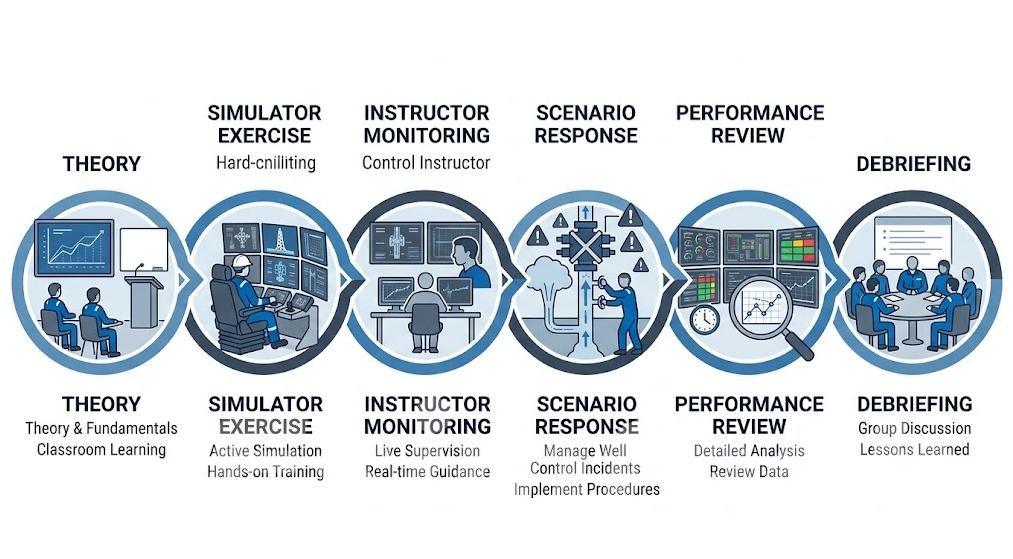
Why Simulation Well Logging Training is the New Industry Trend?
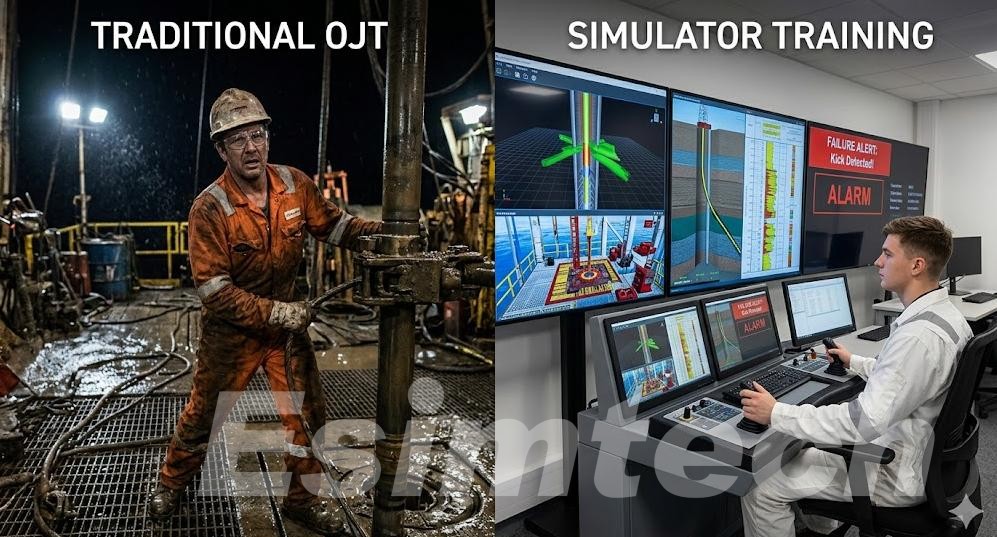
There is no more room for “OJT” (“On-the-Job Training”) when it comes to working with deep-water assets. Using such a costly resource at around $600,000 per day as a training ground is simply not an option anymore due to the enormous financial risks involved.
| Feature | Traditional OJT Training | Simulation-Based Training (Esimtech) |
| Risk Profile | High: Potential for BIH or NPT | Zero: Safe environment for failure |
| Scenario Range | Limited to current well conditions | Unlimited: Gas kicks, power loss, cable breaks |
| Cost Efficiency | Prohibitive (Rig time + POB) | High ROI (Shore-based, repeatable) |
| Skill Validation | Subjective (Mentor’s opinion) | Objective (Data-driven performance metrics) |
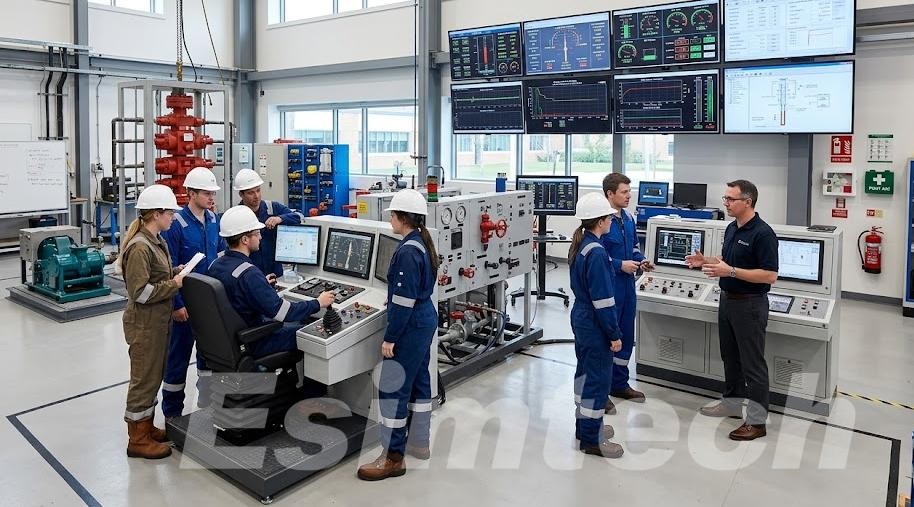
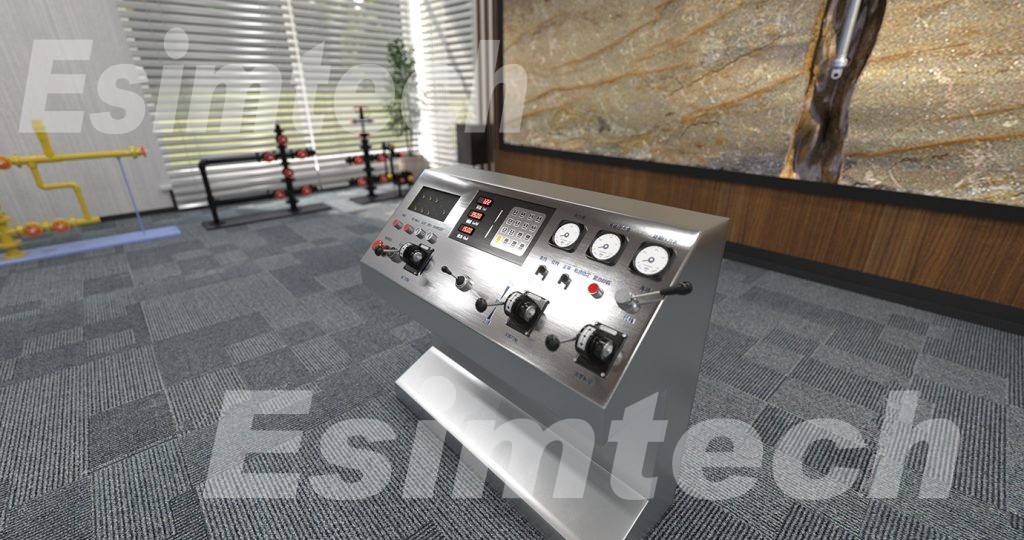
Using digital twin technology and well logging simulation systems, the process of Mission Rehearsal can be achieved. Engineers can enter the exact trajectory of their GOM (Gulf of Mexico) or Brazil Pre-Salt well and simulate the operation hundreds of times prior to deploying the tool string from the storage.
Conclusion
When considering wireline operations in the deepwater arena, there must be a combination of mechanical instinct, physics-based decisions, and quick fire crisis management skills. Wells are now drilling in ultra-deepwater territory, and the room for mistakes by humans has disappeared.
With the aid of well logging simulators, we have found the solution to separate “experience” from “years spent on the rig.” The new age of well logging operations calls for performance in a simulated environment to ensure that once the winch is turned 3,000 meters down into the depths of the ocean, all the challenges have been encountered and overcome before.