Gas Lift vs. ESP: How to Choose an Artificial Lift Method

Written By: Computer Science Professor
Deeply rooted in the R&D of simulators for the oil and gas industry, committed to bringing safety to every oil worker.
Deciding upon the right artificial lift system can be one of the most important decisions in managing mature fields and developing dynamic wells. When reservoir pressure drops, natural lift becomes ineffective. The Gas Lift and Electrical Submersible Pump (ESP) systems are the two most prevalent technologies in the high-volume artificial lift systems market but operate according to entirely different principles.
Making the wrong choice can result in early equipment breakdowns, high workover expenses, and delayed oil production. In this paper, we analyze the Gas Lift and ESP systems in terms of technical restrictions, total cost of ownership, and criteria for field selection.
Comparing Technical Limits of Gas Lift and ESP
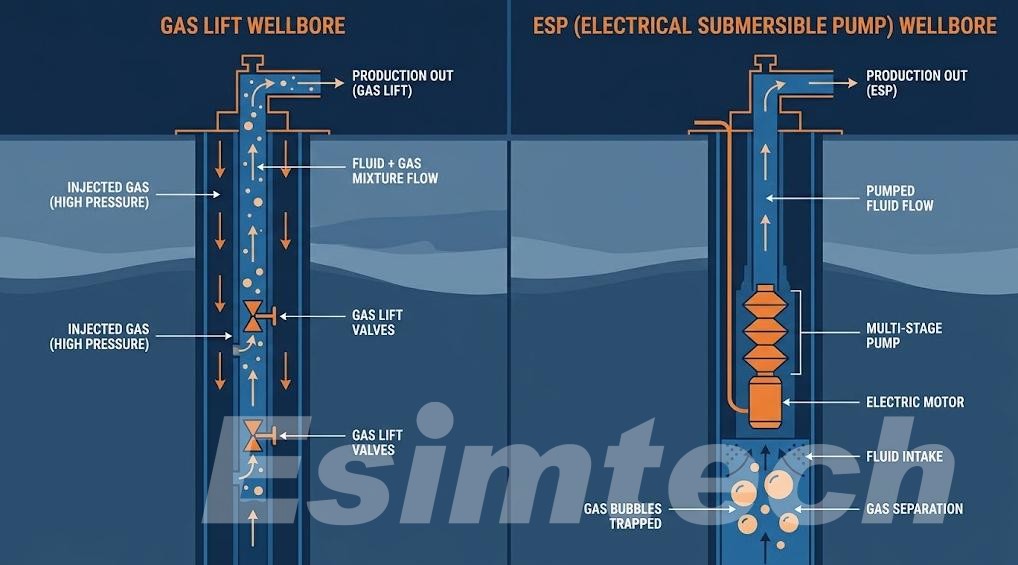
The technical feasibility of an artificial lift method is largely dependent on the physical properties of the fluids and well geometry underground. Ignoring the physical limitations will always result in operational difficulties.
Volume and Depth
Electrical Submersible Pumps (ESP) outshine all other artificial lift methods when it comes to pumping large volumes of fluid from deep wells. An ESP with high horsepower can produce at a rate of over 30,000 barrels per day, which makes it the best choice for high-rate and water-flooded wells. Gas Lift is also capable of producing large volumes of fluid, although its efficiency drops with depth.
Handling Gas-to-Oil Ratio (GOR)
High GOR is the most significant disadvantage of ESPs. Free gas entrainment into the ESP stage leads to gas locking, fluid cavitation, and motor overheating, resulting in fast pump failure without additional gas separators or multiphase pumps. In contrast, Gas Lift is ideal for high GOR conditions. Free gas from the reservoir decreases fluid column density, and this enhances the effect of injected gas, making injection easier.
Solids, Sand, and Well Deviation
ESP installation in deviated or horizontal wells is a very difficult task from the point of view of mechanical stresses. Constant bending in dog-leg sections causes wear of ESP shafts and seals. Also, abrasive sand quickly erodes ESP impellers. Gas Lift can handle sand and solids much better due to the absence of moving downhole equipment. Provided that gas velocity is high enough to prevent liquids from accumulating, Gas Lift will work steadily in such wells.
Evaluating Total Cost and Workover Risks of Artificial Lift Systems
A cost evaluation of artificial lift involves the study of CAPEX and OPEX in addition to the risks involved in interventions.
| Financial & Risk Metrics | Gas Lift Systems | Electrical Submersible Pumps (ESP) |
| Initial Capital Expenditure (CAPEX) | High ground CAPEX (requires compressors/gas lines); low downhole hardware cost. | Moderate ground CAPEX; high downhole equipment cost (motor, cable, VFD). |
| Intervention Method | Slickline / Wireline (low cost, fast execution). | Rig or Coiled Tubing Unit required (high cost). |
| System Mean Time Between Failures (MTBF) | High (no moving parts downhole). | Moderate (sensitive to electrical and mechanical stress). |
| Workover Down-Time | Hours to days. | Days to weeks (subject to rig availability). |
Allocation of CAPEX:
The allocation of CAPEX is totally different in both cases. The CAPEX for Gas Lift will be quite high initially due to the need for high-pressure gas headers and central compressors. But the equipment used downhole will be cheap and light. In ESP, the CAPEX is high downhole because of the requirement for a multistage pump, submersible motor, and power cables.
Intervention Logistics and Deferred Production Costs:
The real economic difference is found in the intervention logistics in case of maintenance work. Intervention of an ESP includes pulling the whole tubing string by using a workover rig or heavy coiled tubing unit. In case of offshore and remote facilities, costs incurred due to rig mobilization alone can reach hundreds of thousands of dollars per day of deferred production.
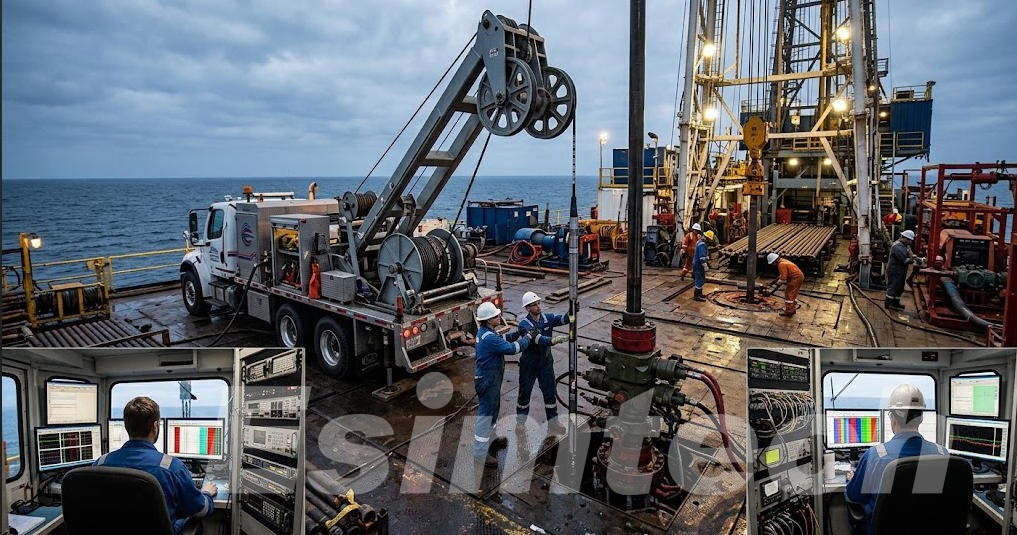
Gas Lift has an excellent reliability record due to its mechanical operation with valves. In case of the need for replacement or calibration of a gas lift valve, all work can be performed within hours by using a slickline unit without pulling the production tubing string.
How to Select the Right Artificial Lift Method for Your Field
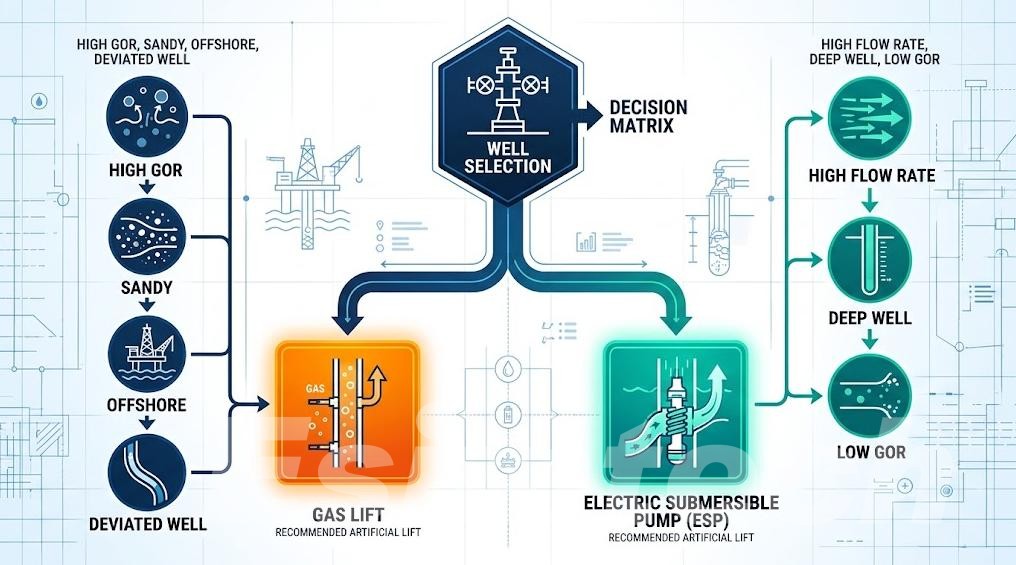
Use the following decision-making aid, which is based on dominant field characteristics:
Select Gas Lift technology if:
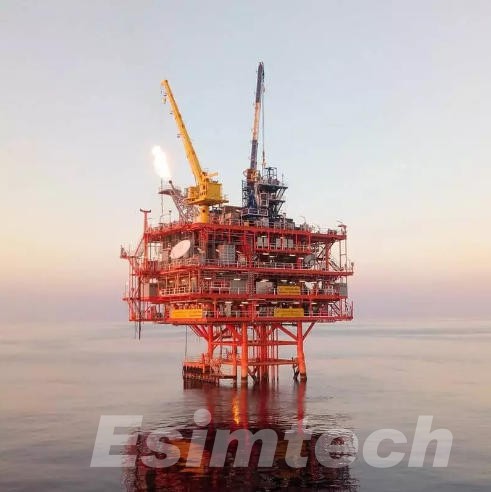
The offshore or subsea fields where the mobilization cost of a workover rig is exorbitantly high.
GOR is high with considerable amounts of associated gas.
Highly deviated, horizontal, or sandy wells causing significant wear of machinery due to rotation.
Fields having a centralized production system where a single compressor station serves multiple wells at one time.
Select ESP if:
High volume of oil production and low GOR fields where drawdown needs to be maximized.
Low bottom hole pressure (BHP) wells making it difficult to get enough drawdown by means of gas injection.
Fields without the availability of high-pressure natural gas.
Fields located on shore and easily accessible.
De-risking Artificial Lift Design with Simulation Solutions
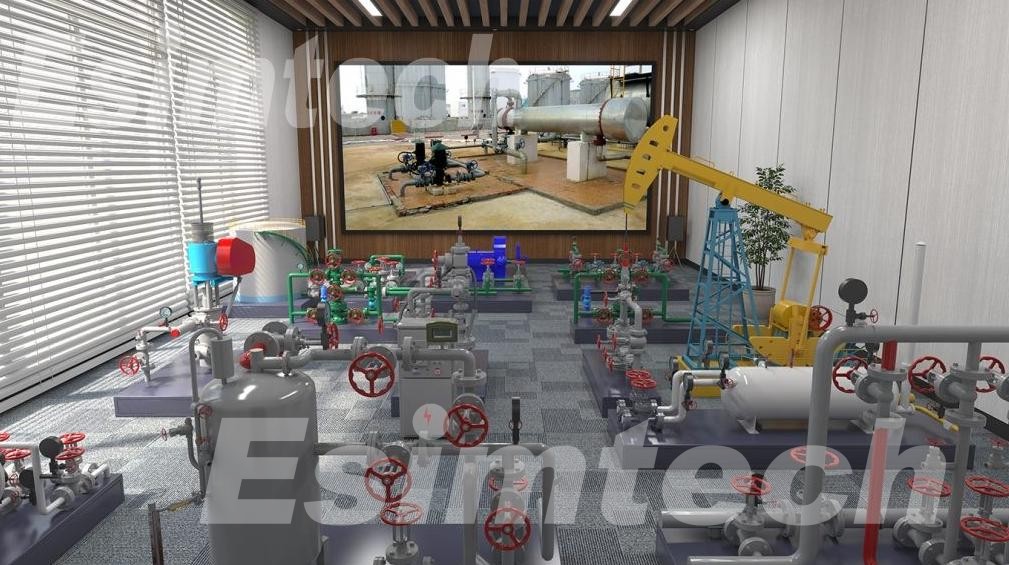
Choosing between Gas Lift and ESP is hardly a black-and-white option, as the conditions of the reservoir change very quickly throughout the lifetime of the well. A well-designed lift system for one set of production conditions could easily become extremely inefficient due to rising water cut or falling reservoir pressures. Static design of the artificial lift system could lead to early failure of the equipment.
Prior to investing substantial sums of money and deploying equipment into the well, engineers should examine multiple flow regimes, gas lift valve schedules, and pump curves.
Conclusion
Gas Lift, on the one hand, offers remarkable toughness in high GOR and sandy environments at a minimum intervention cost, while ESP offers remarkable fluid drawdown capability in high-rate and deep wells. The trick in ensuring long-term profits is being able to anticipate the reservoir dynamics before investing any money.
At Esimtech, you will find the latest simulation systems in petroleum engineering that simulate difficult artificial lift processes and downhole fluid behavior and provide real-time troubleshooting training to the field operator. With the help of Esimtech’s simulation solutions during your planning phase, your engineers will be able to virtually test your options for lift systems.