How Digital Twins Drive Value and Efficiency in Oil Production 2026?

Written By: Computer Science Professor
Deeply rooted in the R&D of simulators for the oil and gas industry, committed to bringing safety to every oil worker.
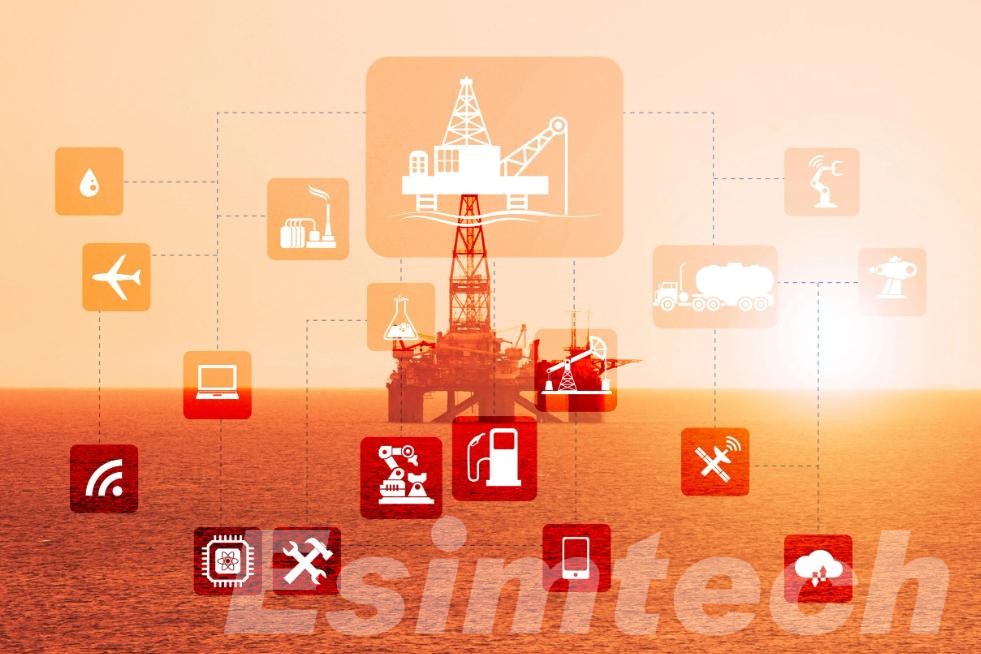
By 2026, the concept of the “digital twin” will move beyond just being another buzzword in R&D labs to become the backbone of all upstream oil and gas operations. With the oil and gas industry facing the challenge of not only price fluctuation but also ESG compliance, there is an emphasis on the need for not just asset visualization, but autonomy and decision-making support.
In the context of oil and gas, the digital twin becomes more valuable not because it exists, but because of its capacity to leverage real-time information from the field using predictive physics.
The Evolution of Digital Twins: What’s New in 2026?
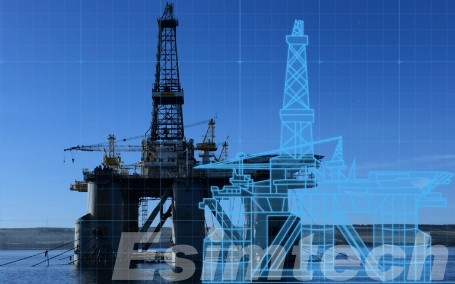
Digital Twins in 2026 are no longer mere 3D CAD representations but complex systems connecting the physical machine with its cloud-based counterpart. According to industry-leading analysis from last year, the domain has evolved beyond “data collection” into the age of “intelligent synthesis.”
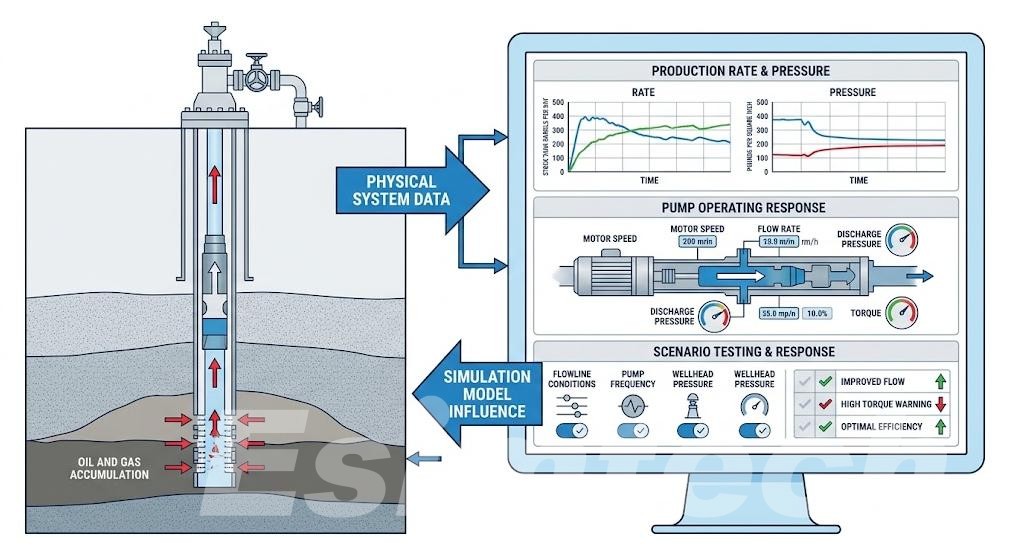
The power of digital twins derives from the absence of data silos. For example, while traditional oil wells have separate data silos for their reservoir data, drilling logs, and output, the modern-day digital twin integrates data from IoT sensors at the wellhead with production curves and underground geology modeling to form a “Single Source of Truth.” As a result, experts from different disciplines can work together in one collaborative virtual environment and test what would happen by making any hypothetical changes to a choke valve or secondary recovery rate.
Driving Efficiency: Optimising Production Lifecycles
Efficiency in 2026 will be determined by the capability to react to changing field dynamics within seconds rather than days. Digital twins create value for the entire production cycle process via Adaptive Flow Optimisation.
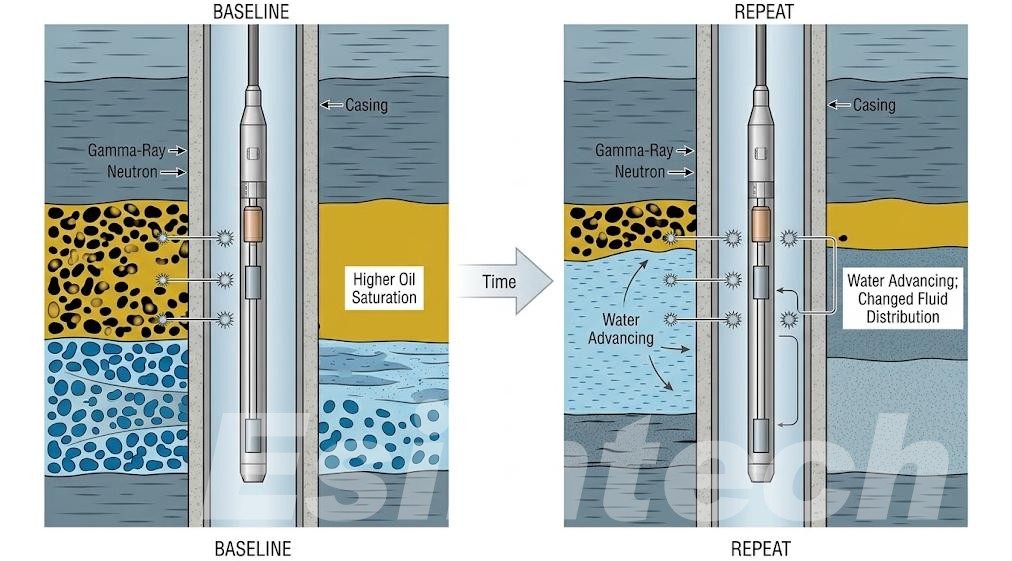
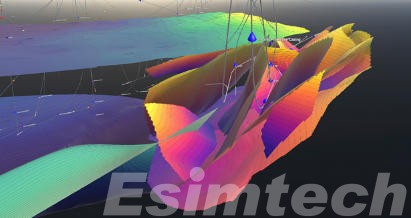
- Subsurface Visualization: By aligning reservoir models with live pressures, temperatures, and acoustic measurements, it becomes possible to simulate fluids’ movement in the borehole with unparalleled precision, thereby helping to uncover oil zones bypassed by conventional reservoir models.
- Production Constraints Detection: The digital twin’s capability to detect localized pressure reductions or “slugging” along long-distance gathering systems is one such example.
- Quantifiable Yield Improvements: In practical applications from 2026, optimizing flow parameters using digital twins through “what-if” analyses results in a 2% to 5% uplift in overall recovery efficiency. Even a 2% uplift in a field with 50,000 barrels per day translates into millions of dollars annually.
Maximising Asset Value through Predictive Maintenance
By 2026, digital twins have gone from basic alarm systems to advanced Diagnostic Depth through the use of physics-based models combined with machine learning techniques.
Physics + Data
Historical maintenance was scheduled according to a calendar system, which frequently resulted in equipment that did not require maintenance being disassembled. The 2026 digital twin system uses:
- Remaining Useful Life (RUL) Forecasting: Equipment vibration and temperature are analyzed against “the digital twin of the asset’s condition” to determine potential breakdowns weeks before they occur, allowing for timely repairs.
- Micro-Anomaly Detection: Machine intelligence allows for the detection of tiny anomalies in the torque and pressure of equipment that indicate an impending seal failure well before any problems arise.
- Cost Savings: Industry data shows that this system lowers Maintenance OPEX costs by more than 25%.
Strategic Gains: Safety, Training, and Sustainability
In addition to increased efficiency, digital twins are changing how humans and nature are impacted by the oil fields.
High-Fidelity Training and Safety
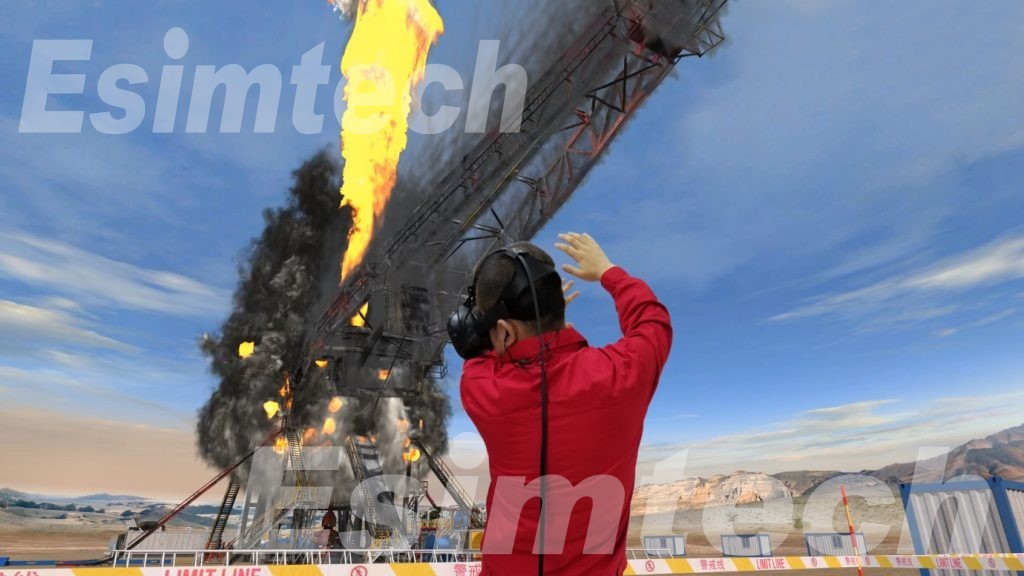
The safety procedures in the year 2026 involve “virtual rehearsal.” The HSE department uses digital twins to conduct simulations for high-risk situations. It is at such instances when high-fidelity simulation comes in. Using real physical logic and 1:1 physical environment simulation technologies like those of Esimtech, personnel can perform well-controlled or other emergency procedures within a simulated setting that recreates the same challenges as those present physically. This means that before anyone steps on board the facility, they will have practiced in its mechanical environment.
The Sustainability Mandate
As carbon taxes and ESG reporting requirements tighten by 2026, digital twins act as the main audit tool for carbon emissions. Through improving energy usage efficiency in the operation of large pumps and decreasing gas flaring by managing pressure levels, digital twins cut down on the carbon emissions per barrel. It is not simply “good PR”; it is a business necessity to raise funds in the 2026 environment.
Implementing Digital Twins: From Concept to ROI
To move beyond a conceptual twin into becoming a high-ROI asset demands addressing certain technological challenges that have dictated the 2026 landscape.
- Data Quality: If twins are accurate reflections of reality, then the data they process needs to be clean. Successful operators are investing in high-accuracy IoT sensors to ensure they aren’t feeding “digital trash” into their models.
- Brownfield Transition: While most of the earth’s oil is extracted from “brownfield” sources that can date back several decades, integrating such old technology into a 2026 framework involves special middleware and an approach that focuses on simulation above all else.
- The Talent Gap: At the moment, there is a serious lack of “Hybrid Engineers”—individuals who are knowledgeable about petroleum physics as well as data science. Winning companies are those that can create multidisciplinary teams in a single digital twin environment.
Summary
This technology will become the next frontier of energy efficiency through 2026 by driving improvements in productivity, reducing operating costs associated with maintenance, and ensuring worker safety via high-fidelity simulation.
As oil and gas simulations continue to advance in their ability to mimic reality accurately, the distance between physical reality and digital intelligence will continue to diminish, paving the way for greater safety, productivity, and sustainability in the oil and gas industry.