BOP Stack Breakdown: Annular vs Ram BOP for Drilling Simulation Training

Written By: Computer Science Professor
Deeply rooted in the R&D of simulators for the oil and gas industry, committed to bringing safety to every oil worker.
If you’ve spent any time on a drilling floor, you know the BOP stack isn’t just another piece of equipment — it’s the last line of defense. But here’s the thing: a lot of training materials still treat annular and ram BOPs like they haven’t evolved in 20 years. They have. And if you’re serious about well control, you need to know not only how each BOP works, but also why simulation has become the real game-changer.
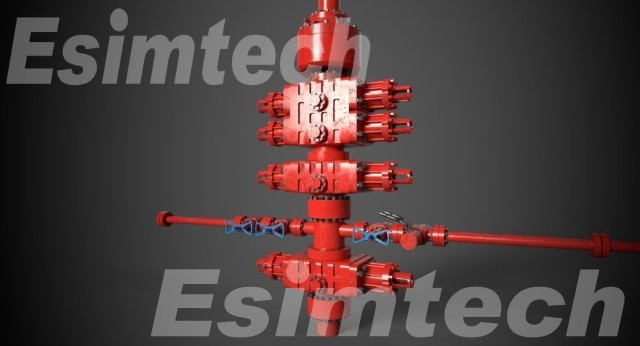
What Each BOP Actually Does?
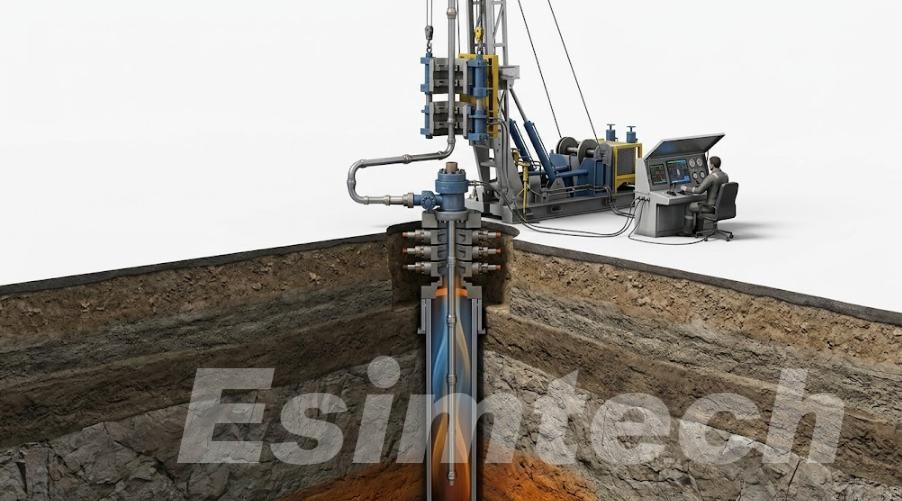
Annular BOP – the flexible one. The packing element used in it is of donut shape, made from rubber, and it collapses under hydraulic pressure. This implies that it can seal across various diameters, including tool joints as well as damaged pipes. Whenever you’re stripping pipe or circulating a kick, always use the annular. The primary tasks of the annular include the following:
- Sealing the moving pipe.
- Stripping.
- First response to a pressure surge.
Ram BOPs – the specialists in brute force. Unlike annular BOPs that use rubber packing, it uses rams made of steel that slide horizontally, clamping on (or even severing) the pipe. You can have various kinds of rams depending on the emergency: a pipe ram to seal against a specific size of pipe, a blind ram to completely seal off the well without a pipe, or a shear ram, which simultaneously severs the pipe and seals it off. The closing of a ram BOP is slow, but it provides far more strength in its sealing capability.
The Big Shift You Should Know About
Older training courses used to mention “annular for stripping, ram for emergency.” This is essentially correct, but the oil and gas industry has progressed in three key aspects since then.
- First, managed pressure drilling and bottomhole pressure control demand higher performance levels from BOPs. Today’s annulars should be able to control pressures at their maximum capabilities, and rams must operate in coordination with fast automatic shut-off functions.
- Second, adjustable RAM technology has become much more prevalent than it was a decade ago. No need for changing rams depending on the pipe size; some systems adjust automatically without removing the flange connections.
- Third, sensors. Modern BOP units include numerous sensors, including position, pressure, and acoustic sensors. This is highly relevant for simulations, because one simply cannot prepare an employee for such intelligence with mere paper diagrams.
Annular vs. Ram: A Fast Comparison
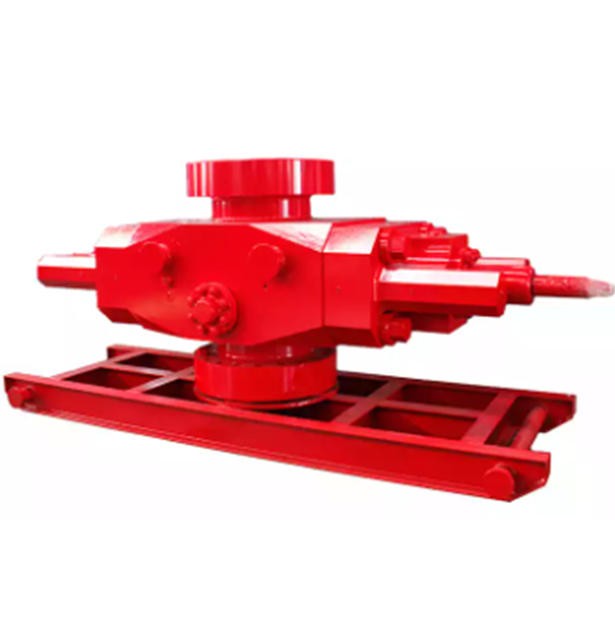
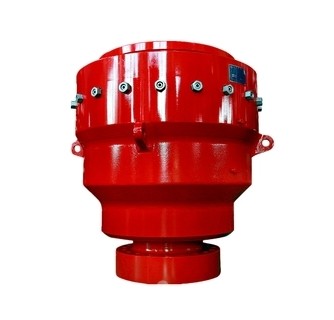
When you line up an annular BOP against the ram BOP, you will observe that they serve different purposes. The annular BOP is fast and flexible, while the ram BOP is slow but precise. In order to make the concept clearer, let us present a comparison table drawn from experience on the drilling floor, and not theoretical knowledge alone.
| Feature | Annular BOP | Ram BOP |
| Sealing type | Rubber packing unit | Steel rams with rubber inserts |
| Pipe size flexibility | Seals on any size, even damaged pipe | Fixed size (unless variable rams) |
| Closing speed | Fast (< 60 seconds) | Slower |
| Cut pipe? | No | Yes (with shear rams) |
| Stripping capability | Yes | No |
| Best for… | Quick response, stripping, irregular pipe | Absolute shut off, high pressure, cutting |
Therefore, the main idea is:
- For speed, flexibility, and stripping, use the annular BOP.
- For precision, pressure containment, and pipe severing, choose the ram BOP.
In reality, they are not rivals but complementary tools that should be combined properly in a BOP stack design.
Where Old “Hands-On” Training Falls Short?
Most drilling crews still learn BOP operations through field walkthroughs, binders, and the occasional low-pressure test. But that doesn’t prepare you for something like:
- A slow ram closure because of hydraulic contamination
- A partial seal on a heavily worn pipe that the annular can’t fully close around
- A shear ram decision when time is counted in seconds, not minutes
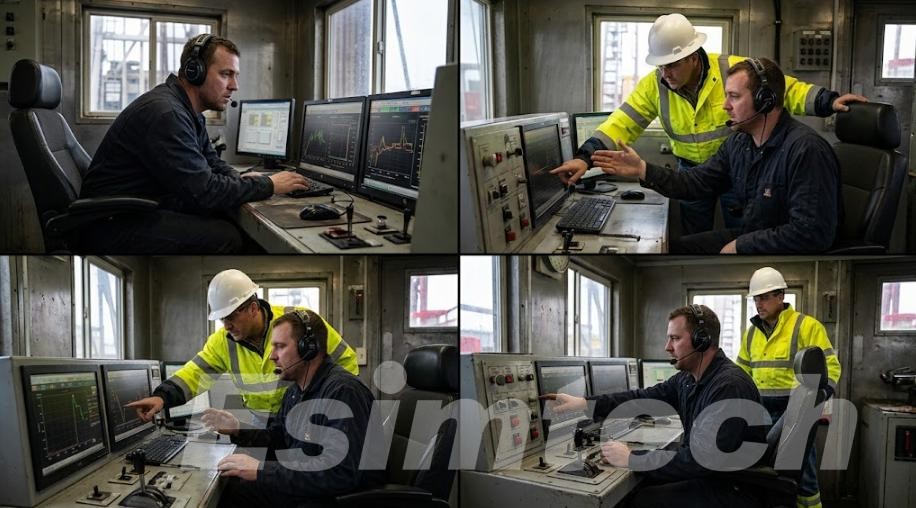
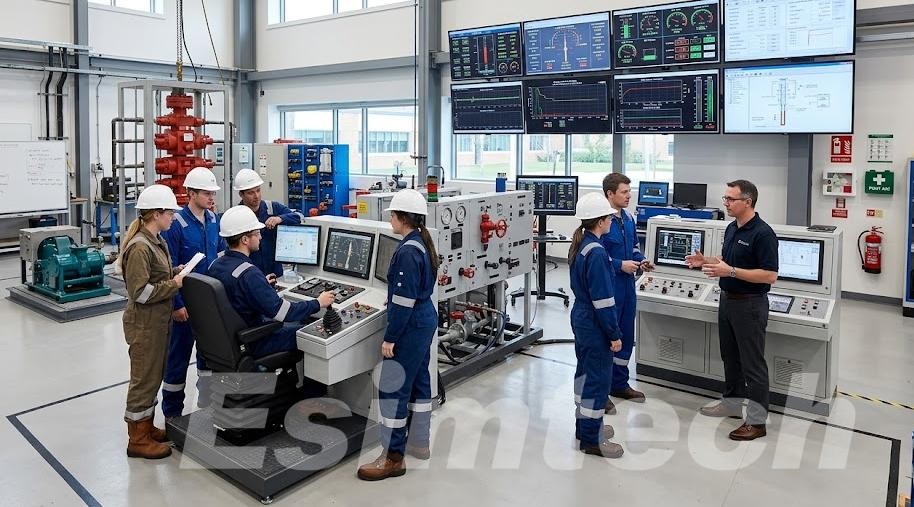
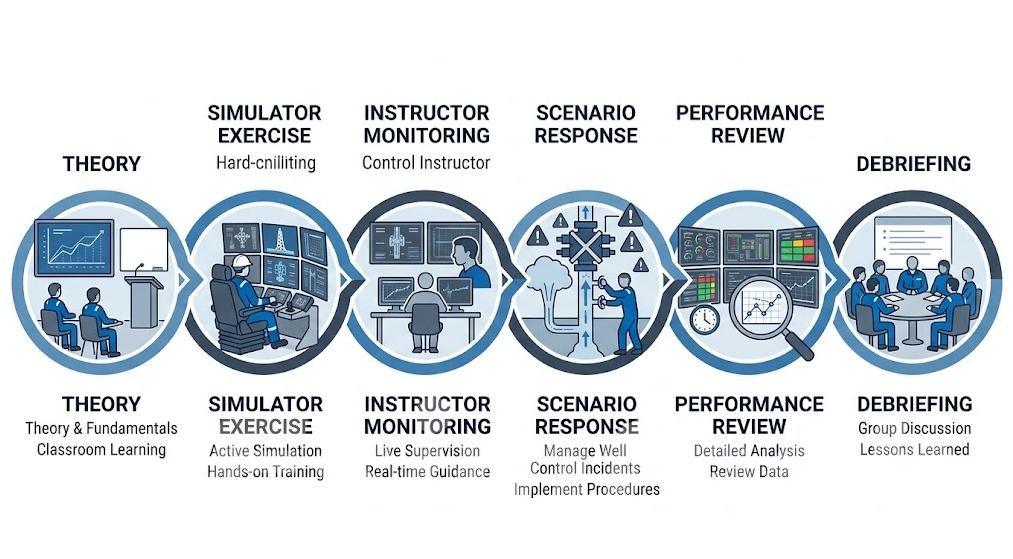
With a proper BOP simulation system, you can practice the entire sequence — kick detection, annular close, pressure hold, ram selection, and shear activation — without putting the real stack at risk.
You can also reproduce edge cases that would be unethical or dangerous to create in the field: a ram that fails to latch, an annular element leaking after stripping 200 feet of pipe, or a miscommunication on which pipe rams are installed.
What Modern Simulation Adds
Modern drilling simulators aren’t limited to basic 3D animations. The high-quality ones incorporate hydraulic lag, sealing degradation through repetitive cycles, and the impact of temperature on rubber seals. Moreover, the BOP simulators are integrated with larger-scale drilling simulators so that the BOP operates dynamically and interacts with other parameters such as pit gain, choke line friction, and gas in mud.
Advanced BOP training modules can simulate a virtual replica of the entire well operation using the exact BOP design in pre- and post-operation evaluations. This is an enormous advancement compared to just a decade ago.
Bottom Line for Engineers and Trainers
When drafting or revising training material, don’t treat the annular and ram BOP as separate entities. Look at them as a system – one that is getting better, faster, and smarter. Don’t expect a manual or PowerPoint presentation to train your reaction time. Simulation is for that.
Still, stick to the basics: annular BOP is all about flexibility and quick reaction, while ram BOP is more aggressive and can shear pipe. But remember that technology added on top makes all the difference.
Only that way will you progress from “I understand the functionality of a BOP” to “I’m prepared for any reaction from the well.”