How to Build a Well Control Training Center?

Written By: Computer Science Professor
Deeply rooted in the R&D of simulators for the oil and gas industry, committed to bringing safety to every oil worker.
Building an oil well control training center is not simply about purchasing simulators and installing them in classrooms. A practical training center should be combined with training objectives, simulation equipment, instructors, actual operation scenarios and evaluation systems.
For oil and gas companies, professional training institutions and petroleum engineering universities, a well-equipped training center can provide a safe and controllable training environment, allowing employees to practice well control procedures, handle abnormal situations and enhance their on-site decision-making abilities.
So, when enterprises plan to build a new well control training center, what factors should they consider?
Start With Your Training and Certification Goals
Firstly, one should not ask “Which simulator should be purchased?”, but rather clarify:
“What kind of training does the training center need to provide?”
First, determine the main users of the facilities. Commercial training centers may target drilling workers, assistant drilling workers, drilling engineers and supervisors, while universities may mainly train students majoring in petroleum engineering.
The training objectives will determine the type of practical exercises, including well blowout detection, well shut-in, pressure control, blowout preventer operation, pressure control and handling of abnormal drilling situations.
The certification objectives should also be determined in advance. If the center plans to conduct IADC or IWCF-related training, the course requirements and practical assessment standards should serve as the basis for the design of simulators, training environment, instructors and assessment processes.
In addition, the training capacity needs to be considered. Small university laboratories and commercial training centers that serve multiple training groups on a weekly basis have significantly different requirements in terms of equipment quantity, space and simulator configuration.
Build the Facility Around the Training Workflow
After determining the training objectives, the physical environment can be planned based on the actual training methods.
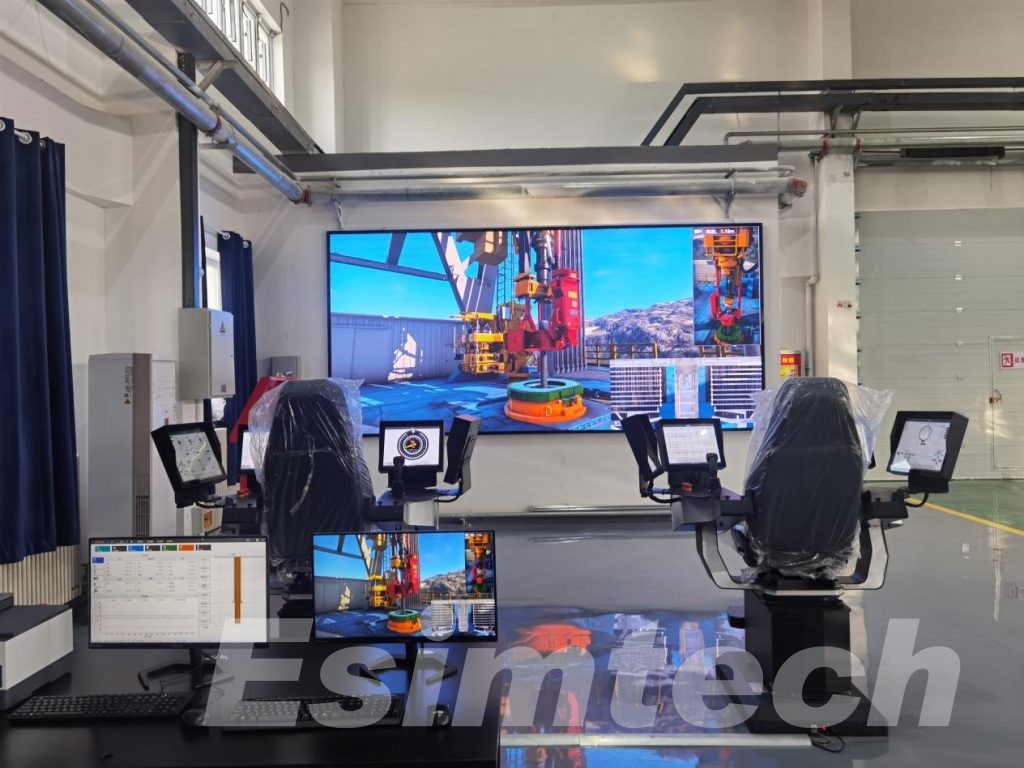
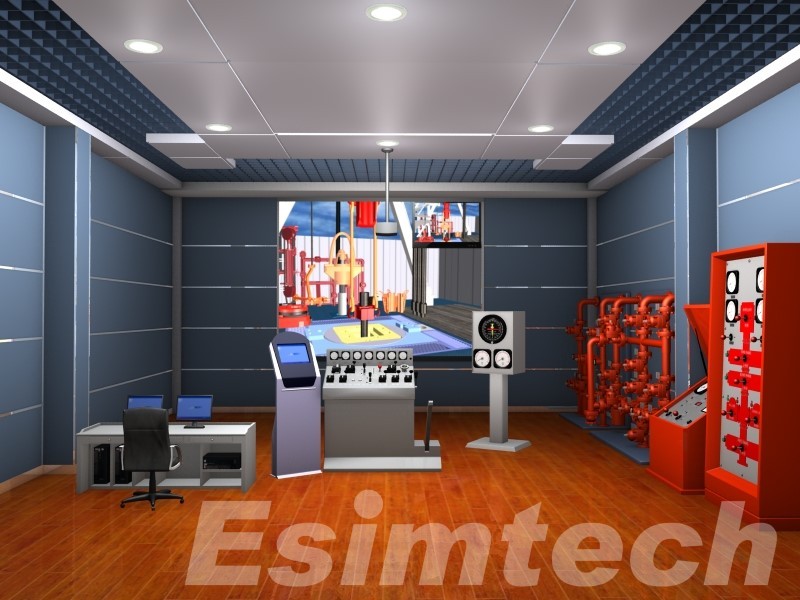
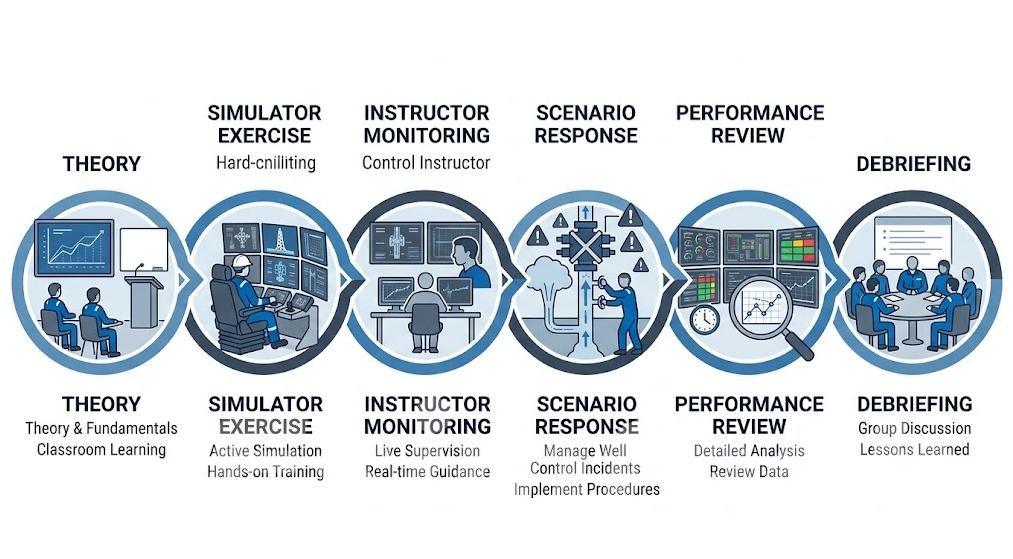
Typical training facilities may include theory teaching classrooms, simulator rooms, instructor workstations, and areas for performance evaluation and summary.
| Facility Area | Main Function |
| Classroom | Theory and pre-simulation instruction |
| Simulator Room | Practical drilling and well control exercises |
| Instructor Station | Scenario control and trainee monitoring |
| Review Area | Performance analysis and debriefing |
| Technical Area | System support and maintenance |
The overall layout should support the complete training process:
Theory teaching → Simulator practice → Instructor monitoring → Scenario response → Performance evaluation → Summary
The simulator room should also be reserved with sufficient space to facilitate communication among trainees and teamwork. Actual well control operations usually require multiple people to collaborate, so the training environment should also reflect this feature.
Infrastructure should be planned as early as possible, including power, network, HVAC, lighting, audio-visual equipment, and equipment maintenance access. These factors will all affect the long-term operation of the training center.
The ultimate goal is to build a complete training environment, not just a room for simulators.
Choose a Well Control Simulator That Matches Your Needs
The simulator is the technical core of the well control training center. However, when choosing one, one should focus on the training capabilities rather than simply comparing the graphical effects or hardware specifications.
The key question is:
“Can the simulator reproduce the actual situations that trainees need to learn and handle?”
Realistic Well and Pressure Modeling
Professional simulators should be able to reproduce the real well conditions and allow instructors to set parameters such as formation pressure, fracture pressure, wellbore geometry, well blowout characteristics, gas migration, and leakage.
The focus is not on making the visuals look realistic, but on making the operation responses match reality.
Drilling and Well Control Operations
Trainees should be able to operate the drilling parameters and control measures related to their duties, including drilling pressure (WOB), rotational speed (RPM), pump speed, standpipe pressure, bottom hole volume, choke pressure, and blowout preventer (BOP).
More importantly, these parameters should be able to dynamically adjust according to the scene, enabling trainees to identify problems, assess well conditions, and make decisions under changing conditions.
Instructor Control and Assessment
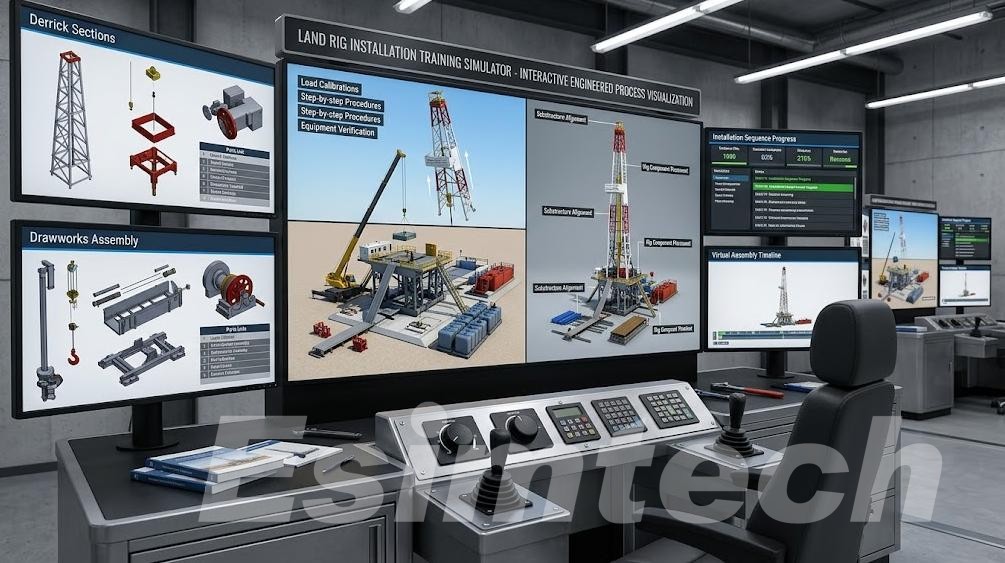
The instructor workstation is also an important component of the simulator system. The instructor should be able to configure the well conditions, set abnormal events, adjust operating parameters, monitor the trainees’ operations and view the simulation results.
The evaluation function is also very important. An effective simulator should record key performance data to help the instructor evaluate the final results and the trainees’ responses throughout the simulation process.
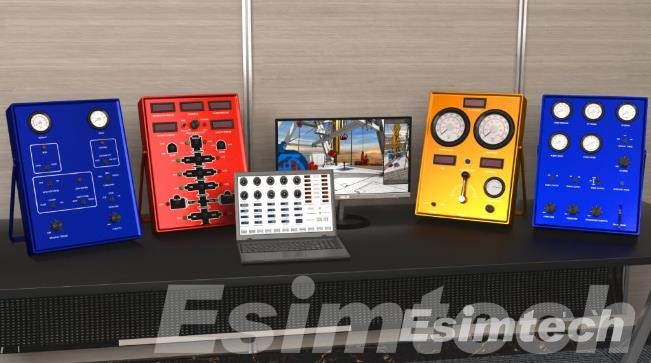
The requirements for simulator configuration vary among different training centers.
| Configuration | Typical Application |
| Desktop | Education and basic simulation training |
| Portable | Flexible or smaller-scale training |
| Cyberchair | Immersive professional training |
| Full-scale | Advanced, high-fidelity training |
The appropriate configuration depends on the number of trainees, training objectives, available space, required realism and budget.
Turn the Simulator Into a Complete Training System
A simulator alone cannot constitute a complete well control training program; its value depends on the accompanying training scenarios, instructors, and assessment methods.
Develop Scenario-Based Training
The training should progress from basic operations to more complex situations. For example, one can start with training on well blowout detection and well shut-in, and then incorporate scenarios such as well control, gas migration, leakage, blowout preventer failure, and high-pressure and high-angle wells.
Effective drills should require trainees to interpret information, communicate as a team, make decisions, and bear the corresponding consequences.
The goal of the training is not to have trainees memorize operational steps, but to cultivate their judgment and decision-making abilities to handle constantly changing well conditions.
Prepare Instructors and Assessment Procedures
Qualified instructors are an important guarantee for the simulator training center. They need to have knowledge of drilling or well control and be able to operate the simulator, develop training scenarios, guide trainees, and conduct effective summaries.
If the center plans to support IADC or IWCF projects, the following steps should be coordinated from the early stage of the project:
Facility planning → Simulator selection → Scenario development → Instructor training → Practical training → Assessment
Specific requirements may vary depending on the project and course, and the latest guidelines should be confirmed directly with the relevant institutions.
After the center is put into use, it should also be managed as a long-term training platform. Hardware and software need regular maintenance, and training scenarios and materials should be continuously updated according to operational and training needs.
Conclusion
Building an oil well control training center involves not only choosing the right simulators, but also coordinating facilities, simulation technologies, training scenarios, instructors, and assessment processes.
For institutions planning to build new training facilities, they should select appropriate simulators and system configurations based on the training needs of the trainees, the training methods of the instructors, and the construction goals of the center.
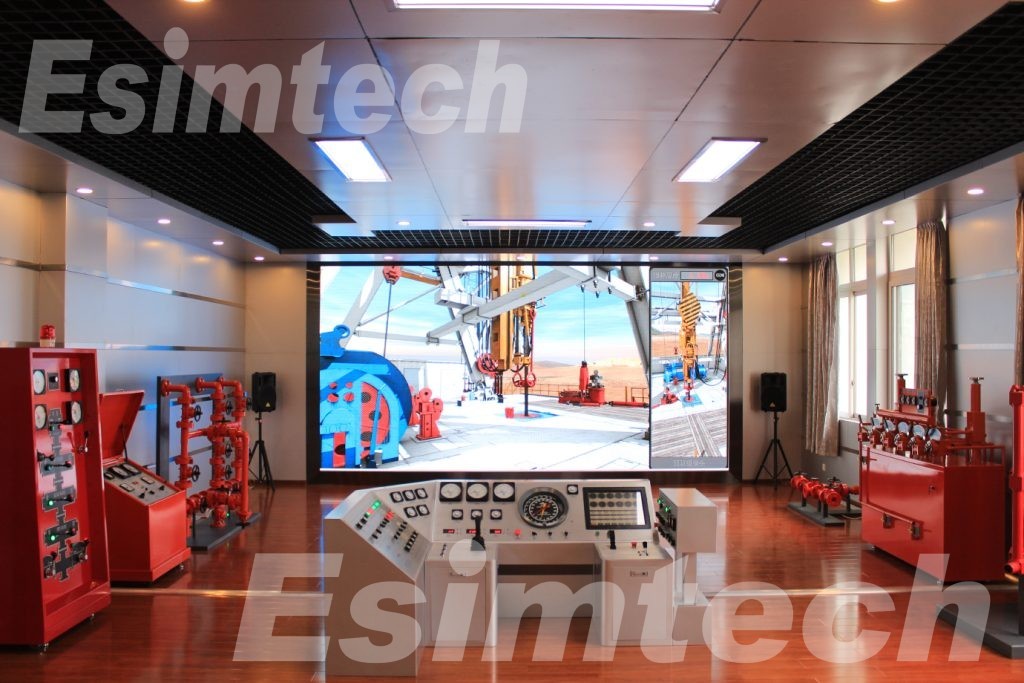
Esimtech provides drilling and well control simulation systems for oil and gas companies, training centers, and universities, and offers configurable solutions to adapt to different training goals and simulation environments.
If you are planning a new well control training center, please contact Esimtech to learn about the simulation solutions that suit your training needs.