How To Evaluate The Effectiveness Of Oil And Gas Training
In the oil and gas industry, the high-risk working environment means that the skill level and safety awareness of employees directly affect the safety of enterprise operations and production efficiency. Enterprises invest a large amount of resources in employee training every year. However, if there is no scientific assessment mechanism, it is easy to fall into the predicament of "training is completed but the effect is unclear".
Effective evaluation of training effectiveness not only enables enterprises to determine whether the training has truly enhanced the employees' capabilities, but also provides data support for the optimization of subsequent courses, ultimately achieving continuous improvement in safety management level and operational performance.
Key Objectives of Training Effectiveness Assessment
Before formulating the evaluation plan, enterprises need to clearly define the ultimate goal of the training evaluation, rather than merely completing the assessment process.
- Firstly, it is to enhance safety performance. By evaluating the changes in employees' abilities in risk identification, emergency handling, and standard operation, it is determined whether the training has effectively reduced human errors and the probability of accidents.
- Secondly, it is to improve operational skills. This includes the employees' mastery of standard operation procedures and their judgment and operation capabilities in complex situations.
- Finally, it is to optimize the return on investment (ROI) of training. By comparing the accident losses, production efficiency, and personnel adaptation cycles before and after the training, the actual economic value created by the training for the enterprise is measured.

Common Methods for Evaluating Oil and Gas Training Programs
Knowledge Tests and Theoretical Assessments
This is the most basic assessment method, which usually includes written tests or online quizzes covering aspects such as safety regulations, equipment operation procedures, and emergency response plans.
This approach can quickly test employees' understanding of the knowledge points, but it often fails to truly reflect their operational capabilities and adaptability in the actual working environment.
Practical Skills Evaluation
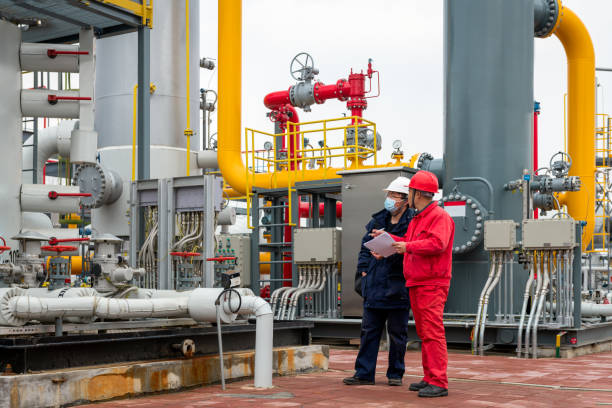
Through on-site operation assessment or simulation of scenarios, employees can complete the designated operation procedures in a close-to-real working environment.
The assessment contents may include operation accuracy rate, task completion time, and handling methods for abnormal situations, etc. This approach is closer to actual work and provides a more objective assessment of skill levels.
Performance and Behavioral Metrics
Combining training outcomes with actual production data is an assessment method that oil and gas enterprises are increasingly attaching importance to. For example:
- Changes in accident rate
- Reduction in the number of violations
- Increase in production efficiency
By comparing long-term data, it is possible to more intuitively reflect the actual improvements brought about by the training.
Trainee Feedback and Satisfaction Surveys
Collecting employees' evaluations on the content, form and practicality of the training through questionnaires or interviews can help understand whether the courses meet the job requirements.
Although it is highly subjective, it still holds significant reference value in course optimization.
How to Build a Systematic Training Evaluation Framework
Defining Clear Training Goals and KPIs
Before the training begins, enterprises should set clear evaluation indicators, such as:
- Safety-related indicators: accident rate, violation rate
- Skill-related indicators: operation accuracy rate, task completion efficiency
- Operational indicators: equipment downtime, production efficiency
Defining clear goals helps to make the evaluation more focused and quantifiable.
Pre- and Post-Training Performance Comparison
Before the training, conduct baseline tests on the employees to record their original skill levels; after the training, conduct the same standard assessment. By comparing the data, the improvement in skills can be visually presented.
This approach can clearly demonstrate the training effectiveness and is also an important basis for measuring the return on investment.
Using Data for Continuous Training Improvement
The assessment should not merely stop at result statistics; rather, it is more important to utilize the data to improve the training program. For example:
- Strengthen training for the operation steps with higher error rates
- Optimize the course content that is difficult to understand
- Adjust the training pace and difficulty level
Form a closed-loop system of "evaluation - optimization - re-evaluation" to continuously improve the training quality.
The Role of Simulation Training in Performance Evaluation
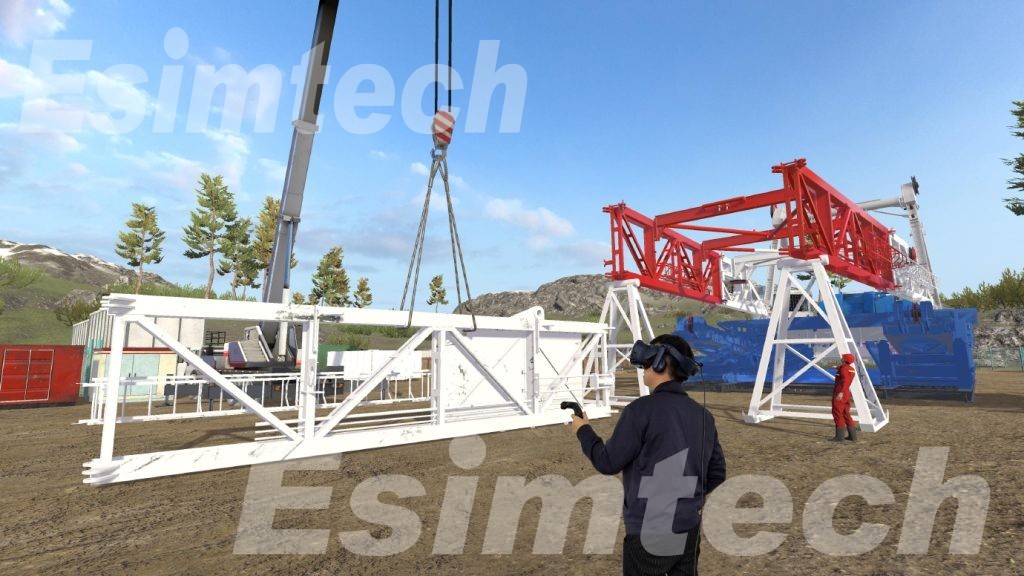
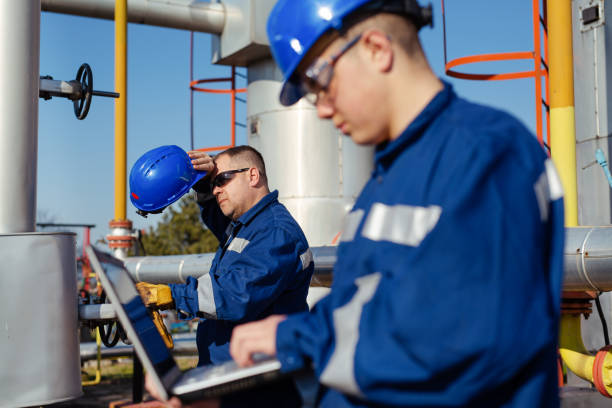
With the development of digital technology, more and more oil and gas enterprises are introducing simulation training systems as the core training tools.
Firstly, the simulation system can output quantifiable skill data, such as operation paths, reaction times, error frequencies, etc., making the evaluation process more objective and accurate.
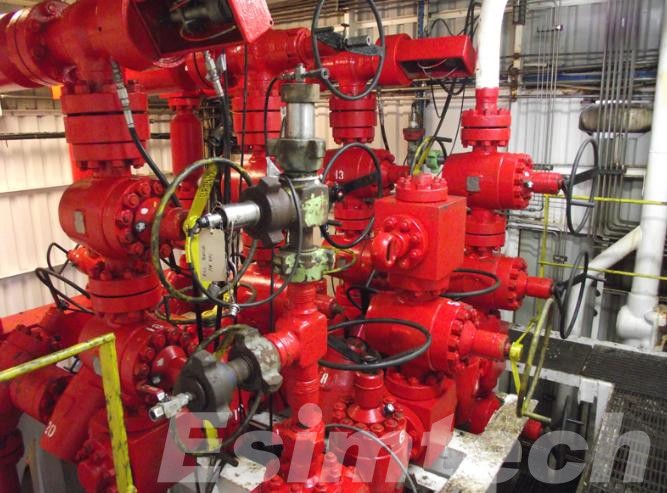
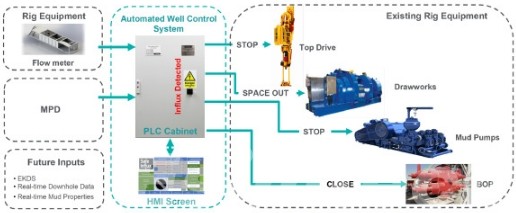
Secondly, it can highly replicate real accident scenarios, including well control accidents, equipment failures, pipeline leaks, etc., allowing employees to conduct practical training in a safe environment, and at the same time providing a reliable basis for evaluating emergency capabilities.
Moreover, the cost of simulation training is more controllable and the risk is zero, avoiding the safety hazards and high costs brought by real drills.
Common Mistakes in Training Effectiveness Evaluation
Many enterprises often encounter the following problems during the training evaluation process:
- Focusing solely on exam scores while neglecting actual behavioral changes;
- Evaluation periods are too short, lacking long-term data tracking;
- Relying on subjective judgment, lacking quantitative analysis;
- Training content is disconnected from actual job duties.
These misunderstandings often prevent the training investment from truly translating into improvements in safety and efficiency.
Practical Tips to Improve Training Evaluation Results
To enhance the accuracy and practical value of the assessment, enterprises can take the following measures:
- Introduce digital assessment tools and data analysis platforms
- Combine simulation training with traditional training methods
- Establish a long-term tracking mechanism instead of conducting one-off evaluations
- Link the assessment results with employee performance and promotion systems
Use multi-dimensional assessment methods to comprehensively reflect the changes in employees' capabilities brought about by the training.
Conclusion
In the oil and gas industry, training is not only a necessary investment but also an important means to ensure safe production and enhance operational efficiency.
Only by establishing a scientific, systematic and data-based training effectiveness evaluation system can enterprises truly understand whether the training has generated actual value and continuously optimize the talent cultivation plan.
In the future, with the popularization of simulation technology and digital management tools, oil and gas training evaluation will develop in a more precise, intelligent and continuously optimized direction, providing solid support for the safe operation of enterprises.