Why AI-Powered Simulation Is Becoming Essential for Oil & Gas Companies in 2026?

Written By: Computer Science Professor
Deeply rooted in the R&D of simulators for the oil and gas industry, committed to bringing safety to every oil worker.
As the oil and gas industry continues to progress further into 2026, organizations are facing unprecedented pressures to increase efficiency, safety, and resilience. Fluctuating markets, aging infrastructure, and a changing workforce, as well as tightening regulations, are driving the use of digitalization. Among the many digitalization solutions, Artificial Intelligence (AI) and Big Data are turning out to be game-changers for the oil and gas industry.
AI and Big Data Matter More Than Ever in 2026

AI and Big Data have moved from “emerging technologies” to operational necessities. Several industry realities contribute to the fact that the importance of AI and Big Data has been heightened:
Operational complexity is rising
Mature field operations, complex reservoirs, and integrated surface and subsurface operations demand faster and better decision-making.
Massive data volumes are underutilized
Contemporary operations have created enormous volumes of real-time and historical data. However, without AI, this huge volume of data remains underutilized.
Cost and efficiency pressures remain high
Companies need to continually improve lifting costs even during a period of stable prices.
Workforce transformation is accelerating
With the retirement of experienced professionals, digital decision support systems are the key to knowledge management and skill transfer.
AI enables companies to convert raw data into actionable insights, while Big Data infrastructure ensures those insights are timely, scalable, and continually improved.
Key Applications of AI in Oil & Gas Operations
AI is now embedded across upstream and midstream operations. The following applications are delivering the most immediate value.
Predictive Maintenance
Predictive maintenance is considered to be one of the most mature and popular AI solutions used in the oil and gas industry.
This is because, by using AI models, the signs of equipment degradation, which occur before the failure of equipment, can be identified. This way, the maintenance activities of the equipment can be prioritized, as opposed to using a fixed interval for maintenance.
In predictive maintenance, which is used in the oil and gas industry in the year 2026, the systems are integrated with enterprise asset management. This helps in the effective planning of labor, spares, and shutdowns.

Production Optimization
Production optimization through AI aims to enhance the performance of the entire system, rather than focusing on the performance of individual processes. AI systems, through their ability to continuously analyze production data from wells, surface systems, and the reservoir, can detect subtle production inefficiencies and provide recommendations for optimal production conditions in real-time.
In a mature field, AI systems can assist in the early detection of performance decline and more effective evaluation of corrective measures. AI systems can help in data-driven decision-making, which can result in more stable production, higher recovery factors, and reduced energy consumption. In 2026, production optimization using AI is a key capability in maximizing value from existing fields.
Drilling & Well Operations
Drilling and well operations involve a significant volume of high-frequency data, making it an appropriate application for AI-based data analysis. Machine learning models, trained on historical data related to drilling operations, can help in real-time decision-making regarding various parameters of the drilling process, thereby optimizing the rate of penetration while avoiding risks such as kicks, losses, and instability of the wellbore.
In 2026, AI is used as a tool to support decisions, rather than a replacement for human expertise in the field of drilling operations. AI helps in improving situational awareness and consistency in decision-making, thereby reducing non-productive time, improving the quality of wells, and reducing costs associated with drilling operations in complex and high-risk environments.
Simulation Technology as The Bridge Between AI and Real Operations
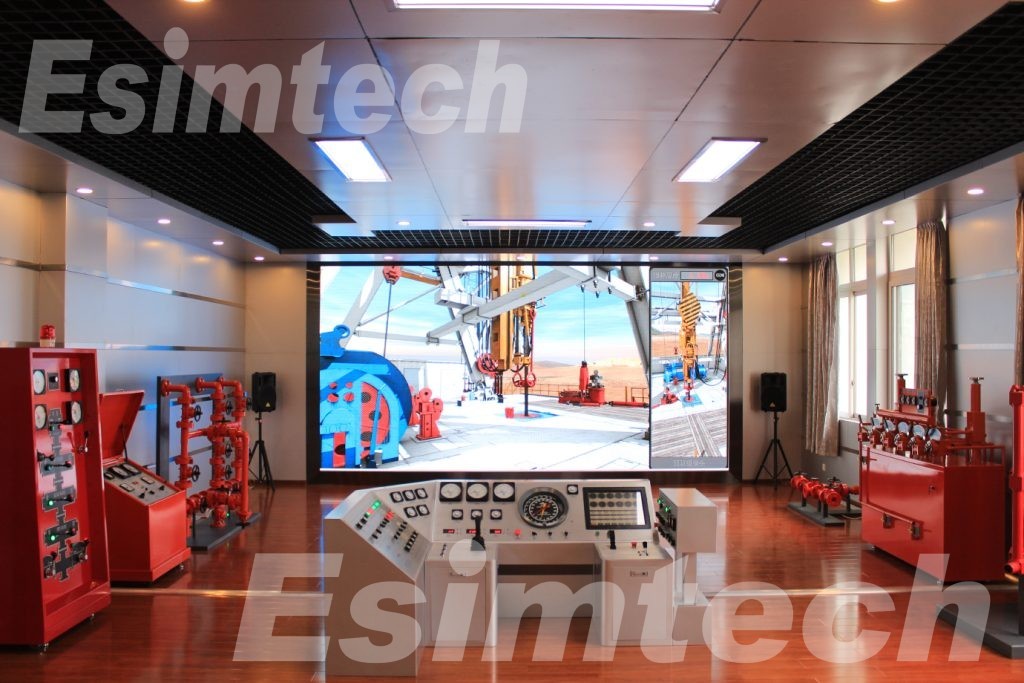
However, the true potential of AI and Big Data lies in their successful and safe application in actual operations. In the oil and gas industry, where operational risks and costs are high, the direct application of AI recommendations in actual operations may result in adverse outcomes. Simulation technology helps to overcome the risks of AI application in oil and gas operations, as it acts as a bridge between AI and actual operations.
Simulation technology helps companies validate AI models in a real-world environment but in a completely risk-free situation. Before actual operations, AI-driven decisions can be simulated over a wide range of operating conditions. The benefits of using simulation technology for AI validation in oil and gas operations include:
- Testing AI recommendations without putting people or assets at risk
- Testing the system under abnormal or extreme operating conditions
- Identifying potential conflicts of operation before field deployment
- Increasing confidence in AI-based decision-making
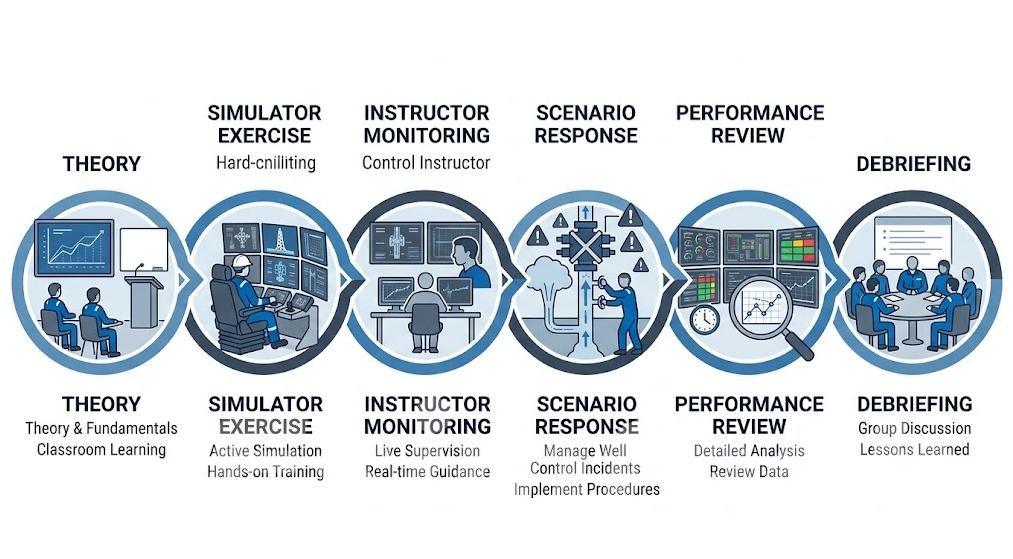
Simulation has a critical secondary function beyond validation: workforce development. Engineers and operators can be trained on AI-based systems, even in a simulated environment that closely mimics actual operating conditions. This allows them not only to be familiar with the recommendations provided by the AI, but also with the rationale for the recommendations.
Benefits for Oil & Gas Companies
The integration of AI, Big Data, and simulation technologies brings about considerable operational and strategic advantages to oil and gas companies in 2026.
These technologies facilitate decision-making based on predictions and real-time optimization, reducing downtime and improving the overall reliability and performance of assets. This results in a more proactive rather than reactive operation.
The advantages from a business perspective include lower operating and maintenance costs, better capital efficiency, and better utilization of existing assets. Furthermore, data-driven decision-making also improves the accuracy of planning processes to navigate market volatility.
The advantages from a human capital perspective are also considerable. Simulation environments combined with AI guidance improve training processes, eliminating trial-and-error learning and reducing the loss of institutional knowledge when experienced employees retire.
Overall, these advantages ensure that the operation is safe and that the overall performance and competitiveness of the assets are maximized in this increasingly complex industry.
What to Expect Beyond 2026?
Looking to the future, several trends are predicted to influence the next step in the digital transformation journey. These are as follows:
- AI models will become more autonomous and self-learning
- Digital twins will integrate real-time information, AI analytics, and simulation
- Operations will become more semi-autonomous and remotely supervised
- Simulation-based validation will become a standard practice for AI deployment
However, human expertise is also predicted to play a key role. The most successful organizations will be those that are able to integrate AI, simulation, and professional expertise into a single framework.