How to Mitigate Torque and Drag in Modern Drilling Operations? Strategies for High-angle & ERD Wells

Written By: Computer Science Professor
Deeply rooted in the R&D of simulators for the oil and gas industry, committed to bringing safety to every oil worker.
In complex oil and gas drilling environments such as ultra-long horizontal wells, deepwater development, and shale gas wells, torque and drag (T&D) remain the core mechanical bottleneck. Excessive friction not only reduces the mechanical drilling rate (ROP) and limits the extension limit, but also increases the risks of differential pressure sticking, drill string fatigue, and casing wear.
Although traditional mechanical methods remain crucial, the T&D mitigation strategies have undergone a qualitative leap. Modern drilling engineers must integrate advanced drill string mechanics, environmentally responsive drilling fluid chemistry, and real-time digital twin physical technologies to ensure wellbore stability and operational efficiency.
Root Causes: Why Complex Trajectories Amplify Friction
Torque (rotational resistance) and drag (axial resistance) are direct functions of the normal contact force between the drill string and the well wall, and are influenced by the friction coefficient. Although the principle is simple, the following downhole dynamic variables will significantly intensify these forces:
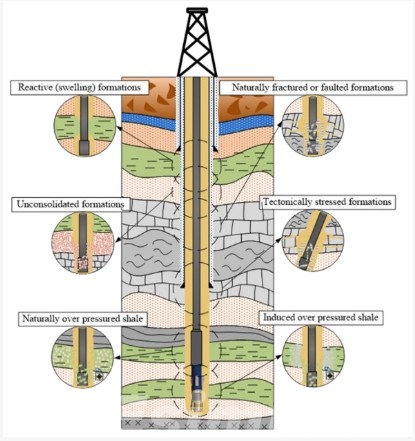
- Micro-curvature and dogleg severity (DLS): An excessively high dogleg severity will form local contact points (keyways), which will exponentially increase the normal force during tripping in or out of the hole.
- Rock cuttings accumulation: In highly deviated well sections (> 60°), incomplete wellbore cleaning can lead to the accumulation of rock cuttings. Dragging the drill string through the rock cuttings bed will significantly increase axial friction.
- Pressure differential sticking: A high pressure difference between the wellbore fluid and the permeable formation will push the drill string against the wellbore wall, causing static frictional sticking.
- Dynamic buckling: Excessive axial load will trigger sinusoidal or helical buckling, causing the drill string to maintain continuous strong contact with the casing or the wellbore wall.
BHA & Mechanical Engineering Optimizations
Managing contact mechanics begins at the engineering and BHA design stage before the bit ever touches the formation.
- Non-rotating drill pipe protector (NRP): By installing an NRP in the high contact section or keyway section of the casing, it can effectively prevent direct contact between metals. The protector remains stationary relative to the formation, while the drill pipe rotates freely inside, significantly reducing the torque in the high dogleg section.
- Lightweight drill string structure: In ultra-long horizontal sections, aluminum or titanium alloy drill pipes are used instead of standard steel ones, taking advantage of buoyancy to reduce weight. The reduction in the self-weight of the horizontal section drill string can directly decrease the normal contact force, thereby breaking through the ground torque limit and increasing the horizontal extension distance.
- Hydraulic oscillator: When using a screw motor for sliding drilling, axial friction often leads to slippage or obstruction in the transmission of drilling pressure. The local axial pressure pulses generated by the hydraulic oscillator can keep the drill string in a micro-amplitude continuous motion, converting high static friction force into a lower dynamic friction force.
- Rotating Directional System (RSS): The RSS maintains the continuous rotation of the drill string, eliminating the micro-curvature of the wellbore caused by the directional sliding of the motor, significantly improving the smoothness of the wellbore wall, and thereby reducing the overall friction coefficient of the entire well profile.
Chemical Solutions & Drilling Fluid Dynamics
The friction coefficient at the interface between the pipe string and the formation mainly depends on the drilling fluid system and the quality of the filter cake.
- Synthetic-based/Oil-based Drilling Fluid (SBM/OBM): Forms a continuous oil film, providing an extremely low friction coefficient (typically ranging from 0.10 to 0.18).
- High-performance water-based drilling fluid (HPWBM): Utilizing polymer film lubricants, it achieves medium to low friction coefficients (typically ranging from 0.18 to 0.25).
- Environmentally friendly lubricant: A biodegradable boundary lubricant that can reduce the friction coefficient by up to 30% in water-based systems.
- Filter cake quality control: The highly effective anti-filtering agent can effectively control the thickness and compressibility of the filter cake, and prevent pressure difference blockage in high-permeability sand layers.
- Wellbore cleaning hydrodynamics: Maintain turbulence or efficient laminar flow to ensure that cuttings are continuously discharged from the bottom side of the horizontal section, preventing the accumulation of the cuttings bed, which could cause mechanical resistance.
Next-Gen Technologies: Digital Twins & AI-Driven Prediction
Modern T&D risk control is accelerating its evolution from static pre-drilling plans to dynamic and real-time intelligent operations in the well.
- Real-time physical model and digital twin: Ground hook load and torque data are directly integrated into the physical engine for real-time access, dynamically calibrating the friction coefficient in the well. Once the actual hook load deviates from the predicted baseline, the system will issue a warning before the stuck occurs, precisely indicating potential hazards such as rock debris accumulation, keyway blockage, or minor buckling.
- Automatic anti-sticking and anti-sliding control system: The modern top drive control system utilizes a high-frequency feedback loop to detect fluctuations in speed and torque. The system can automatically adjust the ground speed and torque within milliseconds, effectively suppressing torsional oscillations and ensuring the smooth rotation of the downhole drill bit.
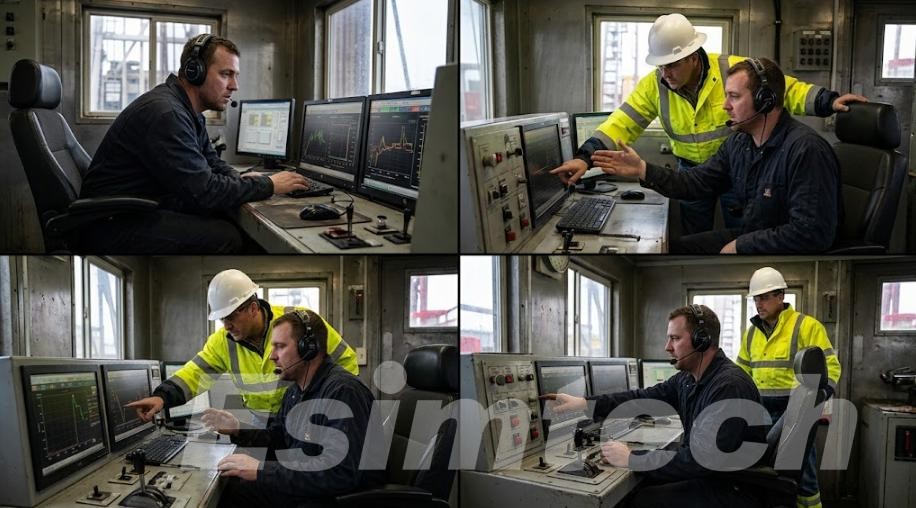
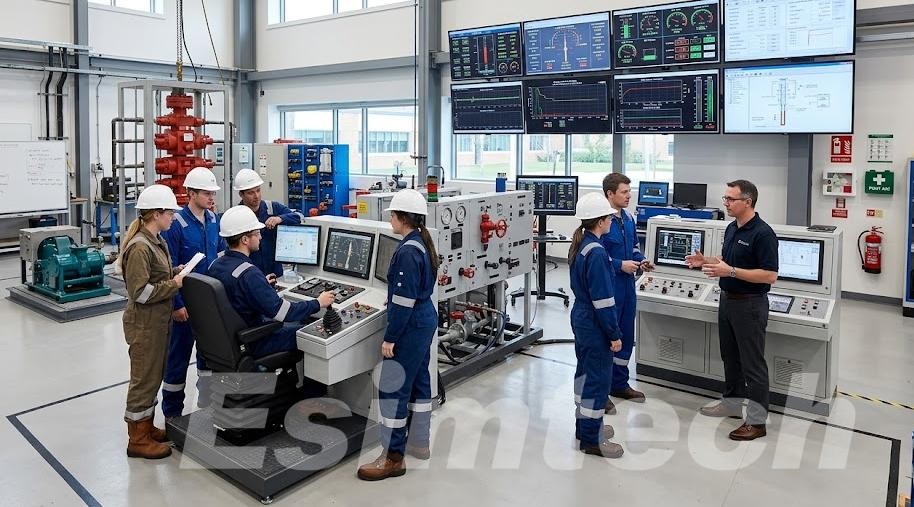
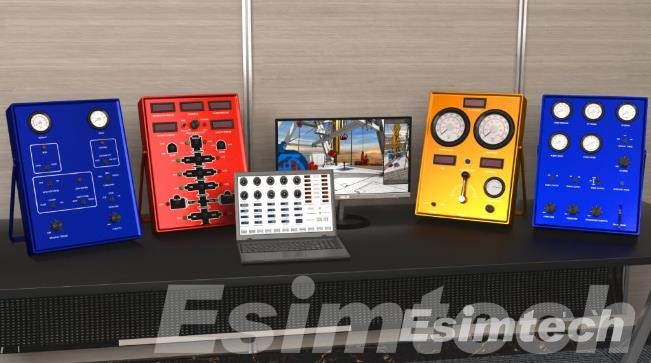
To master these complex downhole mechanics without risking costly field Non-Productive Time(NPT), operators and engineering teams increasingly rely on advanced high-fidelity simulation technology. Real-time simulation platforms allow engineers and rig crews to model complex well profiles, test T&D limits, and train for critical well control scenarios in a risk-free virtual environment.
To explore how cutting-edge simulation solutions enhance operational competency and wellbore safety, visit Esimtech Drilling and Well Control Simulators.
Actionable Field Checklist for Drilling Engineers
Effective control of torque and resistance (T&D) relies on structured, phased operational procedures. This engineering checklist divides the key control measures into two stages: pre-drilling planning and real-time execution. The aim is to help the on-site team proactively identify frictional abnormalities and prevent them from escalating into stuck drill incidents or significant non-productive time (NPT).
| Operational Phase | Action Item | Key Objective & Focus Area |
| Pre-Drill Planning | T&D Sensitivity Modeling | Run pre-drill simulations across a range of friction coefficients (0.12 to 0.35) to establish realistic operating windows. |
| Hookload Operating Envelopes | Define critical sinusoidal and helical buckling thresholds for both slack-off and pick-up scenarios. | |
| BHA Contact Optimization | Position stabilizers and non-rotating protectors strategically to reduce wall contact area while maintaining directional control. | |
| Execution Phase | Real-Time Trend Monitoring | Plot actual Hookload vs. Depth and Torque vs. Depth against theoretical baselines after every stand connection. |
| Hole Cleaning Sweeps | Perform regular high-viscosity or high-density sweeps in high-angle sections to prevent cuttings bed buildup. | |
| Slide Drilling Minimization | Maximize continuous rotation or activate hydraulic oscillators during sliding to break static axial drag. | |
| Off-Bottom Weight Check | Record clean off-bottom torque, pick-up weight, and slack-off weight at every connection to catch friction spikes early. |
Final Thoughts
In modern high-angle and ultra-long horizontal wells, reducing torque and resistance requires a comprehensive engineering approach. By integrating intelligent downhole tool combinations (BHA) component designs, advanced lubricants, and real-time digital monitoring systems, operators can safely exceed the horizontal approach limits, extend tool lifespan, and optimize overall drilling rate (ROP).