Mastering Pressure Spikes with Advanced Shale Oil Drilling Training Simulators

Written By: Computer Science Professor
Deeply rooted in the R&D of simulators for the oil and gas industry, committed to bringing safety to every oil worker.
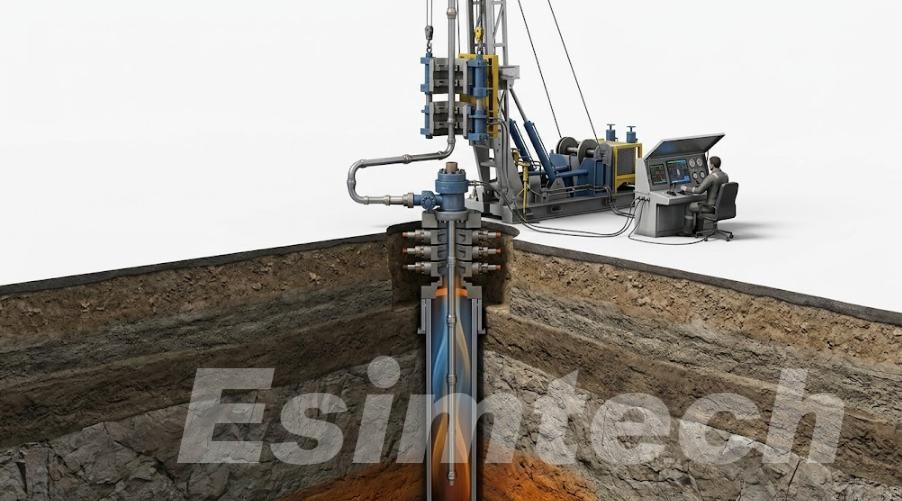
However, in 2026, the margin for error in shale plays is gone. As we venture deeper into the high pressure, high temperature (HPHT) areas of a basin like the Permian or Ordos, the “drilling window” between pore pressure and fracture gradients has become infinitesimally small.
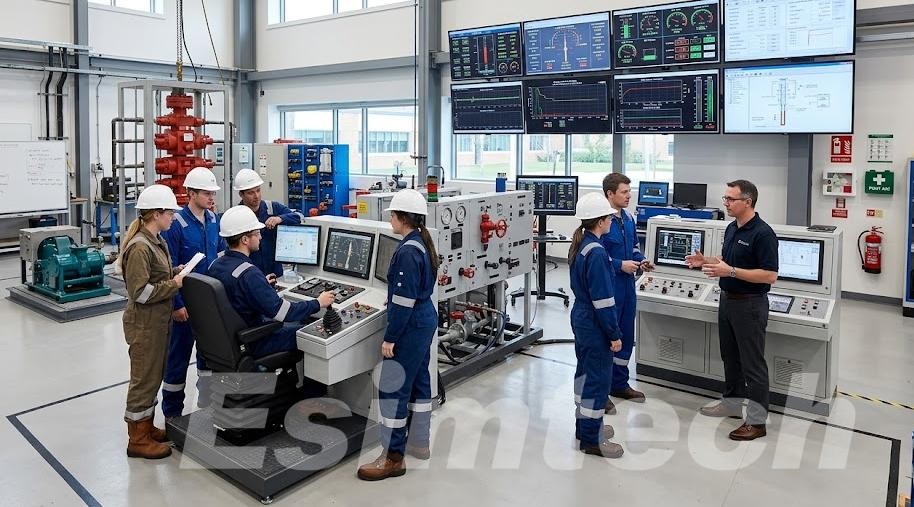
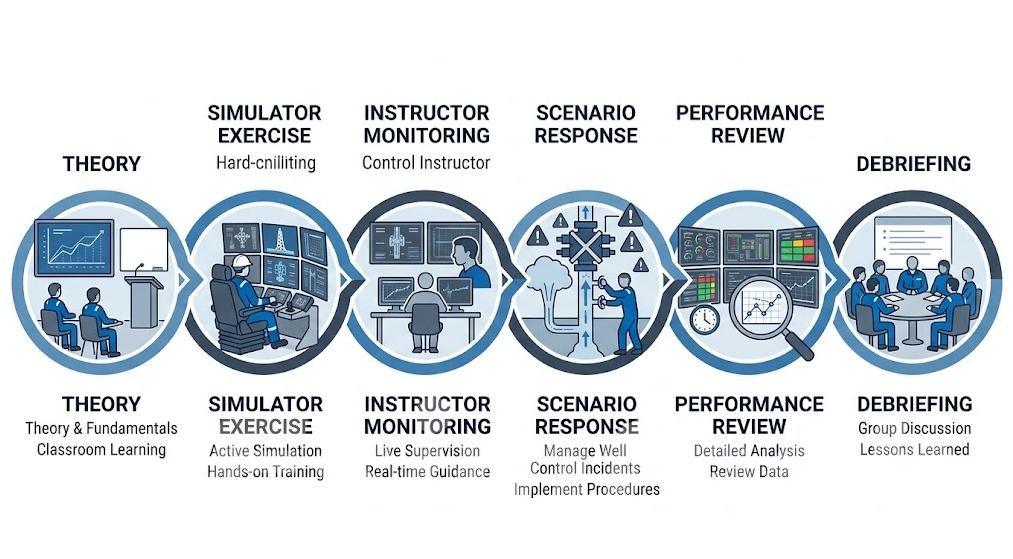
Classroom induction is no longer enough. To avoid catastrophic blowouts and expensive Non-Productive Time (NPT), the industry has moved to shale oil drilling training simulators. They are not just training tools; they are critical environments to develop the requisite muscle memory to handle unexpected pressure surges before they become critical at the surface.
Why are shale oil drilling simulators essential for High-Pressure Detection?
Replicating Complex Kick Scenarios in a Shale Oil Drilling Training Environment
As every driller knows, shale reservoirs are notorious for their heterogeneity. A driller can go from a stable siltstone to a high-pressure gas-filled shale streak in feet, not miles. Conventional training methods don’t even attempt to replicate this “stealth” change.
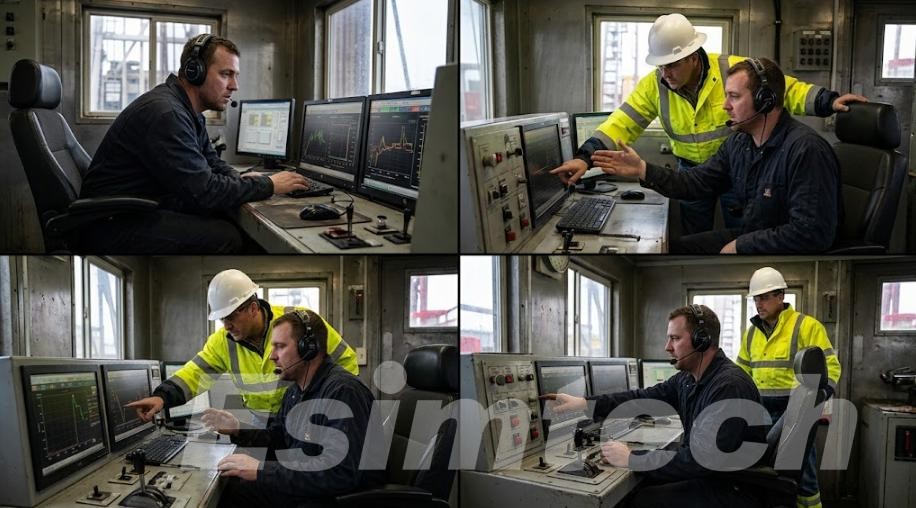
Modern shale oil drilling simulators, on the other hand, use real-time geomechanical data to replicate the specific geological responses that occur with every pressure spike, every change in pump noise, and every change in standpipe pressure. This, of course, is very important, as the first sign of a kick isn’t always some dramatic increase in the pit gain, but rather some subtle change in the “feel” of the brake. By training in this environment, the driller becomes subconsciously attuned to such anomalies, reducing reaction time from minutes to seconds.
Replicating Complex Kick Scenarios in a Shale Oil Drilling Training Environment
The key benefit of a contemporary simulator is its capacity to decompose complex downhole physics into manageable, repeatable learning modules. By focusing on certain variables of a kick, crews can learn to transition from normal operations to emergency response in a controlled, risk-free environment.
Finding Micro-Kicks in Tight Formations
In an unconventional well, gas does not necessarily “slug” into the wellbore; it can migrate slowly and quietly, a process called a micro-kick. Training on a shale oil drilling simulator enables crews to learn to identify pit gains as small as 0.5 to 1.0 barrels.
In a real-world environment, these are readily attributed to sensor noise or heave, but in a simulator, the instructor can focus on these to teach crews to distinguish. This training focuses on the “Flow Check” process: stop, pull off the bottom, and check.
Learning this discipline in a simulator environment ensures that crews do not disregard the precursors to a major blowout.
Managing Gas Migration and Multi-Phase Flow
Gas, once it enters the wellbore, behaves in an erratic fashion as it rises. Simulators used in 2026 incorporate powerful multi-phase flow engines that calculate gas bubble expansion based on the specific PVT characteristics of the hydrocarbon mixture in that region. During Shale Oil Drilling, the crew learns exactly how a tiny bubble of gas, which was 10,000 feet deep, becomes a massive bubble of gas 1,000 feet deep. This is the essential skill of “bleeding off” pressure properly via the choke manifold without overcorrecting and inducing a second kick or breaking the formation.
Equipment Failure & Contingency Training
The worst time to learn how a Blow Out Preventer (BOP) works is during a live event. Simulators allow instructors to “break” the equipment—simulate a failed hydraulic line or a washed-out choke bean during a pressure spike. This forces the crew to move beyond the standard “Driller’s Method” and use secondary barriers. This type of stress testing ensures that when equipment inevitably wears down during real Shale Oil Drilling operations, the crew knows exactly which manual valves to turn.
Integrating Real-Time Data into Your Shale Oil Drilling Training Simulator
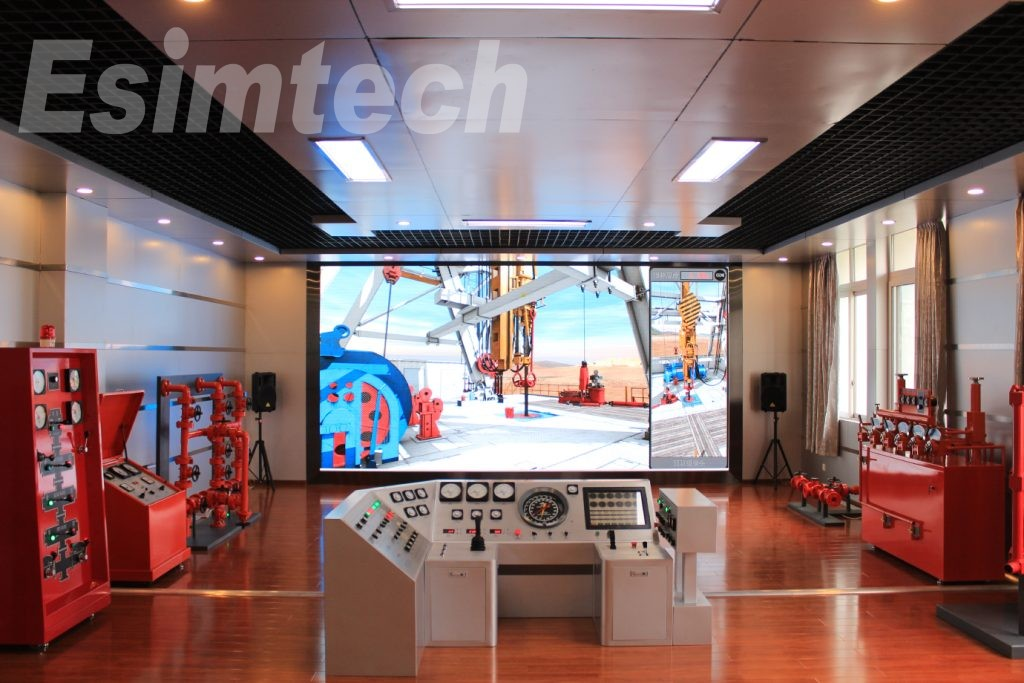
To ensure optimal training, the incorporation of actual project data elevates a conventional simulator to a site-specific operational twin. By combining actual offset well data with real-time geological modeling, operators shift from generic training to execute specific dress rehearsals for the actual challenges of an impending campaign. This level of data accuracy enables a detailed understanding of downhole hydraulics prior to the bit ever hitting the ground.
The key technical elements of this integration for 2026 are:
- Pre-Spud Digital Twins: The importation of Offset Well Data (OWD) and Pore Pressure Predictions to “drill” specific formations virtually before actual mobilization.
- Dynamic ECD Visualization: Training drillers to actually view Equivalent Circulating Density (ECD) in real-time as pump rates and RPM change, ensuring wellbore stability.
- Operational Forensics: Simulating past well-control events from the same field to practice remedial procedures in known high-risk pressure areas.
Through the promotion of the correlation between surface properties and bottomhole pressure, simulators help to ensure that drillers understand well hydraulics. The software is used by teams to confirm pump rates against fracture gradients, thus ensuring that all crew members are on the same page concerning the geomechanical properties of the Shale Oil Drilling project.
Maximizing ROI through Simulation-Based Shale Oil Drilling Training
Investing in simulation is a financial decision with far-reaching implications across the entire well lifecycle. Beyond the safety benefits, the financial benefits include much lower operational risks and improved insurance profiles for drilling contractors.
Reducing Non-Productive Time (NPT)
The financial justification for simulation is simple: prevention of NPT. A single day of rig downtime for a high-spec Shale Oil Drilling operation costs over $100,000. Data for the 2025-2026 operating season shows that simulator-certified crews have 22% fewer well control incidents. Perhaps more importantly, when an incident occurs, simulator-trained crews resolve it 35% faster because they have already simulated the exact scenario. The simulator pays for itself by preventing just one “stuck pipe” incident or just one unnecessary increase in mud weight.
Safety Compliance and Insurance Incentives
In today’s regulatory environment, competency is now a legal requirement. Shale oil drilling simulators can document a driller’s performance in a tamper-proof digital format. Many of the Tier 1 operators now require a “Simulator Scorecard” as part of their bidding process. In addition, insurance companies have begun offering “Safety Credits” to contractors that require “mandated monthly simulator drills,” as these drills lower their actuarial risk of total loss or environmental disaster.
Summary
In the competitive environment of 2026, the success of a Shale Oil Drilling campaign depends on the crew’s skills long before they reach the drilling site.
At Esimtech, we are committed to delivering world-class drilling and well-control simulators that enable oil and gas professionals to succeed in the most challenging environments. Our state-of-the-art technology is designed to meet the high demands of today’s shale drilling, preparing your crew for any scenario.
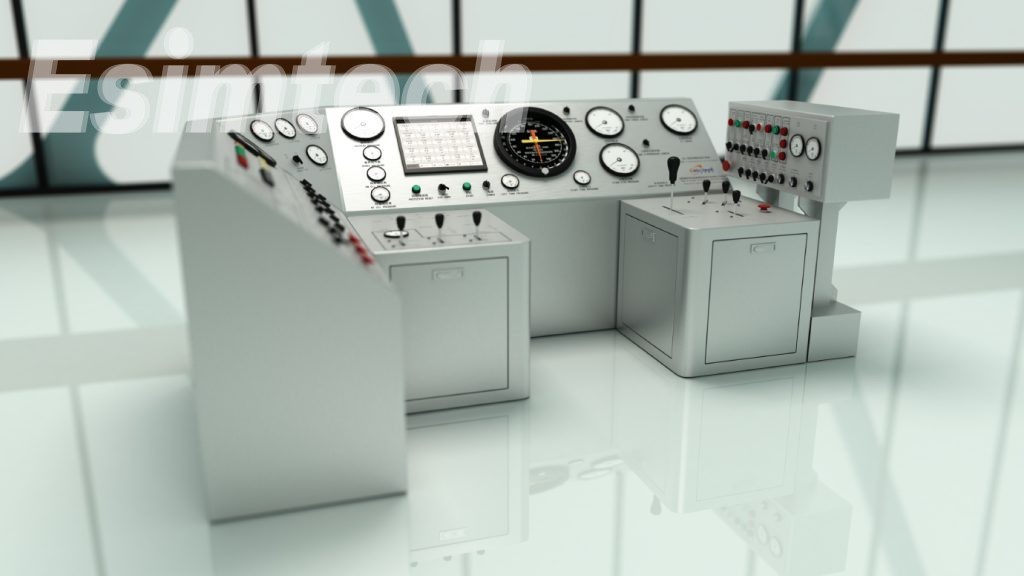
Are you ready to take your crew to the next level and ensure success in your operations? Visit Esimtech today and discover our range of simulation solutions!