Modern Well Stimulation: How Simulation Is Changing Acidizing Safety and Efficiency

Written By: Computer Science Professor
Deeply rooted in the R&D of simulators for the oil and gas industry, committed to bringing safety to every oil worker.
Oil well stimulation operations – especially matrix acidizing and acid hydraulic fracturing – are crucial methods for removing formation blockages and maximizing oil and gas recovery rates. However, these operations involving high pressure and highly corrosive chemicals have extremely low tolerance for human error or equipment failure. In the face of increasingly complex formation conditions and stricter HSE regulatory standards, traditional classroom training and static design software are no longer sufficient to meet the needs of on-site drills.
This article explores how modern high-fidelity simulation technology can bridge the gap between theoretical design and on-site construction by enhancing operational safety and optimizing pumping procedures, thereby bringing quantifiable investment returns (ROI) to oil and gas production enhancement.
Cost of Acidizing: High Rewards, Zero Room for Error
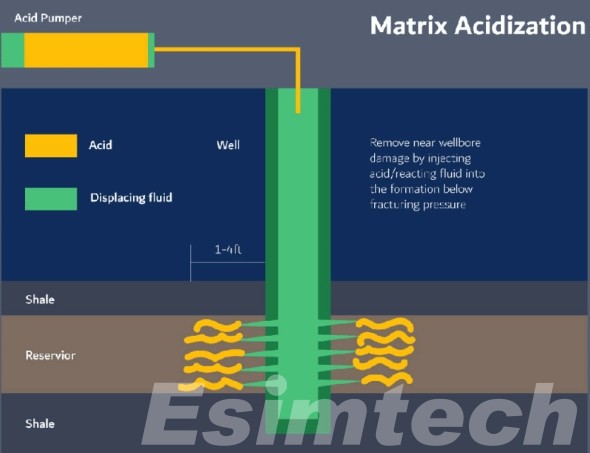
Matrix acidizing and acid hydraulic fracturing are key production enhancement technologies for restoring the permeability of tight sandstone and carbonate rock reservoirs and releasing the production capacity of oil and gas. By injecting a certain amount of hydrochloric acid (HCl), hydrofluoric acid (HF), or organic acid systems into the formation under pressures lower or higher than the formation fracture pressure, it is possible to effectively dissolve active minerals and etch out high-conductivity, high-permeability channels (wormholes).
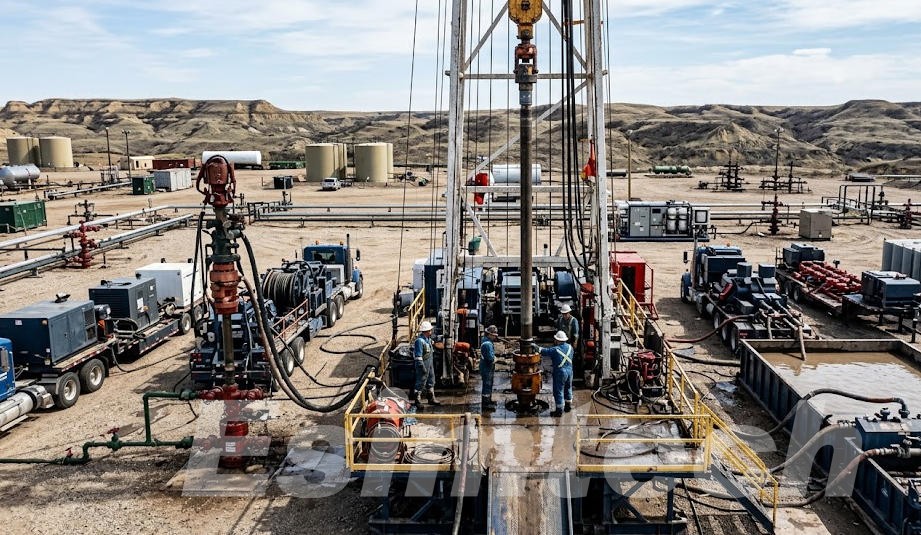
However, the economic benefits of the acidification operation cannot afford any mistakes. A single pumping operation requires injecting tens of thousands of liters of highly corrosive and highly dangerous fluids under high pump pressure. Success in increasing production is often just a step away from catastrophic failure:
- Excessive production and collapse of wormholes: Improper acid fluid dosage or mismatch in pumping rate can lead to severe fluid loss of the acid fluid, boundary expansion beyond the intended area, or ineffective invasion of non-target aquifers.
- Rapid equipment corrosion: Improper compounding of corrosion inhibitors or unexpected delays during operation at high temperatures can cause severe damage to the downhole tubing, high-pressure pumps, and manifold valves within a few hours.
- Pressure peak and HSE risks: Intense chemical reactions, blockage of underground pipelines or abnormal well responses can easily trigger dangerous pressure surges, resulting in burst of high-pressure pipelines, leakage of chemicals and casualties.
The underground production enhancement operation is irreversible. Once the acid fluid is injected into the wellbore, any construction error will directly damage the integrity of the oil and gas well assets, resulting in losses of up to several million dollars in non-productive time (NPT).
The Gap in Traditional Acidizing Preparation
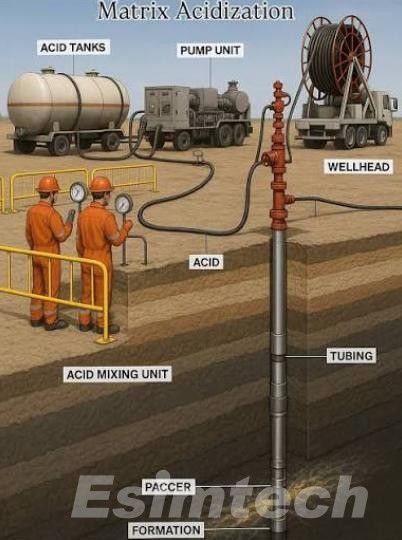
Traditionally, the underground operation teams mainly relied on classroom lectures, desk-based mathematical models, and pre-job training. Although theoretical knowledge and steady-state design software are indispensable for the initial scheme planning, there is still a significant gap between theory and practice in actual on-site operations.
- Static Models vs. Dynamic Realities
Traditional software calculates the acid fluid dosage and pumping procedures based on static reservoir assumptions and is unable to reflect the dynamic feedback during the operation process in real time – such as changes in fluid viscosity, temperature fluctuations, and the real-time evolution of skin factor caused by wormhole expansion.
- The Limits of Field Mentorship
Allowing junior engineers to directly learn complex acidification processes in a real well site involves extremely high risks. Trainees rarely have the opportunity to operate the main control console during actual high-pressure acidization operations, resulting in a lack of practical experience in handling unexpected failures.
- Inability to Practice Contingency Protocols.
It is impossible to safely simulate extreme working conditions such as pump machine failure, pipeline leakage, or sand blockage on-site. Therefore, operators usually encounter and handle such abnormalities for the first time during high-cost real well operations.
3 Ways Modern Simulation Software Transforms Well Stimulation
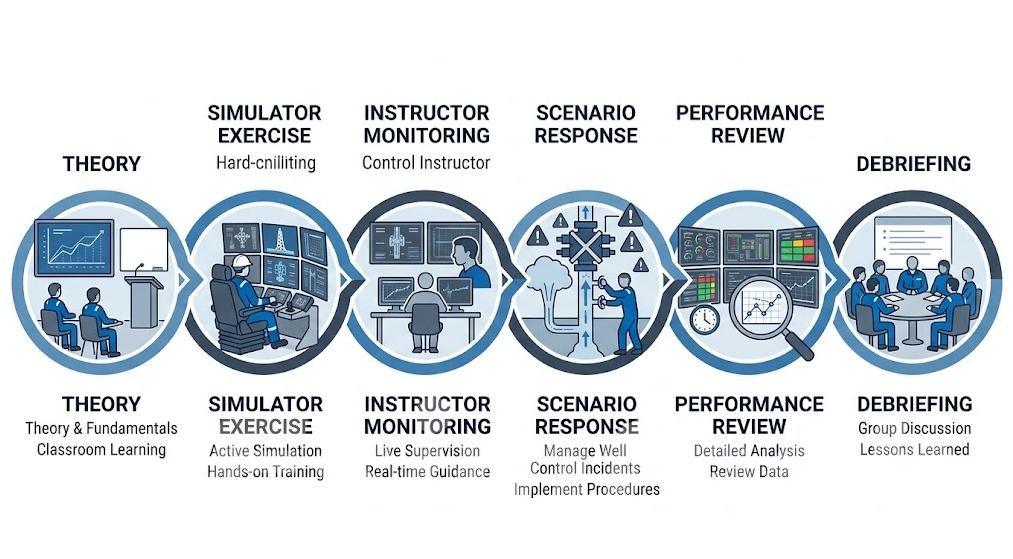
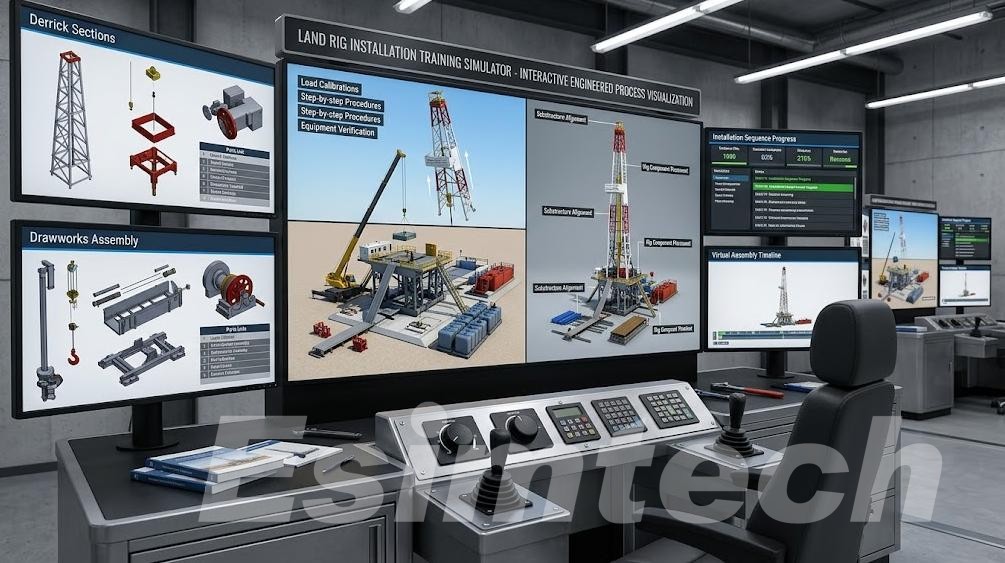
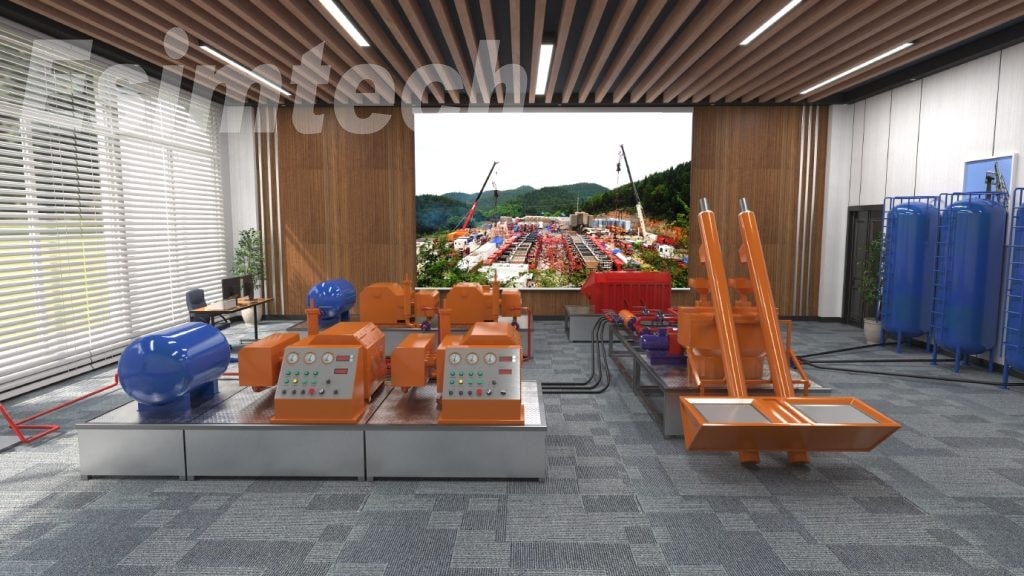
Advanced dynamic simulation technology enables seamless connection between operation design and on-site execution. By deeply integrating real-time numerical models with the hardware control console, modern simulators have redefined the rehearsal methods for engineering technicians to handle complex well stimulation operations.
Replicating True Subsurface Physics in Real Time
Modern simulators have replaced pre-recorded animations with real-time computing engines that cover transient fluid flow, reaction kinetics, phase changes, and fracture mechanics. Trainees can monitor real-time ground pressure, bottomhole pressure, drop in skin factor, and the advancement depth of acid cavitation. In the simulation of matrix acidizing, if the injection rate exceeds the formation fracture limit, the system will precisely simulate the entire process of evolving towards an unexpected fracturing.
Immersive “Hardware-In-The-Loop” Stress Testing
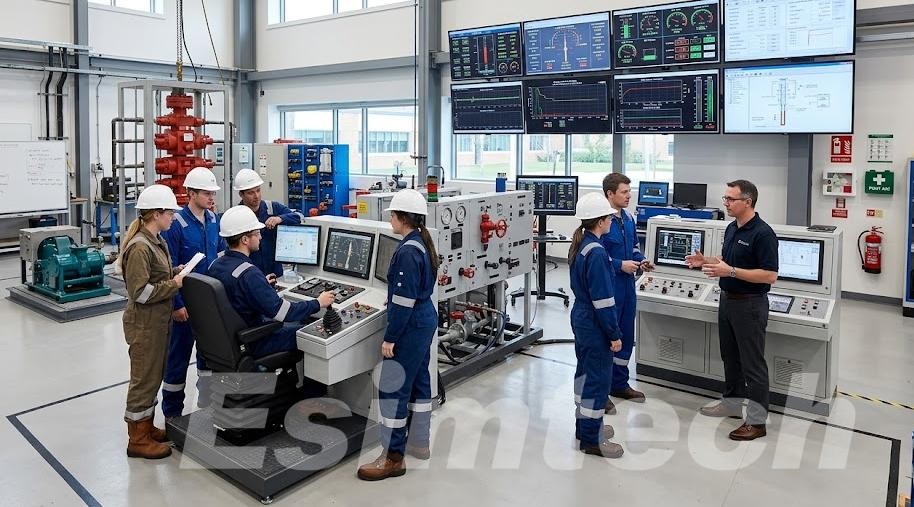
The simulator integrates a highly realistic physical control console (including valves, pressure gauges, manifold, and emergency shut-off ESD system), aiming to enhance the muscle memory of the operators. Trainees can conduct practical exercises for starting and stopping pipelines, and switching storage tanks (from the pre-rinse tank, the main acid tank to the post-rinse tank), and efficiently handle pressure surges under realistic simulated on-site noise and high-intensity working conditions.
Safe Contingency and Anomaly Drills
The trainer can inject custom fault scenarios in real time, such as failure of the chemical additive pump, rupture of the acid washing pipeline, unexpected failure of the corrosion inhibitor, or sudden increase in wellhead pressure. The trainees will focus on mastering early warning identification, execution of emergency well shut-in procedures, and completing pipeline flushing and pressure reduction under zero safety risk conditions.
Operational & ESG ROI: Beyond Just “Training”
While workforce development is a key benefit, the return on investment (ROI) of integrating simulation technology extends directly to field economics and environmental compliance.
| Category | Key Operational Advantages |
| Operational Efficiency | • Eliminates trial-and-error NPT • Accelerates time-to-competence for junior engineers |
| Asset Integrity | • Prevents premature tubular corrosion • Reduces surface equipment and manifold fatigue |
| ESG & HSE Compliance | • Zero chemical spill risk during practice drills • Prevents over-use and waste of acid additives |
Reduction of non-productive time (NPT): By having the drilling team repeatedly practice pump group switching, overflow emergency response, and fluid replacement on the simulator, the rate of on-site operational errors can be significantly reduced. Pre-simulated operation helps the engineering team optimize the pumping plan and avoids incurring costly trial-and-error costs during actual operations.
Extending asset lifespan: Fracturing operations use a large amount of chemical agents. By training operators to control the flow rate within the optimal range and dynamically monitoring the performance of corrosion inhibitors, unnecessary wear on high-pressure manifolds, manifold vehicles, and casing strings can be effectively reduced.
Environment and ESG Compliance: Modern ESG standards advocate minimizing environmental impacts. The simulator training process involves zero chemicals, zero freshwater consumption, and zero diesel emissions. Additionally, the optimized fluid formula can prevent excessive acidification, thereby reducing chemical residues in the formation.
-1-1024x576-min.jpg)
Summary
As reservoir stimulation operations become more complex, relying solely on traditional classroom training is highly likely to lead to on-site misoperations, resulting in costly unplanned downtimes (NPT). Advanced digital simulation systems can provide a risk-free virtual environment for teams to verify fracturing pumping procedures, practice well control and emergency response plans, and precisely optimize fluid transmission strategies.
To learn how high-fidelity hardware and real-time physics engines can help operators enhance on-site construction safety and efficiency, please take a look at Esimtech’s fracturing and acidizing simulation system.