Online Emergency Drills vs. On-site Drills: Which Training Method Is More Effective?
In high-risk industries such as oil and gas, chemicals, power, and manufacturing, emergency drills are crucial for ensuring personnel safety, reducing accident losses, and verifying the effectiveness of emergency plans.
Traditional on-site emergency drills have long been considered "standard practice," but with the development of digital technology, online emergency drills (based on simulation) are gradually becoming an important component of corporate emergency management systems.
So, can online emergency drills replace on-site drills? What are their respective advantages and disadvantages? How should companies choose?
This article will provide a comprehensive comparative analysis from a practical perspective, exploring more efficient emergency drill models.
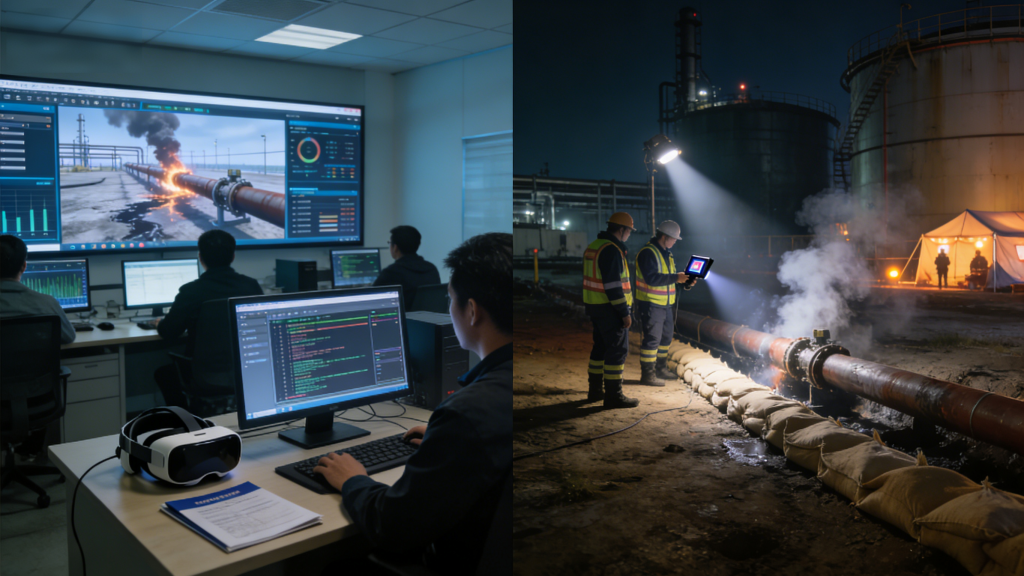
What is An On-Site Emergency Drill?
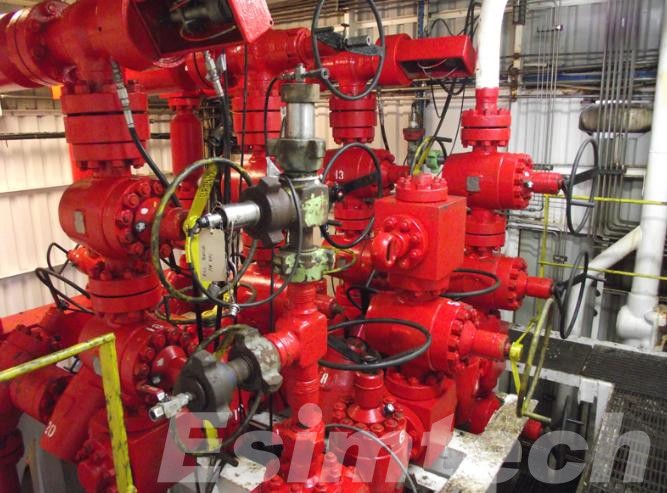
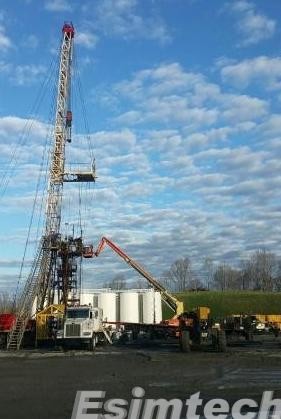
On-site emergency drills refer to the organization of personnel, equipment and processes to conduct on-site drills for sudden accidents in real or semi-real environments.
Common forms of drills include:
- On-site drills for fire, leakage and explosion accidents
- Emergency response to equipment failure
- Personnel evacuation and rescue drill
- Joint emergency response drill involving multiple departments
Advantages of On-site emergency drills
- Highly realistic and closely resembles actual gameplay.
Real scenarios and real equipment can directly expose process problems.
- Enhance practical operation skills
The training effect on personnel's physical strength, reaction speed and equipment operation ability is remarkable.
- Test the on-site collaboration capability
It can truly test the command system, on-site communication and resource scheduling capabilities.
Limitations of On-site emergency drills
High costs: Significant costs associated with venues, equipment, downtime, and organizational coordination.
Safety risks cannot be ignored: Some drills inherently pose potential dangers.
Difficult to repeat frequently: A complete drill often requires a lengthy preparation period.
Data evaluation relies on manual intervention: The effectiveness of drills is difficult to quantify and compare.
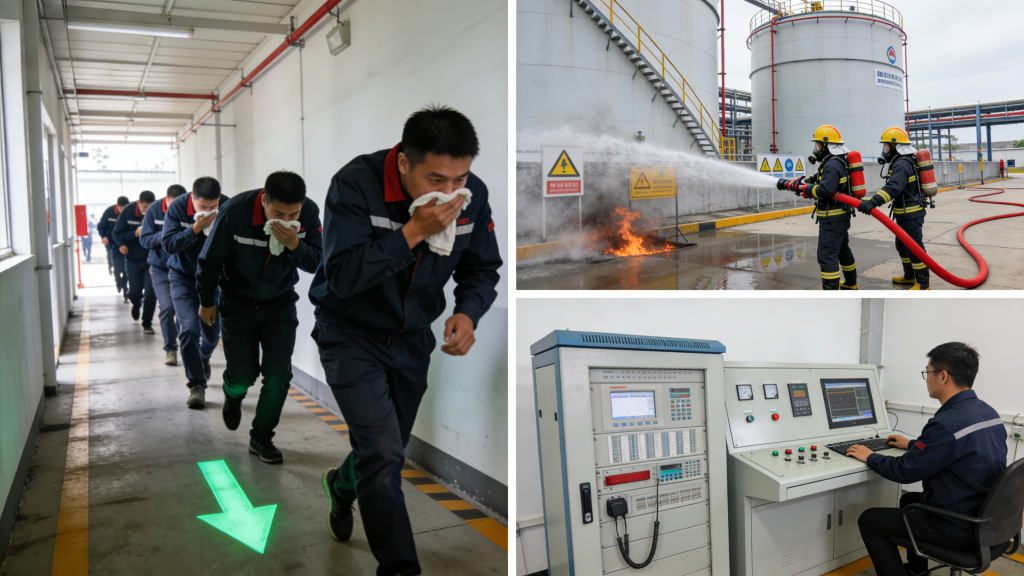
What is An Online Emergency Drill (Emergency Drill Simulation System)?
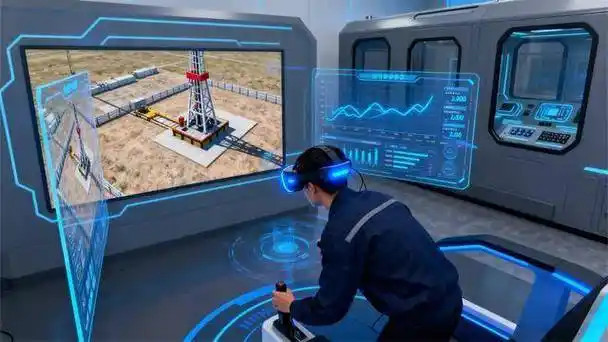
Online emergency drills use computer simulation, 3D scene modeling, and interactive technologies to recreate the occurrence, development, and handling of an accident in a virtual environment, allowing participants to train in decision-making and operations within a "digital accident scene."
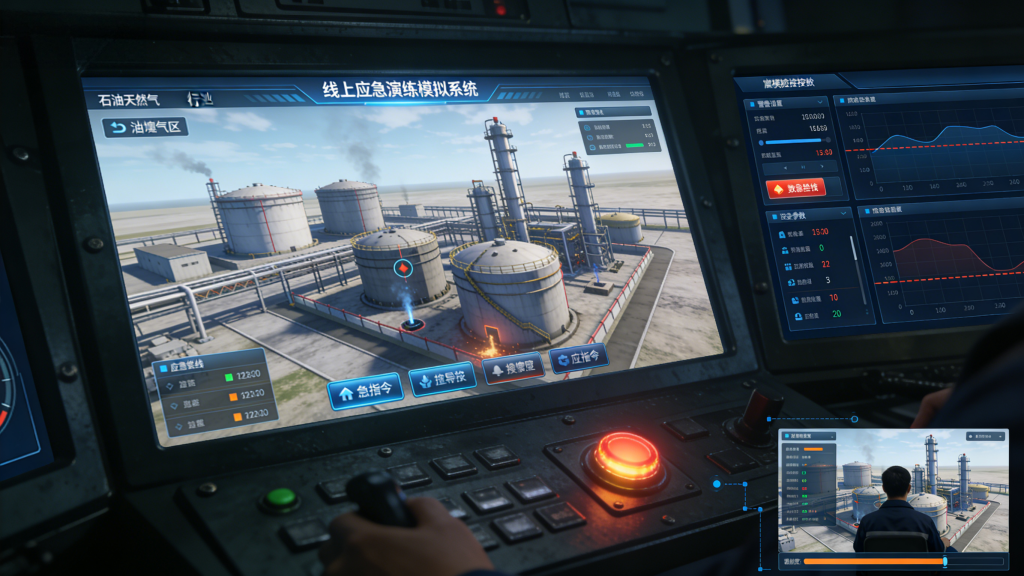
Taking Esimtech Emergency Exercise Simulator as an example, this system can:
Construct highly realistic 3D emergency scenarios
Simulate various types of accidents and complex evolution processes
Support multi-person collaboration, role-playing, and command drills
Automatically record behavioral data and generate evaluation reports
Online Drill Core Strengths
1. Higher security
All drills are conducted in a virtual environment, posing no risks to personnel, equipment or production systems. They are particularly suitable for repeated training in high-risk accident scenarios.
2. Significantly reduce training costs
Enterprises can conduct high-frequency drills at a lower cost without having to suspend production or consume real materials.
3. Repeatable, comparable and optimizable
The same accident scenario can be practiced multiple times. The performance of different personnel and different plans can be quantitatively compared to continuously optimize the emergency response plan.
4. Support remote and cross-departmental collaboration
It is highly suitable for enterprises with multiple bases, departments or across regions to carry out unified emergency drills.
5. Data-driven capability assessment
The system can record key data such as reaction time, decision-making path, and operation sequence, providing objective assessment basis for management.
Online Emergency Drills vs. On-site Drills: Core Comparison
| Contrast dimension | Online emergency drill | On-site emergency drill |
| Safety | Very high | There is a risk. |
| Cost | Low - medium | high |
| Sense of reality | Medium to high (depending on the simulation accuracy) | The highest |
| Repeatability | Extremely high | Lower |
| Data analysis | Automatic, quantified | Rely on manual labor |
| Applicable frequency | Daily and regular | "Phased |
Optimal Solution For the Oil and Gas Industry: "Online + On-site" Collaboration
Online emergency drills and on-site drills are not in an "either-or" relationship, but rather two complementary models with their own focuses. For the oil and gas industry, the collaborative model of "laying a foundation online and practicing practical skills on-site" is the best solution to enhance the effectiveness of emergency training. The Esimtech oil and gas emergency drill simulator precisely provides the core technical support for this collaborative model.
Oil and gas enterprises can build a collaborative training system in accordance with the "three stages" to achieve a training effect of "1+1>2" :
Phase One: Online Basic Training (Laying a solid foundation with Esimtech Simulator
Objective: To enable trainees to master emergency procedures, be familiar with the logic of equipment, and form an initial "conditioned reflex".
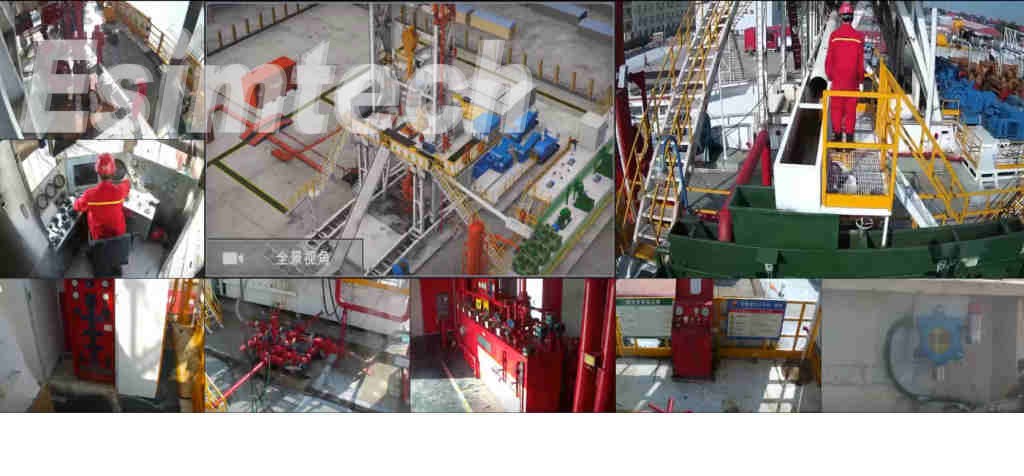
Specific plan: Utilize the Esimtech VR emergency training simulator to enable trainees to "immerse themselves" in learning the entire process of "accident prediction → emergency response → escape". For instance, when simulating an H₂S leakage, train the standard steps of "detecting gas concentration → wearing a gas mask → activating the exhaust system → evacuating personnel". Through the ESIM-DEP1 drilling emergency practical operation platform, trainees repeatedly practice the operation of key equipment (such as well closing valves and activation of fire-fighting equipment) until they can complete the operation proficiently and quickly without deliberately recalling the process.
Phase Two: On-site Advanced Training (Strengthening Weaknesses through Practical Combat
Objective: To make up for the shortcoming of "physical operation touch" in online drills and enhance the collaborative ability of multiple teams.
Specific plan: In actual facilities, conduct practical drills for key links of the online training - for instance, after mastering the "fire hose connection" process online, let the trainees operate real hoses in on-site drills to experience the weight and water pressure. Organize cross-departmental collaborative drills (such as the simultaneous participation of production teams, rescue teams, and command centers) to simulate information transmission and instruction execution after a major accident, and test the degree of coordination among teams.
Phase Three: Online Review + Iterative Optimization (Enhancing Training Efficiency with Data
Objective: To identify weak links through data analysis, continuously optimize the training program, and form a "closed-loop improvement".
Specific plan By leveraging the data analysis function of the Esimtech simulator, record the problems encountered by trainees during on-site drills (such as "A certain team's emergency decision-making was delayed by 10 minutes" and "30% of trainees forgot to check the equipment pressure"), and adjust the online simulation scenarios accordingly - for instance, regarding "decision-making delay", Add "time stress testing" in the online scenarios (such as setting "well shutdown must be completed within 15 minutes, otherwise the accident will expand"); In response to the issue of "omission in equipment pressure inspection", strengthen the prompt and assessment of this link in the online scenario. Through the cycle of "online reinforcement → on-site verification", continuously improve the training effect.
Conclusion: Digital emergency drills are a trend, not a replacement
With the continuous improvement of emergency management requirements, single on-site drills have become difficult to meet enterprises' demands for safety, efficiency and data-driven management.
The online Emergency drill solution represented by Emergency Exercise Simulator is helping enterprises build a more systematic and sustainable emergency response capability system.
In the future, emergency drills will not be about "online or on-site", but rather "how to better combine the two".