Team-Based Well Control Training: Enhancing Communication Between Driller and Company Man

Written By: Computer Science Professor
Deeply rooted in the R&D of simulators for the oil and gas industry, committed to bringing safety to every oil worker.
The well control incident may deteriorate rapidly. The driller is usually the first to notice abnormal changes in flow rate, pressure or the volume of the mud pit. Subsequently, the Company Man needs to understand the situation, assess the risks and coordinate the response.
Technical procedures may have been established, but the challenge on the site is to ensure that critical information is promptly conveyed to the relevant personnel.
Therefore, well control training cannot only focus on the operation of individual equipment. The driller and the well-site representative also need to improve their teamwork skills through drills, including information communication, confirmation, decision-making and coordinated response.
A Well Control Event Starts With What the Driller Sees
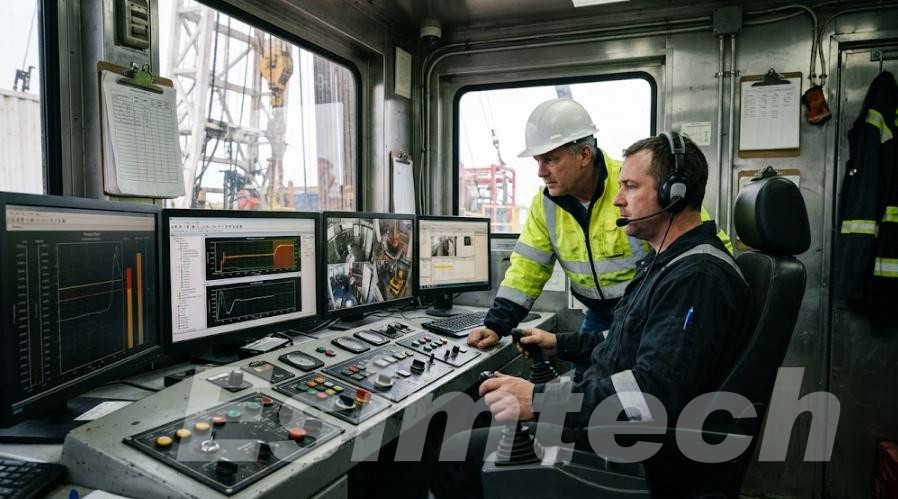
During the drilling operation, the driller continuously monitors the drilling rig control system and various operating parameters. Abnormal changes are usually the first to be detected.
These changes may include an increase in flow rate, changes in the liquid level of the mud pit, abnormal pressure trends, or a mismatch between the pump’s operating status and the current working conditions.
The first step is to identify the changes, and the next step is to accurately convey the information.
Effective communication is not just reporting “The pressure is rising”, but also providing sufficient information to the Company Man, including:
- Which parameter has changed?
- How fast is the change?
- What operation was being carried out at that time?
- Does the change continue?
- Do other monitoring indicators show the same trend?
This information helps the Company Man quickly grasp the well condition.
The driller does not need to make all the decisions alone, but the accuracy and completeness of the information will directly affect the response speed of the team.
The Critical Moment Is Between Detection and Decision
The critical part of well control response is often between finding an anomaly and taking action.
A typical process is as follows:
The driller detects an abnormal well flow and reports it to the Company Man.
The client representative requests confirmation of the well condition, and the driller checks the relevant parameters and reports the latest situation.
The client representative determines the response plan and issues instructions, and the driller confirms the instructions and executes the corresponding operations.
Subsequently, the team continuously monitors the well condition.
This process can be summarized as:
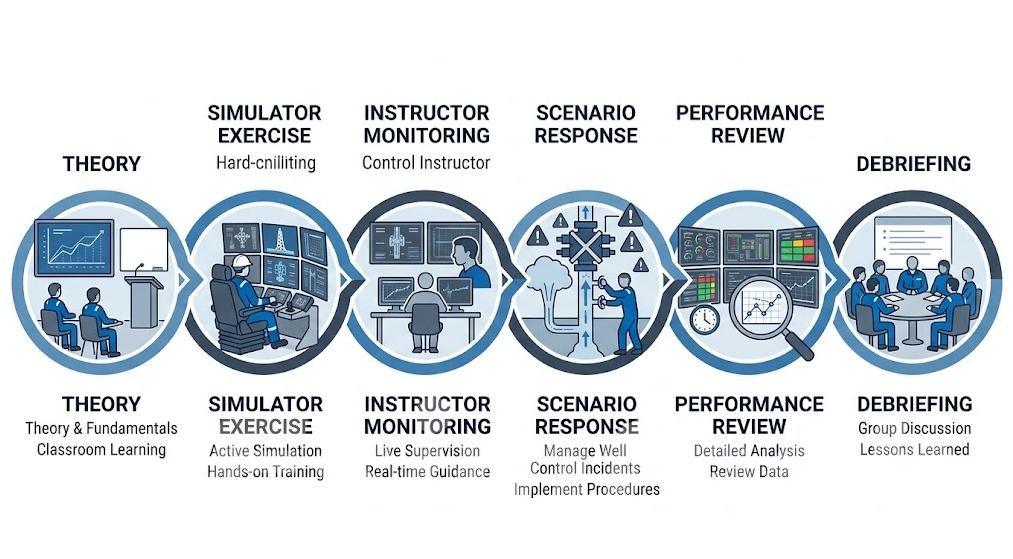
Observation → Reporting → Confirmation → Decision → Action → Monitoring
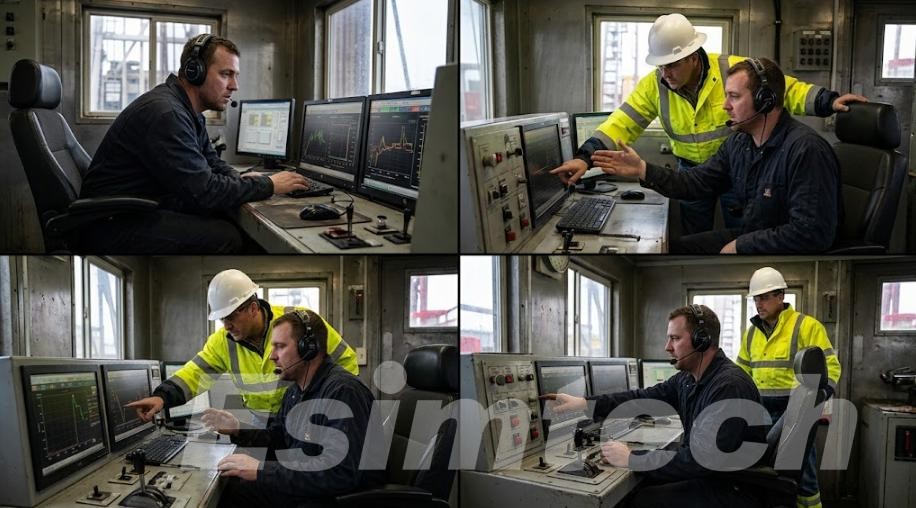
Each step affects the final response outcome. Unclear reporting can lead to delayed decisions, unclear instructions can lead to operational errors, and unacknowledged actions can lead to a lack of a unified understanding of the well condition.
Therefore, the key to effective communication is not to increase the amount of information, but to ensure a clear and continuous connection between observation, decision-making and action.
Where Communication Breaks Down Under Pressure
Compared to classroom discussions, practical assignments are more likely to expose communication problems.
Common communication breakdowns include:
- Excessive information: In abnormal situations, multiple parameters may change simultaneously. An overly detailed report may actually hide key information.
- Unclear instructions: General instructions may prevent equipment operators from knowing exactly what to do.
- Subjective assumptions: The driller may think that the client representative has noticed the same changes, while the client representative may think that the driller has taken measures.
- Lack of confirmation: After the instructions are given, if there is no confirmation on whether it is understood or completed, the team may not be able to determine the current status.
When pressure increases and decision-making time shortens, these communication problems may be further exacerbated.
Team training can repeatedly simulate similar scenarios to help personnel identify where the communication goes wrong at which stage and promptly improve it.
Train the Conversation, Not Just the Procedure
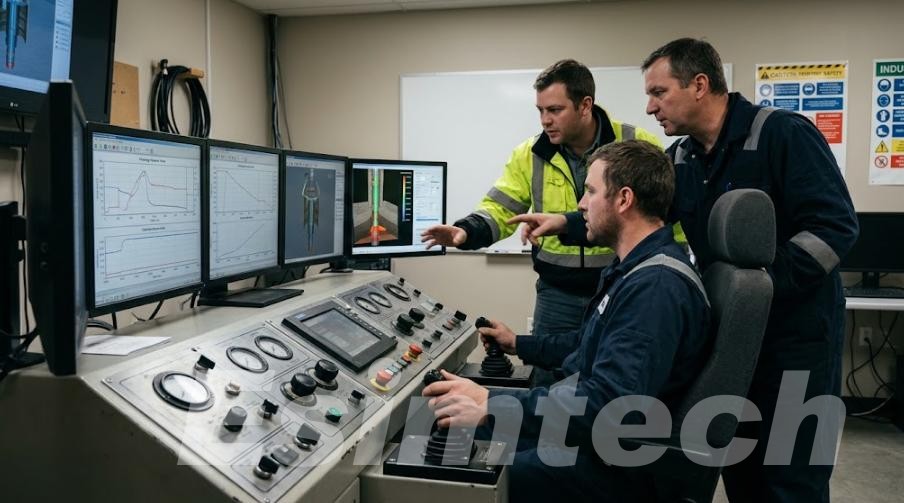
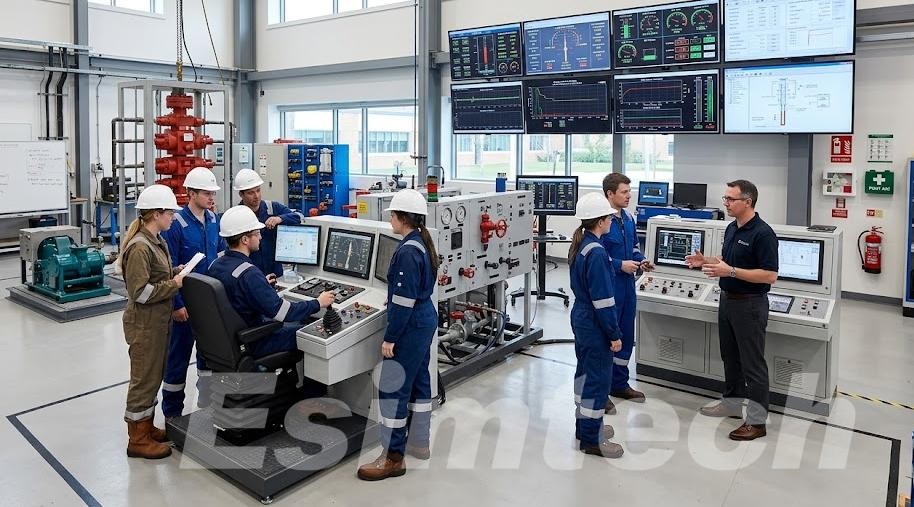
The well control simulator not only enables training for equipment operation, but also can be used for team collaboration drills, allowing the driller and the client representative (Company Man) to jointly handle simulated incidents.
For example:
- Abnormal conditions: Abnormal flow or pressure changes occur during drilling.
- Driller’s observation: The driller identifies the changes and reports the relevant information.
- Party A representative assessment: The Party A representative assesses the information and, if necessary, requests further confirmation.
- Response instructions: The Party A representative conveys the response measures to the driller.
- Driller’s execution: The driller operates the equipment and reports the results.
- Continuous monitoring: The team continuously observes the well condition and maintains communication based on the changes.
The drill should not end immediately after completing the equipment operation. The team should continue to communicate until all members clearly understand the current well condition and the response measures.
This is also the main difference between individual simulator training and team well control training.
How to Evaluate Team Performance After the Scenario
After the simulation exercise is completed, the team’s review should not only confirm whether the operation procedures are correct, but also focus on the communication and collaboration process.
Key points to check include:
- Did the driller promptly identify abnormal conditions?
- Was the initial report clear and accurate?
- Did the client representative (Company Man) obtain sufficient information to assess the on-site situation?
- Were the instructions clear and accurately understood?
- Did the driller confirm the receipt of instructions and subsequent actions?
- Did the team continuously share information after the condition changed?
- Did communication issues cause delays?
Such reviews can uncover collaboration problems that are not easily exposed during individual training.
Even if the driller is highly skilled and the client representative is experienced, the well control performance still depends on whether both parties can maintain effective collaboration. The timely flow of information during condition changes will directly affect the team’s judgment and response.
Team well control simulation training can cultivate this ability in an environment close to actual operations. The driller and the client representative respond to the same condition in their respective roles, repeatedly practice complex scenarios, and review the impact of communication methods on the response results.
The focus of the training is not only to have individuals make correct responses, but also to ensure that the team remains consistent during critical well control moments, completing identification, communication, decision-making, and action.