The Core Benefits of Managed Pressure Drilling (MPD) in Deepwater Operations

Written By: Computer Science Professor
Deeply rooted in the R&D of simulators for the oil and gas industry, committed to bringing safety to every oil worker.
In 2026, deepwater exploration is entering a realm where the “drilling window,” or the difference between pore pressure and fracture gradient, is almost nonexistent.
Conventional drilling techniques will often reach the end of their physical capabilities in such conditions, resulting in common problems of wellbore stability and lost circulation. Managed Pressure Drilling (MPD) has proven to be the ultimate solution for such conditions, providing a closed-loop system that offers precise control over the wellbore pressure profile.
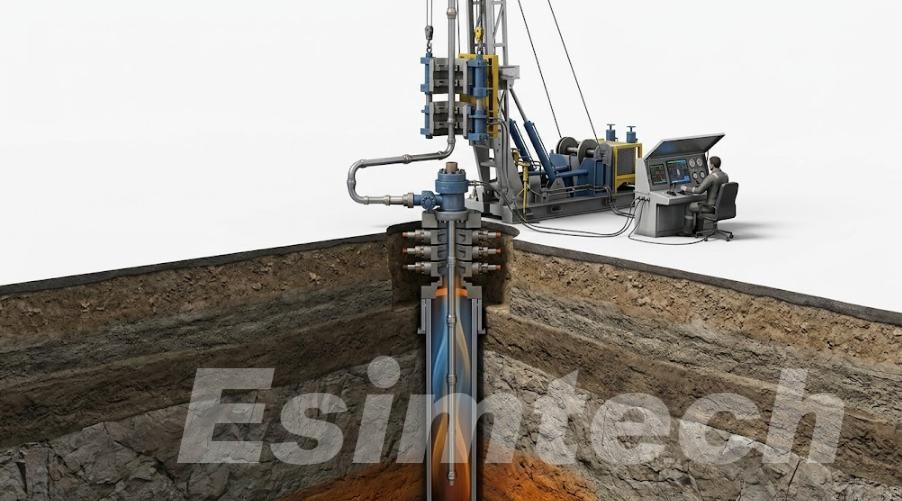
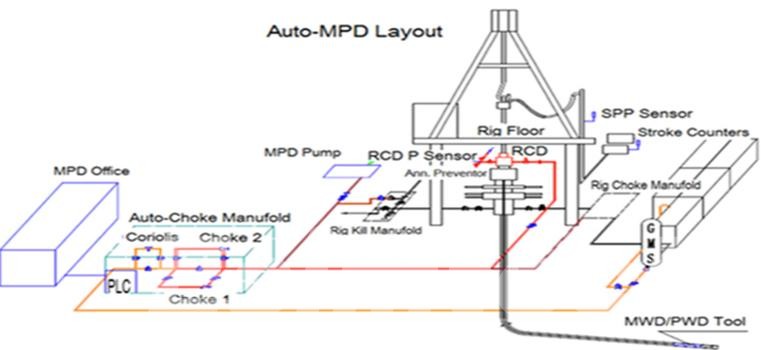
With the use of a Rotating Control Device (RCD) and an automated choke manifold, MPD enables operators to control bottomhole pressure with pinpoint accuracy, even in high-cost offshore environments.
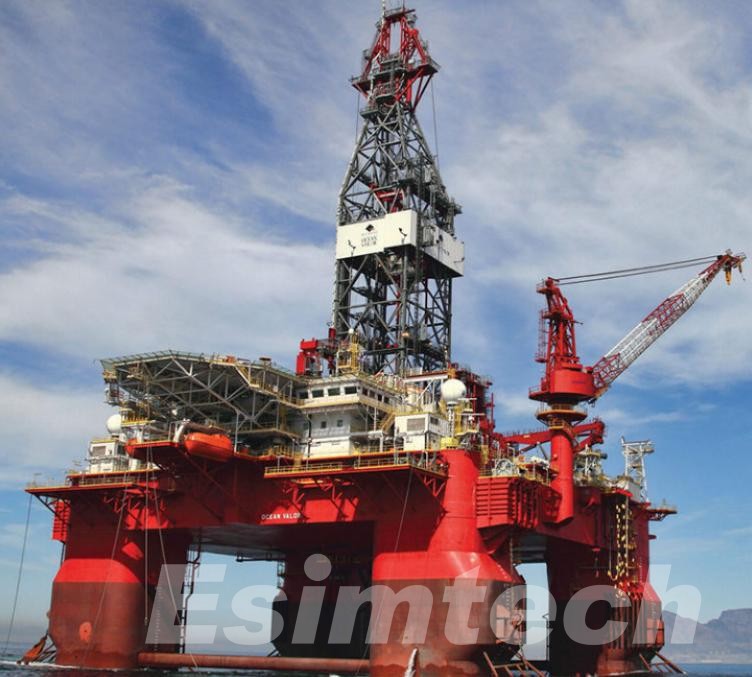
Overcoming the Narrow Pressure Window in Deepwater MPD Operations
Deepwater reservoirs are characterized by geologically young, unconsolidated formations. In a conventional system, the mud weight needs to be sufficiently high to prevent an influx (kick) but sufficiently low to avoid fracturing the formation. In many cases, these two conditions are so close that even the friction created by turning on the mud pumps (Equivalent Circulating Density, or ECD) is sufficient to fracture the formation.
The Managed Pressure Drilling (MPD) system overcomes this problem by maintaining Constant Bottomhole Pressure (CBHP). When the pumps are turned off during a pipe connection, the MPD system automatically creates surface back-pressure to compensate for the loss of annular friction. This prevents the “breathing” of the well—a cycle of influx and loss that has plagued deepwater projects.
In addition, by carefully controlling the pressure profile, operators can often extend casing seats, drilling deeper sections than originally planned. This cuts the number of casing strings needed, saving millions of dollars in steel costs and rig time.
Reducing Non-Productive Time (NPT) with Advanced MPD Systems
In the offshore industry, where the average rig rate per day in 2026 is over $400,000, NPT is the nemesis of ROI. MPD is a high-tech safety net against the three most frequent sources of downtime: kicks, losses, and differential sticking.
Rapid Kick and Loss Detection in Deepwater MPD
The difference between “manual” and “automated” detection is the key to modern MPD. In traditional drilling operations, a driller would use pit volume totalizers, which may take a gain of 10 to 20 barrels to verify an influx. In a deepwater MPD operation, Coriolis flow meters provide “flow-in” vs. “flow-out” detection with high sensitivity.
- Micro-Flux Control: The automated control will sense any gain or loss as small as 1 to 2 gallons. This allows the system to adjust the choke automatically, increasing back-pressure to stop an influx before it becomes a measurable kick.
- In-Flux Management: Unlike other methods, which require shutting the well and possibly sticking the pipe, the MPD allows the crew to circulate the small influx of fluid out of the well using the MPD land-inch manifold. This keeps the drill string rotating and eliminates the time-consuming operation of performing a well control kill.
Optimizing ROP and Connection Times via MPD Technology
Deepwater operations achieve greater efficiency when the Rate of Penetration (ROP) reaches better levels. The MPD system enables operators to use lower mud weights which match pore pressure levels thereby decreasing hydraulic forces that keep rock cuttings attached to the hole bottom.
- Increased ROP: With lower overbalance, the drill bit can break rock more efficiently, often resulting in a 15-30% increase in drilling speed.
- Seamless Connections: The system requires less time for mud conditioning and surge and swab pressure management. The system maintains a stable pressure environment during pipe trips which eliminates the need to slowly “wait on mud” to stabilize. This process can save deepwater rigs several hours of operational time every day.
Enhancing Offshore Safety with Managed Pressure Drilling (MPD) Barriers
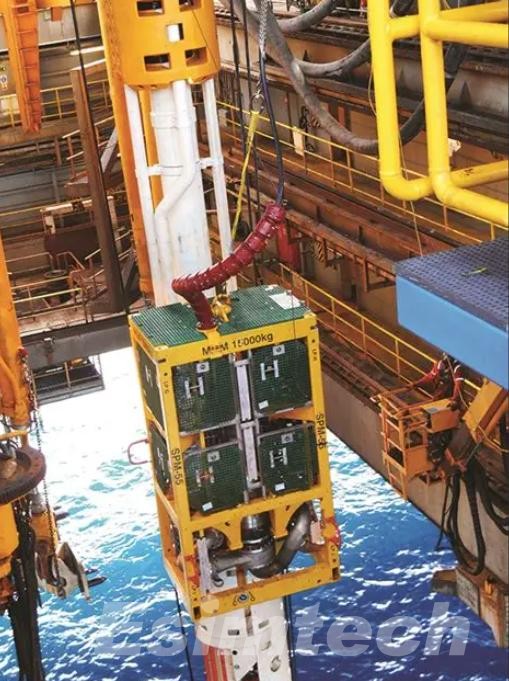
Deepwater safety is more than simply blowout prevention; it is the maintenance of a closed and controlled system at all times. Managed Pressure Drilling (MPD) offers a proactive safety element that cannot be replicated by traditional “open” systems, especially in the environmentally fragile subsea areas of 2026.
The heart of this safety system is the Rotating Control Device (RCD). This technology forms a mechanical seal around the drill string, thereby pressurizing the wellbore as a closed system. This ensures that all gas and fluid returns are routed directly to the automated choke manifold and not to the rig floor.
During an unexpected pressure spike, the MPD system serves as a high-speed buffer, which absorbs the pressure and allows the crew to make informed decisions rather than being driven by the panic associated with a traditional shut-in. This closed-loop system also eliminates the possibility of “lost circulation” events, which are not only costly but can also result in the loss of the primary hydrostatic barrier.
Leveraging Digital Twins for Predictive Deepwater MPD Performance
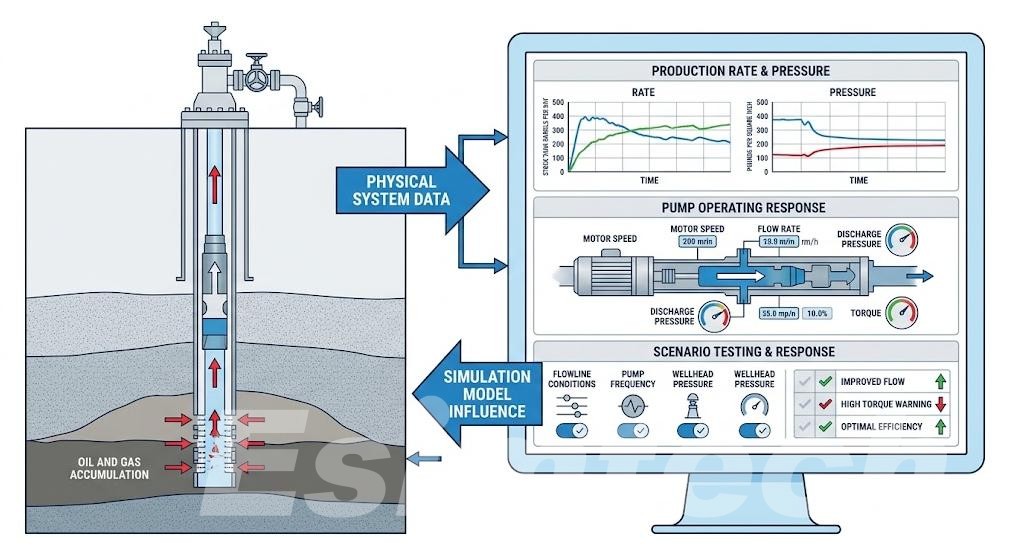
In 2026, Managed Pressure Drilling (MPD) is increasingly enabled by software that closes the gap between surface information and what is really happening downhole. The integration of “Digital Twins”—simulations of the wellbore that operate concurrently with the actual drilling process—enables a degree of predictive drilling that was not possible before.
Current MPD system functionality includes:
- Real-time Hydraulics Modeling: The continuous calculation of the pressure at each foot of the wellbore, taking into account temperature, fluid compressibility, and pipe rotation.
- Pre-emptive Pressure Adjustments: The use of AI algorithms to predict changes in pore pressure based on LWD data, enabling the MPD system to make adjustments to surface pressure before the bit enters a high-pressure area.
- Simulator-Based Proficiency: The entire crew must be trained on a simulator before a high-risk MPD operation to familiarize them with the particular hydraulic conditions of the well.
This data-oriented approach ensures that the Managed Pressure Drilling (MPD) operation is not only reactive, but also proactive. By visualizing the pressure window, the driller can maintain the “sweet spot” of the formation, thus ensuring the highest level of safety and efficiency.
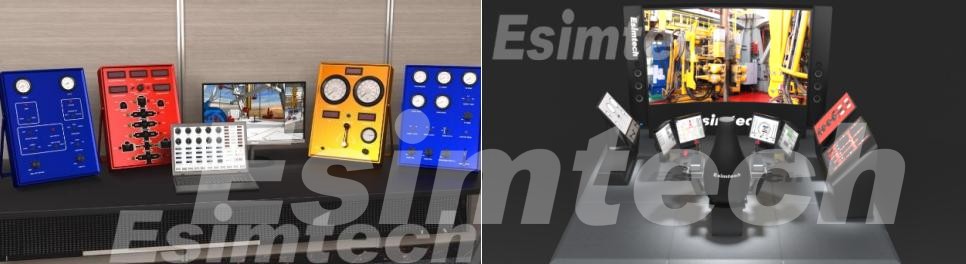
At Esimtech, we understand that the hardware used in an MPD system is only as good as the personnel operating it. We offer the most advanced MPD simulation and training tools available, which enable personnel to learn the intricacies of deepwater pressure management in a highly realistic virtual setting. Our simulators are utilized by international operators to ensure that every driller, toolpusher, and engineer is “MPD-ready” before they ever set foot on a deepwater rig.
Don’t leave your deepwater success to chance. Come to Esimtech to learn how our advanced MPD training modules can protect your operations and optimize your next deepwater project!