How Well Logging Simulators Streamline Complex NMR Data Interpretation and Training

Written By: Computer Science Professor
Deeply rooted in the R&D of simulators for the oil and gas industry, committed to bringing safety to every oil worker.
Nuclear Magnetic Resonance (NMR) logging is a key technology in the oil and gas industry. It breaks away from the limitations of traditional tools that rely on the rock matrix, directly interacting with hydrogen protons in the fluid, thereby providing geologists with more accurate data on total porosity, permeability, fluid type, and reservoir characteristics.
However, in complex geological formations, converting the original relaxation signals into practical reservoir models remains a challenge. Modern well logging simulation technology is precisely the key to solving this problem. It is revolutionizing tool design, data inversion, and the training methods for the next generation of engineers.
Principles of Nuclear Magnetic Resonance Logging
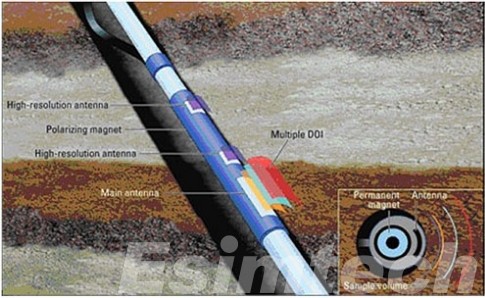
Nuclear magnetic resonance logging generates resonance signals of hydrogen protons in the formation fluids (water and hydrocarbons) by applying an external magnetic field and radio frequency (RF) pulses.
Core Mechanism
- Magnetic polarization: The permanent magnets in the logging instrument generate a static magnetic field, causing the hydrogen nuclei in the formation to align along the direction of the magnetic field.
- Pulse excitation: The instrument emits radiofrequency pulses perpendicular to the magnetic field, disrupting the proton’s equilibrium state and causing it to deflect.
- Relaxation signal detection: After the pulse stops, protons release a weak radio frequency signal during the process of realignment (relaxation), which is eventually captured by the receiving coil.
Key Nuclear Magnetic Resonance (NMR) Parameters
To accurately assess the commercial value of the reservoir, the interpreters mainly rely on the following four core parameters:
- T1 longitudinal relaxation time: The time constant for nuclear spins to return to the equilibrium state, which is a key indicator for differentiating fluid types (light oil, heavy oil, gas, and water).
- T2 transverse relaxation time: The time constant for the attenuation of transverse magnetization intensity, highly sensitive to pore size. Large pores (free fluids) correspond to long T2 values, while small pores correspond to short T2 values.
- T2 distribution curve: A continuous spectrogram of T2 relaxation time, which can directly reflect the pore size distribution of the formation and the heterogeneity of the matrix.
- FFI (Free Flow Index) and BFV (Bound Fluid Volume): These parameters directly quantify the recoverable free fluid and bound fluid (clay-bound water/micropore water), thereby accurately assessing the production potential of the reservoir.
NMR Logging Tool and Operation
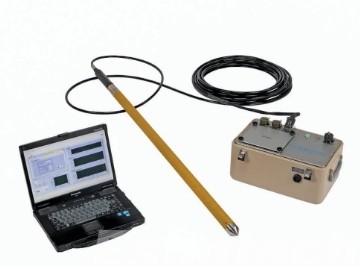
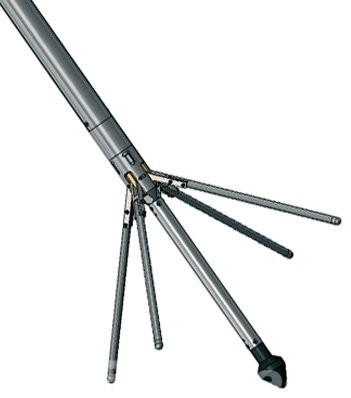
Nuclear Magnetic Resonance logging tools are typically designed to operate in boreholes, consisting of a magnet to create a static magnetic field and RF coils to generate and detect signals. The tool is lowered into the well, and measurements are taken at various depths.
The NMR logging tool emits a series of RF pulses and records the resulting signals over time. These signals are processed to extract T1 and T2 relaxation times, from which various formation properties are derived.
Interpreting NMR data involves analyzing the relaxation times and their distributions to derive porosity, permeability, fluid types, and other reservoir properties. Advanced software and expertise are often required for accurate interpretation.
Applications of Nuclear Magnetic Resonance Logging in the Oil and Gas Industry
While NMR logging offers unmatched capabilities, implementing it successfully in the field involves navigate a series of operational bottlenecks.
| Application | The Field Challenge |
| Porosity & Permeability Assessment | High Matrix Complexity: In heterogeneous carbonate reservoirs or clay-rich formations, rapid signal decay can lead to severe data interpretation errors. |
| Fluid Typing & Saturation | Environmental Interferences: Variations in borehole temperature, extreme pressure, and mud filtrate invasion heavily distort T1/T2 signatures, complicating fluid identification. |
| Reservoir Characterization | Prohibitive Costs & Risks: Real-world NMR tools are expensive to deploy, consume high amounts of downhole power, and carry immense stuck-pipe risks in volatile wells. |
| Workforce Readiness | Technical Expertise Gap: Interpreting highly complex NMR inversion algorithms requires years of advanced training, making skilled personnel scarce and expensive to onboard. |
Advantages of Nuclear Magnetic Resonance Logging
Here is a chart summarizing the advantages of Nuclear Magnetic Resonance logging in the oil and gas industry
| Advantage | Description |
| Non-Destructive | Preserves the integrity of the formation while providing detailed subsurface information. |
| Direct Measurement | Offers direct measurements of porosity, permeability, and fluid types, unlike conventional logs that infer properties. |
| Enhanced Reservoir Understanding | Enables better reservoir modeling with detailed data, leading to more accurate reserve estimates and improved production planning. |
| Fluid Differentiation | Differentiates between oil, gas, and water based on relaxation time signatures. |
| Porosity Assessment | Accurately measures total porosity, distinguishing between bound and free fluid volumes. |
| Permeability Estimation | Provides a more direct estimation of permeability by analyzing T2 relaxation time distribution. |
| Detailed Pore Structure Analysis | Offers insights into pore size distribution, aiding in the assessment of fluid flow characteristics. |
| Immovable vs. Movable Fluids | Differentiates between immovable bound fluids and movable free fluids, crucial for producibility assessment. |
| Integration with Other Data | Enhances reservoir characterization by integrating with other logging measurements. |
| Operational Efficiency | Reduces uncertainties and enhances decision-making, leading to more efficient drilling and production strategies. |
| Versatility | Applicable in a wide range of geological settings and reservoir conditions. |
How Simulation Technology Maximizes NMR Value
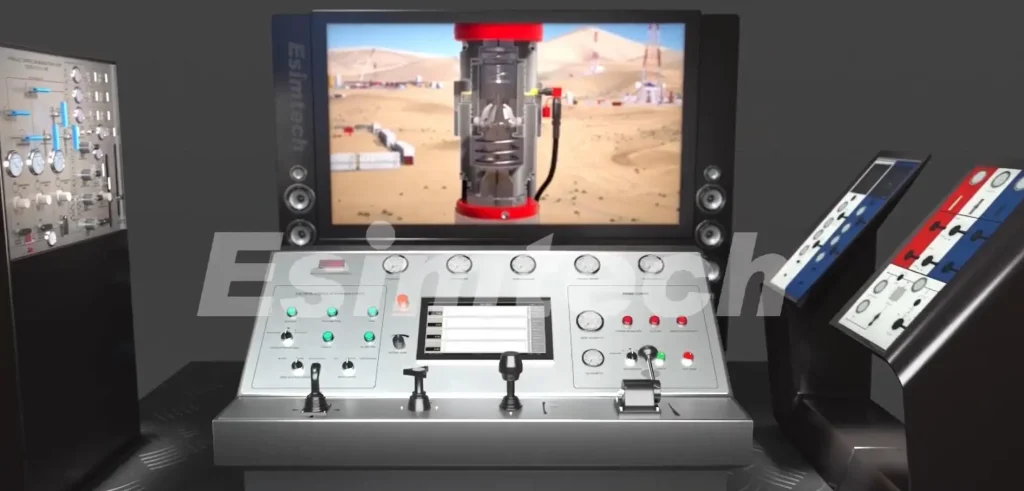
To eliminate the high financial risks and learning costs associated with on-site practical operations, the well logging simulation system has become a standard feature in the industry. By accurately recreating the underground physical environment and the behavior of tools, this system has completely transformed the traditional mode of NMR training and data processing.



3.1 Accelerating Skill Enhancement and Technical Training
Traditional theoretical or written training cannot enable engineers to cope with the rapidly changing decision-making pressures in the drilling site. The advanced logging simulator, on the other hand, provides a fully interactive virtual environment where trainees can practice tool deployment without needing to use actual equipment.
- Interactive tool configuration: Trainees can practice setting the optimal radiofrequency pulse sequence online and precisely control the positioning of the tool in the virtual wellbore.
- Scenario-based practical training: The system can randomly simulate real faults – such as severely imbalanced tools, sudden changes in mud salinity, or complex interference from shale matrix – to test the trainees’ ability to promptly eliminate data distortion.
- Comprehensive scene security linkage: In modern petroleum education, the integration of logging physics with high-risk operations (such as well control/ blowout prevention simulation drills) is often carried out, and combined with VR technology, it helps engineers master the skills of oil well intervention and drilling platform safety.
3.2 Synthetic Data Generation and Advanced Inversion Modeling
Solving the “inversion problem” (reconstructing rock properties from underground radio frequency signals) is a highly challenging aspect in nuclear magnetic resonance logging.
- Virtual prototype: By using multi-physics simulation, thousands of synthetic data of rock-fluid matrix are generated. With these massive data sets, data scientists can optimize the mathematical model and efficiently verify the inversion algorithm before the actual deployment of hardware tools.
- Quantification of uncertainty: Automatically conduct simulation experiments with multiple sets of different inputs (such as fluctuating porosity or clay content), and through sensitivity analysis, provide a clear confidence assessment for reservoir prediction models.
Nuclear Magnetic Resonance Logging (NMR) is a crucial tool in oil and gas exploration for identifying commercial oil and gas flows. However, to fully realize its technological benefits, the key lies in the professional capabilities of the operators. By introducing advanced logging simulation and virtual reality (VR) platforms, enterprises can effectively reduce on-site misjudgments, lower operational costs, and cultivate elite teams capable of tackling complex oil reservoirs.
To help you reduce operational risks and enhance the technical capabilities of your team, as the global leader in high-fidelity oil simulation, Esimtech offers dedicated digital twin simulation solutions for core aspects such as drilling, well control, blowout prevention, and logging.