VR Safety Training in Oil and Gas: The Ultimate Guide to Safer and Smarter Operations

Written By: Computer Science Professor
Deeply rooted in the R&D of simulators for the oil and gas industry, committed to bringing safety to every oil worker.
In the global oil and gas industry, from upstream drilling to downstream refining, the complexity of mechanical equipment and the variability of processing materials require professionals not only to “understand the situation”, but also to “have instinctive reactions”. Traditional training methods – lectures, manuals, and sporadic on-site inspections – are increasingly unable to meet the requirements of modern ESG (environment, society, and governance) and safety aspects.
Therefore, virtual reality (VR) technology has become a key technical tool for bridging the gap in experience between experienced engineers and new employees. By using high-fidelity simulators, companies can transform abstract safety procedures into tangible muscle memory.
Industry Challenges of Oil and Gas Training
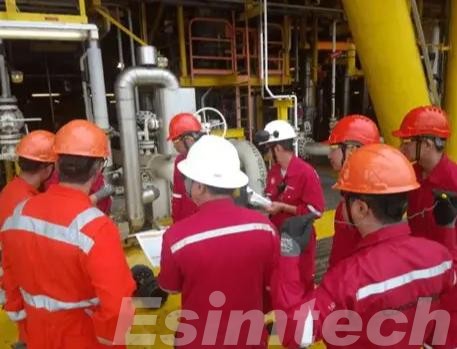
There are challenges related to logistics and safety associated with training in the oil and gas industry that regular schooling will not be able to address.
- Exorbitant Costs of On-Site Training: Conducting exercises in the field in an operational drilling rig or refinery involves high costs in terms of travel, housing, and possibly downtime. The cost-benefit analysis of the on-site training is often adversely affected by this.
- High-Risk Scenarios: Some skills, for example, blowout prevention and well control training, H2S release, cannot be trained in the field since these scenarios are inherently dangerous.
- The Experience Gap: The senior members have been retiring, thus resulting in the youth taking over operations without having the muscle memory like that of the previous operators. Static training will not help one get the feeling when the machines vibrate, or the pressure on the gauges changes, before any accident.
- Access to Complex Machines: Today’s drilling and processing machines are complex pieces of technology. Any mistakes while training may lead to damaging vital parts of these machines.
Key Benefits of VR Training in Oil and Gas
The benefits of VR technology in enhancing industrial scalability are numerous and include the following:
- Neurological Retention: Industrial psychology research shows that kinesthetic learning in virtual reality yields a retention rate of 75%. With Esimtech’s VR training Simulator, operators can learn rig floor processes through touch and hearing, and those processes will be ingrained in their subconscious.
- Learning through Consequences: VR offers an unprecedented “Safe-to-Fail” training ground. Learners are able to witness the immediate visual consequences of a failed valve sequence or shut-in delay, thereby creating a strong sense of reverence for the SOPs, which can never be achieved through mere books.
- Tracking Quantitative Competencies: Whereas traditional field training depends on subjective evaluations, Esimtech’s VR platform collects objective telemetric data. All reaction times, valve torque settings, and sequence procedures are recorded for a quantitative pathway to IWCF/IADC certification.
Key Application Scenarios of VR Training
For ensuring training returns on investment, VR training focuses on the high-risk areas of the lifecycle of the oilfield.
Precise Well Control & Drilling
The drilling rig floor is an important place for the prevention of blow-outs. VR training shifts from manual to virtual reality simulations:
- Kick Detection: Training involves the detection of influx in fluids by monitoring levels of pits and standpipe pressure.
- BOP Control: Trainees will simulate shut-in operations with a virtual BOP stack and virtual choke manifolds.
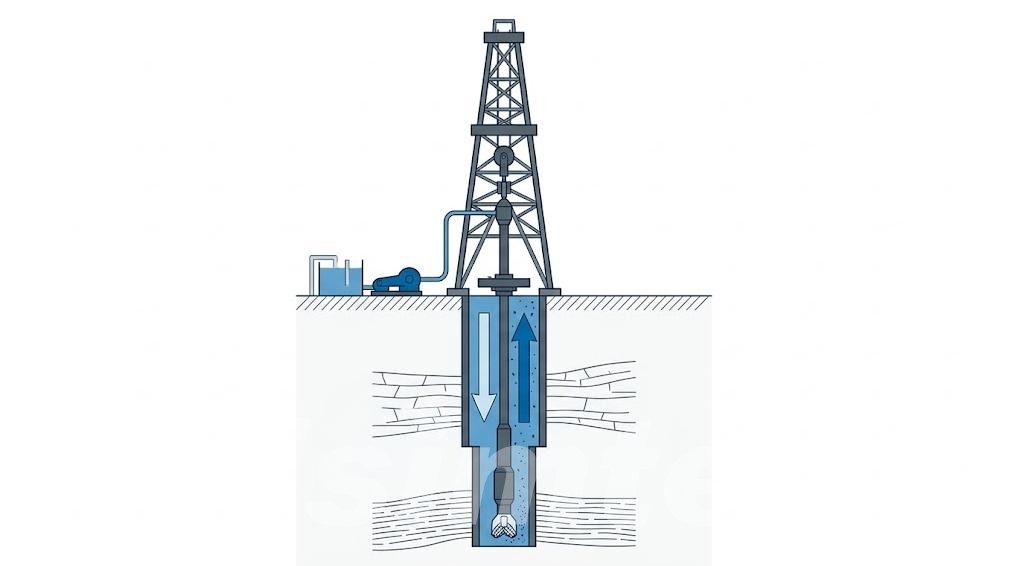
- Fluid Dynamics Simulation: The virtual simulation involves physics-based feedback for managing pressure with different mud weights.
HSE and Critical Emergency Response
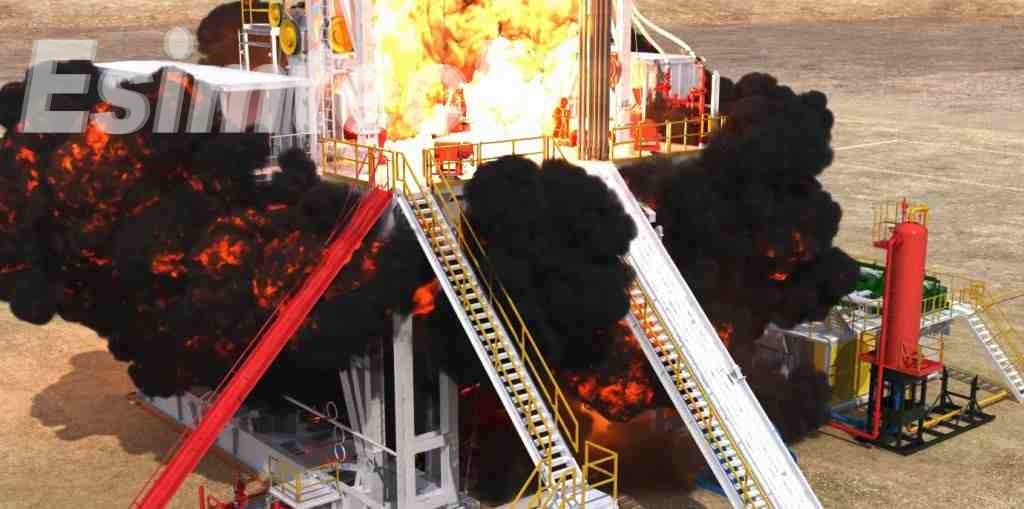
Training on safety should be visceral. With VR, a “safe-to-fail” scenario can be created:
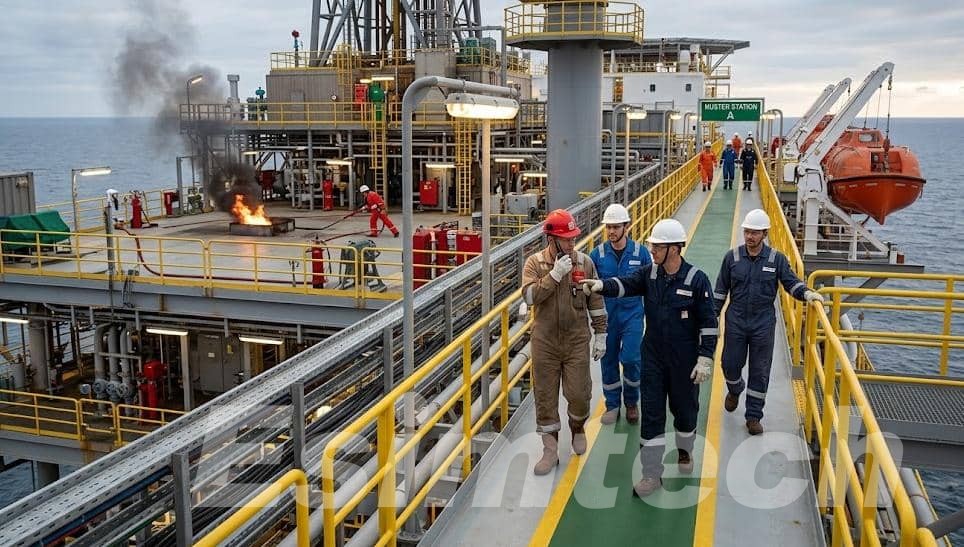
- Fire Drills: Finding the origin of leaks and performing a muster drill amidst thick smoke on offshore oil rigs.
- HSE Risks: Modules include fall protection during monkey boarding and thorough gas testing for entry into confined spaces.
- Standard Operating Procedures: Learning LOTO procedures and feeling the instant repercussions of an error without any physical harm.
Maintenance in Virtual Reality & Troubleshooting using Digital Twins
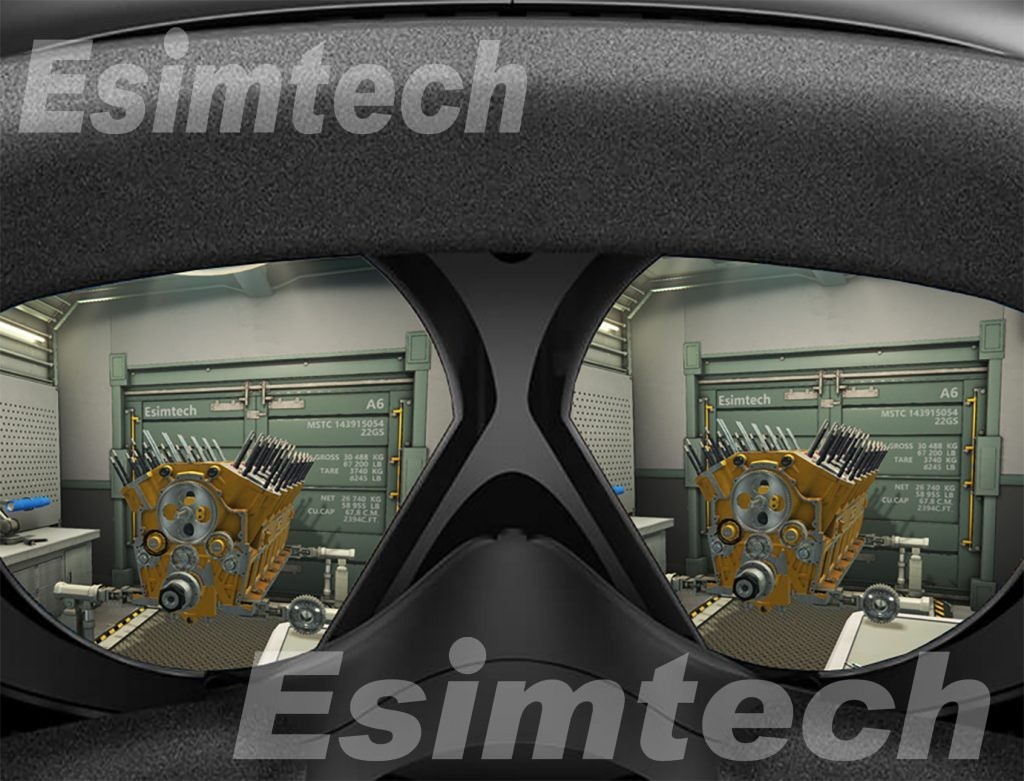
Machinery maintenance doesn’t have to disrupt your operations. With virtual reality, we employ Digital Twins for a thorough understanding of:
- Mechanical Breakdowns: Your techs will undertake virtual examinations and deconstruction of top drives, drawworks, and centrifugal pumps.
- Internal Mechanism: Your team can “walk through” equipment to understand how hydraulics flow and what mechanical wear looks like, which isn’t possible out there.
- Safe Learning Process: Trainees will learn safe procedures on disassembly and assembly without damaging capital equipment.
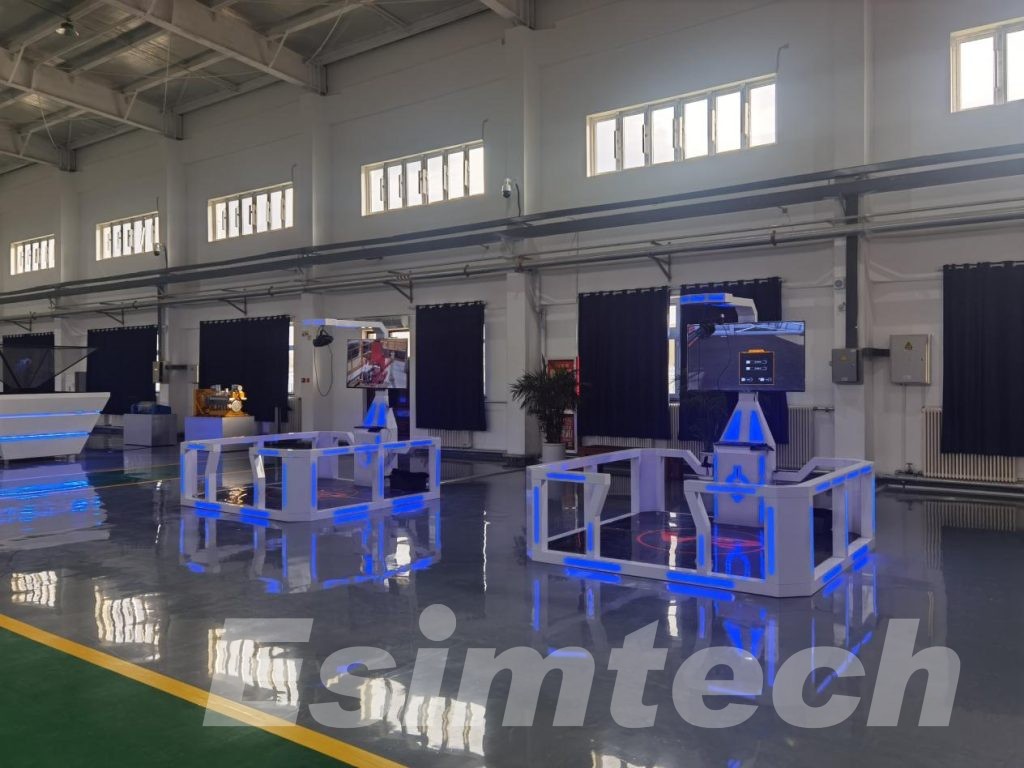
Esimtech Petroleum VR Training Simulator
Petroleum Training Simulators from Esimtech provide the source of truth for global energy experts. Our solutions are designed at the crossroads between cutting-edge fluid dynamics and high-quality hardware.
Technical Accuracy and Physically Based Simulation
The drilling simulators provided by Esimtech use complex mathematical algorithms that emulate the real-world hydraulics and mechanics. Operating an Esimtech virtual choke manifold, a trainee sees the same delays and sensitivity to changes as he would see while working on an actual rig. This is the depth necessary for professionalism.
Integration of Hardware and Haptic Feedback
For the removal of this “floaty” sensation provided by regular VR, Esimtech provides integration hardware consoles. Through our use of mechanical joysticks, throttles, and valves in combination with the virtual world, we connect the world of mechanics to the realm of computer simulation.
Safety (HSE) Modules for the Industry’s “High-Probability” Hazards
- Falling protection and monkey board: Training of the derrickman for safety while working at heights.
- Confinement strategy: Practising the process of testing for gases and obtaining permits before entering storage tanks.
- Process isolation and LOTO procedures: Maintaining safety while conducting work on refineries.
Why Global Company Choose Esimtech?
Esimtech provides a scalable, “AI-proof” solution for the modern petroleum sector. By grounding our VR software in international standards (API, IWCF, IADC), we provide a reliable Source for expert certification. Our simulators transition your workforce from being merely “compliant” to being truly “competent,” ensuring that every professional on your site is prepared for the unexpected.
In an industry where an incident is measured in lives and millions, Esimtech VR simulator is the ultimate investment in operational resilience!