Drillships vs. Offshore Platforms: What are the Key Differences

Written By: Computer Science Professor
Deeply rooted in the R&D of simulators for the oil and gas industry, committed to bringing safety to every oil worker.
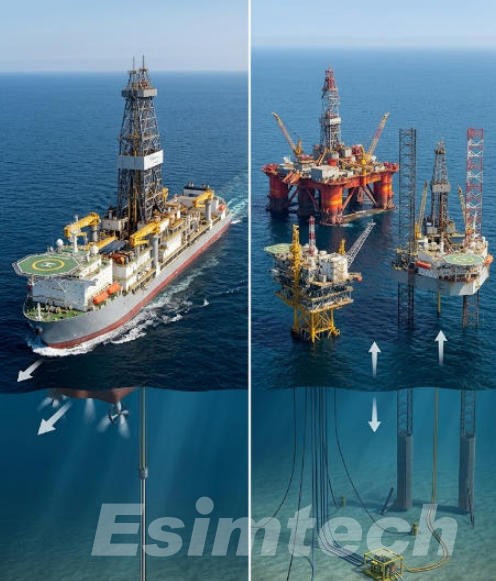
Offshore oil and gas exploration needs marine structures that can handle tough ocean conditions, with advanced engineering behind them. Among the most important offshore facilities are drillships and offshore platforms. Even though both are built for getting oil and gas resources below the seabed, they’re different in structure, mobility, daily operations, water depth capability, and application scenarios.
Knowing how drillships and offshore platforms compare helps energy companies select the right solution for exploration, field development and long-term production work.
Overview of Drillships
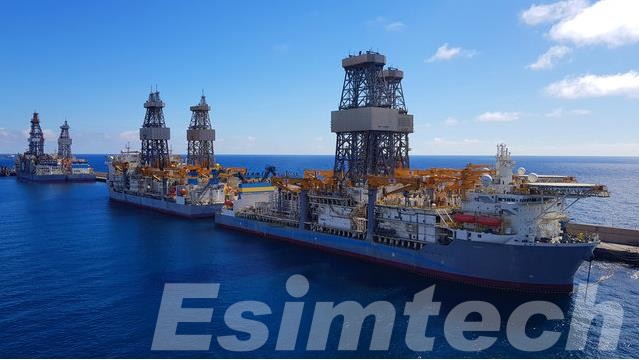
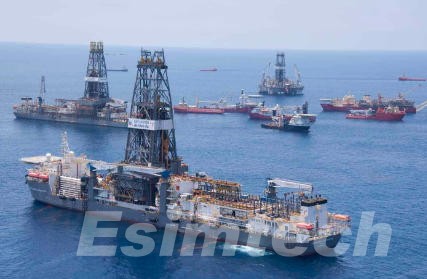
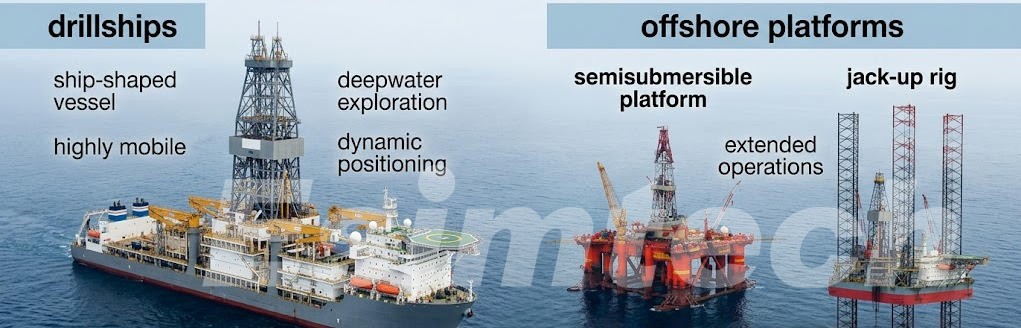
A drillship is a specialized vessel made for offshore drilling activities. It kind of mixes the job of a ship with a drilling rig, so it can sail to different offshore positions and do exploration work. Typically, a drill ship has a drilling tower, more advanced positioning systems, and all the onboard setup needed to drill wells, especially in deep, and ultra-deep waters.
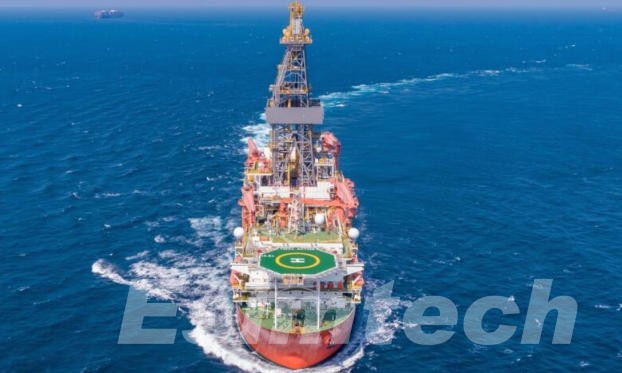
In contrast to fixed offshore platforms, drillships are extremely mobile. They can go between drilling sites without having to carry out large installation tasks, which sounds very practical. That maneuverability tends to matter a lot in the exploration phase, when oil companies need to assess several candidate reservoirs before committing resources.
Most modern drillships rely on dynamic positioning systems. These systems use computer-controlled thrusters along with GPS and different sensors, to keep the vessel hovering above the target drilling location. As a result, drilling can continue safely even when the water is very deep, where anchoring would be unrealistic or impractical
Overview of Offshore Platforms
Offshore platforms are permanent, or sometimes semi-permanent, structures that get put in the sea to help with drilling production, processing, and even storage tasks. In general they come in after an oil or gas field looks commercially viable and has been found in the first place; otherwise, the whole idea is too risky.
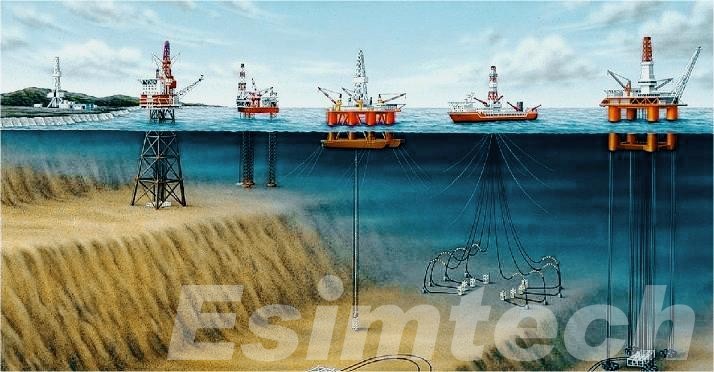
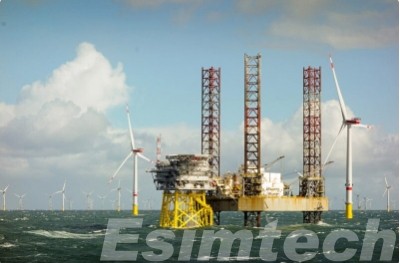
You can find multiple types of offshore platforms like fixed platforms, jack-up rigs, semi-submersible platforms, and floating production systems. The whole design picture depends on things such as water depth, local environmental conditions, and reservoir characteristics.
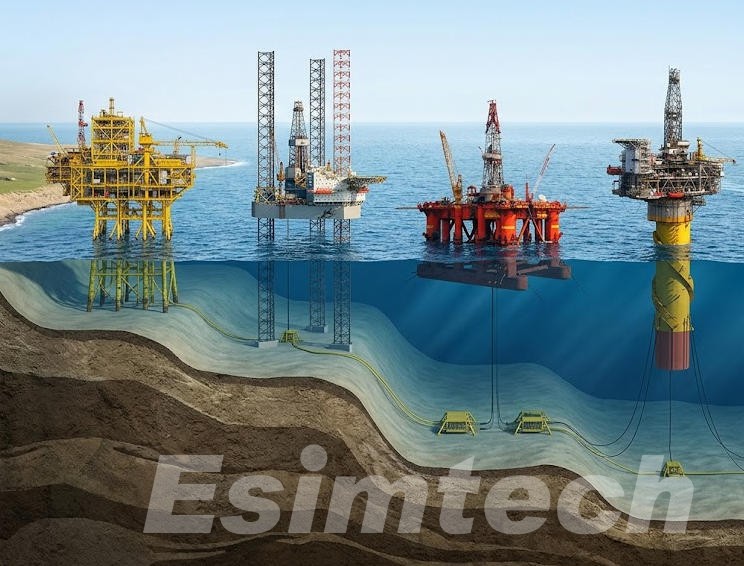
Fixed platforms are fastened straight to the seabed and they are mainly used in shallow waters. They usually have solid stability and many of them can keep running for decades. Floating platforms, including semi-submersibles and tension leg platforms are set up for deeper waters, meaning when a standard fixed structure is not really practical.
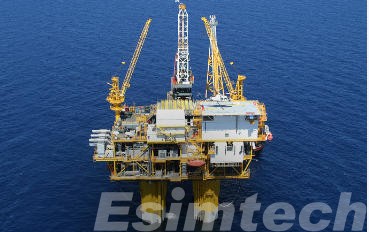
Offshore platforms usually have production gear, living spaces, power systems, processing units, and storage provisions, so they work well for long term oil and gas production, without stopping much.
Key Differences Between Drillships and Offshore Platforms
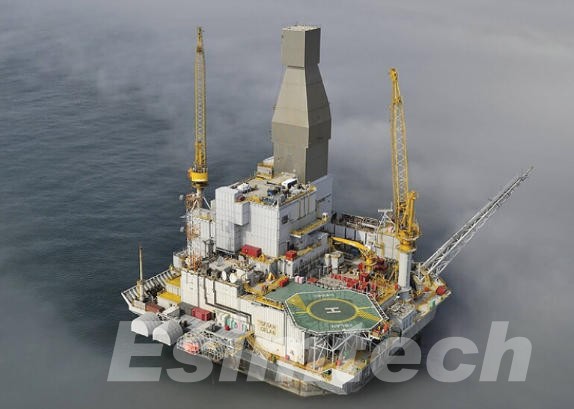
Drillships are specialized floating vessels mainly used for offshore drilling and exploration, while offshore platforms are fixed or semi fixed facilities designed for ongoing production and processing work. Deciding between them depends on things like water depth, the stage of the project, operational needs, economic considerations, etc.
1. Structural Design
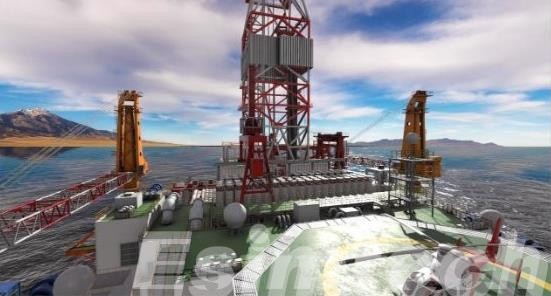
The structural design of drillships vs. offshore platforms is one of the most notable differences. A drill ship has a hull that looks more like a ship, so it can travel across open waters. Drilling gear is integrated into the vessel body, and the derrick sits above a central opening, called a moon pool, where the drilling tools pass down to the seabed.
The ship design provides strong mobility and lets drillships be sent fast to new exploration regions. Still, because they are tuned for transit, they usually end up with not much room for large production facilities.
Offshore platforms are mostly arranged around steadiness and long-run use. Fixed platforms use steel jackets or concrete bases that connect straight to the seabed, while floating platforms lean on mooring systems, anchors, or dynamic positioning tools.
These structures are constructed to carry heavy production equipment, processing areas, living quarters, and storage systems. Their sturdy build lets them keep running continuously for decades.
2. Mobility and Deployment Flexibility
Mobility is maybe one of the main advantages drill ships have. They can be rushed into service and positioned at different exploration areas fast, which makes them good for finding new offshore reserves. After finishing one drilling run, the drillship can relocate to another spot with little to no major changes.
Offshore platforms are much less flexible, because they need heavy engineering, construction, and installation work. And once they are installed, moving them is really hard, also costly.
However, the limited mobility of offshore platforms is balanced by their ability to support large-scale production. They are designed to remain at a specific field location for many years, maximizing resource recovery from established reservoirs.
| Feature | Drillships | Offshore Platforms |
| Mobility | Highly mobile | Mostly fixed or semi-permanent |
| Main Purpose | Exploration and drilling | Production and long-term operation |
| Installation Time | Relatively short deployment | Requires extensive construction and installation |
| Location Flexibility | Can operate in multiple fields | Designed for a specific field |
| Lifespan at One Location | Usually temporary | Often decades |
3. Water Depth Capability
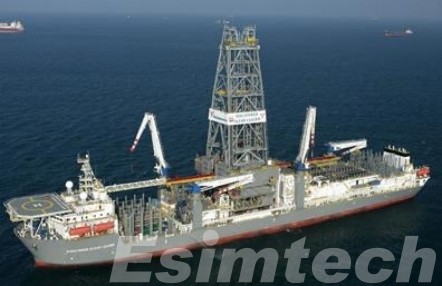
Both drillships and offshore platforms can work in deep-water settings, but drillships are especially suited for ultra-deepwater exploration.
With advanced dynamic positioning technology and specialized drilling systems modern drillships can work in extremely deep waters where traditional fixed structures are not really practical. Because they move so well operators can target far away offshore areas, even where the seabed is awkward and the conditions are hard.
Offshore platforms differ a lot when you look at water depth capability. Fixed platforms are typically for shallow to moderate water, while floating platforms, like semi-submersibles, tension leg platforms and spars, can handle deepwater production.
Choosing which platform to use usually depends on water depth, reservoir size,and the local environmental conditions too.
4. Drilling and Production Capabilities
Drillships are mainly drilling units. Their core job is to drill exploration wells, appraisal wells, plus development wells. They come with advanced drilling hardware, including blowout preventers, drilling control systems, and well monitoring technologies.
Even though some drillships can handle limited well testing work, they are not really built to do full-scale production, like on a long-term basis.
Offshore platforms, by contrast, are set up for continuous output. Once the wells are drilled, these platforms can sort oil, gas, and water, run processing for hydrocarbons, and then move the products over to pipelines, or to transport vessels. A lot of platforms also come with lodging spaces for offshore workers and extra maintenance provisions, so it keeps operations steadier.
5. Cost Considerations
The cost setup for drillships and offshore platforms is not the same. Drillships usually run with high daily operating expenses because they rely on advanced drilling gear, specialized crews, and complex positioning systems, which adds up quickly. Still, their ability to travel around means less permanent infrastructure is needed during the exploration stage.
Offshore platforms demand a big initial spend. Engineering, fabrication, transportation, and installation, plus ongoing maintenance, can be brutally expensive. Still, once everything is up and running, the setup can keep producing in a steady way for years, so for large offshore projects it becomes more economically appealing.
6. Environmental and Safety Considerations
Safety is a big deal for both drillship activities and offshore platform operations. Drillships need to handle multiple hazards tied to deep–water drilling, vessel stability, well control, and harsh marine conditions, sometimes all at once.
Better safety systems make a difference, like blowout preventers, real-time monitoring technologies, emergency shutdown systems, and automated drilling controls, which reduce day-to-day operational exposure.
For offshore platforms, the worries are different but also constant, such as structural fatigue, corrosion, extreme weather, and heavy long-term upkeep. Regular inspection routines and digital monitoring tools are vital so the structure stays reliable, without surprises later on.
Both systems are, also adopting cleaner technologies, improved energy efficiency solutions, and digital management systems that help reduce environmental impact.
Summary Comparison Chart
| Comparison Aspect | Drillships | Offshore Platforms |
| Primary Purpose | Mainly used for exploration drilling, appraisal wells, and well development | Mainly used for long-term oil and gas production and field management |
| Structure Design | Vessel-like hull with drilling equipment installed on the deck and a moon pool for subsea drilling access | Fixed or floating structures supported by seabed foundations, mooring systems, or dynamic positioning |
| Mobility | Highly mobile and can move between different offshore locations | Usually stationary; fixed platforms have very limited mobility, while floating platforms have limited relocation capability |
| Deployment Method | Self-propelled and transported to drilling sites using its own navigation systems | Requires extensive engineering, fabrication, transportation, and installation before operation |
| Water Depth Capability | Highly suitable for deepwater and ultra-deepwater drilling operations | Depends on platform type; fixed platforms are for shallower waters, while floating platforms support deepwater operations |
| Main Applications | Offshore exploration, drilling new wells, reservoir evaluation, and deepwater drilling campaigns | Oil and gas production, processing, storage, and long-term offshore field development |
| Drilling Capability | Equipped with advanced drilling systems, drilling risers, and blowout preventers for well construction | Some platforms include drilling equipment, but many focus mainly on production activities |
| Production Capability | Limited production capability; mainly focuses on drilling operations | High production capability with processing facilities, pipelines, storage systems, and accommodation units |
| Operational Duration | Usually operates temporarily at different locations | Designed for long-term operation, often several decades at one field |
| Flexibility | High flexibility because it can quickly move to new drilling locations | Lower flexibility because installation is complex and location-specific |
| Installation Requirements | Requires positioning systems but does not need permanent seabed installation | Requires complex installation, including foundations, mooring systems, or subsea connections |
| Cost Characteristics | High daily operating costs but lower infrastructure investment | High initial construction and installation costs but economical for long-term production |
| Deepwater Performance | Excellent for ultra-deepwater exploration due to dynamic positioning technology | Floating platforms perform well in deepwater production environments |
| Weather Resistance | Designed to maintain position through dynamic positioning and advanced marine systems | Designed with strong structural stability to withstand long-term environmental loads |
| Maintenance Requirements | Requires regular maintenance of vessel systems, drilling equipment, and positioning systems | Requires continuous inspection of structural integrity, corrosion protection, and production equipment |
| Examples | Deepwater drillships used for offshore exploration and well drilling | Fixed platforms, jack-up platforms, semi-submersible platforms, tension leg platforms, Spar platforms, and FPSOs |
| Best Application Scenario | Early exploration stages and projects requiring frequent movement between locations | Large offshore fields requiring continuous production and processing |
Future Development Trends of Drillships and Offshore Platforms
The future of offshore energy development will continue to rely on both drillships and offshore platforms. As easily accessible reserves decline, exploration is moving toward deeper and more challenging offshore areas, increasing demand for advanced drillships and offshore platforms
| Future Development Trend | Drillships | Offshore Platforms |
| Digitalization and Smart Operations | Integration of digital drilling systems, real-time monitoring, automated drilling controls, and intelligent decision-support systems | Development of smart platforms using IoT sensors, digital twins, cloud platforms, and automated production management |
| Artificial Intelligence (AI) Applications | AI-assisted drilling optimization, automated parameter adjustment, predictive analysis of drilling performance, and intelligent well control | AI-driven production optimization, equipment fault prediction, energy management, and operational decision support |
| Automation and Autonomous Operations | Increased automation of drilling processes, robotic pipe handling, autonomous positioning, and reduced manual intervention | Greater use of autonomous inspection systems, remote-controlled equipment, and automated production processes |
| Deepwater and Ultra-Deepwater Development | Advanced drillships with improved dynamic positioning, stronger drilling systems, and enhanced subsea capabilities for extreme depths | Increased deployment of floating production platforms, semi-submersibles, tension leg platforms, and Spar platforms in deepwater fields |
| Simulation Technology Development | Advanced drilling simulators for well control training, drilling optimization, equipment testing, and emergency response practice | Offshore oil and gas operation simulators and digital twins for production optimization, maintenance planning, and safety training |
| Digital Twin Technology | Creation of virtual models of drillships, drilling equipment, and subsea systems to monitor performance and predict failures | Real-time virtual replicas of offshore platforms for structural monitoring, production analysis, and lifecycle management |
| Remote Monitoring and Operation | Use of satellite communication, shore-based control centers, and remote drilling supervision technologies | Development of unmanned or minimally staffed platforms supported by remote monitoring and centralized operations |
| Safety Improvement Technologies | Enhanced blowout preventers, automated emergency shutdown systems, and real-time drilling risk monitoring | Advanced structural monitoring, corrosion detection, emergency response systems, and automated safety controls |
| Energy Efficiency and Emission Reduction | Adoption of hybrid power systems, optimized fuel consumption, energy-efficient propulsion, and lower-emission drilling operations | Electrification, renewable energy integration, carbon capture solutions, and low-carbon production technologies |
| Advanced Materials and Design | Use of lightweight, corrosion-resistant materials to improve vessel durability and reduce maintenance requirements | Application of stronger structural materials and improved coatings to extend platform service life |
| Predictive Maintenance | Sensor-based monitoring of engines, drilling equipment, and positioning systems to prevent unexpected failures | AI-based maintenance planning for production equipment, structural components, and subsea systems |
| Enhanced Crew Training | Use of full-mission drilling simulators, VR training, and realistic well-control scenarios to improve operator skills | Use of offshore facility simulators and virtual reality training for production, maintenance, and emergency procedures |
| Environmental Protection | Improved drilling waste management, spill prevention, and reduced emissions during offshore exploration | Lower-emission platforms, improved waste treatment, marine ecosystem monitoring, and sustainable offshore operations |
| Flexible and Modular Design | Development of adaptable drillship systems suitable for different drilling environments and well types | Modular offshore facilities enabling faster installation, expansion, and field redevelopment |
| Integration with Renewable Energy | Exploration of hybrid marine energy solutions to reduce vessel emissions | Combination of offshore oil and gas facilities with offshore wind, carbon storage, and renewable energy systems |
Summary
Drillships and offshore platforms actually do different jobs, yet they work together in offshore oil and gas operations. Drillships bring mobility, exploration ability, and deepwater drilling flexibility, so they become important for locating new resources. Offshore platforms, on the other hand, give stable long-term production infrastructure for developing and running established fields.
Which one to use, a drillship or an offshore platform, depends on project goals, water depth, reservoir conditions, and the economics. As offshore exploration keeps pushing into deeper waters, improvements in drilling technology, marine engineering, and digital tools will keep strengthening what both types of offshore solutions can do.