How Simulation-based Training Works for Oil Drilling Crews

Written By: Computer Science Professor
Deeply rooted in the R&D of simulators for the oil and gas industry, committed to bringing safety to every oil worker.
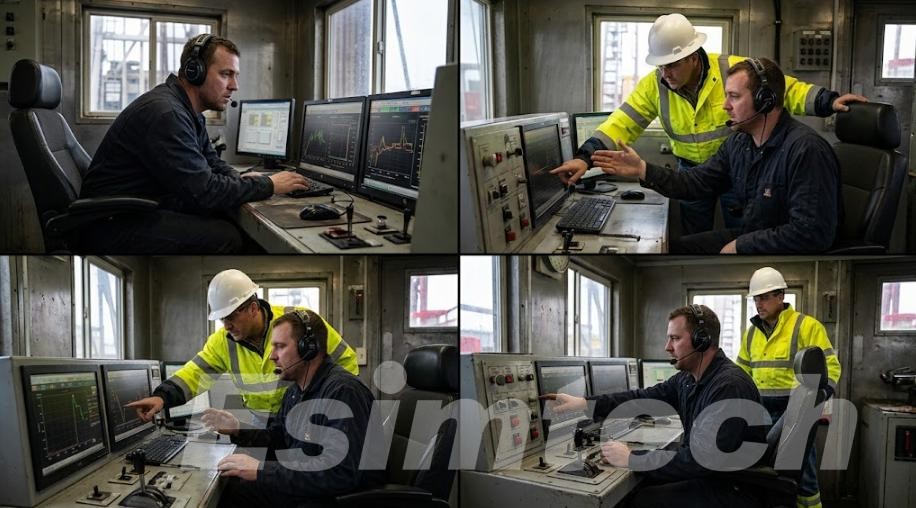
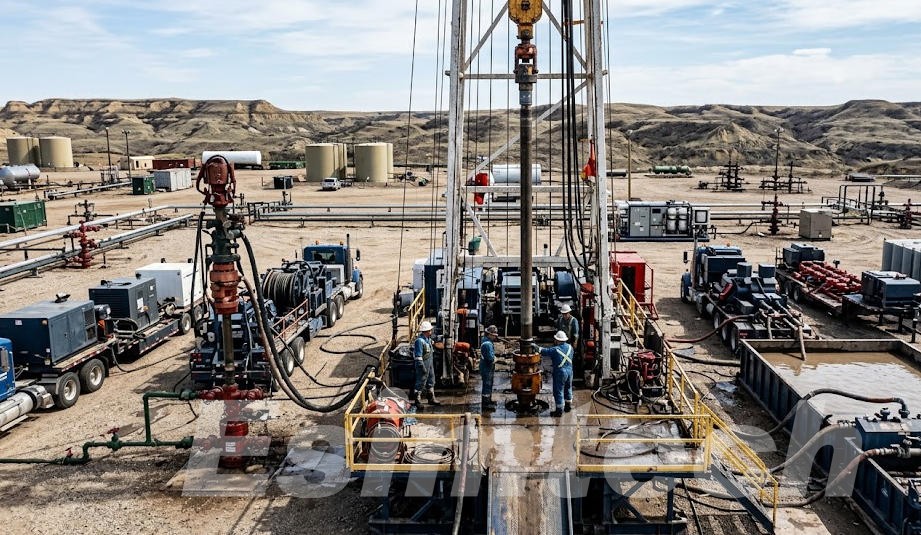
Simulation-based training has become sort of a necessary part of modern oil and gas operations, especially for drilling crews that operate in high-risk and technically complex settings. Rather than learning only on live rigs, which are expensive, slow-moving, and can be hazardous, oil drilling crews now practice in very realistic virtual spaces through simulation-based training. Those spaces mirror actual drilling situations, equipment behavior and emergency scenarios.
What Simulation-based Training Means in Oil Drilling
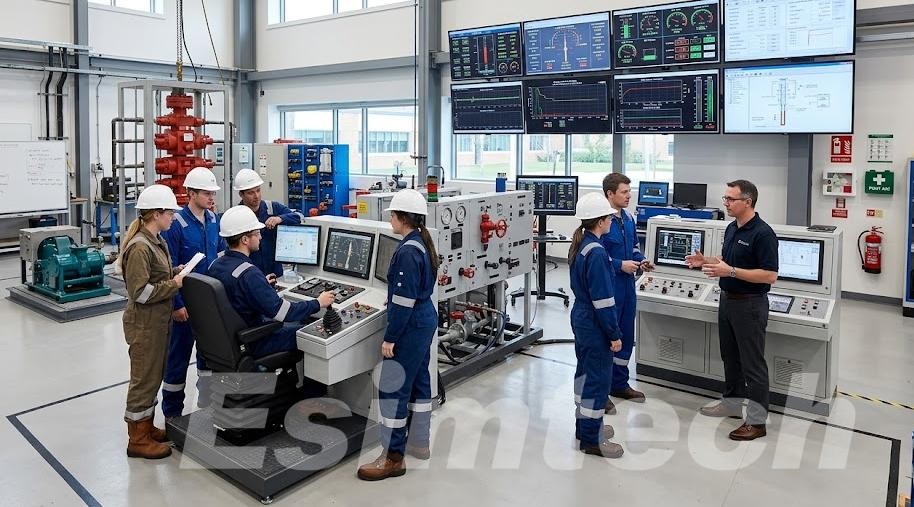
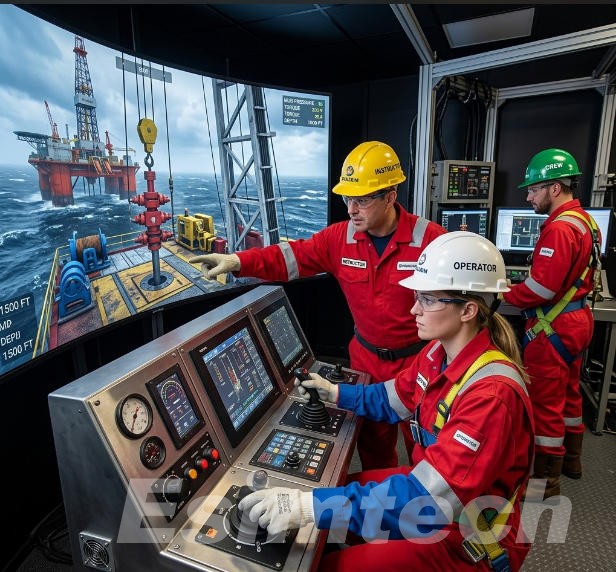
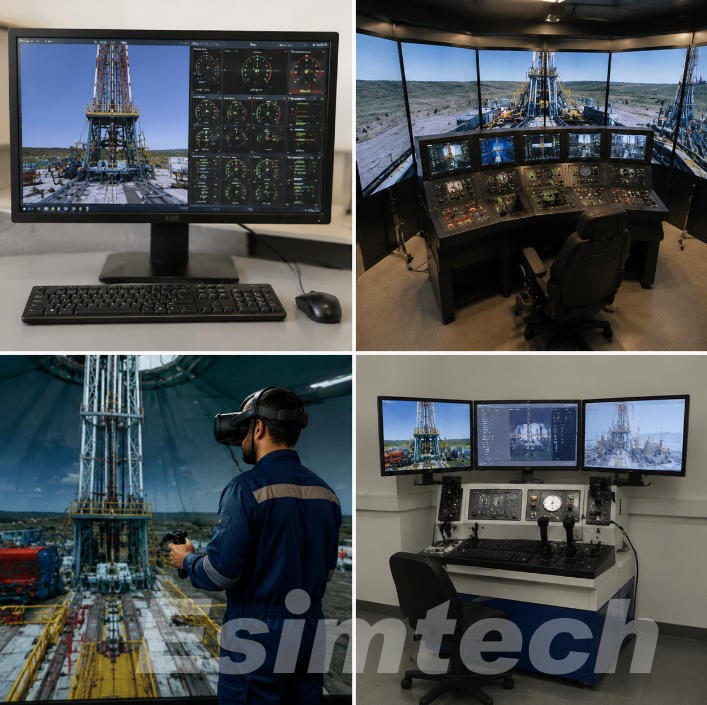
In oil drilling, simulation-based training uses digital models of drilling rigs, well systems, and subsurface conditions to replay the real-world procedures. The simulators can be anything from desktop setups to immersive training rigs with physical controls, 3D visuals, and feedback that updates in real time.
For oil drilling crews, this typically includes:
- Drilling control systems, including top drive, rotary tables, and mud pumps
- Well pressure and flow behavior
- Formation responses and unexpected geological conditions
- Emergency events such as kicks, blowouts, or equipment failures
The goal is to allow crews to practice decision-making and technical skills without exposing real wells or personnel to risk.
Why Simulation-based Training is Critical for Oil Drilling Operations
1. Bridging the Gap Between Theory and Real Field Conditions
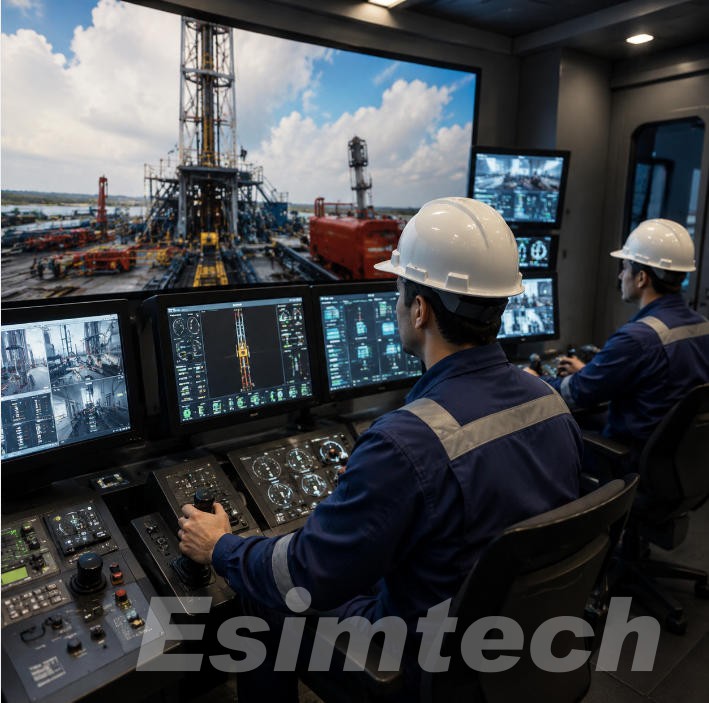
Oil drilling is one of the most technically demanding industrial activities, where theoretical knowledge alone is not enough. Simulation-based training creates a realistic operational environment where crews can apply engineering principles to dynamic drilling scenarios. Instead of simply learning procedures from manuals, trainees experience how well pressure, drilling speed, and formation behavior interact in real time. This connection between theory and practice significantly improves decision-making in actual field operations.
2. Enhancing Safety in High-Risk Environments
Drilling operations involve constant exposure to high pressure, heavy machinery, and unpredictable geological conditions. A small error in judgment can escalate into serious incidents such as kicks or blowouts. Simulation-based training allows crews to repeatedly encounter hazardous scenarios in a completely controlled environment. They can practice recognizing early warning signs and executing proper well control procedures without any real-world danger, dramatically reducing operational risk.
3. Reducing Operational Costs and Equipment Downtime
Training directly on drilling rigs is extremely expensive, not only because of equipment use but also due to production downtime. Simulators eliminate the need to occupy active rigs for training purposes. There is no consumption of drilling mud, no wear on mechanical systems, and no interruption of production schedules. Over time, this leads to substantial cost savings while still maintaining high training standards.
4. Improving Crew Coordination and Communication
Drilling is a team-based operation where coordination between drillers, assistants, mud engineers, and supervisors is essential. Simulation environments replicate this teamwork structure, requiring participants to communicate effectively under pressure, even when things feel fast. When crews practice coordinated reactions to simulated drilling events, they end up building stronger communication routines that transfer straight into real operations, where clear, timely messages can reduce the chance of accidents.
5. Building Competence Through Repetition of Critical Scenarios
Some drilling emergencies are uncommon in real life, which makes it harder for a crew to gain hands-on experience with them. Simulation fixes this by enabling repeated exposure to high-risk scenarios such as pressure surges, equipment failure, or loss of circulation. With each run through, the crew improves instinctive responses and reaction speed, so if a real incident occurs, the team can respond quickly and accurately.
6. Enabling Safe Training for Complex and Extreme Conditions
Many drilling operations now take place in deepwater, high-pressure, and geologically complex environments. These conditions are difficult and sometimes impossible to safely replicate in real-world training. Simulation-based systems allow crews to experience these extreme environments virtually, preparing them for situations they are likely to encounter in advanced drilling projects.
7. Accelerating Skill Development for New Personnel
New engineers and technicians often require years of field exposure to become fully competent. Simulation-based training shortens this learning curve by exposing them early to realistic operational scenarios. This accelerates their understanding of drilling systems and helps them transition more quickly into productive field roles.
The Workflow of Simulation-based Training for Oil Drilling Crews
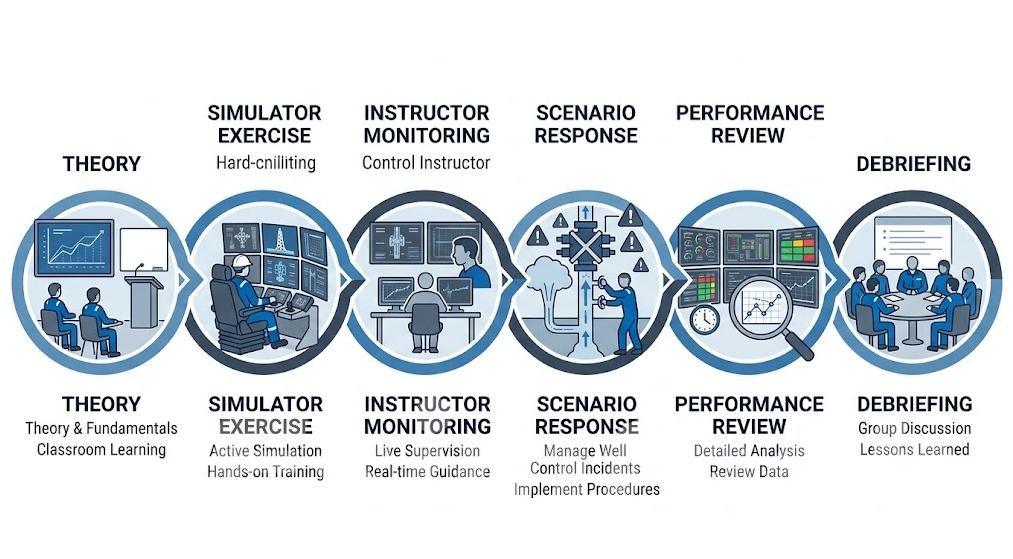
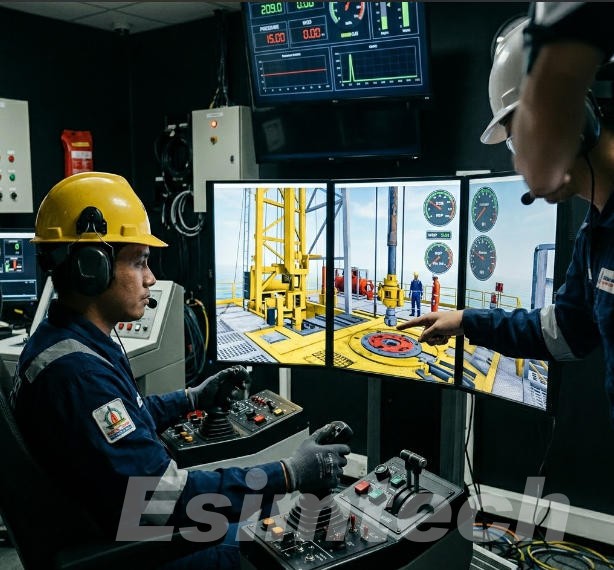
Simulation-based training in oil drilling is not merely a random practice exercise but a meticulously crafted process that closely replicates real-life rig operations. The procedure is designed to guide trainees through preparation, execution, assessment, and enhancement in a continuous cycle. Each phase aims to bolster technical expertise, decision-making skills, and team collaboration within a controlled and repeatable setting.
1. Scenario Design and Training Preparation
The process starts with creating a drilling scenario that mirrors authentic operational conditions. Trainers set parameters such as well depth, geological layers, mud characteristics, and equipment configuration. These inputs determine how the simulated well behaves during practice. Sophisticated systems might also integrate historical field information or digital twin models to enhance realism. At this point, the learning goals are established, ensuring the simulation targets particular skills like well control, equipment operation, or emergency management.
2. System Setup and Role Assignment
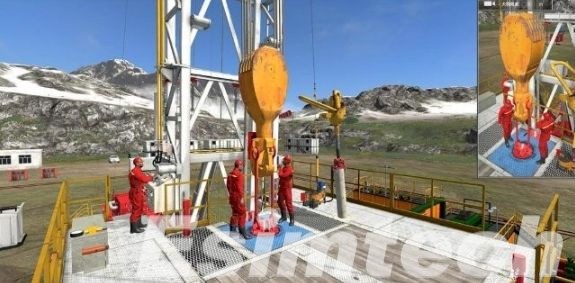
After scenario setup, the simulation environment is activated. Control systems, monitoring panels, and drilling interfaces are turned on to emulate an actual rig setting. Trainees receive roles reflecting real job duties, such as driller, assistant driller, or mud engineer. This role-specific structure is crucial as it recreates the communication hierarchy and coordination seen on real drilling sites.
3. Immersive Operational Execution
Following the setup, the session proceeds to a live simulation. Trainees handle drilling equipment using realistic controls while the simulated environment responds dynamically to each action. Modifying drilling speed, pump pressure, or fluid circulation immediately impacts downhole conditions. This phase tests theoretical knowledge through practical application, demanding constant observation of pressure, torque, and fluid behavior.
4. Introduction of Dynamic Events and Challenges
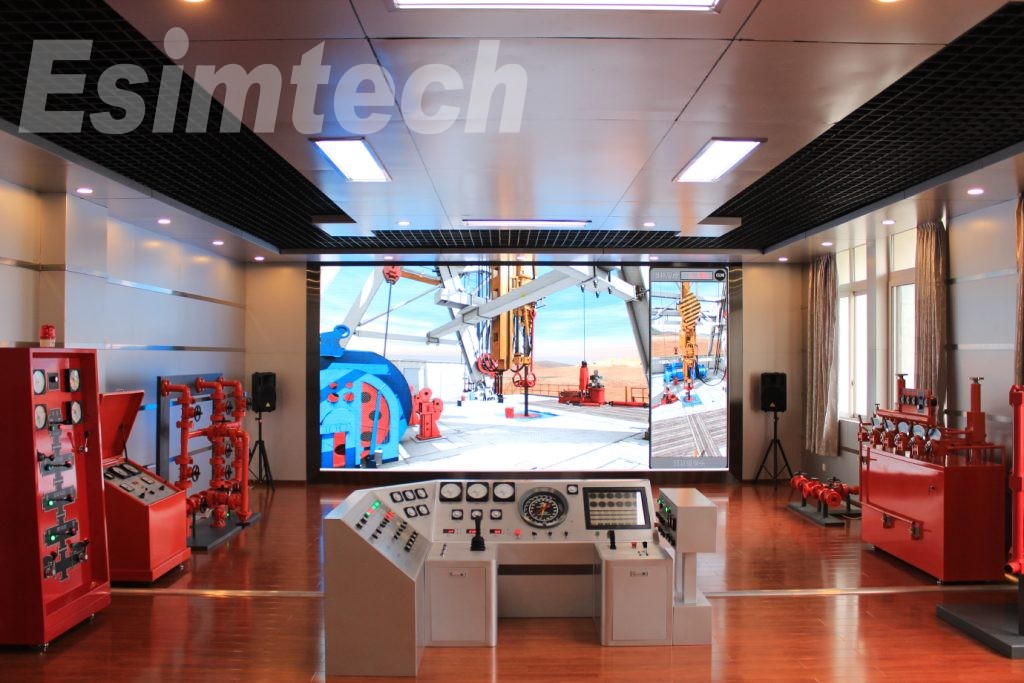
To simulate the unpredictability of real drilling, controlled disruptions are introduced during operation. These might include unexpected formation pressure shifts, equipment failures, or circulation losses. The purpose is not to overwhelm but to assess how trainees detect early warning signs and react under stress. Decision-making speed, precision, and teamwork become essential during this stage.
5. Real-Time Monitoring and Instructor Intervention
Throughout the simulation, instructors observe performance via integrated dashboards that show system status and trainee actions. They can watch how crews manage changing conditions and, if required, modify scenario difficulty in real time. This ensures the training stays focused on learning objectives while preserving operational authenticity.
6. Post-Scenario Evaluation and Performance Review
When the simulation concludes, the process moves to review. The system produces detailed performance metrics, such as reaction times, procedural accuracy, communication effectiveness, and decision results. Instructors discuss this feedback with trainees to pinpoint strengths and areas for improvement. This phase is vital for converting experience into measurable knowledge.
7. Feedback Integration and Skill Refinement
The final phase emphasizes advancement. Based on evaluation findings, training scenarios may be repeated with adjusted complexity or specific challenges. Trainees refine their skills through repetition and corrective feedback. Over time, this cycle fosters consistency, confidence, and operational discipline.
Types of Drilling Simulators
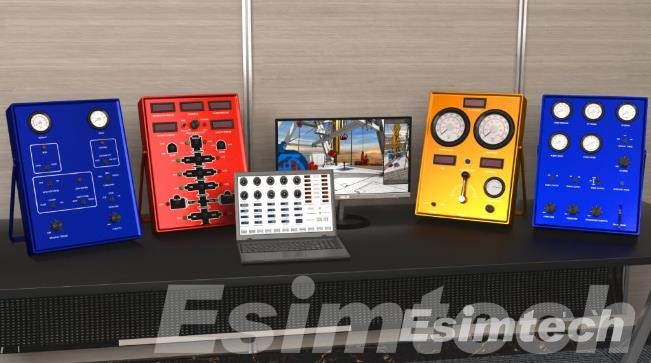
Depending on training needs, different types of drilling simulators are used.
| Type | Description | Training Level | Key Features | Common Use |
| Desktop Drilling Simulator | Software-based simulation running on a PC or laptop | Basic | 2D/3D interfaces, drilling parameter settings, scenario exercises | Introductory training, academic learning, fundamentals of drilling |
| Well Control Simulator | Focused system for simulating pressure control and well control events | Intermediate to Advanced | Kick detection, blowout prevention, pressure monitoring and response scenarios | Well control certification, safety-critical training |
| Cyber Chair Simulator | Operator workstation connected to simulated rig control systems | Intermediate | Real-time drilling controls, digital rig interface, control room environment | Drilling operator and control room training |
| VR Drilling Simulator | Immersive virtual reality-based drilling environment | Basic to Advanced | VR headset, interactive 3D rig environments, immersive scenarios | Safety drills, procedural training, hazard awareness |
| Full-Scale Drilling Simulator | Physical rig replica with real control systems and instrumentation | Advanced | Realistic rig floor, full drilling controls, integrated monitoring systems | Professional rig crew training and offshore readiness |
| Motion-Based Simulator | Simulator platform with motion and vibration feedback systems | Advanced | Hydraulic or electric motion platforms, physical response simulation | Offshore operations, high-risk environment training |
| AR Drilling Simulator | An augmented reality system overlaying digital information onto real environments | Basic to Intermediate | AR devices, real-time data visualization, guided procedures | Field support, maintenance training, equipment familiarization |
| Hybrid Simulator | Combination of physical equipment and digital simulation systems | Intermediate to Advanced | Integrated real and virtual systems, combined control environments | Multi-skill training programs and advanced operational practice |
The Integration of Simulation-based Training with Modern Digital Technologies
Simulation-based training is deeply integrated with modern digital technologies that enhance realism, responsiveness, and data intelligence. This evolution is converting simulators into interconnected, adaptive platforms that closely resemble actual drilling operations and adapt continuously to field conditions.
1. Digital Twins
A major breakthrough involves the adoption of digital twin technology. A digital twin is a virtual replica of an actual drilling rig or well system that continuously updates using real operational data. This enables training scenarios to mimic live rigs nearly perfectly. When parameters such as pressure, flow rate, or equipment status change in the field, the simulation can reflect those changes in real time, creating a highly accurate training experience.

2. Artificial Intelligence
Simulation-based training systems are increasingly influenced by artificial intelligence. AI can analyze trainee performance and automatically adjust scenario difficulty based on skill level. For instance, if a team consistently handles pressure anomalies correctly, the system might introduce more intricate or unpredictable challenges. This adaptive learning method guarantees that training stays demanding, pertinent, and efficient across various experience levels.
3. Cloud Computing and Remote Accessibility
Simulation training has greatly benefited from cloud-based platforms by extending its availability. Instead of needing physical simulator setups, training sessions can now be accessed remotely from multiple locations. This capability is particularly useful for global oil corporations with dispersed teams. Additionally, cloud integration offers centralized data storage, allowing instructors to monitor progress across several training centers and regions.
4. Virtual Reality and Immersive Training Environments
By immersing users in a 3D drilling setting, virtual reality technology elevates the sensory experience of simulation training. Trainees can explore virtual rigs, interact with tools, and gain spatial awareness akin to actual offshore or onshore operations. This level of immersion improves engagement and helps reinforce procedural memory more efficiently compared to conventional screen-based platforms.
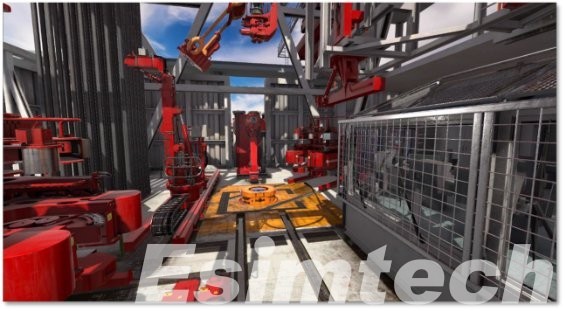
5. Internet of Things (IoT) and Equipment Connectivity
Devices equipped with IoT technology are increasingly employed to connect physical machinery and digital simulation systems. Sensors mounted on actual drilling equipment can transmit performance data into training platforms. This enables simulators to more precisely mimic real equipment behavior and assists trainees in grasping how minor variations in machine performance impact overall drilling operations.
Challenges in Simulation-based Training for Oil Drilling Crews
| Challenge | Description | Impact on Training Effectiveness | Typical Situation |
| High Initial Cost | Advanced simulators (full-scale, motion-based, VR systems) require significant investment | Limits access for smaller operators and training centers | Offshore training facilities and large oil companies |
| Limited Realism in Some Systems | Basic or desktop simulators may not fully replicate real rig conditions | Reduces transfer of skills to real-world drilling environments | Entry-level training programs |
| Technical Complexity | Advanced systems require skilled operators and maintenance teams | Can slow down training deployment and increase downtime | Full-scale and hybrid simulator setups |
| Rapid Technological Changes | Simulation software and hardware evolve quickly | Frequent upgrades required to stay current | Digital drilling environments and VR platforms |
| Lack of Human Stress Factors | Simulations may not fully replicate pressure, fatigue, and real emergency stress | Affects decision-making realism under real drilling conditions | Emergency response training |
| Data Accuracy Limitations | Simulated geological and drilling data may not fully match real field conditions | Can affect learning precision in well planning and execution | Well control and reservoir simulation exercises |
| Integration Issues | Difficulty integrating simulators with existing training systems or operational tools | Reduces workflow continuity in training programs | Multi-platform training environments |
| Instructor Dependency | Effectiveness depends heavily on trainer expertise | Inconsistent training quality across programs | Well control certification training |
| Limited Field Variability | Simulations may not cover all possible real-world drilling scenarios | Gaps in preparedness for rare or complex situations | Uncommon drilling conditions or emergencies |
| Maintenance Requirements | Advanced simulators require regular calibration and technical support | Increases operational downtime and cost | Motion-based and full-scale simulator systems |
Final Words
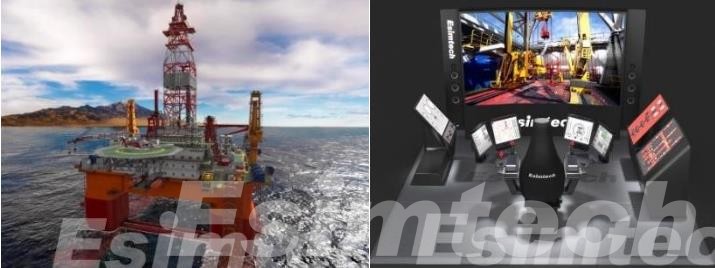
Simulation-based training has revolutionized how oil drilling crews prepare for real-world operations. By merging realistic environments, controlled risk exposure, and detailed performance feedback, it closes the gap between classroom learning and field experience. As drilling activities grow deeper, more automated, and increasingly complex, oil and gas simulation will remain a key tool in promoting safety, efficiency, and operational excellence throughout the oil and gas sector.