Top VR Training Applications in the Oil and Gas Industry
As the oil and gas industry increasingly demands safety, efficiency and standardization, traditional training methods (classroom lectures, video demonstrations, on-site shadowing) have become increasingly unable to meet the actual operational needs in high-risk and complex situations.
Against this backdrop, VR (virtual reality) training is becoming an important tool for oil and gas enterprises to enhance personnel capabilities and reduce accident risks.
So, what types of VR training content are suitable for the oil and gas industry? This article will systematically explore the typical application scenarios of VR in oil and gas training based on operation types, job requirements and practical application value.
Why VR Training Is Well Suited for the Oil and Gas Industry
The working environment in the oil and gas industry has distinct characteristics, which in turn determines the special requirements for training methods in this field.
High-risk operations, in the real environment, "do not allow for trial and error"
Well control failures, equipment maloperations or improper emergency responses often lead to serious consequences. Many critical operations have virtually no practice opportunities in the actual field.
High Equipment Costs and Limited On-Site Training Opportunities
Drilling equipment, well repair equipment and production systems are costly and consume a lot of resources. It is difficult for new employees to repeatedly practice on real equipment.
Emergency incidents occur frequently but have high consequences
Accidents such as blowouts, fires, and H₂S leaks are not common, but once they occur, personnel are required to have highly proficient emergency response capabilities.
The Need for Standardized Training Across Global Teams
Cross-regional projects and international teams are becoming increasingly common, and enterprises need unified and replicable training standards.
In summary, VR training, through its "repeatability, zero-risk, and quantifiable" features, precisely fills the gaps in the traditional training methods of the oil and gas industry.
Oil and Gas Operations Best Suited for VR Training
Well Control and Drilling Safety Training
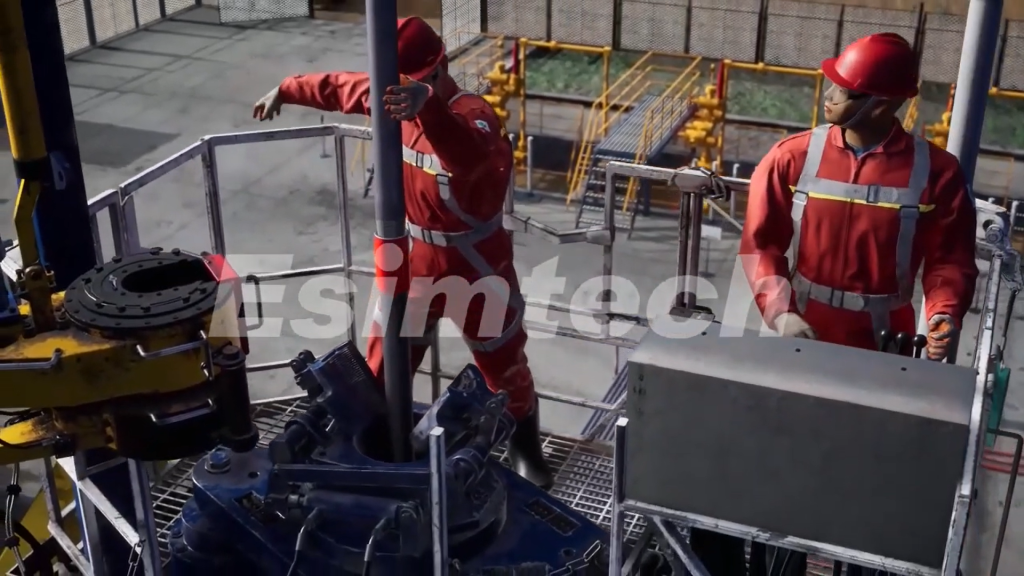
Well control has always been the core content of safety training in the oil and gas industry, and it is also one of the fields where VR applications are most mature.
VR can be used for training:
Early identification of kicks and judgment of parameter abnormalities
Selection of different well control methods' procedures
Operation of blowout preventers (BOP) and handling of abnormal situations
Well control decisions and communication under team collaboration
Through immersive scenarios, trainees can repeatedly practice key operations in a highly realistic well control environment without introducing any actual risks.
Equipment Operation and Standard Operating Procedures (SOPs)
Oil and gas operations are highly dependent on standard procedures, but relying solely on manuals and videos often fails to achieve true operational proficiency.
VR training is suitable for covering:
Drilling platform equipment start-up and shutdown procedures
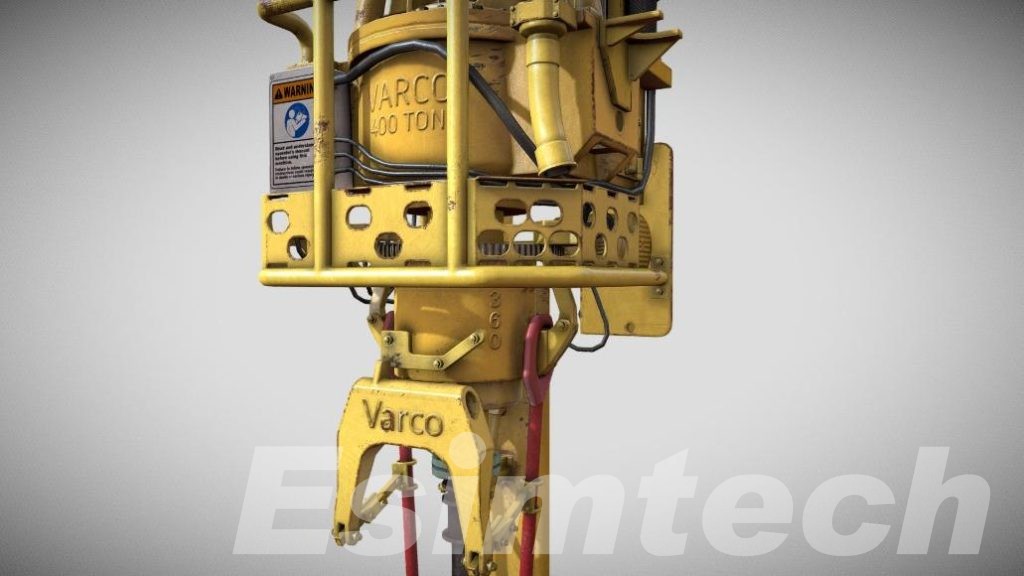
Operation of key equipment such as Top Drive and mud pumps
High-frequency operations such as pulling and setting drill strings
Potential risks caused by incorrect operation sequences
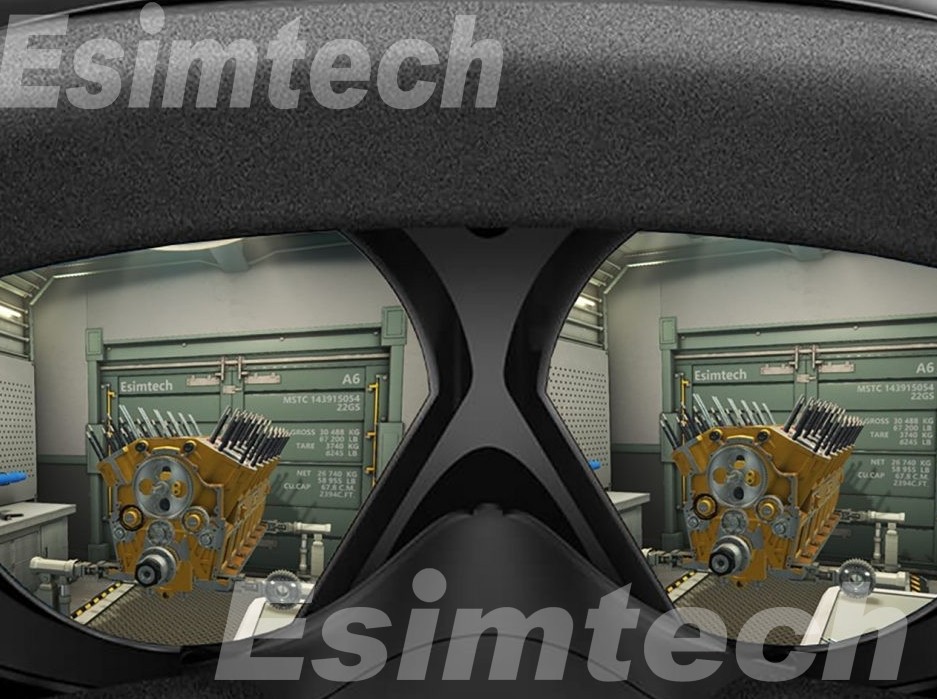
In this type of training, virtual assembly of equipment and operational cognition are particularly important. By using the Device Virtual Assembly Simulator, trainees can complete the virtual disassembly and assembly of equipment in the VR environment, intuitively understand the internal structure and component logic, thereby enhancing equipment maintenance and fault detection capabilities, especially suitable for new employees and cross-functional personnel.
Well Intervention and Workover Training
Well repair and pressure-holding operations have extremely high requirements for process proficiency and risk control, but on-site training is often limited by safety and cost.
VR can be applied in this field as follows:
Wireline / Coiled Tubing operation process drills
Training of key steps in pressure-holding operations
Operation selection under abnormal conditions
Process optimization to reduce non-productive time (NPT)
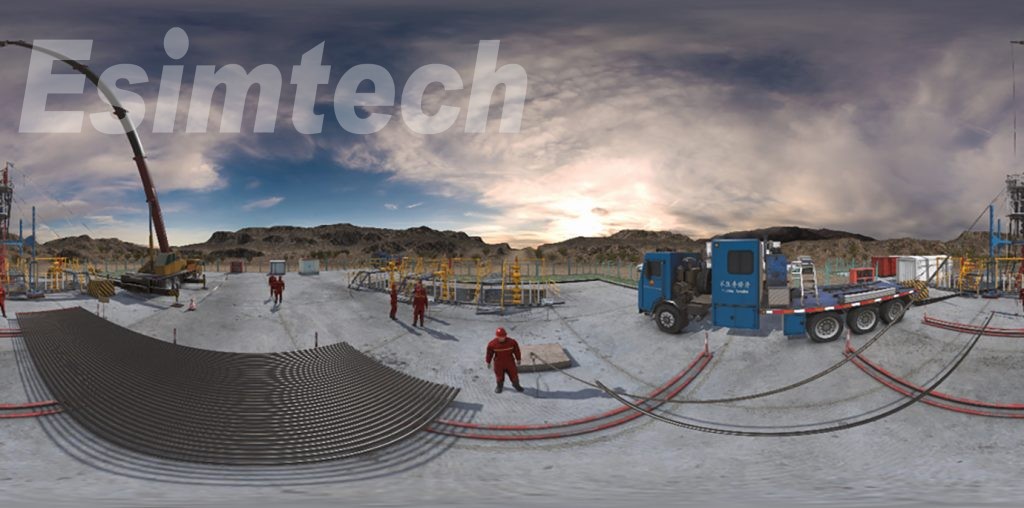
In higher-level applications, mixed reality (MR) technology is beginning to be introduced. The Snubbing Simulator (MR) combines real operation logic with virtual conditions, allowing trainees to practice the Snubbing operation process in a more realistic environment, effectively reducing the risk of incorrect operations during actual operations.
HSE and High-Risk Operations Training
HSE training is a mandatory requirement for oil and gas enterprises and is also an application direction with an extremely high input-output ratio of VR.
Typical VR training scenarios include:
Identification of fall risks during high-altitude work
Safety procedures for confined space work
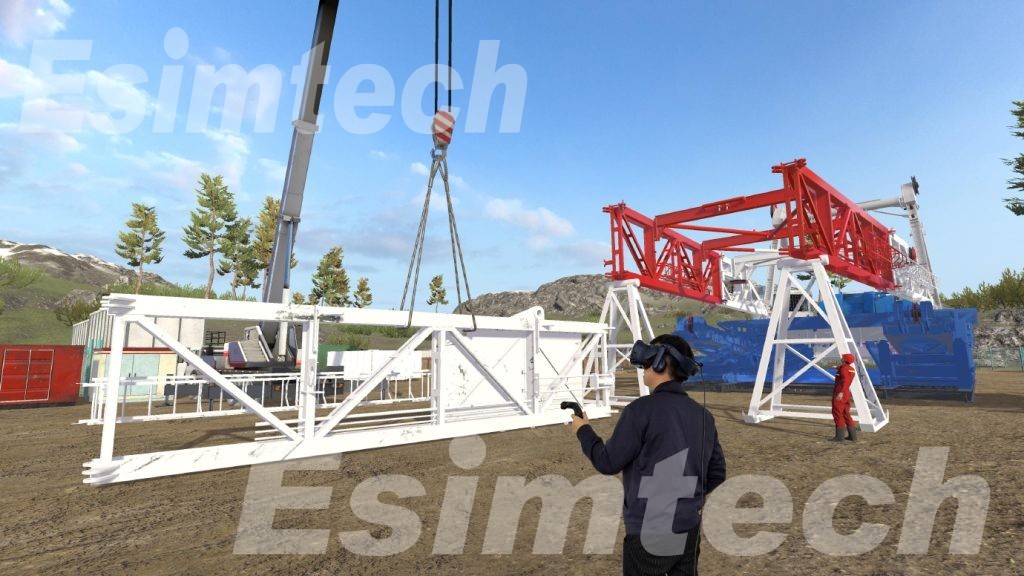
Judgment of personnel positioning during lifting operations
Hot work and energy isolation (LOTO)
VR can visualize the consequences of non-compliant operations, significantly enhancing personnel's risk awareness, rather than merely remaining at the level of "remembering the regulations".
Emergency Response and Evacuation Training
Emergency response is the most challenging part to master in traditional training, and VR has an irreplaceable advantage in this field.
VR can simulate:
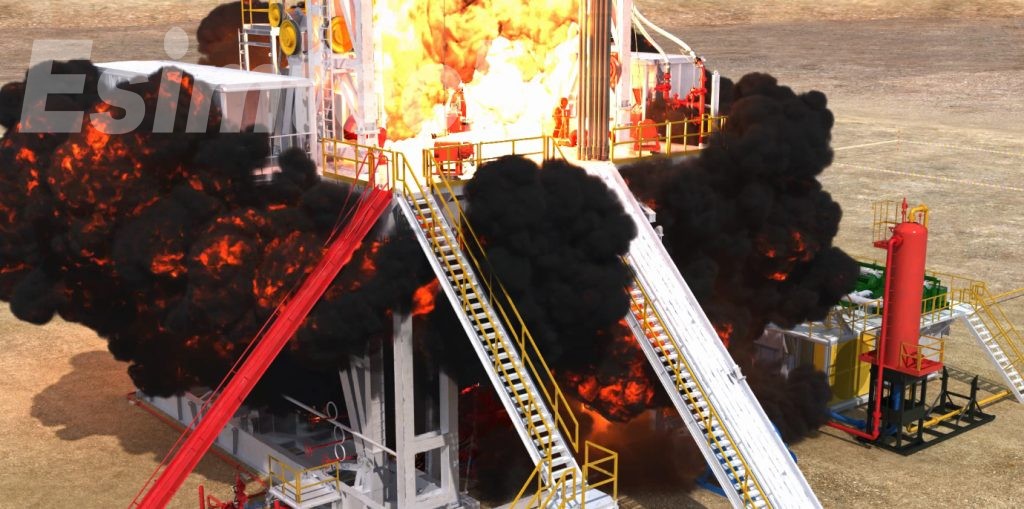
Well blowout, fire, explosion
H₂S leakage and diffusion process
Emergency evacuation of offshore platforms
Decision-making and action sequence under pressure environment
VR Emergency Training Simulator can be used in emergency accident scenarios at highly exposed oil and gas production sites, allowing trainees to repeatedly practice emergency response and evacuation procedures in a risk-free environment, helping them form muscle memory-like reactions in real accidents.
Oil and Gas Production Process Training
For new employees or those transitioning between different positions, understanding the entire oil and gas production process is already a significant challenge.
VR is suitable for:
Overall process cognition from the wellhead to the processing station
Operation logic of separation, compression, and dehydration systems
Understanding the meanings of parameter abnormalities and alarms
Through a three-dimensional and interactive approach, trainees can more quickly establish an overall cognitive framework of the production system.
Offshore Operations and Marine Safety Training
In offshore oil and gas projects, the working environment is more complex and higher demands are placed on personnel's judgment ability.
Common applications of VR include:
Basic understanding of DP (Dynamic Positioning) system
Decision-making during adverse sea conditions
Cooperative operation process between ships and platforms
Navigation and collision avoidance scenario training
VR Training Priorities: Where to Invest First
| Training types | Work risk level Extremely high | VR Compatibility | Target audience | Typical VR application scenarios |
| Well control and drilling safety training | Extremely high | ⭐⭐⭐⭐⭐ | Drilling personnel, well control team | Kick recognition, BOP operation, well control decision-making |
| Emergency incident and evacuation drills | Extremely high | ⭐⭐⭐⭐⭐ | All on-site personnel | Blowout, fire, H₂S leakage, emergency evacuation |
| Underground operations and well repair training | High | ⭐⭐⭐⭐ | Workover personnel, operation engineer | Snubbing, Wireline, pressurized operation |
| HSE high-risk operation training | High | ⭐⭐⭐⭐⭐ | On-site operators | High-altitude work, confined space, hoisting |
| Key equipment operation and SOP training | Medium-High | ⭐⭐⭐⭐ | New employees, operators | Equipment start-stop, standard process training |
| Equipment assembly and maintenance knowledge | Medium | ⭐⭐⭐⭐ | New employees, maintenance personnel | Virtual disassembly, structural cognition |
| Production system process knowledge | Medium | ⭐⭐⭐ | New employees, cross-functional personnel | Production process, alarm understanding |
| Management decision-making and accident review | Medium | ⭐⭐⭐ | Management, supervisory personnel | Accident review, command decision-making |
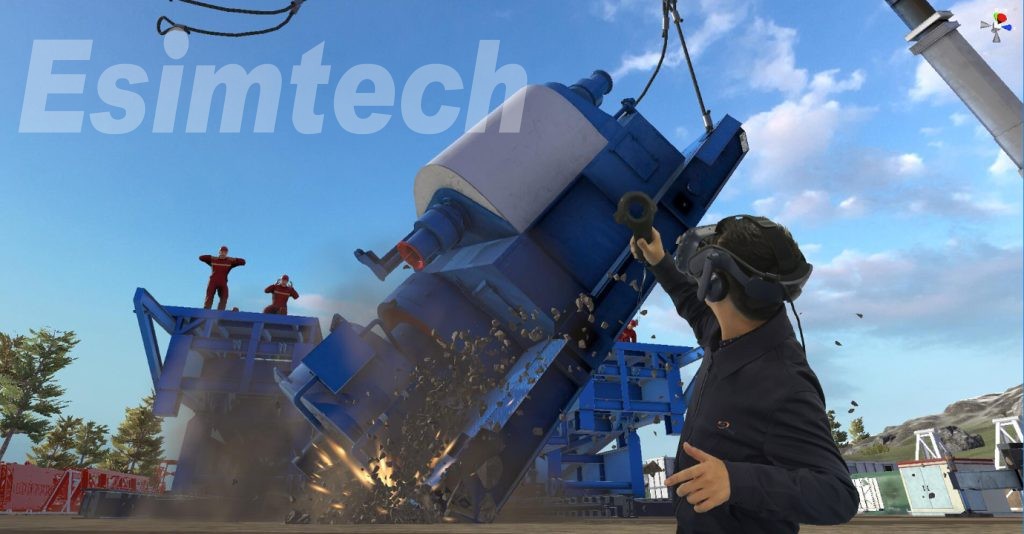
VR Training Focus by Role in Oil and Gas Operations
- Frontline Operators
Equipment operation proficiency
SOP execution accuracy
Emergency response speed - Engineers and Technical Personnel
Condition judgment and parameter analysis
Abnormal situation identification
Operation process optimization capability - Supervisors and Management
Accident review and decision-making path analysis
Team collaboration and command
Safety culture and risk awareness enhancement
Key Benefits of VR Training for Oil and Gas Companies
Reduce the incidence of accidents and compliance risks
Shorten the onboarding period for new employees
Minimize errors and non-productive time (NPT)
Unify global training standards
Evaluate training effectiveness through data-based methods
Conclusion
If a certain training scenario:
- cannot have errors but must be highly proficient
- is difficult to be repeatedly practiced in real environments
- has a consistently high training cost
then, it is almost certainly the most valuable application scenario of VR training.