Well Control Simulator Requirements for IWCF and IADC Training
An oil and gas well control training program requires a simulator, which acts beyond its role as a tool for its operation. Rather, it is an important part of the certification scheme for IWCF and IADC organizations. To be approved by their scheme, the training process has to be completed by a simulator operating up to their standards.
Essentially, the article focuses on the practical training needs and audit needs determined by IWCF and IADC for well control simulators.
Why IWCF and IADC Care About the Simulator
IWCF and IADC do not certify the simulators as products. Instead, they certify the training program, training centers, and overall processes. Just like that, the simulator is right in the middle of the three.
In terms of perspective, the simulator must be able to:
- Reproducing realistic well behavior
- Supporting standardised training outcomes
- Allowing fair and repeatable evaluation of the candidates.
If this is not possible within a simulator, then it is no longer safe for certification.
Well Control Scenarios the Simulator Must Handle
The minimum required is that the simulator fully supports the complete range of scenarios laid down for the well control level to be delivered. In general, this means more than a simple kick and shut-in for Drilling Well Control (Surface, Combined, Subsea).
The simulator should be capable of modelling various causes of kicks, well configurations, and operating errors. The pressure response should make sense: if the trainees perform an incorrect action, it should be clear that the well responds incorrectly.
IWCF and IADC auditors are very sensitive to whether scenarios appear "pre-scripted" or are truly interactive. If all exercises look identical, that raises an immediate red flag.
IWCF-Specific Simulator Expectations

IWCF requires standardized assessment procedures as an essential evaluation method. The Drilling Well Control (DWC) and Well Intervention Pressure Control (WIPC) programs need simulators that enable assessment of candidates according to IWCF learning outcomes.
The simulator needs to support the following requirements:
- Shut-in procedures aligned with IWCF well types
- Accurate pressure response during both surface and subsea scenarios
- Kill methods commonly referenced in IWCF syllabi
The training program needs to establish methods for conducting assessment tests that can be repeated by students. The IWCF organization requires training centers to demonstrate their assessment methods, which guarantee equal assessment conditions for all trainees. A simulator should allow instructors to run comparable scenarios with controlled variables, rather than relying on fully random behavior.
IADC-Specific Simulator Expectations
IADC requires operational skills assessment through its competency demonstration method. IADC-approved programs require assessment of all possible scenarios whereas they permit students to choose their testing methods.
IADC training requires simulators to provide:
- Multiple well designs and equipment configurations
- Realistic drill floor and choke panel interaction
- Team-based exercises, not just individual actions
IADC evaluates simulator performance through two main criteria which include its capacity to enable staff members to communicate and work together. Your simulator can accurately replicate technical functions but it cannot demonstrate interactive performance between different roles within a drilling environment.
Hardware vs Software: What Actually Matters?
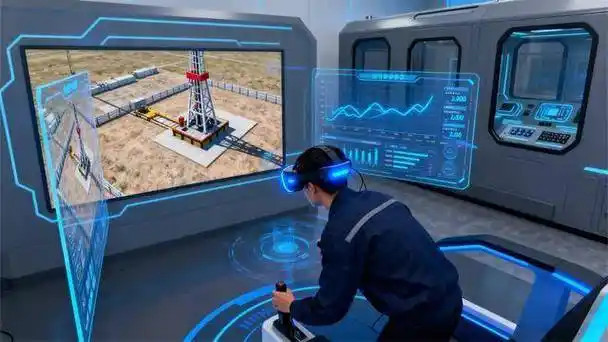
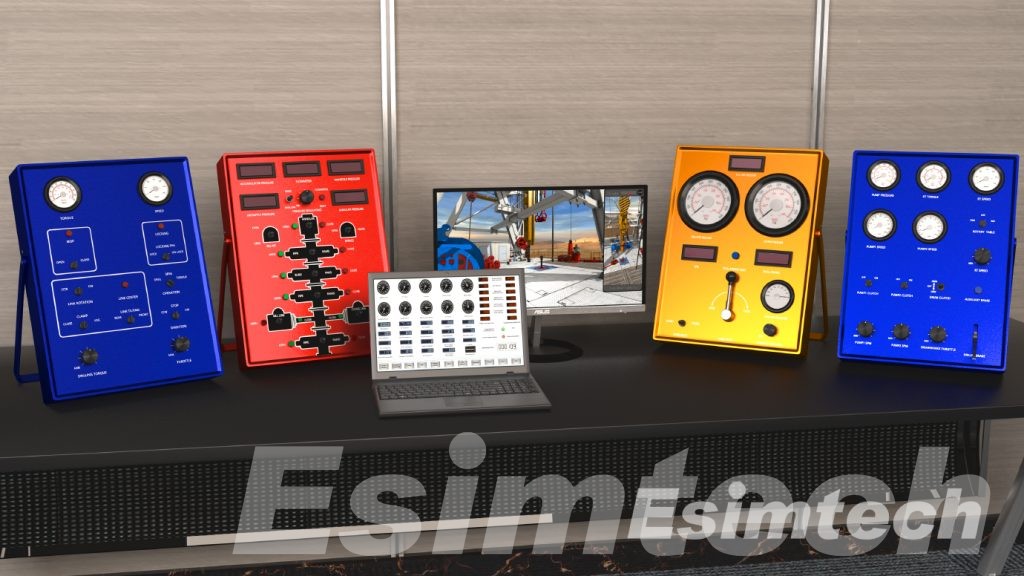
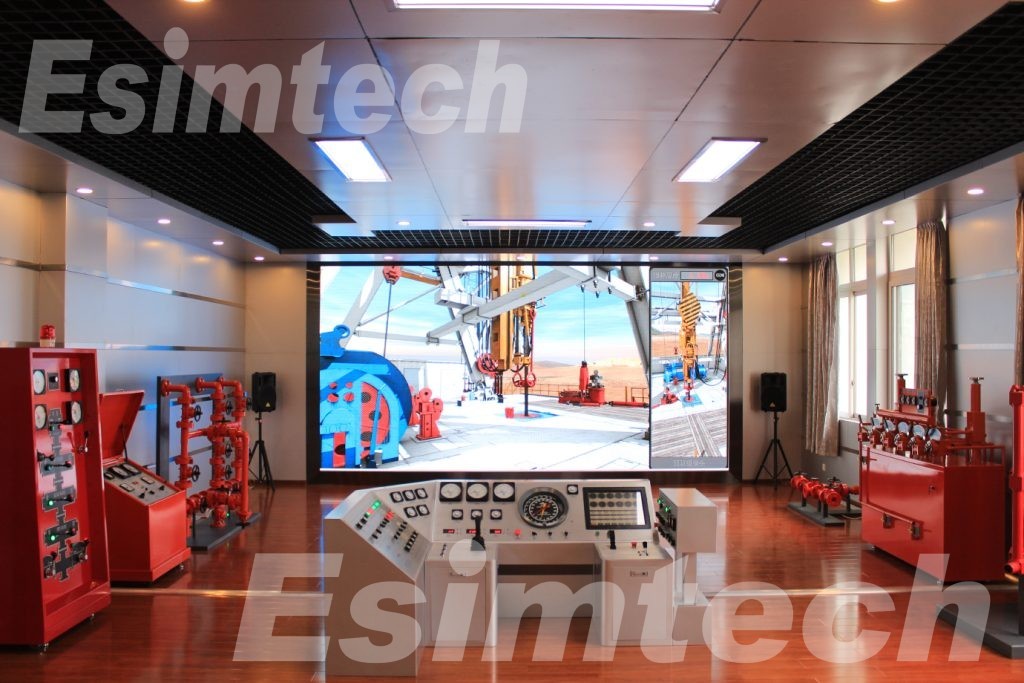
It is not required by IWCF or IADC to have a specific hardware format. Full-scale simulators, compact classrooms, and desktop-based systems can all be acceptable if they meet functional requirements.
What counts is not the size of screens or the number of physical panels but whether the trainees interact with the system in a manner that accurately reflects operations. Usually, a desktop simulator with good models and proper instructor tools is more acceptable than a large-scale simulator with limited scenario control.
The following table summarizes how various simulator setups are typically regarded by regulators:
| Simulator Type | Regulatory Acceptance | Key Condition |
| Full-scale simulator | High | Accurate modeling and instructor control |
| Compact / classroom simulator | High | Supports required scenarios and assessments |
| Desktop simulator | Medium to High | Must demonstrate realism and repeatability |
Data Recording and Assessment Capabilities
For the training of IWCF and IADC, data recording is not an option but a necessity. If the instructor is unable to explain the reasons for a student's passing or failing, then the simulator has only accomplished half of its task.
The simulator should at least record the key operations and responses during the drill. This includes the shut-off time, pressure changes, throttle valve adjustments, and the responses of the trainees when conditions change. The instructor should be able to review these operations after the drill by replaying or through clear trend data.
This is particularly important during the review process. Reviewers rarely ask to examine each data point, but they often inquire about the rationality of the assessment. Simulators that support objective review will make this communication much easier. Systems that rely solely on instructors' memory or handwritten notes usually raise questions.
Audit Preparation and Actual Compliance
Both IWCF and IADC do not independently evaluate simulator products; instead, they evaluate training systems, and the simulator is a key component of the training system.
From a practical perspective, this means that the simulator must support the approved teaching syllabus. The instructors should be able to demonstrate typical well control scenarios as required and explain how these scenarios align with the course objectives.
Documentation also matters more than many expect. Clearly describing the functions of the simulator, the supported scenarios, and the evaluation methods helps to shorten the review time and avoid misunderstandings. Even if the simulator itself is technically feasible, if the documentation of the simulator used by the training center is incomplete, difficulties will often arise.
The requirements of IWCF and IADC for the simulator are not based on having the largest or most complex system, but rather on whether the simulator can support real decision-making, fair assessment, and training that meets the auditing requirements.
If the simulator can correctly respond to the trainees' operations, allowing the instructors to objectively evaluate their performance, and if it can clearly explain during the review process, then it usually meets the requirements. In the end, the regulatory agencies are more concerned about whether the simulator can help cultivate personnel who are competent and confident under pressure, rather than the simulator itself.