The Role of Resistivity Logging in Oil and Gas Exploration

Written By: Computer Science Professor
Deeply rooted in the R&D of simulators for the oil and gas industry, committed to bringing safety to every oil worker.
Resistivity logging is critical in oil and gas exploration, as it gives helpful clues about what’s going on underground and what fluids may be sitting there. It’s also one of the most commonly used well logging techniques, so geologists and petroleum engineers can use it to spot likely hydrocarbon reservoirs, judge formation properties, and then end up making better drilling or production decisions.
Understanding the Basics of Resistivity Logging
Okay, so the basics part, resistivity logging leans on the idea that different geological materials have different abilities when it comes to carrying an electrical current. Most rock-making minerals, like sandstone and limestone, are usually weak conductors, not really great at conducting electricity. But the fluids inside their pore spaces really affect the electrical behavior.
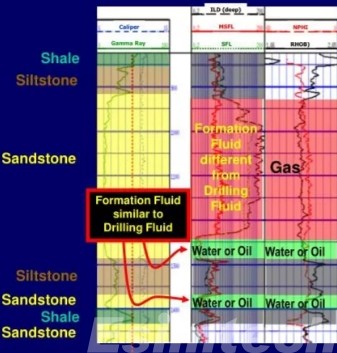
For example, formation water that has dissolved salts will conduct electricity fairly well, so it typically shows up as lower resistivity readings. Meanwhile, hydrocarbons such as oil and natural gas are poor at conducting current, so formations that contain hydrocarbons tend to show higher resistivity responses.
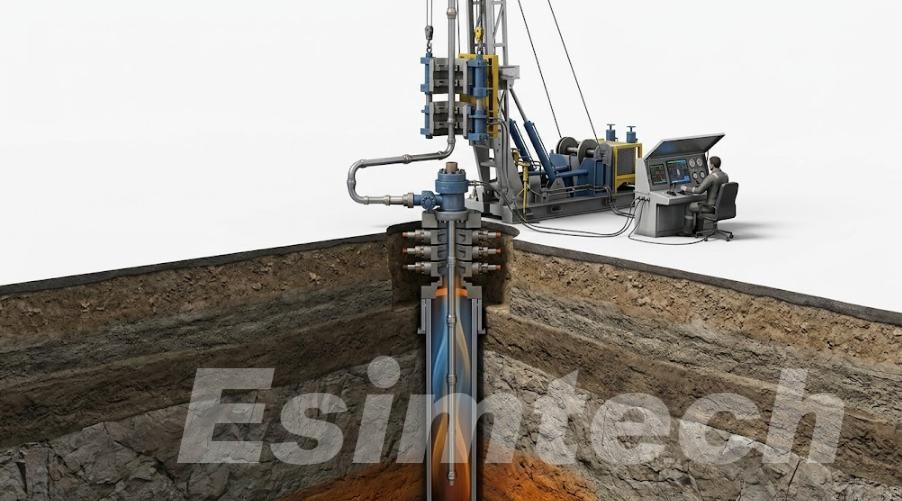
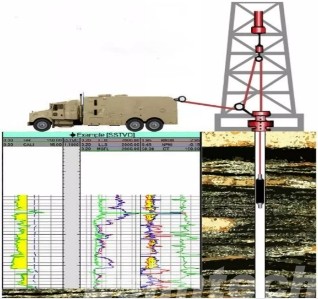
During the logging run, specialized instruments are lowered into the wellbore. They transmit electrical currents or electromagnetic signals into the nearby formations. After that, the recorded signals get processed, and the final outcome is formation resistivity, which then gives a pretty direct window into reservoir traits, and it helps people interpret what they’re working with, even if the situation is complicated.
Types of Resistivity Logging Tools
There are several types of resistivity logging tools used in the oil and gas industry, each suited to different formation characteristics and drilling environments.
| Type of Resistivity Logging Tool | Working Principle | Main Features |
| Laterolog | Use focused electrical currents injected into the formation through electrodes to measure formation resistivity while reducing borehole effects. | Provides accurate deep resistivity measurements; suitable for conductive drilling fluids; effective in high-salinity environments. |
| Induction Logging | Generate electromagnetic fields that induce currents in the formation; the response is used to calculate conductivity and resistivity. | Works well in non-conductive drilling fluids; provides multiple investigation depths; useful for analyzing invasion effects. |
| Micro-Resistivity Logging | Measure electrical resistivity very close to the borehole wall using small-scale electrodes. | High-resolution measurements detect thin beds, fractures, and near-wellbore changes. |
| Array Resistivity | Use multiple electrode configurations to obtain resistivity measurements at different depths of investigation. | Provides shallow, medium, and deep resistivity data; improves formation interpretation accuracy. |
| Imaging Resistivity | Use dense electrode arrays to create high-resolution images of formation resistivity variations around the borehole. | Produces electrical borehole images; identifies geological structures and small-scale features. |
| Logging While Drilling (LWD) | Measure formation resistivity in real time while drilling using electromagnetic or propagation resistivity technology. | Provides real-time formation data; supports geosteering; reduces drilling uncertainty. |
| Propagation Resistivity | Transmit electromagnetic waves through the formation and analyze signal attenuation and phase changes. | High-resolution measurements during drilling; effective in deep and challenging reservoirs. |
| Dual Laterolog | Use two focused resistivity measurements with different depths of investigation. | Separates near-wellbore and deep formation resistivity; improves fluid saturation evaluation. |
| Electromagnetic Resistivity | Use electromagnetic energy to evaluate formation conductivity without direct electrical contact. | Suitable for difficult borehole conditions; supports real-time measurements. |
Key Functions of Resistivity Logging for Oil and Gas Exploration
Resistivity logging is widely used in conventional reservoirs, unconventional resources, offshore drilling, and complicated geological settings. It can deliver usable formation insights which helps trim exploration uncertainty, tune the drilling plan, and in the end increase hydrocarbon recovery.
1. Identifying Hydrocarbon-Bearing Formations
One major role of resistivity logging is spotting strata that might contain oil and natural gas. In most cases, hydrocarbon fluids have low electrical conductivity when you compare them with saline formation water. Because of that, oil and gas intervals tend to exhibit higher resistivity values, while formations filled with water usually give lower resistivity responses.
During exploration drilling, the resistivity logging tools measure electrical responses coming from the surrounding rocks and the fluids around them, and engineers then interpret those signals, to find likely reservoir intervals and also separate productive horizons from places that do not really produce. When this resistivity information is paired with other well log data, it gives a sound basis for judging whether a formation could contain commercial hydrocarbon potential.
2. Evaluating Formation Fluid Properties
Resistivity logging also helps in revealing what kinds of fluids exist within underground formations. Electrical conductivity depends a lot on those fluid properties, so resistivity readings can support the distinction between oil-rich, gas-bearing, and water-saturated zones.
By examining resistivity swings, engineers can infer how much water saturation and how much hydrocarbon saturation sit in the reservoir. These assessments help when they are trying to judge how much recoverable oil and gas might actually be available, and then estimate the economic value of the whole reservoir.
When fluid evaluation is done well, operators can decide more confidently about well completion choices, production methods, and the overall field development approach.
3. Determining Water Saturation and Hydrocarbon Volume
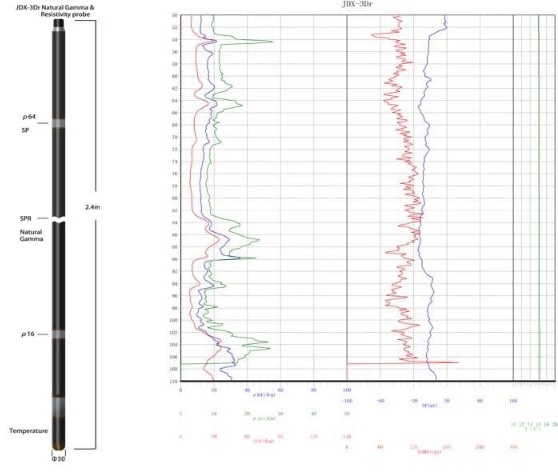
One of the key jobs of resistivity logging is to approximate the share of water and hydrocarbons occupying the pore spaces inside reservoir rocks. The water, which carries dissolved minerals, tends to conduct electrical current, whereas hydrocarbons resist the electrical flow. Because of this contrast, resistivity measurements become useful inputs for saturation computations.
Petroleum engineers use resistivity measurements together with porosity data and petrophysical models to figure out the hydrocarbon percentage in a formation. These evaluations matter a lot for estimating reserves, picking drilling targets, and anticipating future production performance, in general.
Good saturation analysis also blocks spending on low-productive areas, and it helps push for higher resource recovery. When the numbers are right, decisions feel steadier and less hopeful.
4. Supporting Reservoir Characterization
Resistivity logging gives fairly specific clues about reservoir properties, so it becomes a key part of reservoir characterization. It supports the recognition of changes in rock behavior, geologic boundaries, natural fractures and fluid contacts, all inside one formation.
With high-resolution resistivity tools, engineers can catch thin layers and awkward geological structures that might steer fluid movement and production behavior. This kind of evidence helps them form more accurate reservoir models. It also improves understanding of underground structures, even where the setting looks complicated.
Better reservoir characterization supports enhanced oil recovery planning, production optimization, and longer-term reservoir management.
5. Improving Drilling and Well Placement Decisions
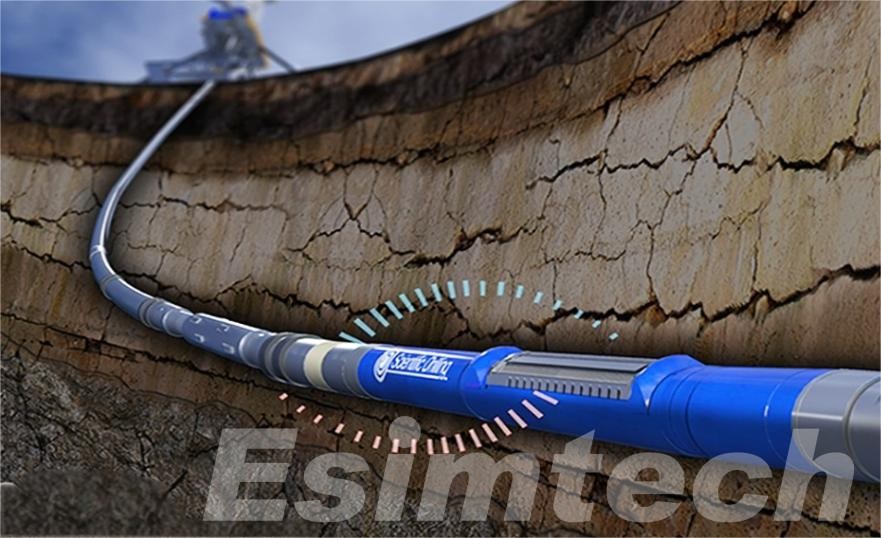
Resistivity logging is being used more during drilling work through logging-while-drilling (LWD) technology. With LWD resistivity tools, operators can get formation measurements in real time while the well is still being drilled. That means immediate adjustments can be made rather than waiting, which seems simple but it matters.
In horizontal or directional wells, where well trajectory control is the whole point, accurate placement is critical to maximize contact with productive reservoir zones. Real-time resistivity data lets drilling teams recognize formation boundaries, keep away from unwanted water zones, and hold the path inside the target intervals.
This capability is especially helpful in complicated reservoirs, where even slight drilling direction changes can alter production results.
6. Detecting Formation Boundaries and Geological Changes
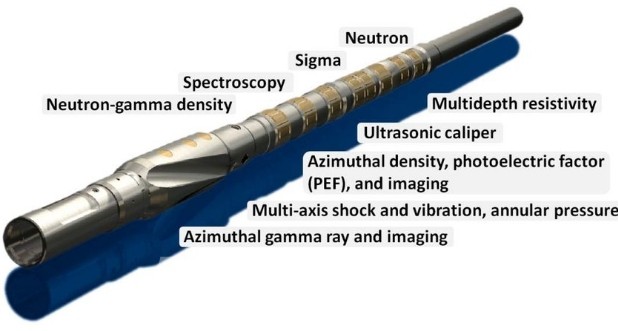
Another very important job of resistivity logging is to notice changes in geologic formations. Different rock varieties, and the fluid situation in them, produce different resistivity patterns, so engineers can figure out where one layer ends and another begins, even if the boundary is subtle.
Resistivity measurements can reveal transitions between reservoir and non-reservoir rocks, oil-water contacts, gas-oil contacts, and other geological features. This information improves geological interpretation and supports more accurate exploration decisions.
In zones with more complex structure, like faulted reservoirs or fractured formations, resistivity logging gives essential context for understanding what is going on underground.
7. Evaluating Reservoir Quality and Productivity Potential
Resistivity logging plays a role in reservoir quality evaluation, mainly because it gives useful clues about how pore fluids are arranged and what the formation is like. When you see high resistivity values, and at the same time the porosity conditions look promising, that combination can point to intervals that are likely to hold producible hydrocarbons.
Engineers rely on resistivity measurements to judge if the reservoir has enough hydrocarbon saturation and whether the conditions are right for profitable commercial output. This kind of screening supports decisions on where to drill, while also helping to shape completion designs in a more confident way.
When reservoir quality assessment improves, resistivity logging tends to lower operational exposure and raise overall development efficiency.
8. Enhancing Exploration Efficiency and Reducing Risks
Exploration for oil and gas usually requires major capital and comes with real geological uncertainty. Resistivity logging helps reduce that uncertainty, because it offers direct understanding of subsurface structures before large-scale development kicks off.
Accurate resistivity data lets exploration teams make better calls about well locations, reservoir potential, and overall development plans. When operators spot promising zones earlier, they can cut down unnecessary drilling costs and raise the chances of successful exploration.
In offshore and deep-water projects, where drilling expenses are extremely high, resistivity logging gives especially strong support for decision-making.
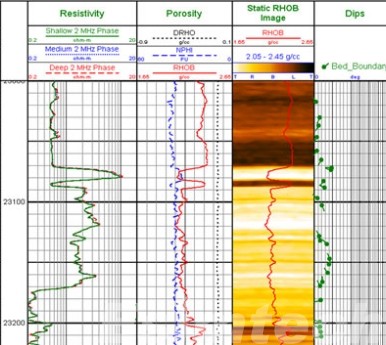
9. Integrating with Advanced Simulation Technologies
Modern resistivity logging systems are becoming increasingly integrated with simulation technologies to improve the speed and accuracy of resistivity interpretation.
| Simulation Technology | Integration with Resistivity Logging | Main Functions | Benefits for Oil and Gas Exploration |
| Reservoir Simulation | Resistivity logging data is incorporated into reservoir models to improve predictions of fluid distribution and reservoir behavior. | Uses resistivity-derived saturation, porosity, and formation properties to simulate oil, gas, and water movement. | Improves reservoir forecasting, production planning, and recovery optimization. |
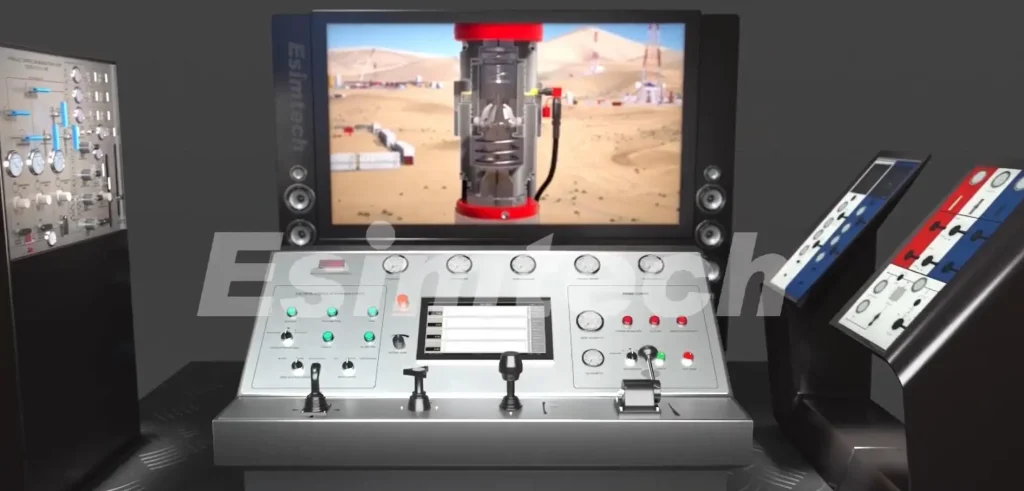
| Drilling Simulation | Real-time resistivity measurements are integrated into drilling simulation platforms to reproduce formation responses and drilling conditions. | Simulates wellbore placement, formation changes, and drilling scenarios based on resistivity data. | Enhances drilling training, reduces operational risks, and improves decision-making during complex wells. |
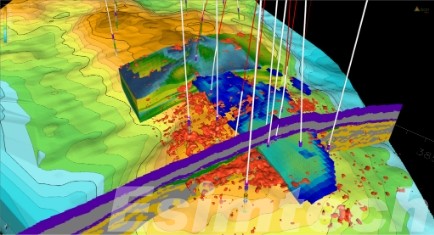
| Geological Modeling Simulation | Resistivity data is combined with geological simulation tools to create more accurate subsurface models. | Represents rock properties, stratigraphy, faults, and reservoir boundaries in three-dimensional models. | Provides better understanding of complex formations and improves exploration success. |
| Well Logging Simulation | Digital logging simulators use resistivity responses to model tool behavior and formation interactions. | Simulates different logging conditions, tool configurations, and measurement responses. | Helps optimize logging programs and improves interpretation accuracy. |
| Formation Evaluation Simulation | Resistivity measurements are integrated with petrophysical simulation software to evaluate reservoir quality. | Simulates relationships between resistivity, porosity, permeability, and fluid saturation. | Supports more accurate hydrocarbon identification and reserve estimation. |
| Digital Twin Technology | Real-time resistivity data is combined with digital twin platforms to create dynamic virtual representations of wells and reservoirs. | Continuously updates reservoir and drilling models using real-time field data. | Enables predictive analysis, faster decision-making, and improved operational efficiency. |
| AI and Machine Learning Simulation | Resistivity logging datasets are used to train intelligent models for automated interpretation and prediction. | Identifies patterns in large logging datasets and predicts reservoir characteristics. | Reduces interpretation time, improves accuracy, and supports automated exploration workflows. |
| Geosteering Simulation | Real-time LWD resistivity data is integrated with geosteering simulation systems to guide horizontal drilling paths. | Simulates formation boundaries and predicts optimal well trajectories. | Maximizes reservoir contact, avoids unwanted zones, and improves production potential. |
| Well Completion Simulation | Resistivity information is combined with completion models to optimize perforation and production strategies. | Evaluates productive intervals, fluid distribution, and completion designs. | Improves well performance and reduces completion risks. |
| Enhanced Oil Recovery (EOR) Simulation | Resistivity monitoring data is integrated with EOR models to track fluid movement during recovery operations. | Simulates water flooding, gas injection, and other recovery processes. | Helps optimize injection strategies and increases hydrocarbon recovery efficiency. |
Applications of Resistivity Logging in Different Exploration Environments
Resistivity logging is widely applied in various oil and gas exploration environments
| Exploration Environment | Applications of Resistivity Logging | Benefits |
| Conventional Oil and Gas Reservoirs | Used to identify hydrocarbon-bearing zones, evaluate formation properties, estimate water saturation, and determine reservoir boundaries in sandstone and carbonate formations. | Improves reservoir evaluation accuracy and helps identify productive intervals for drilling and completion. |
| Offshore Exploration | Applied in offshore wells to analyze complex formations, detect hydrocarbon zones, and provide reliable formation data during expensive drilling operations. | Reduces exploration uncertainty, supports safer drilling decisions, and improves the success rate of offshore projects. |
| Deepwater Reservoirs | Used to evaluate deep and complex geological structures, identify fluid contacts, and provide real-time formation information through advanced logging tools. | Helps operators manage high-cost deepwater operations and optimize well placement. |
| Unconventional Reservoirs | Applied in shale oil and gas formations to evaluate organic-rich layers, estimate hydrocarbon saturation, and support horizontal well planning. | Improves identification of productive zones and enhances recovery from complex resources. |
| Fractured Carbonate Reservoirs | Used to detect fractures, identify reservoir heterogeneity, and analyze fluid movement pathways within carbonate formations. | Provides a better understanding of reservoir connectivity and supports improved production strategies. |
| Horizontal and Directional Wells | Integrated with logging-while-drilling (LWD) systems to provide real-time resistivity measurements for geosteering and reservoir navigation. | Helps maintain the wellbore within productive zones and maximizes reservoir exposure. |
| Mature Oil Fields | Used for reservoir re-evaluation, remaining oil detection, and monitoring changes in fluid distribution during enhanced oil recovery operations. | Supports production optimization and extends the economic life of existing fields. |
| Complex Geological Formations | Applied to analyze formations with multiple rock types, thin layers, faults, and variable fluid conditions. | Improves geological interpretation and reduces uncertainty in challenging exploration areas. |
| Heavy Oil Reservoirs | Used to evaluate fluid distribution, identify oil-bearing intervals, and support reservoir characterization. | Helps optimize production methods and improve recovery planning. |
| Gas Reservoirs | Applied to distinguish gas-bearing zones from water-bearing formations and estimate gas saturation. | Supports accurate gas reserve evaluation and efficient development planning. |
Summary
Resistivity logging is a fundamental technology in oil and gas exploration, giving useful hints about formation properties, fluid distribution, and reservoir chances. By picking out hydrocarbon-bearing layers, assessing the rock intervals, aiding drilling operations, and improving the estimate of reserves, resistivity logging helps cut down exploration risks and boosts overall production output. It feels like you learn a lot from the resistive behavior of the ground, even if the details are a bit tricky at first.