How to Do Oil Rig Construction Well: Key Process and Technologies

Written By: Computer Science Professor
Deeply rooted in the R&D of simulators for the oil and gas industry, committed to bringing safety to every oil worker.
Oil rig construction is one of the most complex engineering projects in the whole energy industry. A successful oil rig needs careful planning, advanced engineering, strict quality control, efficient project management, and comprehensive safety measures. And whether it’s building an offshore platform or a land-based drilling rig, every single stage has to be carried out accurately, or else you risk structural reliability, operational efficiency, and long-term performance kinda going sideways.
Doing oil rig construction well isn’t only about throwing steel structures together and fitting drilling equipment. It takes a more systematic approach, sort of like an integrated process that blends modern technologies with skilled professionals and time-tested building practices, from the early design phase up to final commissioning.
Understanding Oil Rig Construction
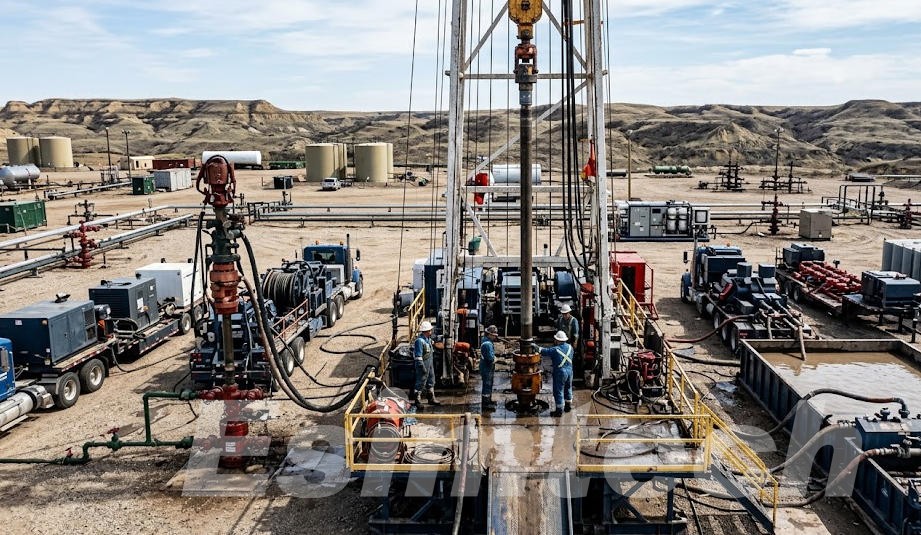
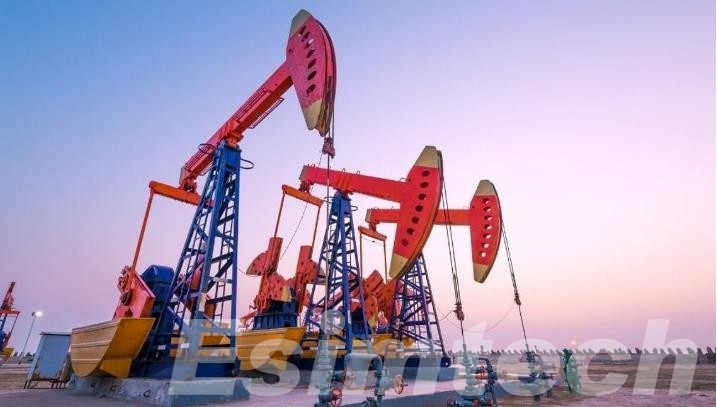
Oil rig construction is basically the full cycle, designing, manufacturing, assembling, installing, and then commissioning the drilling facilities that are used for oil and gas exploration and production. Depending on the actual place they will work in, oil rigs can be set up as land-based rigs or as offshore platforms, which is a bit more demanding.
For land rigs, the whole thing is usually built on prepared drilling sites , and the equipment is often modular, so it can be moved and pieced together fairly fast. Offshore rigs, on the other hand, need more complicated construction methods, because they have to endure rough marine conditions, like strong waves wind, corrosion, and even extreme water depths that can really complicate everything.
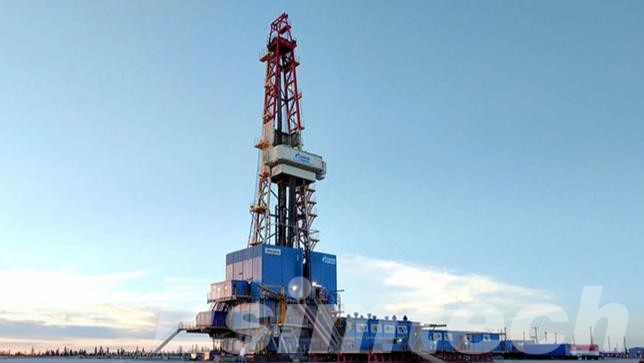
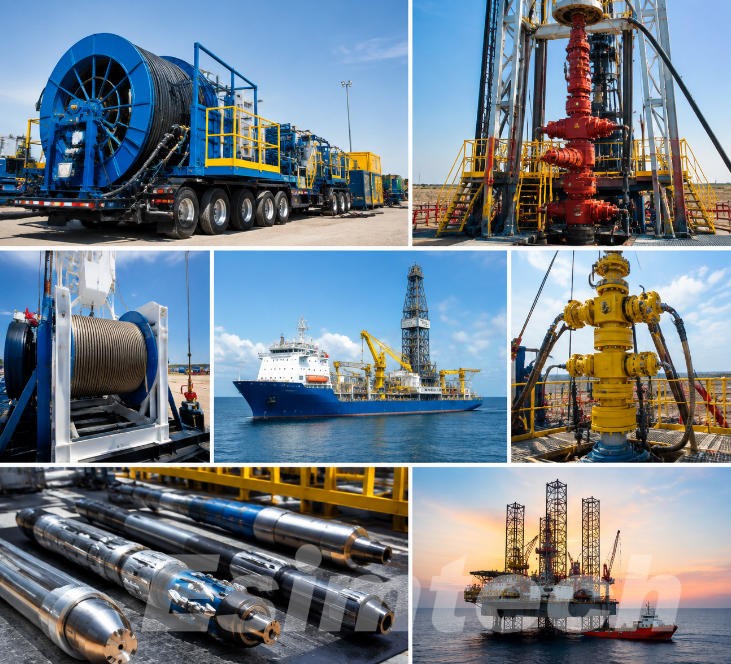
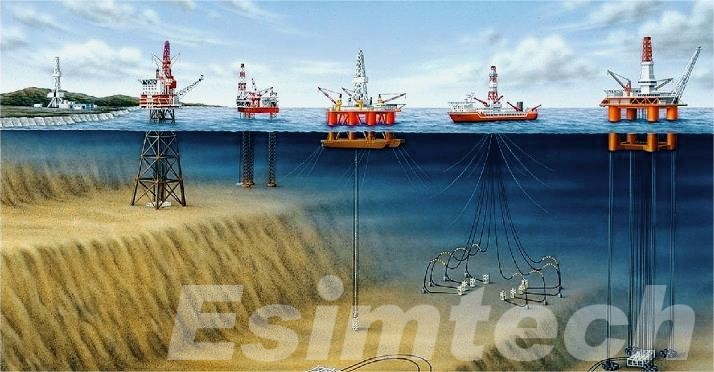
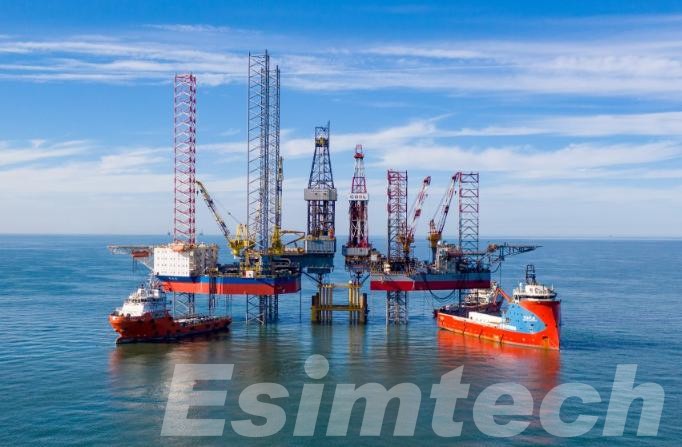
When we talk about offshore oil rig construction, it can include fixed platforms, jack-up rigs, semi-submersible rigs, drillships, and also floating production systems. Each one needs its own structural design and build approach, largely based on water depth, what the reservoir conditions look like, and what the operation is trying to achieve.
Key Process of Oil Rig Construction
Each stage of oil rig construction needs to be handled with care, to make sure the rig can stand up under tough operating conditions, and still provide safe and efficient oil and gas output.
1. Project Planning and Feasibility Study
The oil rig construction starts with broad planning and feasibility checking. Before any real work begins, engineers alongside project managers review the drilling location and the geological setup, also look at environmental considerations, production objectives, and the day-to-day operational needs.
If the rig is offshore, teams do site surveys to inspect seabed conditions, check water depth, map wave patterns, and confirm weather behavior. These studies help decide the rig type that fits best.
During this stage, the project teams also estimate construction expenses, work out schedules, identify possible risks, and set up safety as well as environmental protection plans. Proper planning helps reduce unexpected problems later in the construction phases, and makes sure that the rig design meets both technical and regulatory requirements, in practice.
2. Engineering Design and Structural Development
After finishing feasibility studies, engineers move into the detailed design step. This design work defines the whole structure, the equipment layout, and the operating systems of the oil rig.
Structural engineers build the core framework for the rig, including support structures, decks, towers, and foundations. For offshore platforms, the design has to take into account extreme forces driven by waves, wind, currents, plus marine corrosion. Advanced engineering software, computer-aided design (CAD), and simulation tools are commonly used to evaluate structural strength and steadiness, all at once.
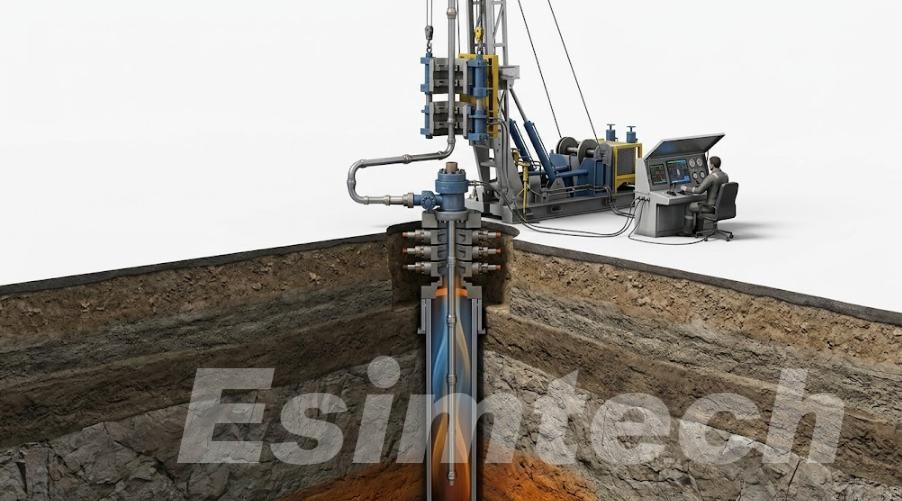
The design for drilling systems is another important bit of this stage too. Engineers end up planning the setup for key equipment like the derrick, the drill floor, mud circulation system, blowout preventer (BOP), and the well control systems . At the same time they include electrical systems, power generation, communication networks, accommodation areas, plus emergency equipment, in the overall plan.
3. Material Selection and Procurement
After the design is locked in, the next step is choosing construction materials and equipment then arranging the procurement or purchasing. Oil rigs need high-strength materials able to deal with rough conditions and heavy day-to-day operational loads.
Steel is commonly used for the big structural parts, mainly because of its strength and durability. Offshore structures often need corrosion-resistant materials, protective coatings, and special treatment processes, to avoid impairment from long seawater exposure.
Procurement is about sourcing thousands of things, drilling equipment, pumps, valves, pipelines, electrical systems, control systems, plus safety equipment. Even small delivery setbacks can disturb the construction timeline, so effective supply chain management is truly essential, because delays matter a lot.
4. Fabrication of Rig Components
Fabrication is one of the main stages in oil rig construction. Large structural parts are produced in specialized shipyards or industrial facilities first, and then they are moved to the installation location.
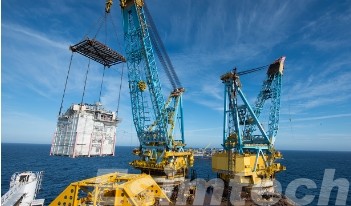
For fixed offshore platforms, fabrication usually covers building the jacket structure and also the topside modules. The jacket is a big steel framework that supports the platform, then it transfers the weight down to the seabed. The topside includes drilling equipment, production facilities, control rooms, living quarters, and other operating systems too.
During fabrication, advanced welding practices and precise manufacturing approaches are used to put together huge steel sections. Quality control inspections, ultrasonic testing, radiographic testing , and dimensional checks help make sure each piece meets the safety requirements.
Modern fabrication workshops more and more rely on automation tools like robotic welding plus digital monitoring systems, to boost accuracy, shorten the production timeline and protect workers.
5. Transportation of Rig Components
After the fabrication work is done, finished components have to be transported to the drilling site. Because the rig parts are massive and heavy, oil rig structures need dedicated transportation procedures.
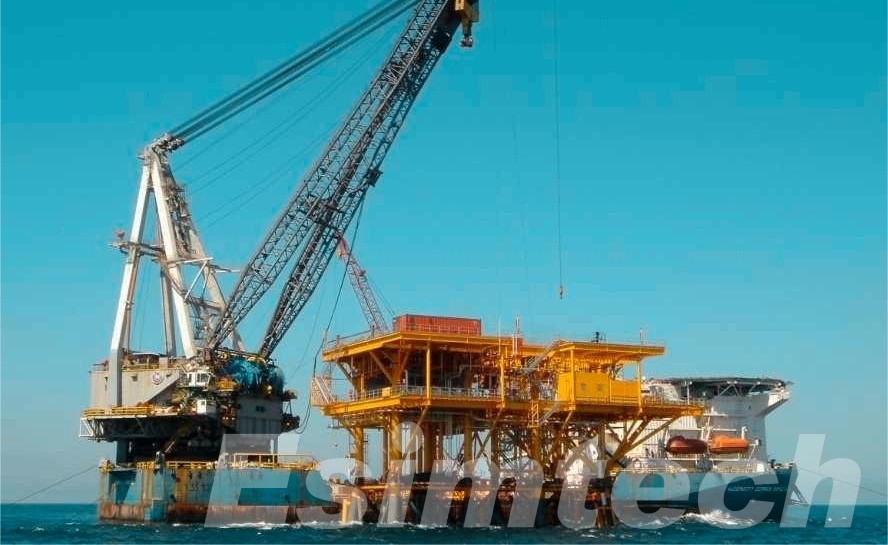
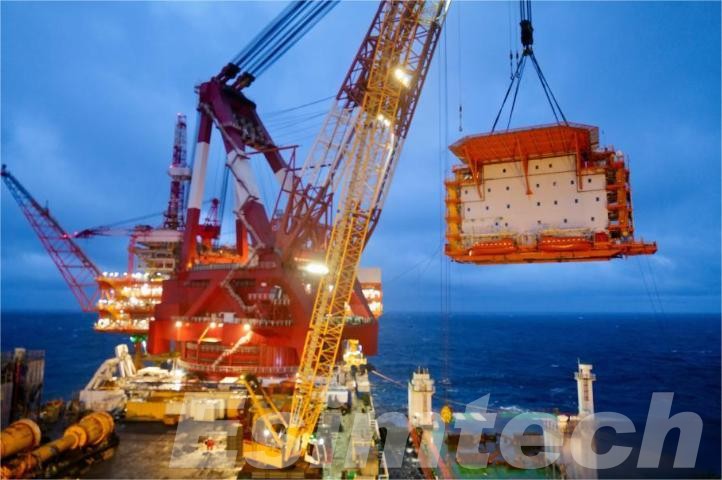
Offshore platforms are often moved with heavy-lift vessels, transport barges, or purpose-built installation ships. Transportation planning looks at sea conditions, route restrictions, lifting capacity, and even weather forecasts, so nothing is underestimated.
Securing and handling procedures are, really, essential during transport to avoid structural harm, because even small missteps can lead to cracking or bending. Engineers do careful calculations for load forces and also for stability, so the unit can move safely from the fabrication yard to the offshore working area without surprises.
6. Offshore Installation and Assembly
During this stage, the rig is assembled at its final operating spot. Honestly, it is one of the hardest parts, since construction crews must operate in open marine conditions, with wind, spray, and wave action all around them.
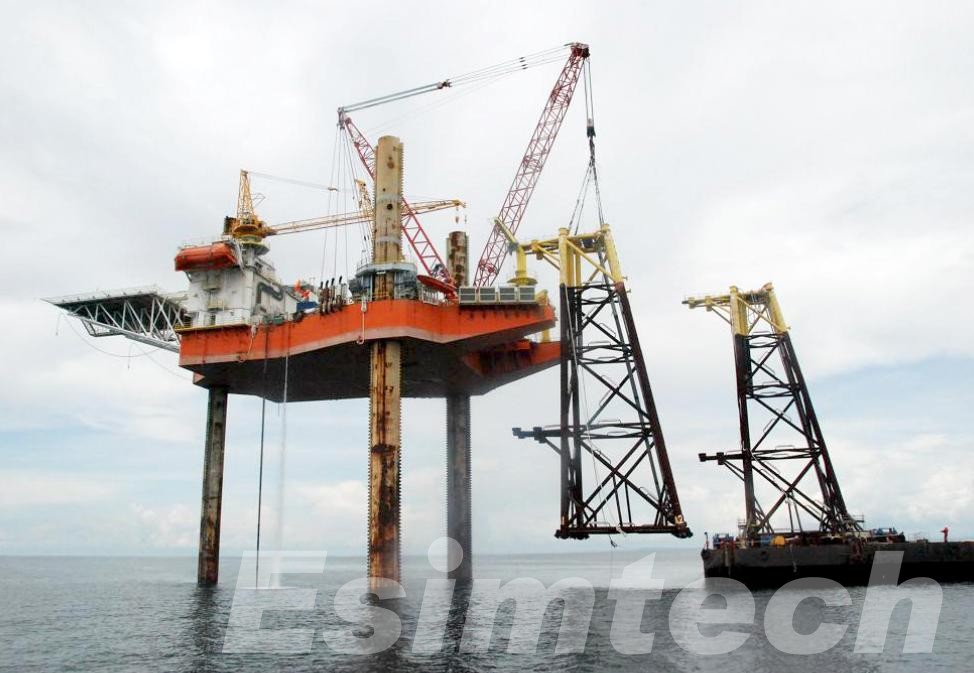
For fixed platforms, the jacket structure gets installed first. Then, heavy-lift cranes place the jacket on the seabed, after which large piles are driven into the soil for reinforcement and steadiness. Once the foundation is secured in place, the topside module is hoisted and set onto the jacket.
Floating rigs, including semi-submersible platforms and drillships, rely on advanced location control methods to remain in position. Those methods might use mooring lines and anchors, or dynamic positioning technology, which is supervised by computer-controlled systems.
When the oil rig installation starts, engineers end up linking structural parts, pipelines, electrical systems, communication networks, plus safety gear so the rig can be brought into operation.
7. Installation of Drilling and Production Equipment
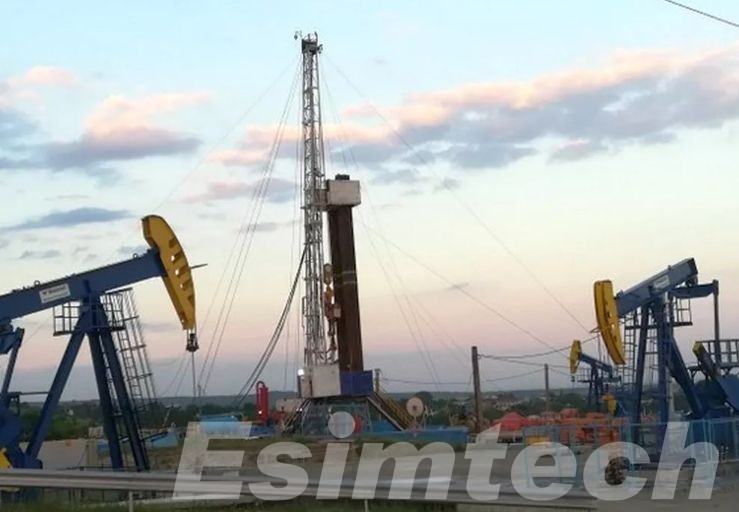
Once the main structure is put together, the drilling and production setups are installed and then tested. The drilling system acts like the main working unit on an oil rig and it has to be integrated very carefully, with precise alignment in practice.
Key drilling equipment includes the derrick, the top drive system, drill pipes, mud pumps, and the BOP system. The BOP matters a lot, because it gives pressure control, and stops uncontrolled releases of oil or gas while drilling is running.
Production equipment is installed on rigs that are intended for oil and gas processing. These systems split up the recovered fluids, remove contaminants, and ready the hydrocarbons for shipping afterward.
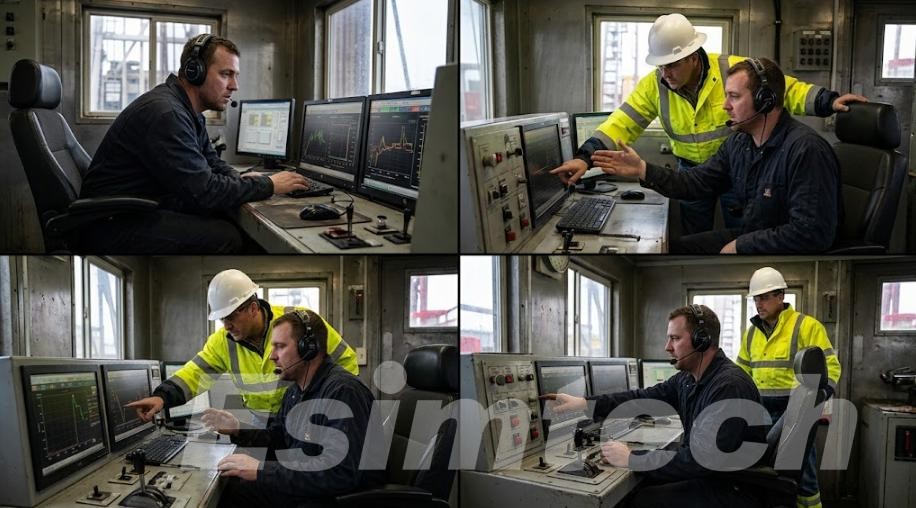
Control systems, sensors, and observation equipment are also built in so operators can steer drilling activities with more safety and also with better efficiency.
8. Testing, Inspection and Commissioning
Before an oil rig really starts operating, a lot of testing and commissioning work is carried out. Engineers check every structural component, every mechanical system, all electrical equipment, and safety devices to make sure they work as they should.
Pressure tests are done on pipelines and well control systems, while electrical and communication systems receive performance verifications. Emergency subsystems, including fire protection, evacuation gear, plus shutdown systems, are tested using simulated scenarios.
Commissioning makes sure the whole rig works as one unified system. Only after every inspection is finished and regulatory approvals are secured can the rig start commercial drilling.
Safety and Environmental Considerations for Oil Rig Construction
During oil rig construction, safety is one of the top priorities. Oil rigs are working in places where equipment failure, extreme weather, and hydrocarbon-related hazards can bring real danger, fast.
Construction teams keep to strict safety procedures, and they do risk assessments, equipment inspections, emergency response planning, and ongoing worker training. On top of that, rig designs include fire suppression equipment, emergency shutdown systems, clear escape routes, and lifeboats. All of these are meant to work together, so when something goes wrong, there is a planned reaction.
Environmental protection is important too. Modern oil rig construction uses technologies that help reduce emissions, prevent spills, deal with drilling waste properly, and limit damage to marine ecosystems.
Also, advanced environmental monitoring systems watch structural conditions, equipment performance, and environmental factors in real time. With this approach, operators can spot potential trouble earlier and enhance operational reliability, even under changing conditions.
Simulation and Digital Technologies in Modern Oil Rig Construction
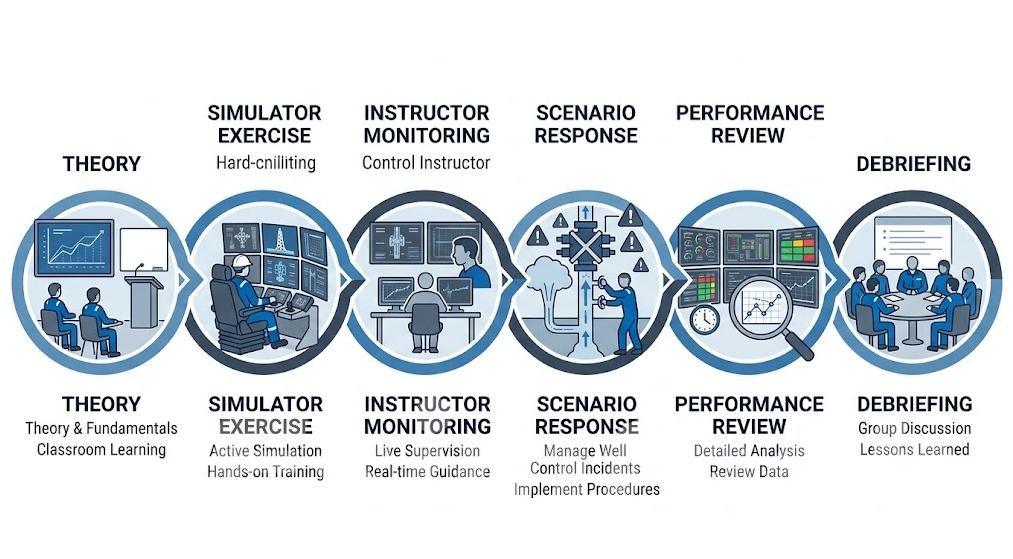
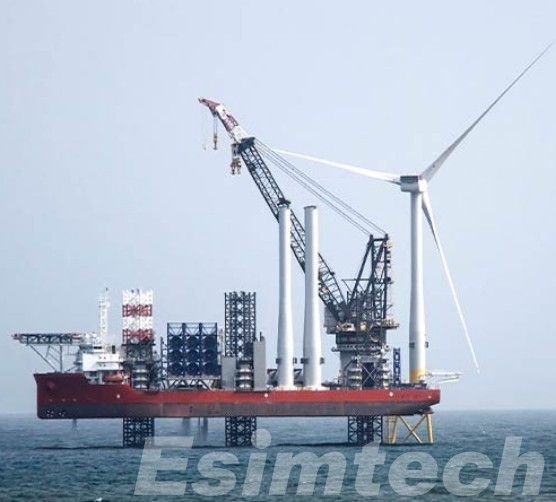
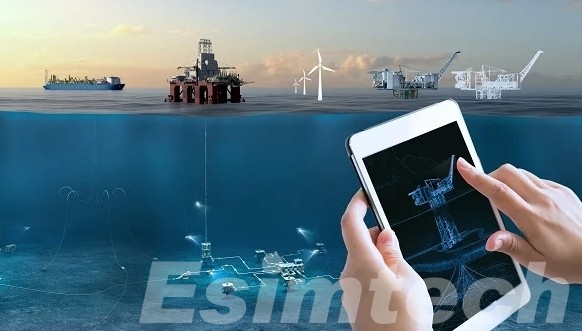
The integration of advanced digital tools and oil and gas simulators helps engineers contractors and operators watch projects more effectively, cut down construction risks, and fine-tune complicated offshore and onshore rig development procedures. It feels more like guidance than guesswork, because data shows up earlier.
1. Building Information Modeling (BIM)
Building Information Modeling (BIM) is being used more often in oil rig construction to build a detailed digital picture of structures equipment and internal systems before any physical work begins. With BIM, engineers from different disciplines, structural mechanical electrical and process engineering teams can work together inside one shared digital space, instead of bouncing between separate files.
Using BIM models, project teams can see the full rig layout and spot design conflicts early, then tweak where the equipment goes to make things cleaner. For instance, any potential interference between pipelines, drilling equipment, and electrical systems can be noticed while the design is still being made, not later after installation. As a result, costly changes get reduced and construction work moves more efficiently.
BIM also helps with project scheduling, material handling, and ongoing lifecycle maintenance, because it carries reliable information about the rig across its whole working period.
2. Simulation Technologies
Simulation technologies allow engineers and construction teams to test, optimize, and improve oil rig designs before physical construction begins.
| Simulation Technology | Application in Oil Rig Construction | Benefits |
| Structural Simulation | Simulates loads, stresses, vibrations, and environmental forces on rig structures before construction begins. Engineers test platforms, support structures, and foundations under different operating conditions. | Improves structural reliability, reduces design errors, and ensures the rig can withstand harsh environments. |
| 3D Modeling and Digital Twin Simulation | Creates virtual replicas of oil rigs to visualize structures, equipment layouts, and construction processes. Digital twins combine engineering models with real-time data for performance analysis. | Helps detect design conflicts, optimize construction planning, and support future maintenance activities. |
| Finite Element Analysis (FEA) | Analyzes the strength and behavior of components such as steel frames, pipelines, and offshore structures under different loads. | Predicts potential failures, improves material selection, and enhances structural safety. |
| Construction Process Simulation | Simulates fabrication, transportation, lifting, and installation procedures before actual construction activities. | Reduces installation risks, improves scheduling, and optimizes the use of equipment and manpower. |
| Offshore Installation Simulation | Models complex offshore operations, including jacket placement, topside lifting, mooring installation, and vessel movements. | Improves planning accuracy and minimizes risks during challenging offshore operations. |
| Drilling System Simulation | Simulates drilling equipment integration, well control systems, and operational scenarios during rig design and preparation. | Helps optimize equipment configuration, improve safety, and reduce commissioning problems. |
| Hydrodynamic Simulation | Evaluates the effects of waves, currents, wind, and ocean conditions on offshore rigs and floating platforms. | Supports stable platform design and improves performance in extreme marine environments. |
| Computational Fluid Dynamics (CFD) Simulation | Analyzes airflow, heat transfer, fluid movement, and ventilation systems in rig structures and equipment areas. | Improves safety system design, equipment cooling, and environmental control. |
| Virtual Reality (VR) Simulation | Provides immersive virtual environments for engineers and workers to explore rig designs, installation procedures, and emergency scenarios. | Enhances training, improves safety awareness, and helps identify design problems before construction. |
| Augmented Reality (AR) Simulation | Overlays digital information onto physical construction environments to assist with assembly, inspection, and equipment installation. | Reduces installation errors, improves worker efficiency, and provides real-time guidance. |
| Equipment Operation Simulation | Tests the interaction between drilling equipment, power systems, control systems, and production units in a virtual environment. | Ensures system compatibility and improves operational readiness before startup. |
| Safety and Emergency Simulation | Simulates accidents, equipment failures, fires, blowouts, and evacuation procedures to evaluate emergency responses. | Improves safety planning, strengthens emergency preparedness, and reduces workplace risks. |
| Logistics and Supply Chain Simulation | Models transportation routes, material delivery schedules, and offshore supply operations. | Reduces delays, improves resource allocation, and enhances project coordination. |
| Maintenance and Lifecycle Simulation | Predicts equipment wear, corrosion development, and future maintenance requirements using operational data. | Extends equipment lifespan, reduces downtime, and supports predictive maintenance strategies. |
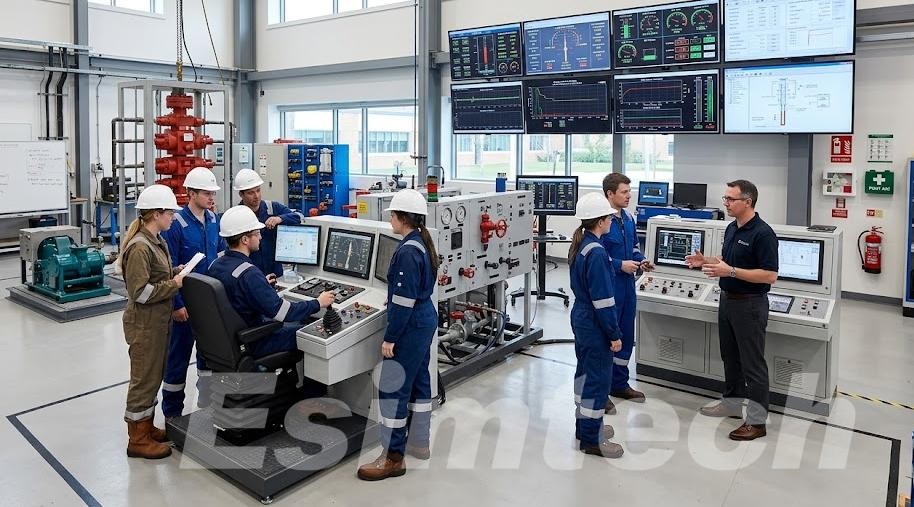
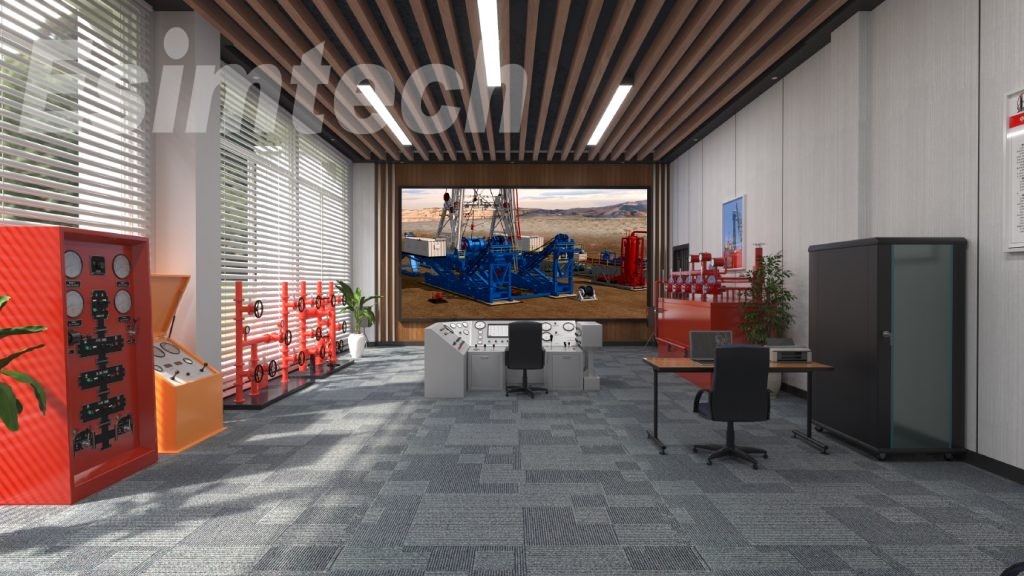
| Drilling Training Simulator Systems | Provides realistic training environments for crane operations, drilling operations, well control, and offshore safety procedures. | Develops skilled workers, reduces training risks, and improves operational performance. |
3. Artificial Intelligence and Machine Learning Applications
Artificial intelligence (AI) and machine learning tools are playing a bigger role in improving oil rig construction operations. AI platforms can examine large volumes of project information to find recurring patterns, forecast hazards, and strengthen construction plans.
During fabrication, AI-powered systems can help with quality checks by looking at images and catching welding defects structural troubles, or other manufacturing errors. This tends to raise accuracy when compared with the usual manual inspection work, where people might miss small things.
Also, AI algorithms can aid in project management by forecasting construction delays, improving how resources get allocated, and tightening cost control. When teams spot trouble early, they can apply corrective measures before minor issues turn into more serious damage.
4. Internet of Things (IoT) and Smart Sensors
The Internet of Things (IoT) lets oil rig construction teams link equipment tools and monitoring systems through digital networks. Smart sensors placed on structural components and machines gather real-time measurements about temperature pressure vibration, stress, and equipment behavior.
During construction, IoT sensors help monitor lifting operations, environmental conditions and even structural installation accuracy. Engineers can remotely track construction tasks and respond fast to abnormal situations that pop up, sometimes before anyone notices in person.
After the rig becomes operational, the IoT setup keeps feeding useful information for equipment monitoring, safety management, and maintenance scheduling. That nonstop data gathering strengthens dependability and also limits unplanned downtime.
5. Automation and Robotics in Fabrication
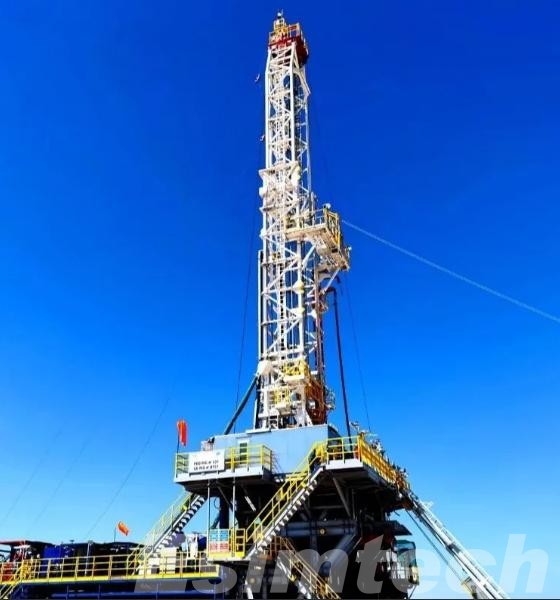
Automation and robotics are pushing forward the efficiency and precision of oil rig component manufacturing. Modern fabrication yards rely on robotic welding systems, automated cutting machines, and computer-guided manufacturing tools to craft large structural components with high accuracy.
Robotic welding systems deliver consistent weld quality, and cut down on human exposure to risky, hazardous environments. Automated inspection robots can review welds, pipelines, and structural surfaces to surface defects faster and with more precision, than a manual routine.
Bringing in automation also helps compress construction timetables, because it boosts production speed. At the same time it reduces rework, errors during fabrication, and repeated tasks that waste time.
6. Advanced Data Analytics for Project Management
Big oil rig construction programs produce huge volumes of data, from engineering blueprints, supply chains, fabrication steps, and installation activities. Advanced data analytics tools help project teams arrange and interpret this information so they can make better choices.
With analytics, teams can spot construction patterns, watch project momentum, judge supplier performance, and even anticipate potential delays. Using real-time data dashboards, managers can steer schedules, control budgets, and allocate resources with less guesswork.
Data driven project management helps coordination land better between contractors, engineers, and operators on big rig construction programs. It connects schedules, approvals, and daily tasks, even when the work streams are moving at different speeds.
7. Digital Safety Management Systems
Digital safety technologies are getting better at handling risk during oil rig construction. Today’s systems rely on sensors, wearable devices, data analytics, and automated monitoring tools, which in turn strengthen worker protection in practice.
Wearable devices track worker positions, exposure to harsh conditions, and signs of fatigue. Then digital safety platforms can read incident records and flag likely hazards before something bad happens.
There are also virtual safety training environments, where workers can practice emergency actions, like evacuation steps or equipment shutdown operations, inside realistic simulated settings.
Challenges in Oil Rig Construction
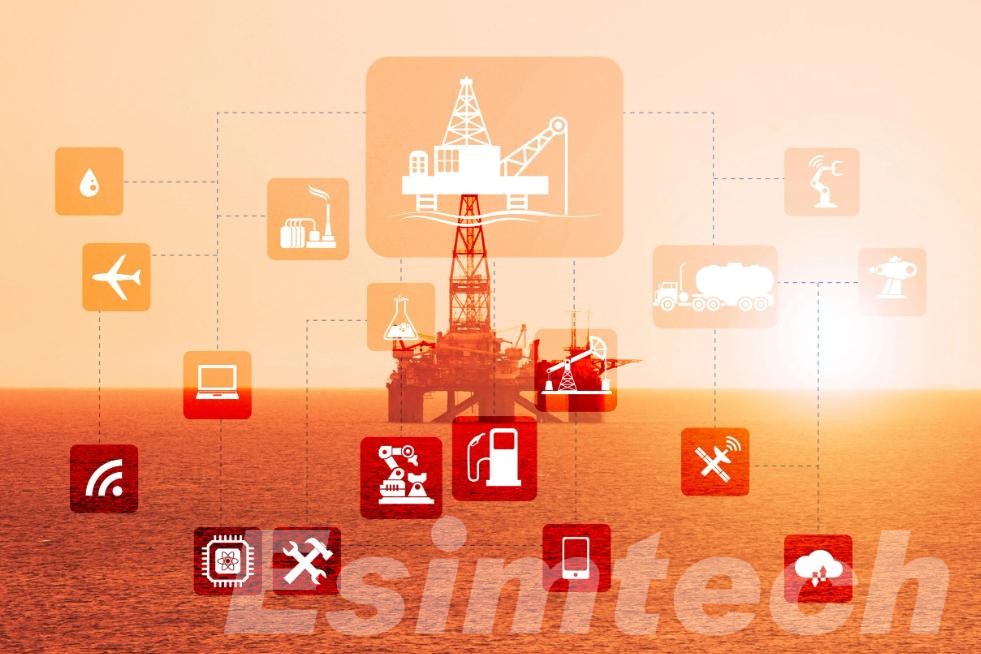
Oil rig construction faces many challenges, including high costs, hard logistics, and harsh environments, etc. Offshore projects are even more demanding, because the crews have to work way out from shore while also handling unpredictable weather and tough transport conditions.
| Challenge | Description | Impact on Construction |
| High Construction Costs | Oil rig projects require large investments in engineering, materials, equipment, transportation, and labor. | Budget overruns and increased project risks. |
| Complex Engineering Requirements | Oil rigs involve the integration of structural systems, drilling equipment, production facilities, and safety systems. | Design conflicts, longer development periods, and technical difficulties. |
| Harsh Environmental Conditions | Offshore rigs must operate under extreme conditions, including strong waves, storms, high winds, and seawater corrosion. | Structural damage risks, installation delays, and increased maintenance requirements. |
| Difficult Offshore Logistics | Transporting large components and equipment to remote offshore locations requires specialized vessels and planning. | Delays in delivery, higher transportation costs, and installation challenges. |
| Material Selection and Corrosion Control | Oil rigs require materials that can withstand mechanical stress and marine environments. | Reduced equipment lifespan and increased repair costs. |
| Regulatory and Environmental Compliance | Oil rig projects must meet strict industry standards and environmental regulations. | Additional approval processes, construction delays, and increased compliance costs. |
| Complex Supply Chain Management | Thousands of components must be sourced, transported, and delivered according to project schedules. | Equipment shortages, construction delays, and increased expenses. |
| Weather and Installation Delays | Offshore installation activities depend heavily on weather conditions and sea conditions. | Schedule disruptions and increased offshore operation costs. |
| Quality Control During Fabrication | Large steel structures and mechanical systems require precise manufacturing and inspection. | Structural defects, equipment failures, and safety concerns. |
| Technology Integration Challenges | Modern rigs require integration of automation, sensors, digital systems, and control platforms. | Compatibility issues and increased system complexity. |
| Skilled Workforce Requirements | Oil rig construction requires experienced engineers, technicians, welders, and offshore specialists. | Reduced productivity and higher risk of construction errors. |
| Deepwater Construction Difficulties | Deepwater rigs require advanced foundations, floating systems, and specialized installation methods. | Higher technical complexity and increased project costs. |
Final Words
Successful oil rig construction requires a combination of advanced engineering, careful planning, good materials, experienced workers, and modern digital and simulation technologies. From early design and fabrication through the installation and then commissioning, each little step has to be managed closely, so safety, reliability, and efficiency do not fall apart in the field.
If companies use advanced simulators, tighten up quality assurance, keep safety high on the priority list, and apply more sustainable construction methods, they can end up with rigs that work well even in difficult operating conditions, while also matching the rising needs of the global energy industry.